Hollywood spent two years insisting generative AI would never touch a real studio production. Amazon just put money and a greenlight behind the opposite bet. Amazon MGM Studios and AWS have launched the GenAI Creators' Fund, ordered three AI-made animated series for Prime Video, and unveiled Project Nara, a purpose-built AI production platform that plugs directly into the tools professional studios already run.
What Actually Happened
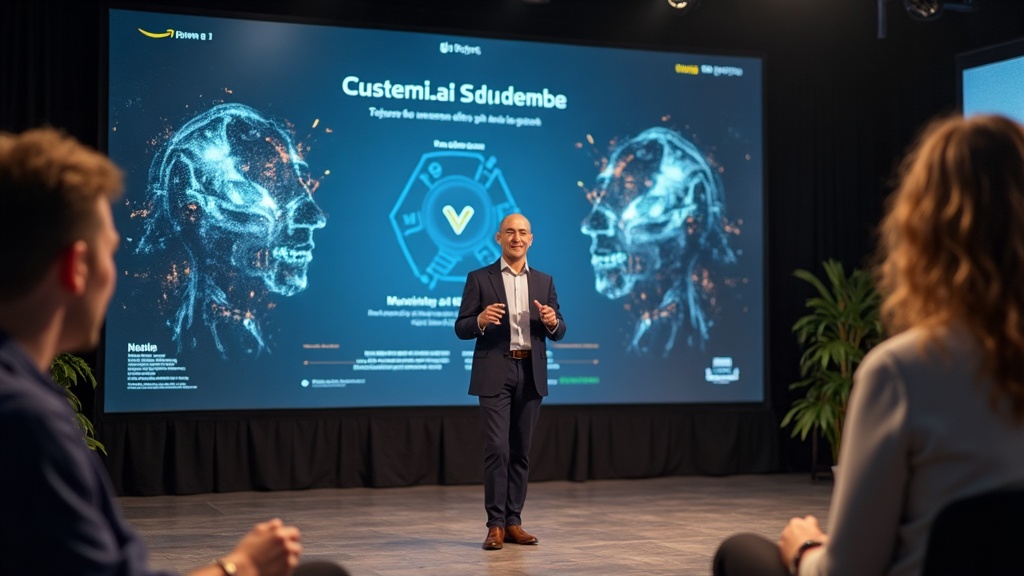
On May 27, 2026, at an event called AI on the Lot held at Culver Studios, Amazon MGM Studios and Amazon Web Services announced the GenAI Creators' Fund and its first three greenlit projects. The fund gives creators access to professional-grade AI tools plus capital, deliberately mixing established filmmakers, digital-native creators, and technology startups in one program. The structure is staged: grants pay for proof-of-concept pilots and shorts, and the studio then decides which of those graduate into full series or films. It is a deliberate attempt to lower the cost of finding out what works before committing real production budgets.
The venue choice was itself a statement. AI on the Lot is an industry gathering focused squarely on generative tools in film and television, and Amazon used it to plant a flag while most of its rivals were still issuing carefully hedged statements about responsible exploration. The announcement bundled three things that studios normally reveal separately: a funding vehicle, a slate of concrete orders, and a proprietary platform. Packaging them together signaled that this is not a pilot program Amazon might quietly shelve, but a committed strategy with budget, projects, and infrastructure already in place. That framing matters, because in Hollywood the difference between a press release and a real strategy is whether the money and the greenlights arrive on the same day.
The first three orders are all animation. They are Cupcake & Friends from BuzzFeed Studios, Love, Diana Music Hunters from Albie Hecht and pocket.watch, and Punky Duck from creator Jorge R. Gutierrez. All three are slated to premiere on Prime Video at a future date. Animation is the logical proving ground: it is expensive, labor-intensive, and stylized enough that AI-assisted pipelines can show cost and speed gains without tripping the uncanny-valley problems that still dog AI-generated live action. Starting with cartoons is not a limitation, it is a calculated choice of the terrain where the technology is most ready to perform.
The technical centerpiece is Project Nara, Amazon MGM Studios' AI production platform built on AWS. It functions as a collaborative production workspace where teams generate video, make edits, give feedback, and track progress in real time across both animation and live-action workflows. Crucially, Nara integrates AI production agents with the professional software studios already depend on: Maya, Blender, Nuke, Unreal Engine, and the Adobe Suite. Amazon frames the philosophy bluntly: human creativity leads, AI supports. That positioning is not just public relations, it is a design constraint that shapes how the whole platform is meant to be used.
Why This Matters More Than People Think
The story is not that AI can make a cartoon. The story is that a major studio has built AI directly into its production pipeline and attached a funding mechanism to pull outside creators onto that pipeline. Project Nara is not a consumer toy or a standalone generator. It sits inside the same toolchain as Maya and Unreal, which means it is designed to slot into existing professional workflows rather than replace them. That is how technology actually penetrates an industry: not by competing with the incumbent tools, but by living inside them until it becomes inseparable from the work.
The fund design is the clever part. By paying for pilots and shorts first and greenlighting selectively, Amazon converts a risky technology bet into a cheap option portfolio. Each grant buys a low-cost look at whether an AI-assisted pipeline can produce something audiences want, and only the winners get full budgets. This is venture logic applied to content: spread many small bets, kill the failures early, and scale the few that work. It also quietly solves Amazon's pipeline problem, generating Prime Video originals at a fraction of traditional development cost while spreading the creative risk across dozens of teams.
The vertical integration is the part rivals cannot easily match. Amazon owns the cloud the platform runs on through AWS, the foundation models and the Bedrock service that serve it, the studio that commissions the work, and the distribution surface that ships it to viewers. No other player holds all four layers at once. Netflix rents its compute, Disney rents its models, and the pure AI labs own neither a studio nor a streamer. When a single company controls infrastructure, models, production, and distribution, it can capture value at every layer and subsidize any one of them with the others, which is exactly the kind of structural edge that turns a product launch into a long-term position.
For Prime Video specifically, the economics are pointed. Streaming margins live or die on content cost per hour of engagement. If AI-assisted animation can cut production budgets even partially while holding audience quality, Amazon improves the unit economics of its entire originals slate. Multiply that across a catalog and a global subscriber base, and a tooling decision becomes a margin lever measured in billions. That is why this is a studio strategy announcement dressed up as three cartoon orders, and why rival streamers will read it far more carefully than any single show would warrant.
There is a talent-acquisition angle too. By funding outside creators rather than only its in-house teams, Amazon is using the program to recruit the digital-native makers who already think in AI-first workflows, the people most likely to define what the next generation of animation looks like. A grant plus a professional pipeline is an attractive offer to a creator who has been making polished work alone on consumer tools, and it pulls that emerging talent toward Amazon before Netflix or Disney can court them. The fund is as much a hiring funnel as it is a content strategy.
The Competitive Landscape
Every major studio and streamer is circling the same question, and most are doing it quietly to avoid a backlash. Netflix has used generative tools in select productions and taken public heat for it. Disney holds the most valuable animation IP on earth and the most to lose from a misstep, so it has moved cautiously. Amazon's move is louder and more structural: it is not just using AI on a show, it is building a platform and a funding program and inviting outside creators in. That turns a one-off experiment into infrastructure, and infrastructure is what competitors find hardest to copy quickly.
The closest historical parallel is Pixar's RenderMan in the late 1980s and 1990s. Pixar did not just make films, it built and licensed the rendering technology that reshaped how the entire industry produced animation, and that tooling advantage compounded for decades. Project Nara is an attempt to occupy the same position for the generative era: own the platform creators use, and you own a tollbooth on the future of production. The studio that controls the pipeline controls the economics of everyone who builds inside it, which is a far more durable advantage than any single hit title.
On the technology side, Amazon is leaning on AWS as the moat. Runway, Luma, and OpenAI's Sora-class video models are all chasing the raw generation layer, but raw generation is not a production pipeline. By integrating agents into Maya, Nuke, and Unreal, Amazon is competing on workflow integration rather than model quality alone, the same way it won cloud computing not with the best servers but with the best developer experience. That positioning is harder for a pure model lab to replicate, because the lab has to learn the messy reality of professional production while Amazon already lives inside it through AWS.
Hidden Insight: The Real Product Is the Pipeline, Not the Pixels
The instinct is to evaluate this announcement on whether the cartoons look good. That misses the point entirely. The strategic asset is Project Nara as a standardized, AWS-hosted production environment that every funded creator is trained to work inside. Once thousands of creators build their muscle memory and their assets on Nara, switching costs rise and Amazon owns a creative operating system. The three series are marketing for the platform, not the other way around, and judging the strategy by the shows is like judging the early App Store by its first few apps.
There is a data flywheel hiding inside Nara that few are discussing. Every project produced on the platform generates a corpus of how professional creators actually use AI tools in production: which prompts get discarded, which edits get reversed, where human hands override the machine. That feedback is training data of a kind no public video model can buy, because it captures the judgment of working artists at the moment of creative decision. Over time, Amazon can fold that signal back into Nara to make its agents better at exactly the tasks studios need, widening the gap against general-purpose generators that learn from scraped clips rather than real production workflows.
The bear case, however, is real and immediate. Critics argue that audiences increasingly recoil from content labeled AI-made, and that a backlash from both viewers and the creative guilds could make AI-assisted originals a reputational liability rather than a margin win. The 2023 Hollywood strikes were partly about exactly this, and the wounds are fresh. The risk is that Amazon spends to build a pipeline that talent refuses to use and audiences refuse to watch, leaving an elegant platform with no cultural permission to operate. Technology adoption in entertainment has always been gated by politics as much as by capability.
There is also a quality-ceiling question that skeptics point out. AI-assisted animation may lower cost, but lower cost plus easier production usually means more content, not better content, and streaming is already drowning in volume. If Nara makes it cheap to produce mediocre series at scale, Amazon risks accelerating the exact content glut that makes any single title harder to discover. The platform could win on economics while losing on the only metric that ultimately matters, which is whether anyone actually chooses to watch what it produces.
The most underrated angle is labor, not as a threat but as a redefinition. Amazon's framing, human creativity leads and AI supports, is a deliberate political stance designed to bring creators along rather than displace them. If that framing holds in practice, with creators retaining authorship and credit, Nara could become the model for how studios adopt AI without a war. If it does not hold, and the tooling quietly erodes the number of artists per production, the same platform becomes the case study guilds use to fight every future deal. The gap between the framing and the reality is where the next decade of entertainment-labor conflict will be decided.
What to Watch Next
In the next 30 to 90 days, watch for the production credits and cost disclosures on the three greenlit series, because the per-episode budget relative to traditional animation is the entire thesis. Watch for whether additional studios announce their own AI production platforms in response, which would confirm Nara forced the industry's hand. Track guild reactions from the Animation Guild and the Writers Guild of America, whose public posture will shape how freely Amazon can expand the program and how many established creators feel safe joining it.
Over 90 to 180 days, the leading indicator is whether any Nara-produced pilot graduates into a full live-action project, since live action is where AI tooling faces its hardest test. Watch the second wave of greenlights for genre diversity beyond animation, and watch whether Amazon opens Nara to creators outside its funded program, which would signal a move from internal tool to commercial platform. Audience reception data, if Amazon discloses it, will reveal whether viewers actually penalize AI-assisted content or simply do not care once a show clears a quality bar.
The deepest question to track is whether this becomes a platform business. If Amazon eventually licenses Project Nara to other studios or independent creators the way Pixar licensed RenderMan, the company will have converted a content strategy into an infrastructure position that taxes the whole industry. If Nara stays an internal tool, it remains a margin optimization for Prime Video and nothing more. The difference between those two outcomes is worth tens of billions of dollars, and the next year of greenlights and licensing decisions will tell us which path Amazon is actually on.
Amazon did not announce three cartoons, it announced the operating system it wants every creator in Hollywood to build inside.
Key Takeaways
- GenAI Creators' Fund launched May 27, 2026 by Amazon MGM Studios and AWS, funding proof-of-concept pilots that the studio selectively greenlights.
- Three animated series ordered for Prime Video: Cupcake & Friends, Love, Diana Music Hunters, and Punky Duck.
- Project Nara is an AWS-built production platform integrating AI agents with Maya, Blender, Nuke, Unreal Engine, and the Adobe Suite.
- Strategic logic: the pipeline, not the pixels, is the product, raising switching costs as creators build inside Nara.
- Stated philosophy: human creativity leads and AI supports, a deliberate stance aimed at avoiding a creator backlash.
Questions Worth Asking
- If a studio owns the AI pipeline every creator works inside, who really controls the economics of the next decade of film and TV?
- Will audiences penalize content they know was made with AI, or will they stop caring once the quality clears a bar?
- Does cheaper production make better shows, or just more of them in an already saturated streaming market?