Anthropic has spent a fortune renting other people's chips. Now it is in early talks to run Claude on silicon that belongs to one of its own backers. People familiar with the discussions say Anthropic is exploring a deal to serve Claude inference workloads on Microsoft's custom Maia 200 accelerator through Azure, a move that would loosen its dependence on Nvidia at the exact moment its compute bills are exploding. The talks are preliminary, but the logic is not. Every dollar Anthropic shaves off inference is a dollar it keeps as it races toward profitability and a public listing.
What Actually Happened
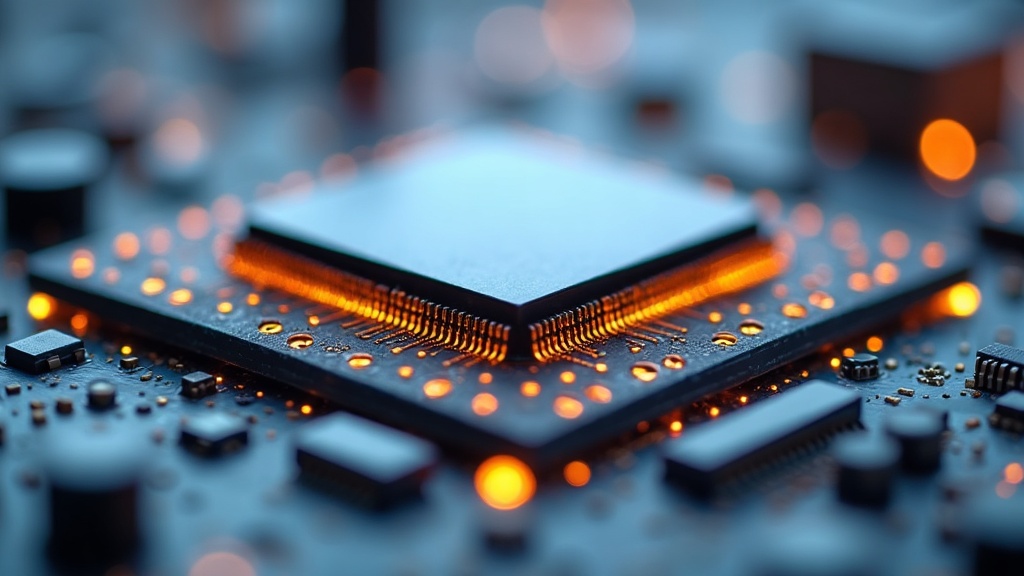
The conversations center on Microsoft's Maia 200, a chip Microsoft launched in January 2026 and built specifically for inference rather than training. Microsoft fabricates it on TSMC's 3-nanometer process and claims it delivers more than 30% better performance per dollar than rival silicon on inference tasks. For a company like Anthropic, whose costs are increasingly driven by serving Claude to millions of users and thousands of enterprises rather than by one-time training runs, performance per dollar on inference is the single most important number on the bill.
Anthropic already runs a deliberately diversified compute stack. It trains and serves across Nvidia GPUs, Amazon's Trainium accelerators through a multibillion-dollar AWS partnership, and Google TPUs, including a recently reported deal for roughly 35 gigawatts of TPU capacity routed through Broadcom. Adding Microsoft's Maia 200 would give Anthropic a fourth independent silicon option and, just as importantly, a second hyperscaler cloud beyond AWS and Google to host its most demanding workloads. The talks reflect a company determined never to be captive to any single chip or any single cloud.
Scale is the backdrop that makes the talks credible. Anthropic's compute commitments now run into the tens of billions of dollars across its cloud partners, and the company has publicly described capacity deals measured in gigawatts rather than chip counts. At that scale, even a fractional improvement in cost per token compounds into enormous absolute savings, and it gives Anthropic the volume to justify the heavy software engineering that moving to a new accelerator requires. Microsoft, for its part, has been aggressively expanding Azure capacity earmarked for AI inference, and Maia 200 is the chip it wants filling those racks.
For Microsoft, the prize is validation. Maia was conceived to reduce Microsoft's own dependence on Nvidia and to give Azure a cost edge on AI workloads, but custom silicon only matters if frontier developers actually trust it with production traffic. Landing Claude, one of the most demanding and respected models in the market, would prove Maia can handle real frontier inference and would give Microsoft a marquee reference customer to wave at every other enterprise weighing whether to build on Azure's homegrown chips or stick with Nvidia.
Why This Matters More Than People Think
The center of gravity in AI economics has quietly shifted from training to inference. Training a frontier model is a brutal, expensive event, but it happens a handful of times a year. Inference happens billions of times a day, every time a user sends a prompt, and it scales directly with adoption. As Claude usage climbs across consumer apps, coding tools, and enterprise deployments, inference becomes the dominant line in Anthropic's cost structure, which is exactly why a chip promising 30% better performance per dollar on inference is worth a serious negotiation.
This also reframes the Microsoft and Anthropic relationship. Microsoft is OpenAI's largest backer and infrastructure partner, which makes the idea of Anthropic, OpenAI's fiercest rival, running on Microsoft silicon genuinely unusual. It signals that Microsoft is willing to be a neutral arms dealer in the model wars, selling compute to whoever will buy it, rather than betting exclusively on OpenAI. For Anthropic, leaning on a partner so closely tied to its rival is a calculated risk, but the cost savings and the leverage against Nvidia may be worth the awkwardness.
There is a distribution angle that sweetens the deal for both sides. Claude is already available to enterprises through Azure's model catalog, so many of Microsoft's largest customers consume Claude inside the Microsoft ecosystem today. Serving that traffic on Maia 200 rather than on rented Nvidia capacity would let Microsoft capture more margin on workloads it already hosts, while giving those enterprise customers a cheaper path to the model they want. The economics line up precisely where the two companies' interests already overlap, which is part of why the talks are happening at all.
The risk, however, is real and Anthropic surely knows it. Porting a frontier model to a new accelerator is not a flip of a switch. It demands deep software optimization, custom kernels, and months of validation to match the latency and throughput that customers expect, and any regression in quality or speed lands on Anthropic's reputation, not Microsoft's. Skeptics point out that Maia 200 is a young chip with a thin software ecosystem compared with Nvidia's CUDA, and that the promised 30% advantage may erode once the real engineering costs of migration are counted. The headline savings are seductive; the integration tax is where deals like this often stall.
The Competitive Landscape
Every hyperscaler is now building chips to escape the Nvidia tax. Amazon has Trainium and Inferentia, Google has its TPU line now several generations deep, and Microsoft has Maia. The common goal is to capture more of the margin that currently flows to Nvidia, whose accelerators can carry gross margins that make cloud providers wince. Anthropic sitting at the intersection of all three custom-silicon programs makes it one of the most valuable swing buyers in the industry, able to play suppliers against each other in a way few customers can.
The financial stakes for the hyperscalers are staggering. Analysts estimate that custom accelerators could let cloud providers reclaim tens of billions of dollars a year in margin currently paid to Nvidia, which is why Amazon, Google, and Microsoft have each poured multibillion-dollar budgets into their chip programs. The catch is that a chip is only as valuable as the workloads it attracts. Without anchor customers running real frontier models, custom silicon becomes an expensive science project, which is exactly why landing Anthropic would matter far beyond the revenue from a single contract.
Nvidia is not standing still. Its upcoming Vera Rubin systems promise large inference gains, and its CUDA software moat remains the single biggest reason developers hesitate to switch. The pitch from Microsoft, Amazon, and Google is essentially the same: accept some software friction today in exchange for structurally lower costs tomorrow. Whether frontier labs take that trade is the defining question of the next phase of the AI buildout, and Anthropic's decision on Maia 200 will be read as a signal by every other lab weighing the same choice.
There is a clean historical parallel in the smartphone era. Apple spent years on Intel and third-party components before designing its own A-series and M-series chips, a vertical integration that eventually gave it a cost and performance edge competitors struggled to match. The hyperscalers are running the same playbook with AI accelerators, and the labs are the swing factor that determines whether custom silicon reaches the volume needed to justify its enormous development cost. A Claude deployment on Maia would be the kind of anchor workload that turns a promising chip into a sustainable product line.
Hidden Insight: Compute Diversification Is the New Moat
The non-obvious story is that compute optionality is becoming a competitive advantage in its own right. A lab locked into a single chip and a single cloud is exposed to price hikes, supply shortages, and the strategic whims of its supplier. A lab that can shift workloads across Nvidia, Trainium, TPU, and Maia can arbitrage price and availability in real time, and it can credibly threaten to move volume, which is the only thing that keeps suppliers honest. Anthropic is methodically building that optionality, and the Maia talks are the next brick in that wall.
Look closely and a power inversion comes into view. For two years the chip and cloud giants dictated terms to a field of capital-hungry labs that needed compute at any price. As the leading labs approach real revenue and public listings, that dependency is reversing. A lab generating billions in revenue and able to direct its workloads across four silicon platforms is no longer a supplicant; it is a kingmaker whose decisions can validate or doom a multibillion-dollar chip program. The Maia talks are a small, concrete example of that inversion playing out in real time.
This matters enormously for the upcoming IPO narrative. When Anthropic files to go public, investors will scrutinize gross margins and supplier concentration. A company that can show it serves inference across four independent silicon platforms looks structurally healthier than one whose cost line is hostage to a single vendor. Diversified compute is not just an engineering decision; it is a story Anthropic can tell Wall Street about durability and pricing power, and that story directly affects how the market will value the business.
The strategic subtlety is that Anthropic does not even need the deal to close to benefit from it. The mere fact that it is a credible Maia customer strengthens its hand in every Nvidia and AWS negotiation, because suppliers price in the threat of losing volume. This is how sophisticated buyers operate: they cultivate alternatives not only to use them, but to make their incumbent suppliers compete to keep the business. A frontier lab with four viable chip options pays less on all four than a lab with one, regardless of where the workloads ultimately run.
The uncomfortable truth here is that the much-discussed Nvidia moat is real on the software layer but increasingly porous on the economics. CUDA keeps developers comfortable, but comfort has a price, and at Anthropic's scale even a 20% to 30% efficiency gain on inference translates into hundreds of millions of dollars a year. Once the savings cross that threshold, the engineering cost of porting starts to look cheap, and the moat that felt impregnable in 2024 begins to leak. The Maia talks are a sign that the threshold has been crossed for at least one frontier lab.
What to Watch Next
In the next 30 days, watch for any confirmation that the talks have moved from exploratory to contractual, and for the specific scope of any deal. A limited pilot serving a slice of Claude traffic would be a cautious first step, while a commitment to move a meaningful share of inference to Maia would be a far louder statement about Microsoft's silicon and Anthropic's confidence in it. Watch the language carefully, because pilots and production are very different signals.
Over the next 90 days, track benchmark disclosures and any published latency or throughput numbers for Claude on Maia 200. Real performance data, rather than Microsoft's marketing claim of 30% better performance per dollar, will determine whether other labs follow. Watch also for Nvidia's competitive response, whether through pricing, the Vera Rubin rollout, or new software tooling designed to make switching even harder than it already is.
Over the next 180 days, the indicator that matters most is Anthropic's gross margin trajectory heading into its public listing. If a multi-silicon strategy visibly improves unit economics, expect every frontier lab to accelerate its own diversification, and expect hyperscaler chips to capture a growing share of inference. If the integration costs swamp the savings, the Nvidia moat will look sturdier than ever, and the Maia talks will be remembered as a negotiating tactic rather than a turning point. Either way, the result will reshape how the entire industry buys compute.
Watch the regulatory dimension too. A deal that places Anthropic's workloads on Microsoft's chips, inside Microsoft's cloud, while Microsoft simultaneously anchors OpenAI, will draw attention from antitrust regulators already studying how concentrated the AI compute market has become. The optics of one company supplying the picks and shovels to both leading model labs are politically charged on both sides of the Atlantic. Any structural terms that resemble preferential access or exclusivity could invite scrutiny, and the way the two firms frame the arrangement will matter as much as the technology behind it. For an Anthropic preparing to face public investors, the cleanliness of these relationships is not a footnote, it is part of the diligence every IPO buyer will run before committing a dollar.
The Nvidia moat is real on software and leaking on economics, and a frontier lab shopping its inference to Microsoft's chips is the first crack you can measure.
Key Takeaways
- Anthropic is in early talks to run Claude inference on Microsoft's custom Maia 200 accelerator via Azure.
- Maia 200 launched in January 2026 on TSMC's 3nm process and claims over 30% better performance per dollar on inference.
- Anthropic already spans Nvidia, Amazon Trainium, and Google TPUs, including a roughly 35-gigawatt TPU deal via Broadcom.
- Inference, not training, now drives cost, making per-dollar efficiency the most important number on Anthropic's bill.
- Compute diversification doubles as an IPO story, strengthening gross margins and reducing supplier-concentration risk.
Questions Worth Asking
- If inference now dominates AI costs, how much pricing power do chip suppliers really hold over labs that can move workloads freely?
- Why would Anthropic trust critical workloads to Microsoft, the company most closely tied to its rival OpenAI?
- At what efficiency gain does the engineering cost of leaving Nvidia's CUDA ecosystem finally become worth paying?