One gigawatt of sustained AI compute is roughly the entire fleet Anthropic could draw on at the start of 2026. The company just signed a deal to add three and a half more. With a single agreement involving Google and Broadcom, Anthropic quietly committed to a 4.5x expansion of its compute base inside eighteen months, a bet that the constraint on frontier AI is no longer ideas or talent but raw electrified silicon.
What Actually Happened
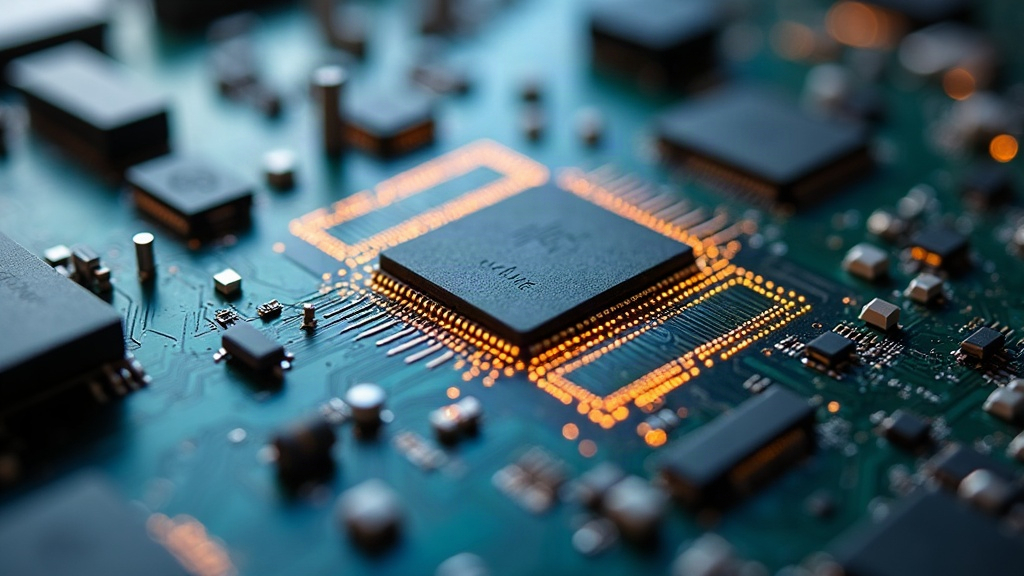
Anthropic announced an expanded partnership with Google and Broadcom to secure approximately 3.5 gigawatts of next-generation TPU-based AI compute, with capacity expected to begin coming online in 2027. The deal builds on roughly 1 gigawatt already scheduled to arrive in 2026, meaning the company has now lined up about 4.5 gigawatts of total capacity over an eighteen-month window. The new TPUs are based on Google's custom accelerator designs, manufactured in partnership with Broadcom, which builds the custom silicon and networking that turn Google's chip architecture into deployable data-center hardware.
The financial scale implied by the agreement is staggering. Analysts at Mizuho estimated that Broadcom would record roughly $21 billion in AI revenue from Anthropic in 2026 and as much as $42 billion in 2027, figures that would make a single customer relationship larger than the entire annual revenue of most semiconductor companies. For Broadcom, Anthropic is no longer just a customer. It is becoming a structural pillar of the business, and the market has repriced Broadcom's shares accordingly over the past year.
Anthropic disclosed the deal alongside a revenue milestone that explains why it needs the capacity. The company said its annualized run-rate revenue has surpassed $30 billion, up from roughly $9 billion at the end of 2025. That is more than a tripling in under half a year, and it is the kind of demand curve that forces a company to lock in compute years in advance or risk being unable to serve its own customers. Anthropic trains and runs Claude across a deliberately diversified hardware base spanning AWS Trainium, Google TPUs, and Nvidia GPUs.
Why This Matters More Than People Think
The headline number is the gigawatts, but the real story is the diversification away from Nvidia. For three years, the entire AI industry has been functionally dependent on a single vendor for training hardware, and that dependence has meant paying Nvidia's margins, waiting in Nvidia's queue, and designing around Nvidia's roadmap. By committing 3.5 gigawatts to Google TPUs built with Broadcom, Anthropic is making one of the largest non-Nvidia compute bets ever placed by a frontier lab. It is a vote of confidence that custom accelerators have matured enough to train and serve a flagship model at scale.
This also reframes what a frontier AI company actually is. Anthropic is increasingly an infrastructure enterprise that happens to produce a model, rather than a research lab that happens to need servers. Securing 4.5 gigawatts of power and silicon is a capital-markets and supply-chain achievement as much as a scientific one. The companies that win the next phase of AI may be those that can finance, schedule, and physically build compute fastest, not necessarily those with the cleverest architecture, because architecture advantages erode in months while a power-and-silicon supply chain takes years to assemble.
For Google, the deal is a strategic coup that goes beyond cloud revenue. Every gigawatt of Anthropic workload running on TPUs is a gigawatt not running on Nvidia, and it validates Google's decade-long bet that designing its own accelerators would eventually pay off against the merchant-silicon incumbent. It also deepens Google's already complex relationship with Anthropic, in which Google is simultaneously an investor, a cloud provider, and now a primary silicon supplier to a company whose Claude models compete directly with Google's own Gemini. That tangle of cooperation and competition is the defining structure of the modern AI industry.
There is a macroeconomic dimension that rarely makes the headlines. A commitment measured in gigawatts is ultimately a commitment to electricity, land, transformers, and cooling, not just chips. Anthropic's 4.5-gigawatt target implies power consumption on the order of several large nuclear reactors running continuously. That forces the company, and its partners, into the energy business by proxy: negotiating long-term power purchase agreements, siting data centers near generation capacity, and competing with entire cities for grid access. The AI race is quietly becoming an energy race, and deals like this one are how that shift shows up on a balance sheet before it shows up in the news.
The Competitive Landscape
Anthropic's compute land-grab is part of an industry-wide scramble that has every major lab signing multi-year, multi-gigawatt deals. OpenAI has committed to enormous capacity through its Stargate effort and partnerships spanning Nvidia, AMD, and custom silicon, while reportedly arranging compute through SpaceX-linked infrastructure. Meta is building its own MTIA accelerators to reduce its Nvidia bill, and xAI has assembled one of the largest single GPU clusters in existence. The common thread is that every serious player has concluded that compute, not algorithms, is the binding constraint on progress.
The historical parallel is the railroad land grab of the nineteenth century, when the decisive advantage went not to whoever had the best locomotive but to whoever secured the right of way, the land, and the financing to lay track first. The AI equivalent of right-of-way is power and fabrication capacity, both of which have multi-year lead times and finite supply. Anthropic locking in 2027 capacity in 2026 is the modern version of buying the route before competitors realize the route is the asset. Once the capacity is committed, latecomers cannot simply outspend their way to parity overnight.
However, the bear case is that Anthropic is making an enormous fixed-cost commitment against demand that is still unproven at this scale. The risk is that $30 billion in run-rate revenue, impressive as it is, reflects a land-rush moment in enterprise AI adoption that could cool. Critics argue that locking in 4.5 gigawatts of capacity through 2027 assumes the current growth curve continues, and if model commoditization compresses pricing or if a more efficient architecture suddenly slashes the compute required per query, Anthropic could find itself holding billions in capacity it overpaid for. Skeptics point out that the history of capital-intensive technology booms is littered with companies that built for a demand curve that bent the wrong way.
Hidden Insight: Compute Contracts Are the New Moats
The non-obvious truth is that long-dated compute agreements are becoming the most durable competitive moat in AI, more durable than any model. A frontier model's lead lasts months before a rival matches it. A 3.5-gigawatt supply agreement that takes years to build and is backed by scarce power and fabrication capacity creates an advantage that competitors cannot replicate on any short timeline. Anthropic is converting a fast-eroding asset, model quality, into a slow-eroding one, guaranteed access to the physical means of producing intelligence at scale.
This inverts how most observers rank the AI players. The leaderboard everyone watches is the benchmark leaderboard, where Claude, GPT, and Gemini trade the top spot every few weeks. The leaderboard that may actually determine the winners is the one almost nobody publishes: who has contracted the most power and silicon, on the best terms, soonest. By that measure, the deals signed in 2026 are quietly setting the competitive order of 2028, long before the models that will run on that hardware have even been designed.
The multi-vendor strategy is the other piece of the insight. By spreading workloads across AWS Trainium, Google TPUs, and Nvidia GPUs, Anthropic is doing something the single-vendor labs cannot: creating genuine price competition among its suppliers and insulating itself from any one vendor's shortages, price hikes, or roadmap slips. This is the same playbook that disciplined supply chains in autos and consumer electronics, where dependence on a sole supplier is treated as an existential risk. Anthropic has decided that supplier diversity is worth the engineering cost of making Claude run efficiently on three different chip architectures.
The uncomfortable question this raises is whether the AI frontier is becoming a club that only a few entities can afford to enter. When the price of admission is measured in gigawatts and tens of billions of dollars of multi-year compute commitments, the barrier to founding the next Anthropic is no longer brilliant research. It is access to capital and energy at a scale only a handful of companies and governments can muster. The open, fast-moving research culture that produced the current generation of models may be giving way to an oligopoly defined by who can sign the biggest infrastructure contracts.
What to Watch Next
In the next 30 days, watch Broadcom's earnings commentary and any guidance updates tied to its AI revenue, since Anthropic is now large enough to move those numbers materially. Also watch whether other labs respond with their own custom-silicon announcements, which would confirm that the Nvidia-alternative thesis has gone mainstream rather than remaining an Anthropic and Google experiment. Any signal that a third frontier lab is committing serious volume to TPUs or other custom accelerators would mark a genuine shift in the hardware order.
Over 90 days, the metric to track is whether Anthropic's run-rate revenue keeps pace with its capacity commitments. The company has lined up 4.5 gigawatts on the assumption that demand will fill it. If revenue growth from $30 billion stalls, the market will start asking whether the compute was over-ordered. Watch enterprise adoption data too, since Anthropic recently passed OpenAI in some measures of business deployment, and sustaining that lead is what justifies the capacity buildout in the first place.
On a 180-day horizon, the deeper question is energy. Watch for Anthropic and its partners to announce power purchase agreements, data-center siting decisions, or grid-related deals, because 4.5 gigawatts cannot be conjured from existing slack. The locations and energy sources chosen will reveal whether the AI buildout can be powered sustainably or whether it collides with grid limits and local opposition. The companies that solve the power equation first will have the real advantage, and the ones that do not will find their gleaming silicon contracts impossible to actually plug in.
It helps to understand why a custom accelerator like Google's TPU can credibly challenge Nvidia at this scale. General-purpose GPUs are flexible, which makes them ideal for research where workloads change constantly, but that flexibility carries an efficiency penalty in production. A TPU is purpose-built for the matrix operations that dominate transformer training and inference, and when paired with Broadcom's custom networking it can move data between thousands of chips with less overhead than a comparable GPU cluster. For a company like Anthropic, whose workloads are now stable and enormous, trading flexibility for efficiency at 3.5-gigawatt scale can translate into billions of dollars in saved operating cost over the life of the hardware. That math is the quiet engine behind the entire deal.
The arrangement also reveals how interdependent the supposed rivals of AI have become. Google invests in Anthropic, sells it cloud capacity, and now supplies the silicon that trains a model competing with Google's own Gemini, while Broadcom turns Google's chip designs into the hardware that makes it all real. Each party is simultaneously partner, supplier, investor, and competitor to the others. This web of mutual dependence is not a temporary anomaly but the emerging structure of the industry, where the cost of building at the frontier is so high that even direct competitors must share infrastructure to afford it. The lesson for smaller players is sobering: the giants are not just outspending everyone, they are weaving themselves into a fabric of relationships that is nearly impossible to break into from the outside.
Consider the timing relative to the broader capital cycle. Anthropic locked in this capacity during a stretch when frontier labs raised record sums, including Anthropic's own multi-billion-dollar rounds that pushed its valuation past the levels of every private AI peer. Cheap, abundant capital is exactly what makes a 4.5-gigawatt commitment financeable today. Should funding markets tighten, the labs that secured their compute during the boom will look prescient, and those that waited will discover that both the capital and the capacity got far more expensive at the same time.
The benchmark leaderboard changes every week; the compute leaderboard, written in gigawatts and signed years in advance, is the one quietly deciding who is still standing in 2028.
Key Takeaways
- 3.5 gigawatts of next-generation Google TPU capacity secured through Broadcom, arriving from 2027, on top of 1 gigawatt already coming in 2026.
- 4.5x expansion of Anthropic's compute base in eighteen months, since 1 gigawatt roughly equals its entire fleet at the start of 2026.
- $21B to $42B in estimated Broadcom revenue from Anthropic across 2026 and 2027, per Mizuho, making one customer a structural pillar.
- $30B run-rate revenue for Anthropic, up from roughly $9 billion at the end of 2025, the demand that forces years-ahead compute commitments.
- Multi-vendor strategy spanning AWS Trainium, Google TPUs, and Nvidia GPUs reduces dependence on any single supplier and creates price competition.
Questions Worth Asking
- If compute contracts are the real moat, does the public benchmark leaderboard mislead us about who is actually winning the AI race?
- What happens to a 4.5-gigawatt commitment if a more efficient model architecture suddenly cuts the compute required per query in half?
- When the price of frontier AI is measured in gigawatts, who can still afford to start the next Anthropic, and what does that concentration mean for innovation?