Apple spent fourteen years building the most profitable walled garden in technology history. So when the company quietly began testing a feature that hands the keys of its AI ecosystem to Google, Anthropic, and potentially any competitor willing to ship an App Store update, the instinct is to ask: what changed? The answer is more uncomfortable than most analysts are willing to say.
What Actually Happened
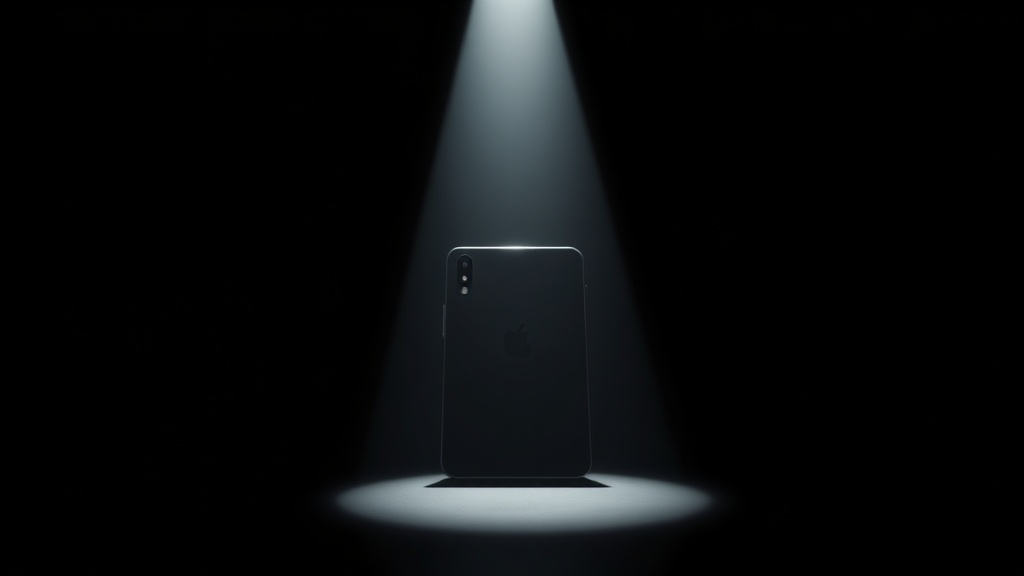
In early May 2026, multiple credible reports confirmed that iOS 27, iPadOS 27, and macOS 27, all scheduled to be unveiled at WWDC 2026 on June 8 at Apple Park, will include a new system Apple is internally calling "Extensions." The feature allows users to route Apple Intelligence tasks through third-party AI providers: Google Gemini, Anthropic's Claude, Grok, and potentially others. Inside the Settings app, users will be able to designate which AI model powers specific features: Siri conversations, Writing Tools, Image Playground, and more. AI providers gain access to this system by updating their App Store apps to include compatibility, which means Apple retains gating authority over who participates.
The feature's documentation, visible in test builds, reads: "Extensions allow you to access generative AI capabilities from installed apps on demand, through Apple Intelligence features such as Siri, Writing Tools, Image Playground and more." The voice distinction is particularly notable: when Apple's own system responds, Siri uses one voice; when a third-party model like Claude handles the query, it uses a different voice, a subtle but significant signal that tells users exactly which AI is speaking. Apple has internally tested integrations with both Google and Anthropic. WWDC is the first official public confirmation expected, with deployment likely in fall 2026 alongside the iPhone 18 lineup.
Why This Matters More Than People Think
The raw distribution math is extraordinary. Apple has approximately 2.2 billion active devices globally. In the United States, iOS holds over 57% market share, and iPhone ownership skews heavily toward higher-income, higher-engagement users, precisely the demographic every AI company is fighting to reach. ChatGPT reached 100 million users faster than any application in history. But Claude, Gemini, and Grok combined have never had access to a pre-installed distribution channel of this scale. If 20% of active iPhone users in the US alone designate Claude as their preferred AI model, a conservative estimate given Anthropic's brand equity among knowledge workers, that translates to approximately 60 million new daily active users for Anthropic, acquired at zero customer acquisition cost.
For the enterprise AI market, the implications compound further. Enterprise customers who already pay for Claude or Gemini APIs will be strongly motivated to set those models as their device defaults for workflow consistency. A legal associate who drafts briefs with Claude on her laptop will likely prefer Claude to handle her Siri queries on her iPhone. This creates a virtuous cycle: AI providers with existing enterprise contracts inherit consumer device presence as a downstream benefit. Microsoft's Copilot is notably absent from early reports about Extensions participants, a conspicuous gap given Microsoft's aggressive enterprise AI positioning. The Extensions system may quietly become the new front in the AI distribution wars, fought not on benchmark leaderboards but in the iOS Settings app.
The Competitive Landscape
Before Extensions, the competitive dynamics of on-device AI were simple: Apple offered its own models, with ChatGPT as the sole third-party option via a deal struck in 2025. OpenAI's integration gave it privileged access to Siri for complex queries, a distribution advantage that every other AI company publicly envied. Extensions changes that calculus entirely. OpenAI's privileged position evaporates. Google, which competes with Apple in smartphones but cooperates on AI deals, now has a path to iOS distribution for Gemini that doesn't require separate negotiations. Anthropic, which has no consumer device hardware and has been reliant on API and Claude.ai web traffic, suddenly has access to the world's most valuable consumer hardware platform.
The historical analogy that maps most cleanly is the browser wars of the late 1990s. When Microsoft bundled Internet Explorer with Windows, it killed Netscape. When regulators subsequently forced Microsoft to offer a browser choice screen in Europe, the market reshuffled dramatically. Apple is effectively implementing a voluntary browser-choice-screen equivalent for AI, doing it on its own terms, before a regulator orders it, with architecture that gives Apple continued leverage. The company that loses most is OpenAI, whose exclusive on-device position is its one substantive consumer distribution advantage. The company that wins most, assuming it ships a robust Extensions integration before WWDC, is whichever AI provider captures early user habit. Habits set early tend to stick; whatever model users choose in fall 2026 will likely remain their default through 2028.
Hidden Insight: The Antitrust Move Apple Just Made
Apple's decision to open iOS to third-party AI is being reported as a product story. It is primarily a legal and regulatory story. The European Union's Digital Markets Act designated Apple as a "gatekeeper" and imposes obligations to allow interoperability with competing services. The US Department of Justice's antitrust focus on iPhone ecosystem lock-in has created ongoing pressure to demonstrate openness. South Korea's amended App Market Promotion Act has been scrutinizing Apple's restrictions. In this environment, Apple Intelligence, which was entirely first-party in its initial form, was a ticking regulatory clock. Its exclusivity was precisely the kind of vertical integration the DMA was designed to dismantle.
By shipping Extensions voluntarily, Apple accomplishes several things regulators cannot easily attack. First, it designs the openness on its own terms: the App Store compatibility requirement means Apple controls which AI companies get access and can apply its standard review process. A regulator-imposed interoperability mandate would have required Apple to accept any compliant AI provider without App Store gatekeeping. Second, Apple frames Extensions as a consumer benefit rather than a regulatory concession, which shapes both public perception and the legal narrative in future enforcement proceedings. Third, Apple's hardware advantage (the Neural Engine in Apple Silicon, which runs on-device AI inference significantly faster than most competing chipsets) means that even as it opens to third-party AI, Apple's own models running locally maintain a latency and privacy advantage that cloud competitors cannot match.
The deeper strategic calculation: Apple doesn't need to win the AI model race. It needs to win the AI device race. If the iPhone becomes the most capable AI inference device available, regardless of which AI model is running, Apple captures the value. The $999 iPhone doesn't get cheaper because Claude replaced Siri. Apple's hardware margin is insulated from the AI model commoditization that is currently crushing cloud inference pricing. Every AI company competing for Extensions distribution is, in effect, helping Apple sell iPhones.
What to Watch Next
Three signals to track in the next 90 days: First, which AI providers announce WWDC partnerships before June 8. If Anthropic, Google, and Meta all announce Extensions compatibility before WWDC, it signals Apple has been running a coordinated launch strategy, and that OpenAI, conspicuously absent, may be in a difficult renegotiation over its privileged status. Second, the terms of App Store participation for AI Extensions. If Apple requires a revenue share from AI providers (analogous to its 30% App Store commission), the financial implications for Anthropic and Google are substantial. If participation is free, it suggests Apple views AI distribution as a hardware sales driver rather than a direct revenue source. Third, user uptake data, which will surface in quarterly earnings commentary in early 2027.
The 180-day view: by year-end 2026, the AI consumer market will likely bifurcate between iOS and Android in a way that mirrors the broader smartphone divide. iOS users, who skew toward higher disposable income and greater AI tool adoption, will have a curated Extensions marketplace of three to five major providers. Android users, spread across Pixel, Samsung Galaxy AI, and dozens of OEM implementations, will experience a more fragmented landscape. Apple's Extensions system, even in its first-generation form, will likely be cleaner and more consistent than anything Android offers. That UX advantage, compounded over years, is where Apple quietly consolidates its position as the premier AI inference hardware platform even as it cedes the model competition to cloud rivals.
Apple didn't open iOS to rival AI models because it wanted to, it did it because the alternative was having regulators open it for them, on terms Apple couldn't control.
Key Takeaways
- iOS 27 "Extensions" opens Siri and Apple Intelligence to Claude, Gemini, and Grok, users choose their preferred AI model in Settings, with WWDC June 8 as the official unveiling
- Apple has 2.2 billion active devices globally, even 20% third-party AI adoption in the US alone could deliver ~60 million new daily users to Anthropic or Google at zero acquisition cost
- EU Digital Markets Act and US antitrust pressure are the likely drivers, Apple is opening its AI platform on its own terms before regulators can impose less favorable conditions
- OpenAI's privileged position as Siri's sole external AI partner ends with Extensions, the new system creates a level playing field that OpenAI's 2025 deal was specifically designed to prevent
- Apple's hardware margin is insulated from AI model commoditization, every AI provider competing for Extensions users is effectively helping Apple sell iPhones at full price
Questions Worth Asking
- If Apple requires a revenue share from AI providers using Extensions, similar to its App Store 30% commission, does that fundamentally change the economics of consumer AI distribution for companies like Anthropic that have been burning capital on user acquisition?
- Does the ability to choose your AI model represent genuine consumer choice, or does it create a new form of lock-in as users build habits around whichever model they pick first in fall 2026?
- If Apple's Neural Engine gives local AI inference a latency and privacy advantage that cloud-based Extensions providers can't match, how long before Apple's own models, even if less capable by benchmark, win on user experience alone?