The cheapest input to the AI boom was never the chips. It was the electricity, and Arizona just put a price on it. Arizona Public Service, the state's largest utility, has asked regulators to raise rates on data centers by more than 45 percent, while holding the increase for a typical household to roughly 14 percent. The proposal draws the clearest line yet between the companies building AI infrastructure and the ratepayers who have been quietly subsidizing their power.
What Actually Happened
Arizona Public Service, known as APS, filed a rate case with the Arizona Corporation Commission that asks for an average increase of about 14 percent across its customer base, which would add roughly $20 a month to a typical residential bill. Buried inside that filing is a far steeper ask: a separate rate class for extra-large energy users, principally data centers, that would see increases exceeding 45 percent. APS frames the move as making sure that the largest loads pay the full cost of the service they consume rather than spreading it across every other customer.
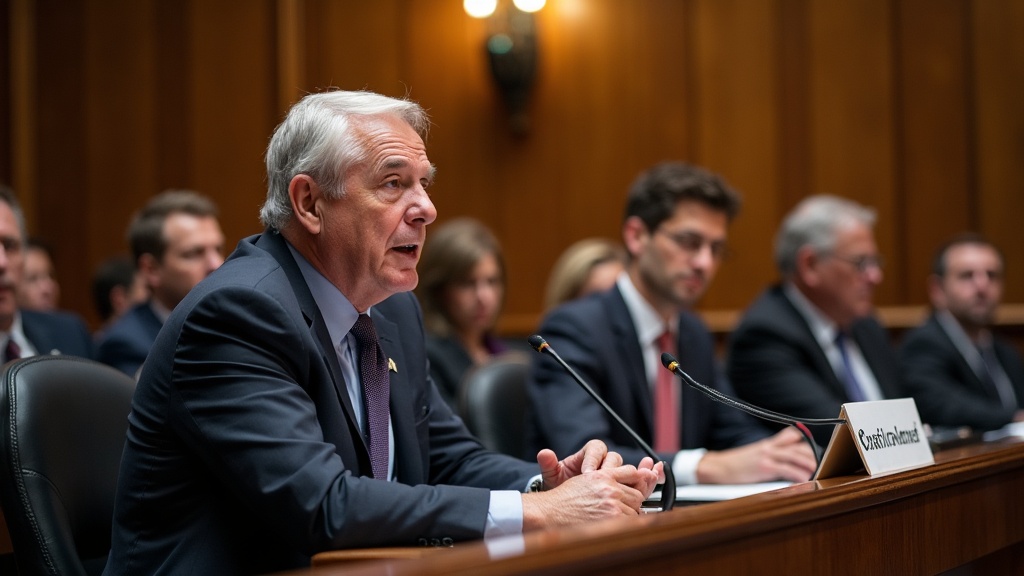
The utility's stated rationale is grid investment. APS says it has spent heavily on operation, maintenance, and transmission upgrades over the prior rate period, and that the surge in demand from AI and cloud data centers is forcing accelerated buildout of generation and wires. Public comment hearings that opened in May 2026 drew hours of protest, much of it from residential customers furious that their bills are climbing at all while the largest consumers of power negotiate special treatment. The Corporation Commission is not expected to rule until late in the year, leaving months of contested proceedings ahead.
Arizona is not a marginal market for this fight. Metro Phoenix has become one of the densest data-center corridors in the United States, anchored by hyperscale campuses from Microsoft, Google, and Meta, alongside the enormous semiconductor fabrication plants that TSMC is building in the north Phoenix desert. Those facilities draw power measured in hundreds of megawatts each, and the pipeline of announced projects implies load growth that would have been unthinkable for a desert utility a decade ago. The 45 percent surcharge is APS trying to make that growth pay for itself. For a desert grid that once worried mainly about peak summer cooling demand, the arrival of always-on, year-round data-center load represents a structural change in what the utility has to plan and build for.
Why This Matters More Than People Think
For two years the AI industry has talked about compute scarcity as a chip problem, a story about Nvidia allocations and HBM memory supply. The Arizona filing reframes it as a power problem with a billing address. Every gigawatt of data-center demand has to be generated, transmitted, and balanced, and somebody pays for the poles, wires, and plants that make that possible. APS is the first major utility to say out loud that the somebody should be the data centers themselves, at a premium, rather than the retired schoolteacher in Mesa whose bill went up $20 a month.
The political logic is unavoidable. Residential ratepayers vote, and they are watching their bills climb in a state where summer air conditioning is not optional but a matter of survival. Data centers do not vote, employ relatively few people per megawatt consumed, and are owned by some of the most valuable companies on earth. When a regulated monopoly has to allocate a large cost increase, the path of least political resistance is to load more of it onto the customers who cannot vote you out and can clearly afford it. The 45 percent figure is a number engineered to survive a public hearing.
What makes the Arizona case sharper than a routine rate hike is the visibility of the trade-off. In most utility proceedings, cost allocation is an arcane fight that nobody outside the room understands. Here, the framing is brutally legible: data centers running AI workloads on one side, families running air conditioners on the other, and a finite pool of grid-cost dollars to divide between them. That legibility is why the hearings drew hours of protest, and it is why commissioners across the country are watching how Arizona handles the optics as much as the economics.
The deeper implication is that the marginal cost of AI is becoming visible and local in a way it never was before. A model trained in a Phoenix data center now has a measurable effect on the electricity bill of a household twenty miles away, and regulators are being asked to adjudicate that relationship in public. Once a utility commission formally rules that data centers must pay a premium, that ruling becomes precedent, and every other state staring at the same load growth gets a template for doing the same thing. Arizona is writing the cost-allocation playbook the entire industry will be forced to read.
The Competitive Landscape
Arizona is the loudest case, but it is not alone. In Virginia, the data-center capital of the world, Dominion Energy has proposed a dedicated large-load rate class and longer contract commitments to protect ordinary customers from stranded-asset risk if a hyperscaler walks away. In Ohio, AEP reached a settlement requiring large data centers to commit to minimum payments covering most of their requested capacity whether they use it or not. Georgia Power, PJM utilities, and others are all moving toward special tariffs that ring-fence data-center costs. The common thread is regulators refusing to let residential customers underwrite speculative AI buildout.
The historical parallel is the railroad and the company town. In the late nineteenth century, when a single industrial customer could dominate a local utility or rail line, regulators eventually imposed special rate structures so that the giant did not extract subsidies from everyone else on the network. The data center is the new anchor tenant, drawing so much load that it distorts the economics of the entire grid it connects to. The regulatory response, a century later, rhymes: define a class for the giant, make it pay its own way, and protect the captive residential base that has nowhere else to buy power.
For the hyperscalers, the competitive consequence is that location economics are shifting under their feet. A site that looked cheap on land and tax incentives can become expensive once a 45 percent power surcharge lands, and the calculus of where to build the next campus now has to price in regulatory risk that did not exist three years ago. The companies with the deepest pockets, Microsoft, Google, Amazon, and Meta, can absorb it, but the smaller AI infrastructure players and the neocloud startups renting capacity may find that the cheapest power markets are quietly closing to them. Power cost is becoming a moat.
That moat cuts in an unexpected direction. The conventional assumption was that abundant capital would let any well-funded AI company rent all the compute it needed. But compute is downstream of power, and power is rationed by interconnection queues that can stretch four to seven years in the most congested regions. A hyperscaler that secured firm capacity and a favorable tariff in 2023 now holds an asset that a 2026 entrant cannot simply buy with a larger check. Regulatory and grid timelines, not balance sheets, increasingly decide who gets to build, and the Arizona surcharge is the price tag finally becoming explicit.
Hidden Insight: The Grid, Not the GPU, Is About to Set the Pace of AI
The industry's mental model still treats electricity as an abundant commodity that scales smoothly with demand. It does not. Building new generation and high-voltage transmission takes five to ten years, requires permitting across multiple jurisdictions, and faces local opposition at every step. GPUs can be manufactured and racked in months. That mismatch means the binding constraint on AI expansion is shifting from silicon to substations, and the Arizona surcharge is an early symptom of a grid that cannot grow as fast as the demand being pointed at it.
This inverts a lot of strategic assumptions. The companies that win the next phase of the AI race may not be the ones with the best models but the ones that locked in firm power contracts and interconnection queue positions early. That is why OpenAI's Stargate is chasing gigawatts of dedicated capacity, why Microsoft signed a deal to restart Three Mile Island, and why Amazon and others are buying nuclear-adjacent sites outright. Power procurement has quietly become a frontier-lab core competency, and the Arizona case shows what happens to anyone who assumed the grid would simply absorb them without sending a bill.
There is a subtler dynamic underneath the rate fight. A 45 percent surcharge is, in effect, a market signal telling data centers to bring their own generation, and many are starting to. On-site solar, batteries, fuel cells, and behind-the-meter gas turbines all become more attractive the moment grid power carries a punitive premium. If APS prices data centers too aggressively, it risks accelerating exactly the defection it should fear most: its largest customers building private power and partially leaving the regulated grid, which leaves the remaining residential base holding an even larger share of fixed grid costs. The surcharge could be self-defeating.
The bear case for the utilities, however, is straightforward and worth stating plainly. Critics argue that these surcharges and minimum-payment commitments will simply be passed through to AI customers as higher compute prices, slowing adoption and pushing workloads to cheaper jurisdictions abroad, including places with dirtier grids and looser oversight. Skeptics point out that data centers also bring tax revenue, construction jobs, and grid investment that can ultimately benefit all customers, and that singling them out for a 45 percent premium could chill the very infrastructure investment Arizona spent a decade courting. The risk is that the state wins the rate fight and loses the data centers.
What to Watch Next
In the next 30 to 60 days, watch the Arizona Corporation Commission's procedural schedule and the intervenor filings. Consumer advocates, the hyperscalers, and large-load coalitions will all file testimony, and the gap between the 45 percent ask and whatever number survives cross-examination will reveal how much pricing power utilities actually have over data centers. A settlement, as happened in Ohio, is more likely than a clean commission order, and the structure of any settlement, minimum payments versus pure rate increases, will tell you how the risk gets allocated.
Over 90 to 180 days, track whether other commissions cite Arizona. Regulatory bodies move by precedent, and the first few large-load rulings in 2026 will harden into a national template faster than most observers expect. Watch Texas, where ERCOT's isolated grid and surging data-center interconnection requests are creating a parallel crisis, and watch the PJM territory, where capacity auction prices have already spiked partly on data-center demand. If three or four states land on similar large-load tariffs by year end, the era of data centers as subsidized grid guests is over.
Watch the federal layer too. A June 2026 executive order and assorted pledges from technology companies promised to shield ordinary ratepayers from data-center costs, but reporting has already shown those pledges do not cover the largest Arizona projects. If Washington signals that ratepayer protection is a national priority, state commissions gain political cover to push surcharges higher. If the federal posture instead prioritizes AI buildout speed over consumer costs, utilities may face pressure to soften the very tariffs they are now proposing. The tension between the AI-dominance agenda and the ratepayer-protection agenda will play out first in cases exactly like this one.
The longer-horizon marker is the behind-the-meter buildout. If hyperscalers respond to surcharges by announcing major on-site generation, dedicated power plants, or nuclear offtake deals at scale, that is the signal that grid economics have permanently changed the shape of AI infrastructure. The numbers to watch are interconnection queue volumes, announced self-generation capacity, and the spread between industrial and residential rates in data-center-heavy states. When that spread widens decisively, the quiet subsidy that powered the first wave of the AI boom will have officially ended, and Arizona will be remembered as the place it ended first.
The AI boom ran on cheap electricity that someone else paid for, and Arizona just handed the bill to the data centers themselves.
Key Takeaways
- APS proposed a 45%+ rate increase for data centers and other extra-large energy users, versus about 14% for typical residential customers.
- A typical household bill would rise roughly $20 a month, fueling hours of public protest at hearings that opened in May 2026.
- Metro Phoenix is a top US data-center hub, anchored by Microsoft, Google, Meta, and TSMC fabs drawing hundreds of megawatts each.
- Virginia, Ohio, and Georgia utilities are moving in parallel, with dedicated large-load tariffs and minimum-payment commitments to protect residential ratepayers.
- The Arizona Corporation Commission is not expected to rule until late 2026, with a negotiated settlement the most likely outcome.
Questions Worth Asking
- If electricity, not chips, is the binding constraint on AI, are the labs with the best models or the best power contracts the ones who actually win?
- Does a punitive data-center surcharge protect ratepayers, or does it just push hyperscalers to build private power and leave the regulated grid behind?
- When the marginal cost of training a model shows up on your neighbor's electricity bill, who do voters hold responsible, and what do regulators do about it?