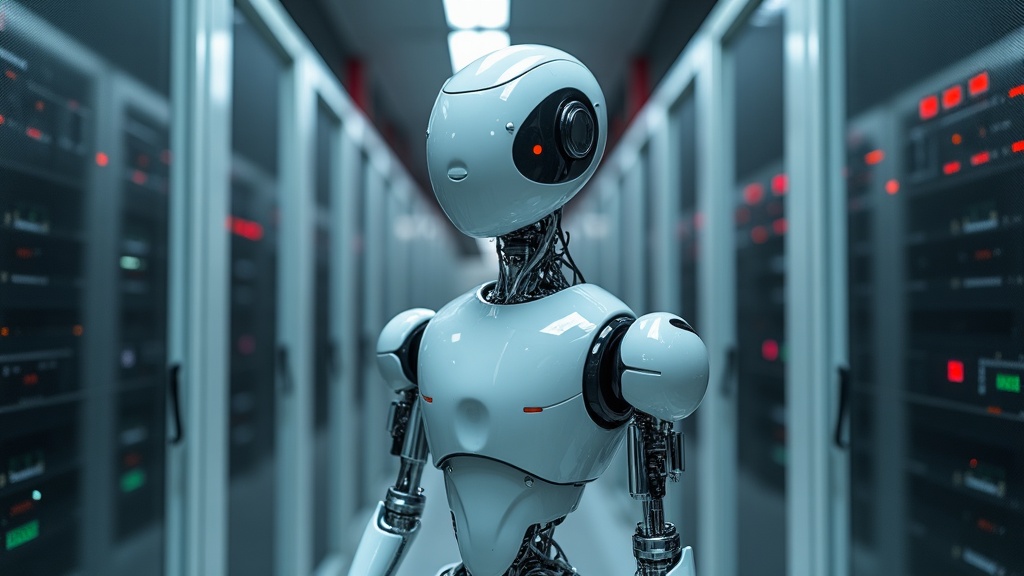
The world's largest electric vehicle maker has been secretly building humanoid robots for four years, and the world is only now finding out. BYD, the Chinese automaker that overtook Tesla in global EV sales volume in 2023 and has held that position since, officially confirmed on June 4, 2026 that it has been developing humanoid robots under a project codenamed "Yao-Shun-Yu" since 2022, with 150 prototypes already undergoing real-world testing inside its own manufacturing facilities. The company plans to deploy 20,000 humanoid robot units in its own factories by the end of 2026, a number that would instantly make BYD the second-largest internal humanoid robot deployer on earth behind Tesla.
This is not a startup announcing a prototype. This is the company that manufactures 4 million vehicles a year, makes its own batteries, builds its own chips, and employs over 570,000 people, entering the humanoid robot market with four years of development already behind it and a production plan measured in tens of thousands of units rather than hundreds.
What Actually Happened
BYD Executive Vice President Li Ke delivered the confirmation at a June 4 investor briefing, stating that BYD is "already working on humanoid robots" and that the company believes the key competitive factors in the sector will be manufacturing scale, software integration, and hardware capability, precisely the three areas in which BYD has built defensible advantages in the electric vehicle industry over the past decade. The project, codenamed "Yao-Shun-Yu" after three ancient Chinese emperors revered for wisdom and governance, operates under BYD's 15th Business Unit, which focuses on electronic integration and intelligent systems. The unit was quietly established in 2022, the same year that Elon Musk first publicly demonstrated an early prototype of Tesla's Optimus humanoid robot at Tesla AI Day, a presentation that was widely mocked at the time for its visible limitations. BYD's four years of parallel development means the company has been tracking the humanoid robot market since the very moment it became clear that Tesla was treating the category seriously.
The technical details released with the confirmation are specific and credible. 150 prototypes of the Yao-Shun-Yu humanoid are currently undergoing operational testing within BYD's manufacturing facilities, performing actual factory tasks rather than controlled laboratory demonstrations. This is the most credible form of humanoid robot testing for commercial validation: real-world performance under production conditions, with real cost and efficiency data generated by actual industrial use rather than simulated environments. BYD's manufacturing facilities represent ideal test beds because BYD operates some of the world's most automated assembly lines, with existing sensor networks, conveyor systems, and quality control infrastructure that autonomous robots must integrate with reliably. The company plans to scale from 150 prototypes to 20,000 deployed units within its own factories by December 31, 2026, an acceleration that implies a production ramp already in progress rather than one that begins with the public announcement.
The production infrastructure to support this deployment is also in place. A new dedicated industrial park in Xi'an, in Shaanxi Province, has been engineered to produce 50,000 humanoid robot units annually at full capacity. Xi'an was chosen strategically: it is a manufacturing hub with existing supply chain infrastructure for precision components, close proximity to BYD's semiconductor and battery supply chains, and access to Shaanxi Province's large engineering talent base. The long-term distribution plan is also unusually specific for a product category this early in its development: if humanoid robots eventually reach household viability as consumer products, BYD intends to sell them through its existing automotive dealer network, the same channel through which it sells its BYD Seal, Han EV, and Atto 3 models. BYD's dealer network exceeds 10,000 outlets in China alone, a pre-built consumer distribution infrastructure that no other humanoid robot maker in the world currently possesses.
Why This Matters More Than People Think
The entry of BYD into humanoid robotics restructures the competitive landscape of the industry in a way that the entry of any startup, no matter how well-funded, cannot. BYD's manufacturing economics are categorically different from those of dedicated robotics companies. When Figure AI builds a humanoid robot, it sources motors from one supplier, batteries from another, sensors from a third, microcontrollers from a fourth, and metal structural components from a fifth, negotiating each procurement relationship separately and absorbing the cost of supply chain coordination and margin stacking at each layer. BYD manufactures its own lithium iron phosphate batteries through its Blade Battery division, its own automotive-grade semiconductors through BYD Semiconductor (which produced over 1 billion chips in 2025), its own electric motors, its own precision castings, and its own body structures. Every component that goes into a humanoid robot, BYD already makes for vehicles at massive scale, with supply chains already optimized and margins already captured internally.
The 20,000-unit factory deployment target for 2026 deserves particular attention because of what it implies about BYD's cost structure. The current market price for commercially available humanoid robots ranges from $17,990 for the Unitree H1 to over $100,000 for Boston Dynamics' Atlas. Tesla has stated a target price of $20,000 per Optimus unit for consumer sales, though analysts have questioned whether that price is achievable given component costs. BYD, applying its EV cost-reduction playbook to humanoid robots, could potentially manufacture at prices that undercut the current market by 30 to 50 percent while maintaining margins that dedicated robotics startups cannot match. The company that figured out how to produce a competitive battery electric vehicle for under $10,000 in China (the BYD Seagull) knows more than any organization on earth about compressing hardware cost curves through vertical integration and manufacturing scale.
The risk is not trivial, however, and skeptics point out that building a humanoid robot is a fundamentally different engineering challenge from building a car, even a sophisticated electric one. An automobile operates in a constrained, well-defined environment on roads with clear rules, predictable physics, and established infrastructure. A humanoid robot must navigate unstructured environments, manipulate objects of varying size, weight, and fragility, understand spoken and gestured instructions, and recover from unexpected situations without human intervention. General Motors, Ford, and Chrysler have all attempted technology adjacencies over the past three decades, from digital services to autonomous vehicles to flying cars, and almost all of these efforts have failed, not because the companies lacked capital, but because manufacturing excellence in one domain does not transfer automatically to software-intensive, AI-driven adjacent domains. BYD's automotive AI capabilities may share technological foundations with humanoid robotics, as Li Ke claimed, but the software stack required for a humanoid robot to perform varied factory tasks reliably at commercial scale has not yet been demonstrated by any company in the world, including Tesla, at the 20,000-unit level.
The Competitive Landscape
Tesla's Optimus program is the most direct point of comparison. Tesla CEO Elon Musk claimed in late 2025 that Tesla had approximately 1,000 Optimus units operating within its own Fremont and Texas factories, though the company has not released independent verification of those numbers. Tesla's target is to produce over 100,000 Optimus units in 2026 for internal factory use, with a subsequent consumer sales launch at a target price of $20,000 to $30,000. If Tesla's production ramp is on track, it would make Tesla the largest single deployer of humanoid robots on earth by a margin of roughly five to one over BYD's announced 20,000-unit target. But Tesla's production of Optimus units has consistently fallen short of Musk's publicly stated targets, a pattern that BYD's manufacturing discipline may not repeat. BYD has a track record of meeting or exceeding production targets in a way that Tesla, historically, does not. The comparison that actually matters is not whose number is larger in Musk's slides but whose units are reliably performing actual work in factories by December 31, 2026.
The rest of the humanoid robot market remains fragmented across well-funded but commercially early-stage companies. Figure AI raised $1 billion at a $39 billion valuation in early 2026 and is deploying units at BMW's South Carolina manufacturing facility. Agility Robotics' Digit became the first humanoid to earn a commercial paycheck in a production environment. Boston Dynamics' Atlas is deploying at Hyundai's US plants. Each of these companies has real technical capabilities and real commercial deployments, but none has BYD's manufacturing infrastructure, supply chain integration, or capital efficiency. The most important competitive dynamic to watch is not which company has the best robot today but which company can scale production fastest while maintaining acceptable reliability. In that specific race, BYD's manufacturing DNA gives it an advantage that no amount of venture capital can buy for a startup without existing supply chain relationships.
The closest historical parallel to BYD's humanoid robot entry is BYD's own entry into the battery electric vehicle market in the early 2000s. At the time, established automakers treated BYD's early EV models as irrelevant curiosities produced by a company with no automotive heritage. Warren Buffett's Berkshire Hathaway made a $232 million investment in BYD in 2008 when that bet was considered eccentric at best. By 2025, BYD was the world's largest EV maker by volume. The pattern of incumbents and Western observers underestimating BYD's manufacturing discipline, cost reduction capability, and long-term strategic patience has repeated itself twice now. The humanoid robot announcement follows the same template: low-profile development for years, confirmation only after prototypes are tested and production infrastructure is in place, and a deployment timeline measured in tens of thousands of units rather than in laboratory demonstrations. Dismissing BYD's humanoid robot program because it lacks a slick consumer launch event would repeat the same analytical error that analysts made about BYD's EV program in 2008.
Hidden Insight: The Vertical Integration Endgame
The codename "Yao-Shun-Yu" is more revealing than it appears to Western observers. In Chinese cultural memory, the Three Emperors (Yao, Shun, and Yu the Great) are not primarily military figures: they are archetypal administrators celebrated for establishing effective governance, practical infrastructure, and lasting institutional order. They represent the ideal of leadership through competent management rather than through charismatic conquest. BYD's choice of this codename for its humanoid robot program signals, to anyone familiar with Chinese organizational culture, that this is a long-term infrastructure play being treated with the methodical seriousness of a core business unit, not a flashy technology moonshot designed to generate press coverage. The naming convention communicates internal intent as much as product identity, and the intent is to build something that governs and manages BYD's own factory floors before it ever tries to govern anything outside them.
The open platform signal in Li Ke's comments is the most strategically important detail that has received the least attention. BYD explicitly indicated it is considering an architecture under which the company manufactures its own robots while also cooperating with external robotics companies, potentially supplying hardware, batteries, or structural components to third parties. This would mirror the path BYD took with its Blade Battery technology, which it initially kept proprietary but eventually licensed and sold to select OEM partners including Toyota. An open platform in humanoid robotics would transform BYD from a competitor to the existing robotics ecosystem into its critical infrastructure provider. If BYD's factory-grade humanoid hardware becomes the reference platform that other robotics software companies build on, BYD captures economics from the entire industry's growth rather than just from its own robot sales. This is precisely the kind of platform thinking that has made Apple's App Store, AWS's cloud infrastructure, and TSMC's foundry business structurally dominant within their respective ecosystems.
The dealer network distribution strategy is genuinely new thinking in the humanoid robot industry and has no analog among current competitors. Tesla has roughly 900 showrooms globally. Boston Dynamics, Figure AI, and Agility Robotics have essentially no consumer retail presence whatsoever. BYD has over 10,000 dealer outlets in China, with international expansion to Europe, Southeast Asia, and Latin America ongoing. Humanoid robots sold as household consumer products, the category that analysts project could become a multi-trillion-dollar market by 2040, require the kind of physical retail presence, after-sales service network, and consumer financing infrastructure that automobile dealers already provide. If BYD deploys humanoid robots through its dealer network, it has a go-to-market advantage in the eventual consumer humanoid robot market that no dedicated robotics company can match without spending billions building retail infrastructure from scratch. The dealer network is not just a distribution channel: it is the consumer trust infrastructure that allows a $20,000 purchase decision to feel manageable to an ordinary household.
The deepest non-obvious angle here concerns what BYD's humanoid robot program signals about the future relationship between the EV and robotics industries at a global supply chain level. The components that go into an EV (electric motors, power electronics, battery cells, structural steel, advanced sensors) and the components that go into a humanoid robot are not identical but are deeply overlapping. As both industries scale simultaneously, companies that produce components for both can achieve cost curves that pure-play manufacturers in either industry cannot replicate. BYD is not just entering the humanoid robot market: it is beginning to position itself as the vertically integrated manufacturing platform that could supply the entire physical AI industry, from the battery cells in a humanoid's torso to the semiconductor controllers that process its vision inputs. If that positioning succeeds over the next five years, the humanoid robot market does not have one dominant player. It has one dominant supplier who sells to all the players, and that supplier is BYD.
What to Watch Next
The 30-day indicator to watch is whether BYD releases any additional technical specifications for the Yao-Shun-Yu humanoid, including locomotion speed, payload capacity, battery runtime, sensor suite, and the specific factory tasks the 150 prototype units are currently performing. In the humanoid robot industry, the gap between "we have a prototype that walks" and "we have a robot that reliably performs a 400-step assembly task for eight hours without supervisor intervention" is enormous. BYD's willingness to publish specific performance data for its factory prototypes would be the single strongest signal of genuine commercial readiness, because it would either match or contradict the 20,000-unit deployment timeline. Companies deploying robots at that scale need robots that meet minimum performance thresholds consistently, and if BYD's prototypes are at that threshold, publication of the data would be a rational competitive move to discourage investors from funding rival programs.
The 90-day horizon to monitor is the Xi'an industrial park production ramp. BYD's stated goal of deploying 20,000 units in its own factories by December 31, 2026 requires a production ramp that begins no later than July 2026 given typical manufacturing scale-up timelines. If BYD announces production commencement at the Xi'an park in July or August, the 20,000-unit target is plausible. If the Xi'an ramp is delayed past September, the full-year deployment number almost certainly misses its target, and the gap between the announced plan and actual execution becomes a relevant signal for investors evaluating how seriously to price BYD's humanoid ambitions. The Tesla comparison is directly relevant here: Musk has repeatedly announced Optimus production timelines that have slipped by six to twelve months. Whether BYD's manufacturing discipline produces a different outcome is the central empirical question for the next 90 days.
The 180-day and longer horizon to track is the competitive response from Tesla, Figure AI, and the established Korean chaebol conglomerates. Samsung, Hyundai, and LG all have the manufacturing scale and component supply chains to enter the humanoid robot market on terms similar to BYD's. Samsung's robotics division has been active in research for over a decade. Hyundai owns Boston Dynamics. LG has an extensive industrial automation division. BYD's announcement could serve as the trigger that accelerates Korean and Japanese OEM entries into humanoid robotics on a timeline far faster than the market currently expects. If Samsung announces a humanoid robot program by end of 2026, the global humanoid robot market transforms overnight from a US-China two-horse race to a full multi-front industrial competition among the world's largest manufacturers, with implications for supply chains, semiconductor demand, and geopolitical technology positioning that extend far beyond the robotics industry itself.
The company that figured out how to build a $10,000 EV is now building a humanoid robot, and it already makes every component it needs: that is not a moonshot, it is a manufacturing problem BYD has spent 20 years learning to solve.
Key Takeaways
- BYD confirmed four years of secret development on humanoid robots under codename Yao-Shun-Yu via its 15th Business Unit, with 150 prototypes already tested in real factory environments as of June 2026
- 20,000 units targeted for 2026 factory deployment would make BYD the world's second-largest internal humanoid deployer behind Tesla, using its own vertically integrated supply chain for batteries, chips, and motors
- Xi'an industrial park engineered for 50,000 units per year gives BYD the highest planned humanoid robot production capacity of any non-US company, with the facility designed for rapid scale-up
- Dealer network of over 10,000 outlets in China positions BYD as the only humanoid robot maker with a pre-built consumer distribution infrastructure capable of supporting mass-market household sales without building retail from scratch
- Vertical integration across batteries, semiconductors, and motors gives BYD a structural cost advantage that could undercut current market prices ranging from $17,990 to over $100,000 per unit by 30 to 50 percent
Questions Worth Asking
- BYD's core competitive advantage in EVs was manufacturing cost reduction through vertical integration: if the same playbook applies to humanoid robots, what does a $7,000 BYD humanoid robot do to the business models of Figure AI, Agility Robotics, and Boston Dynamics?
- BYD's stated interest in an open platform architecture for humanoid robotics, where it manufactures hardware that third-party software companies build on, would mirror TSMC's foundry model: what conditions would need to be true for BYD's robot hardware to become the reference platform the industry consolidates around?
- The Comunidad de Madrid's active partnership with WeRide and the Chinese government's active support for BYD's robotics ambitions both represent government-sponsored AV and humanoid robot deployment: at what point does the speed advantage of government-sponsored technology deployment create a competitive dynamic that private capital-funded Western companies structurally cannot match on timelines?