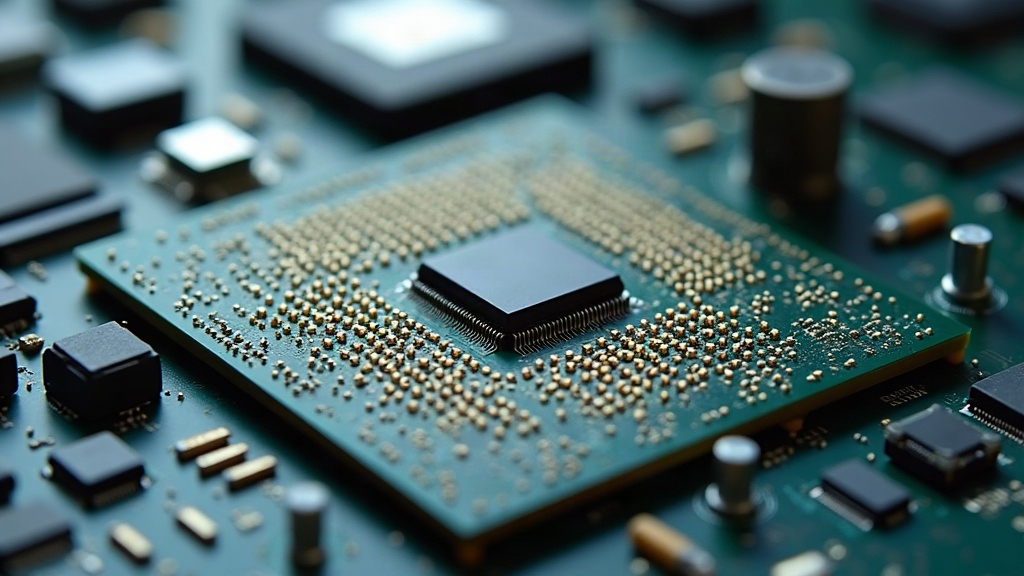
When DeepSeek released V4's technical report on April 24, 2026, the paragraph that received the least attention was buried in the infrastructure section: the model was trained on Huawei's Ascend AI processors. Not NVIDIA A100s. Not H100s. Not the chips that US export controls were designed to keep out of Chinese hands. DeepSeek V4, a 1.6 trillion parameter model that MIT Technology Review called "frontier-grade", ran on domestic Chinese silicon. That single fact rewrites the entire geopolitical logic of American AI chip export controls.
What Actually Happened
DeepSeek, the Hangzhou-based AI lab that shocked the Western AI industry with V2 and V3, released a preview of its fourth-generation model on April 24, 2026. The V4 series comes in two variants: DeepSeek-V4-Pro with 1.6 trillion total parameters (49 billion active via Mixture of Experts architecture) and DeepSeek-V4-Flash with 284 billion total parameters (13 billion active). Both models support a context length of 1 million tokens, longer than most frontier models. Pricing is dramatically lower than Western equivalents: V4-Pro costs $3.48 per million output tokens versus OpenAI's $30 and Anthropic's $25. V4-Flash is priced at just $0.28 per million output tokens.
Performance benchmarks show V4 performing favorably against Claude Opus 4.6, GPT-5.4, and Gemini 3.1 Pro, though DeepSeek's own technical report acknowledges it "falls marginally short" of GPT-5.4 and Gemini 3.1 Pro, estimating a developmental trajectory approximately three to six months behind state-of-the-art frontier models. On agentic coding and reasoning tasks, V4 claims best-among-open-source performance. DeepSeek has open-sourced the model weights under a permissive license, making V4 available for anyone to download, deploy, and fine-tune.
Why This Matters More Than People Think
The US government has spent hundreds of billions of dollars in export control infrastructure, diplomatic pressure, and domestic chip production subsidies over the past four years, all predicated on a single assumption: controlling access to advanced AI chips means controlling access to advanced AI. The October 2022 export controls, the subsequent tightening in October 2023, and the additional restrictions introduced in 2025 were all built around the idea that without NVIDIA A100s and H100s, Chinese labs could not train frontier-grade models. DeepSeek V4 invalidates that assumption at scale.
Huawei's Ascend 950 AI processor, the chip DeepSeek used to train V4, is domestically produced and entirely outside the reach of US export controls. The fact that DeepSeek was able to train a 1.6 trillion parameter model on these chips means either that Huawei's chips have reached performance parity with NVIDIA's restricted export-control tier, or that DeepSeek's training algorithms are so efficient they compensate for hardware inferiority. Either interpretation leads to the same strategic conclusion: the export control strategy has either failed or is failing faster than the US government anticipated. Jensen Huang warned in early 2026 that restricting chip exports would accelerate China's domestic chip development rather than impede it. DeepSeek V4 is the evidence.
The Competitive Landscape
For the first time, a credible open-source model runs on a chip ecosystem entirely disconnected from the US technology stack. This bifurcation has implications that extend beyond AI benchmarks into enterprise procurement, cloud infrastructure, and national security. Companies in Southeast Asia, the Middle East, and Latin America, markets increasingly pressured to choose between US and Chinese technology ecosystems, now have access to a frontier-grade model that doesn't depend on US chip exports, US cloud providers, or US software licensing. The $3.48/million token price point for V4-Pro versus $30 for OpenAI's equivalent makes that choice economically compelling for cost-sensitive deployments.
Within China, the V4 release accelerates replacement of US-stack enterprise AI deployments with domestic alternatives. Alibaba Cloud, Baidu AI Cloud, and Tencent Cloud have all been positioning to offer DeepSeek V4-based services. At sub-$4 output token pricing, enterprise AI deployments become viable for Chinese companies that previously found frontier-model pricing prohibitive. This is important context for understanding why DeepSeek prices so aggressively: the goal is not profit margin, but ecosystem lock-in at scale, funded by DeepSeek's parent company High-Flyer, one of China's most successful quantitative hedge funds.
Hidden Insight: The IP Theft Accusation Is a Distraction from the Real Story
Alongside the V4 release, the US government escalated accusations of "industrial-scale" intellectual property theft by DeepSeek and other Chinese AI firms. These accusations are politically convenient but analytically misleading. Whether or not individual Chinese researchers borrowed from GPT-4 training data, DeepSeek V4 was trained on Huawei chips using techniques documented in open academic literature. The IP theft framing serves a political purpose, it shifts the narrative from "our export controls failed" to "they cheated", but it doesn't change the strategic reality.
The deeper hidden insight is what V4's training methodology reveals about the next phase of the AI compute race. DeepSeek has consistently published detailed technical reports that are unusual in their transparency for a competitive AI lab. Those reports show a pattern of extreme compute efficiency, squeezing more performance from fewer hardware resources through algorithmic innovation. V4's tech report describes a new multi-head latent attention mechanism and auxiliary-loss-free load balancing for MoE routing that together significantly reduce memory bandwidth requirements during training. This means that even if Huawei's chips are 30–40% less efficient than NVIDIA's H100s for standard transformer workloads, DeepSeek's algorithms compensate through architectural optimization.
The lesson the AI industry should take from DeepSeek V4 is not "China stole our technology", it's "algorithmic efficiency is now as important as hardware capability, and China is winning the algorithmic efficiency race." As Huawei scales production of the Ascend 950, DeepSeek expects to close the remaining 3–6 month performance gap with GPT-5.4 and Gemini 3.1 Pro. If that trajectory holds, the combination of frontier performance, open-source availability, and sub-$4 pricing creates a dominant position in global AI adoption among cost-sensitive markets. The scenario that should concern Western AI labs most is not the current performance gap, it's the rate of closure.
What to Watch Next
The key metrics to track over the next 30 days are: (1) Huawei Ascend 950 production volume reports, any acceleration suggests DeepSeek can move V4-Pro pricing even lower; (2) enterprise adoption announcements from Southeast Asian and Middle Eastern cloud providers, if major cloud players in these regions announce DeepSeek V4 availability before any US-stack equivalent, it signals the geographic split is accelerating; and (3) NVIDIA's Q2 2026 earnings guidance, which will show whether restricted market demand has begun affecting overall chip revenue.
Over the 90–180 day window, watch for the US government response to the Huawei Ascend story: will export controls be extended to cover chip design tools and EDA software that Huawei used to design the Ascend processors? That would be the next logical escalation, but it carries significant blowback risk from Dutch ASML and Japanese Shin-Etsu Chemical. Also watch for DeepSeek's next technical report, if V5 is already in training on Ascend 950s, the timeline for performance parity with US frontier models may be closer to 3 months than the 6 months DeepSeek's own report estimates. And watch the open-source adoption curve: every enterprise that fine-tunes and deploys V4 on their own infrastructure becomes a customer that OpenAI and Anthropic can never win back.
The chip export controls assumed that controlling hardware meant controlling AI, but DeepSeek V4 just proved that algorithmic efficiency can accomplish what sanctions cannot stop.
Key Takeaways
- DeepSeek V4-Pro has 1.6 trillion total parameters (49B active), trained on Huawei Ascend chips entirely outside the US technology stack, directly invalidating the core assumption behind US AI chip export controls
- V4-Pro is priced at $3.48/million output tokens versus OpenAI's $30 and Anthropic's $25, a pricing structure that makes Chinese AI economically dominant in cost-sensitive global markets
- DeepSeek's own technical report places V4 three to six months behind GPT-5.4 and Gemini 3.1 Pro, but with Huawei chip production scaling, that gap is expected to close before end of 2026
- Both V4 models support 1 million token context length and are open-sourced under permissive licensing, enabling any company globally to deploy frontier-grade AI without US vendor dependencies
- V4's training used a new multi-head latent attention mechanism that reduces memory bandwidth requirements, demonstrating that algorithmic efficiency is compensating for any hardware disadvantage from Huawei versus NVIDIA chips
Questions Worth Asking
- If DeepSeek V4 closes the 3–6 month performance gap with GPT-5.4 and Gemini 3.1 Pro before end of 2026, what justification remains for paying 10x more for a US-stack equivalent model, and what does that mean for OpenAI's revenue targets?
- The IP theft framing suggests US policy makers view this as a legal problem rather than a strategic one, but if the real issue is algorithmic efficiency, can export controls solve an innovation competition problem?
- Your company's AI vendor selection was likely made assuming US-stack models would remain frontier, if an open-source, Huawei-native model matches that performance at 10% of the cost, does your current vendor lock-in still make strategic sense?