For twenty years Foxconn has been the company that builds your iPhone and almost nothing you can name. It is the largest contract manufacturer on earth, and it has been quietly dependent on a single customer in Cupertino for a dangerous share of its revenue. At Computex in Taipei, Foxconn made its clearest move yet to rewrite that identity, announcing a strategic collaboration with Intel to build next-generation AI infrastructure. The subtext is unmistakable: Foxconn wants out of the iPhone trap, and it has decided AI server racks are the exit.
What Actually Happened
Intel and Foxconn unveiled the partnership at Computex 2026, framing it as a collaboration to build AI infrastructure and intelligent computing platforms that span silicon, rack, system, and application layers. The deal pairs Intel's chip technology with Foxconn's manufacturing and system-building scale, focused on the equipment that fills AI data centers: server racks powered by Intel Xeon processors and AI accelerators. The two companies are not describing a vague memorandum. They are showing production-ready hardware.
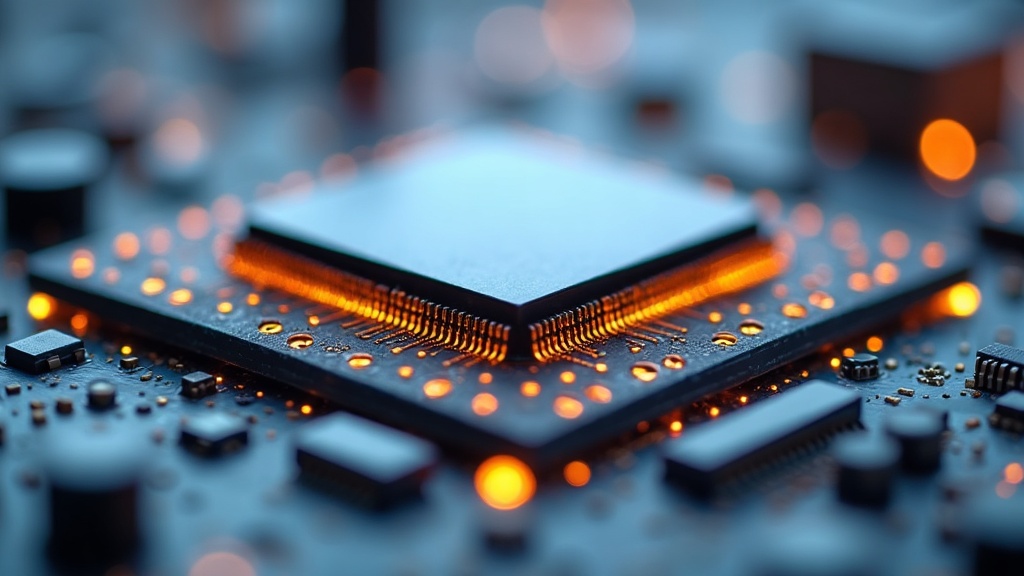
The centerpiece on the show floor was a rack pairing Intel's new Xeon 6+ processors, built on the company's 18A manufacturing process, with SambaNova SN-50 Reconfigurable Dataflow Units tuned for AI inference at improved cost and power efficiency. A single liquid-cooled Xeon 6+ rack can pack 36,864 cores into 32U of space. Foxconn also plans a CPU-dense variant for workloads that do not need acceleration, such as cost-optimized inference and data processing. Intel went further, saying Foxconn would explore collaboration on design services and even custom silicon, which pushes the relationship well past simple contract assembly.
That last point is the tell. Foxconn has historically been paid to screw together other companies' designs at razor-thin margins. A partnership that reaches into design services and custom silicon is Foxconn trying to climb the value chain, capturing more of the dollar that an AI rack represents rather than just the assembly fee. For Intel, handing that responsibility to Foxconn is a bet that the world's biggest manufacturer can make its troubled 18A node into something customers actually buy at volume.
Why This Matters More Than People Think
Foxconn's revenue runs well above $200 billion a year, and for most of the past decade Apple has accounted for a large and uncomfortable slice of it. Every analyst who covers the company has warned about the concentration risk: when one customer's product cycle determines your year, you are not a strategic player, you are a supplier. AI servers are the most attractive escape route Foxconn has ever had. The company already assembles a large share of the world's Nvidia-based AI systems, so it knows the business. Deepening with Intel lets it diversify the customers, the chips, and the margins all at once.
For Intel, the stakes are existential rather than opportunistic. The 18A process is the make-or-break node in the company's foundry turnaround, the technology that is supposed to prove Intel can manufacture leading-edge silicon competitively again after years of losing ground to TSMC. A flagship partner like Foxconn building production racks on Xeon 6+ is exactly the external validation Intel needs to convince the market that 18A is real. The partnership is as much a credibility transfusion for Intel as it is a diversification play for Foxconn.
The combination also signals where the AI hardware market is heading: toward integrated, rack-scale systems rather than loose collections of chips. Buyers increasingly want a complete, liquid-cooled, power-optimized rack delivered as a unit, not a parts list they have to integrate themselves. The company that can design and manufacture the whole rack, from the silicon up through the cooling and the system software, captures more value and locks in the customer. Foxconn and Intel are betting that vertical integration of the rack is the next battleground, and that whoever owns it owns the economics.
The timing is not accidental. AI infrastructure spending is running at an annual pace measured in hundreds of billions of dollars, and the buildout is still early. Foxconn is making its move while the market is expanding fast enough to absorb a new full-stack competitor, before the eventual consolidation that follows every gold rush. If it waits until AI server demand matures, the high-margin design and integration layers will already be claimed by incumbents like Dell and Supermicro. Moving now, with Intel as a willing partner that needs Foxconn as badly as Foxconn needs a non-Apple growth engine, is the company betting that the window to climb the value chain is open today and will not stay open. That urgency is why a manufacturer famous for caution is suddenly talking about custom silicon.
The Competitive Landscape
Foxconn does not have the AI server market to itself. Taiwanese rivals Quanta, Wistron, Wiwynn, and Inventec all build AI systems at scale, and Supermicro and Dell have turned rack-scale AI infrastructure into fast-growing businesses of their own. What Foxconn brings is sheer manufacturing capacity and a balance sheet large enough to invest ahead of demand. The Intel partnership is a way to differentiate in a crowded field by offering an alternative to the Nvidia-everything stack that every other assembler is also selling.
Scale is the variable that could let Foxconn win where others stall. Quanta and Wiwynn are formidable, but none can match Foxconn's capacity to stand up new manufacturing lines across multiple countries on short notice, a capability it built precisely to serve Apple's brutal annual cadence. That muscle, repointed at AI racks, means Foxconn can promise hyperscalers something its rivals struggle to: volume on demand, at a moment when every buyer is desperate for capacity and willing to pay for certainty of supply. The same dependency that made Foxconn vulnerable to Apple also forged the one asset that might make it indispensable to the AI buildout.
On the silicon side, the partnership is a direct shot at the Nvidia-dominated status quo. SambaNova's inclusion is the most interesting detail, because it positions a non-Nvidia inference accelerator at the heart of a flagship rack. Nvidia still owns the overwhelming majority of AI training and a commanding share of inference, but inference is where alternative architectures have the best shot, since it is more cost-sensitive and less dependent on Nvidia's CUDA software moat. Pairing Intel CPUs with SambaNova RDUs is an explicit attempt to build a credible AI rack that does not route most of its value to Nvidia.
The historical parallel is Foxconn's own checkered record of trying to escape Apple. The company bought Sharp to get into displays, launched the Foxtron venture to build electric vehicles, and famously promised a $10 billion LCD factory in Wisconsin that never materialized at anything close to the announced scale. Each was an attempt to diversify beyond assembling phones, and each delivered far less than the headline. Intel, for its part, is attempting the kind of foundry comeback that AMD pulled off in the chip market last decade by betting everything on a single process generation. Both companies are running plays they have run before, with decidedly mixed results.
Hidden Insight: A Double Escape From Two Kinds of Dependence
The obvious framing is Foxconn diversifying away from Apple. The sharper framing is that Foxconn is trying to escape two dependencies at once, and the second is the one nobody is naming. Foxconn's AI server business today is overwhelmingly a Nvidia business: it assembles Nvidia-designed systems and earns a thin margin doing it, which means it has simply traded dependence on Apple for dependence on Nvidia. The Intel and SambaNova partnership is Foxconn's attempt to build an AI franchise where it controls more of the design and is not just the hands assembling someone else's gold-rush hardware.
That reframes why the design-services and custom-silicon language matters so much. The margin in an AI rack does not sit in assembly, where Foxconn already competes against four other Taiwanese giants on price. It sits in design, integration, and owning the customer relationship. By moving up into those layers with Intel, Foxconn is trying to convert itself from a body shop into a systems company, the kind that earns 20-point margins instead of low-single-digit ones. Whether it can pull that off against entrenched system vendors is the real question the partnership poses, and it is far from settled.
For the industry, the deeper signal is that the AI hardware supply chain is beginning to diversify away from a single-vendor model under its own economic pressure. When every hyperscaler and sovereign data center is spending tens of billions on compute, even a few percentage points of cost savings on inference justify building an entire alternative stack. Intel and SambaNova do not need to beat Nvidia to win. They need to be good enough and cheap enough on inference that buyers want a second source, and the sheer scale of AI spending now makes a second source economically irresistible regardless of who holds the performance crown.
There is a quieter geopolitical layer to all of this. Intel is the last American company still capable of manufacturing leading-edge logic on home soil, and Washington has staked a great deal of industrial policy on its survival. A Foxconn partnership that makes 18A commercially viable serves a strategic goal far beyond either company's balance sheet: it gives the United States a credible alternative to a chip supply chain that runs almost entirely through Taiwan. For Foxconn, a Taiwanese firm, aligning with the American foundry champion is also a hedge against the geopolitical risk that hangs over its home base. The partnership reads differently once you see it as two companies positioning for a world where chip manufacturing is a matter of national security, not just cost.
The bear case, however, is sobering, and history is on its side. Foxconn's prior diversification attempts, from Sharp to the Wisconsin plant, suggest the company is better at announcing ambition than realizing it, and AI server assembly remains a low-margin business no matter how fast it grows. Critics argue that Intel's 18A yields are still unproven at the volume a Foxconn partnership implies, and that a single missed process ramp could turn the flagship rack into a demo that never ships in quantity. Skeptics point out that SambaNova, despite real technology, has struggled to win share against Nvidia's software ecosystem, and that a Computex showpiece is not the same as committed customer orders. The partnership could be exactly what both companies need, or it could be two challengers propping each other up against a market leader that keeps extending its lead.
What to Watch Next
Over the next 30 days, watch for concrete customer commitments rather than show-floor demonstrations. The question that matters is whether a named hyperscaler, a sovereign data center, or a large enterprise places a real order for Foxconn-built Xeon 6+ racks. Watch also for any disclosure on 18A yields and capacity, because the entire partnership rests on Intel's ability to manufacture these chips at volume and on cost.
Over the next 90 days, watch Foxconn's revenue mix in its quarterly reporting. The diversification thesis only holds if AI infrastructure starts measurably reducing the Apple share of the business. Track whether the SambaNova inference racks find buyers, since that is the test of whether a non-Nvidia inference stack can win real workloads at scale rather than just appearing in keynote slides. Any sign of repeat orders, as opposed to pilot purchases, would be the strongest evidence the partnership is converting into a franchise.
Over the next 180 days, watch whether Intel's 18A becomes a node that other customers adopt on the strength of the Foxconn validation, and whether Foxconn deepens the relationship into the custom silicon the announcement teased. The metric that matters is not the core count on a single rack, impressive as 36,864 cores in 32U sounds. It is the share of AI infrastructure spending that flows through an Intel-and-Foxconn stack rather than a Nvidia one, because that number is the only proof that the second source has actually arrived.
Foxconn spent twenty years escaping the iPhone only to land inside Nvidia's shadow. The Intel pact is its bet that it can finally own a piece of the rack instead of just bolting it together.
Key Takeaways
- Foxconn and Intel announced a strategic AI infrastructure partnership at Computex 2026 spanning silicon, rack, system, and application layers.
- The flagship rack pairs Intel Xeon 6+ chips on the 18A process with SambaNova SN-50 inference accelerators, packing 36,864 cores into a single 32U liquid-cooled rack.
- Foxconn runs over $200 billion in annual revenue with heavy Apple concentration, and AI servers are its clearest route to diversify customers and margins.
- 18A is Intel's make-or-break node, and a Foxconn production partner gives the foundry turnaround the external validation it has lacked.
- The real escape is from Nvidia too: pairing Intel CPUs with SambaNova RDUs is an explicit bid to build an AI rack that does not route most of its value to Nvidia.
Questions Worth Asking
- If even the world's largest manufacturer is paid thin margins to assemble Nvidia systems, where does the real profit in the AI hardware boom actually accumulate?
- Can a second-source inference stack win on cost alone when Nvidia's CUDA software ecosystem is the real moat?
- Given Foxconn's record from Sharp to Wisconsin, why should this diversification attempt succeed where the others fell short?