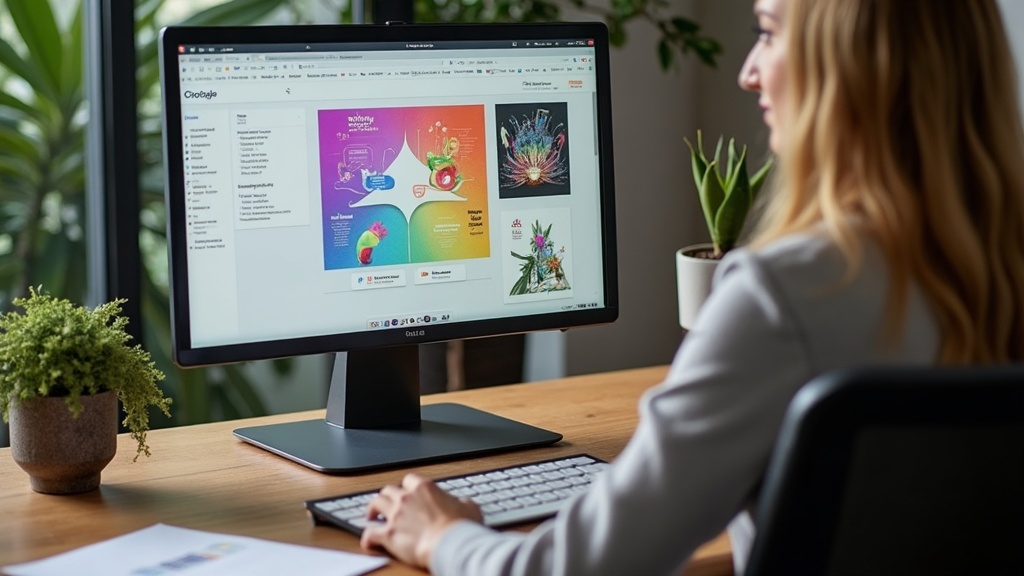
Canva spent twelve years convincing 220 million people that design did not require a designer. Google just decided that was a market worth taking, and it brought a weapon Canva cannot easily copy: the same Workspace that billions of people already open every morning to write documents and build slides. Google Pics is not a new app you have to discover. It is design dropped into the place where work already happens.
What Actually Happened
At Google I/O 2026, Google unveiled Pics, an AI-powered design and image-generation application built directly into Google Workspace. The pitch is blunt: generate social media graphics, invitations, marketing materials, and mockups from a simple text prompt, with no design experience required. Pics is positioned as a direct alternative to Canva and to AI-native challengers like Anthropic's Claude Design. The app launched first to a group of testers at I/O, with a broader rollout to Google AI Pro and AI Ultra subscribers planned for later this summer.
The engine underneath is Nano Banana 2, Google's latest image model, which the company says is tuned for precise text rendering, real-world knowledge, and detailed visual output. Text rendering is the detail that matters most, because the single most embarrassing failure of image generators has been their inability to spell. A design tool that produces a poster with garbled letters is useless for the exact marketing and social use cases Pics targets. By foregrounding text accuracy, Google is signaling that Pics is built for output people actually publish, not just pretty pictures they admire and discard.
The interaction model is the other tell. Pics lets users modify a generated design by clicking directly on an element and either typing a new instruction or leaving a comment, the same way feedback works in Google Docs. That click-to-edit, comment-to-revise loop borrows the collaboration grammar that made Workspace ubiquitous and applies it to visual creation. Pics is embedded across Docs, Slides, and the wider Workspace suite, so a graphic generated in one place can flow into a document or presentation without an export-import detour. The friction Canva users tolerate between tools simply does not exist inside one suite.
That seamlessness is the part competitors will struggle to answer. A graphic created in Canva still has to be downloaded and re-uploaded to land in a Google Slides deck or a Gmail newsletter, and every one of those handoffs is a moment where a casual user gives up. Pics removes the seams because it lives in the same document model as the rest of Workspace. The image, the comment thread on that image, and the revision history all sit inside the file, shared and edited by the same collaborators already in the document. Design stops being a trip to another tool and becomes one more thing you do in the doc you already have open.
Why This Matters More Than People Think
The obvious story is Google versus Canva. The real story is distribution. Canva built its empire by being a destination, a place you go to make a thing. Google does not need you to go anywhere. Workspace has billions of active users who are already inside Docs, Gmail, and Slides every day, and Pics meets them there. When a design tool lives one click from where work already happens, the acquisition cost that every standalone app pays drops to zero. That is the structural advantage Canva has never faced, and it is the reason this launch is sharper than another me-too AI feature.
The timing compounds the threat. Generative AI has commoditized the hard part of design, which was the craft of arranging pixels. When anyone can describe a poster and receive a publishable result, the value shifts from the design surface to the place where the request originates. That place, for hundreds of millions of knowledge workers, is a document or a slide or an email. Google is betting that the design tool of the future is not a separate canvas but an ambient capability inside the tools you already use, summoned by a prompt and refined by a comment.
There is a subscription strategy underneath the product strategy. By gating Pics behind Google AI Pro and AI Ultra, Google turns a design feature into a reason to pay for its premium AI tiers. Every Workspace customer evaluating whether to upgrade now has one more capability in the bundle, and bundling is how Google has historically won markets it entered late. Pics does not need to beat Canva on its own merits. It needs to make the AI Ultra subscription more obviously worth it, and it can lose money for years while doing so because it is a feature in a suite, not a company that must stand alone.
This asymmetry is what makes the launch dangerous for a pure-play competitor. Canva must price its product to fund its entire business, from servers to salaries to marketing. Google can treat Pics as a loss leader whose only job is to raise the perceived value of a subscription that is already being sold for other reasons. A company that must profit from design is competing against a giant that is happy for design to be free, as long as it sells more AI Ultra seats. That is the same financial logic that let Google give away maps, email, and documents until the paid alternatives looked overpriced, and it is the hardest kind of competition to survive.
The Competitive Landscape
Canva is the incumbent with the most to lose, and it is not standing still. With more than 220 million monthly users and a private valuation that has reached roughly $40 billion, Canva has spent the past two years racing to embed its own AI generation, its Magic Studio suite, and acquired capabilities like Leonardo and Affinity. Canva's defense is depth: a vast template library, brand kits, team workflows, and a print and publishing pipeline that a fresh Google feature cannot match on day one. The company also owns the design-first user who came for Canva and stayed for the ecosystem, a user Google has to pull away rather than acquire fresh.
The field is wider than two players. Adobe has pushed Firefly and Express hard, leaning on its professional credibility and its Creative Cloud install base. Microsoft Designer brings the same Workspace-adjacent logic Google is using, but from inside Microsoft 365, which means the two productivity giants are about to fight this battle on parallel fronts. Anthropic's Claude Design represents the AI-native challenger that skips the canvas metaphor entirely, and a wave of startups from Ideogram to Recraft compete on pure image quality. The market is not a duopoly. It is a brawl, and Google is entering it with distribution rather than a head start on craft.
The historical parallel that should worry Canva is what Google did to standalone office software. Documents, spreadsheets, and presentations were once products you bought, and Google made them free features inside a browser, bundled with email and storage, and slowly turned a purchase into a default. Microsoft survived because Office was entrenched in enterprises, but a generation of standalone tools did not. Canva is in the position those tools were in: a beloved destination that does one category brilliantly, facing a giant that can make a good-enough version of that category a free-feeling part of something everyone already uses.
Yet the parallel is not perfect, and Canva's defenders have a point. Office software was a productivity commodity that most people used because they had to, which made it easy to substitute with a free, good-enough version. Design carries more emotional and brand weight. A marketing team choosing the visuals that represent their company is not looking for the path of least resistance the way someone formatting a memo is. Canva has spent a decade earning trust as the place where brand-consistent, presentation-ready design happens, and that trust is a different kind of moat than the convenience Google is attacking. Whether it holds depends on how good Pics actually is at the unglamorous work of staying on brand.
Hidden Insight: The App Is Dying as a Unit of Software
The deeper signal in Pics is not about design at all. It is about the dissolution of the standalone application as the basic unit of software. For thirty years, the way you used a computer was to open an app dedicated to a task: a word processor, a spreadsheet, a design tool. Generative AI is collapsing those boundaries. When you can summon any capability with a prompt inside whatever you happen to be working in, the app as a separate destination starts to look like an artifact of an older interface era. Pics is design without a design app. The category is becoming a verb inside other software, not a noun you launch.
This reframes what Google is actually doing. It is not building a Canva competitor. It is absorbing the function of design into Workspace the way it absorbed the function of word processing, betting that ambient, prompt-summoned capability beats dedicated destinations. If that thesis is right, the threat is not just to Canva but to every single-purpose software company whose entire value is being the place you go to do one thing. The question every vertical SaaS founder should be asking is whether their app survives as a destination once the underlying capability can be summoned anywhere by a prompt.
The bear case, however, is that destinations have proven shockingly durable, and Google has a long history of launching products that should win and quietly killing them. Workspace integration sounds decisive on a keynote slide, but Canva users do not stay for the canvas alone. They stay for the template ecosystem, the brand consistency tools, the team libraries, the muscle memory, and the simple fact that design-serious users want a design-serious home. Skeptics point out that Google has launched and abandoned more chat apps, social products, and half-built tools than any company in technology, and that a feature gated behind a premium subscription tier rolling out "later this summer" is not yet a product anyone can rely on.
There is a sharper risk in the model itself. Nano Banana 2 may render text precisely in a demo, but image models remain unpredictable across the long tail of real requests, and a marketing graphic that is subtly wrong, off-brand, or legally problematic is worse than no graphic at all. Canva's value is partly that its outputs are constrained, on-brand, and safe by design. A free-form generative tool that occasionally produces a confident, polished, and incorrect result shifts the burden of quality control back onto a user who came to Pics precisely because they are not a designer and cannot always tell when something is off. The risk is that Pics generates more output and less trust.
What to Watch Next
In the next 30 days, watch the actual rollout. Google said Pics reaches AI Pro and Ultra subscribers later this summer, and the gap between an I/O demo and a shipped feature is where Google products often lose momentum. Track whether the text rendering holds up outside curated examples, because that single capability determines whether Pics is a publishing tool or a toy. Watch Canva's response too: a fast feature match or a pointed marketing campaign would signal the incumbent takes the threat seriously rather than dismissing it as another Google experiment.
Over 90 days, the metric that matters is attach rate. How many Workspace users actually generate designs in Pics versus how many open Canva in a separate tab out of habit. Distribution only wins if proximity changes behavior, and that is an empirical question, not a strategic certainty. Also watch whether Google extends Pics beyond static graphics into video, presentations, and branded templates, because each expansion moves it from a Canva feature competitor toward a Canva category competitor, and the breadth of the rollout will reveal how seriously Google is committed.
On a 180-day horizon, the real indicator is whether Microsoft answers with a comparable Designer push inside Microsoft 365, turning this into a productivity-suite proxy war. If both giants bundle AI design into their suites, Canva's standalone model faces pressure from two directions at once, and its next funding round or rumored IPO will price in that risk. The longer arc to watch is whether the standalone design app survives at all as a category, or whether design follows word processing and spreadsheets into becoming a feature that lives wherever the work already is. Pics is the first real test of that thesis, and the summer rollout is when the theory meets the user.
Google is not building a Canva competitor. It is betting the standalone app is dying and design becomes a verb you summon inside the tools you already use.
Key Takeaways
- Google Pics launched at I/O 2026 as an AI design app built into Workspace, taking direct aim at Canva and Claude Design
- Nano Banana 2 powers Pics with precise text rendering, the capability that decides whether AI design output is publishable
- Click-to-edit and comment-to-revise borrow the Google Docs collaboration grammar and apply it to visual creation
- AI Pro and Ultra gating turns Pics into a reason to pay for Google's premium AI tiers rather than a standalone product
- 220 million Canva users and a roughly $40 billion valuation are the incumbent position Google is attacking with distribution, not craft
Questions Worth Asking
- If any capability can be summoned by a prompt inside the software you already use, does the standalone app survive as the basic unit of software?
- Does Canva's template ecosystem and brand tooling form a durable moat, or is it the kind of depth a distribution giant can erode over time?
- When a non-designer generates a polished but subtly wrong graphic, who catches the error, and does more output actually mean more value?