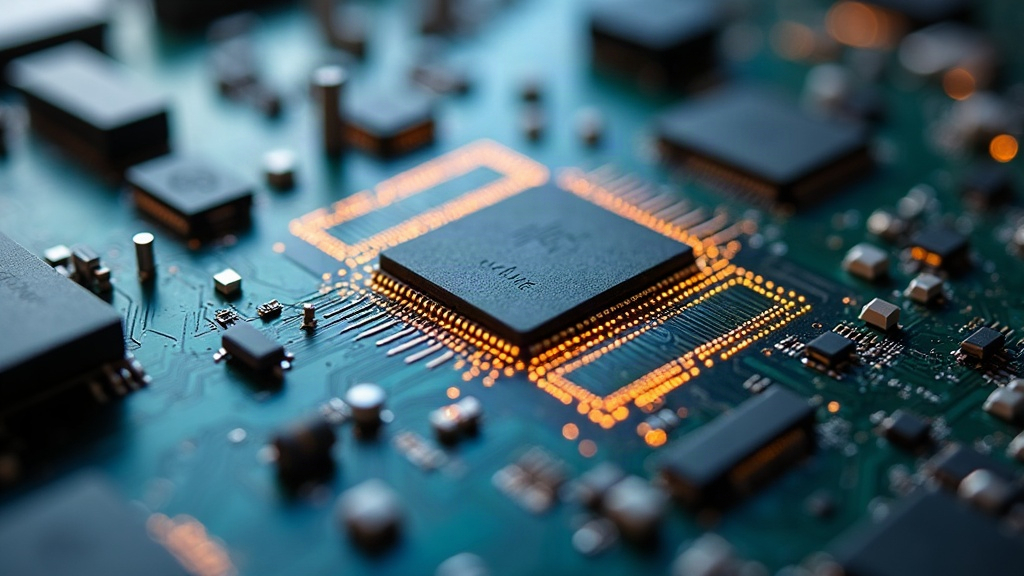
Intel finally showed the chip it has been promising for a year, and the most interesting number is not its speed. Crescent Island ships with up to 480GB of cheap LPDDR5X memory, draws just 350 watts, and cools with plain air. Intel is not trying to beat Nvidia at training the next frontier model. It is betting the real money in AI has quietly moved somewhere else.
What Actually Happened
At Computex 2026, Intel detailed Crescent Island, a data center GPU built specifically for AI inference rather than training. The headline specification is memory capacity: a reference configuration carrying 160GB of LPDDR5X that partner board designs can scale up to 480GB. The card is a standard PCI Express add-in board with a 350-watt power target, built on Intel's Xe3P architecture, and it supports a wide range of numerical formats from FP4 all the way to FP64. Intel is targeting customer sampling in the second half of 2026, and notably did not commit to a firm mass-production date, which leaves a gap between announcement and revenue that competitors will exploit.
The deliberate choices here are the story. By using LPDDR5X instead of the high-bandwidth memory (HBM) that sits on every Nvidia and AMD training accelerator, Intel trades peak bandwidth for capacity and cost. HBM is the single most supply-constrained component in the entire AI hardware stack, rationed by a handful of memory makers and priced accordingly. LPDDR5X is the commodity memory used in laptops and phones, abundant and cheap. Air cooling rather than liquid cooling means Crescent Island can drop into existing server racks without the plumbing retrofit that liquid-cooled accelerators demand, lowering the barrier to deployment for the operators Intel is courting.
This is a strategic retreat dressed as an advance. Intel's earlier AI accelerator line, Gaudi, sold poorly and a planned successor was quietly cancelled. Rather than keep throwing capital at the training market Nvidia owns outright, Intel has redrawn the battlefield. Crescent Island is explicitly described as built for agentic AI, the inference-heavy workloads where models are run, not trained, billions of times a day. Intel is conceding the glamorous half of the market to focus on the half it thinks it can actually win on cost, power, and deployment simplicity.
Why This Matters More Than People Think
The AI hardware narrative has been training-centric for years, because training is where the eye-watering cluster spend lives and where Nvidia's moat looks unbreakable. But the economics of a deployed AI product are dominated by inference, not training. A model is trained once and then served to users millions or billions of times, and every one of those calls is an inference operation that costs power and silicon. As agentic systems multiply the number of model calls per task, inference is becoming the larger and faster-growing line item on every AI operator's budget.
Crescent Island's design reads the inference market correctly. Inference is frequently bottlenecked by memory capacity rather than raw compute, because serving large models and long context windows requires holding enormous amounts of data in memory close to the processor. A chip with 480GB of capacity can hold a very large model or batch many concurrent requests on a single card, which is precisely what an inference operator needs and precisely what an expensive, capacity-limited HBM accelerator struggles to deliver economically. Intel is optimizing for the metric that actually constrains the workload it is targeting.
There is a supply-chain argument underneath the technical one. The entire AI buildout is gated by HBM availability, and that scarcity props up the price of every training accelerator on the market. By building a credible inference chip that sidesteps HBM entirely, Intel is offering operators a way to escape the memory bottleneck that has defined AI hardware costs since 2023. If even a fraction of inference workloads migrate to capacity-optimized, HBM-free silicon, the demand pressure on HBM eases and the cost structure of serving AI changes for everyone, not just Intel's customers.
The timing also aligns with a shift in how AI is actually consumed. The reasoning and agentic models that defined 2025 and 2026 generate far more tokens per query than the chatbots that came before them, because they think in long internal chains before answering and often call themselves repeatedly to complete a task. Every one of those tokens is an inference operation. A single agentic workflow that books travel, reconciles a spreadsheet, and files a report might trigger thousands of model calls where a simple chatbot exchange triggered one. That multiplication is why inference spend is compounding faster than training spend, and why a chip optimized for cheap, high-capacity serving arrives into a market whose center of gravity is shifting toward exactly that workload.
The Competitive Landscape
Intel is walking into a fight already crowded with companies that saw the inference opportunity first. Nvidia sells inference-optimized parts and will defend the segment ferociously, but its business and its margins are anchored to HBM-rich training silicon, which gives it less incentive to cannibalize itself with cheap, capacity-heavy inference cards. AMD's Instinct line spans both training and inference. And a wave of specialist startups, including Groq, Cerebras, and SambaNova, have built their entire identities around inference speed and cost, with Groq in particular making a name on low-latency token generation.
The most pointed competitor, though, may be the custom silicon the hyperscalers build for themselves. Google's TPU, Amazon's Trainium and Inferentia, and Microsoft's Maia are all designed to drive inference costs down inside their own clouds, and they represent demand that Intel will never capture because it is satisfied in-house. Intel's addressable market is therefore the operators who lack the scale to design their own chips: the neoclouds, the enterprises, the sovereign AI projects that want capable inference hardware without paying Nvidia's premium or waiting in Nvidia's allocation queue.
The historical parallel that should worry Intel is its own recent past. Intel arrived late to the smartphone processor market with Atom, technically competent but strategically behind, and never recovered the position. It arrived late to discrete GPUs with Arc and is still scrapping for share. The risk is that Crescent Island, sampling only in the second half of 2026 with no committed mass-production date, repeats the pattern: a reasonable product that shows up a cycle too late, into a market that has already standardized on someone else's stack and someone else's software ecosystem.
Hidden Insight: Intel is betting inference commoditizes before training does
The non-obvious thesis inside Crescent Island is a prediction about how the AI market matures. Intel is betting that inference becomes a commodity layer before training does, and that in a commodity layer the winning chip is the one with the best cost per served token, not the best benchmark. This is a fundamentally different competition than the training race. Training rewards peak performance and bleeding-edge memory bandwidth at almost any price, because a faster training run means a better model sooner. Inference rewards throughput per dollar and per watt, because it runs continuously at scale and its costs compound forever.
This distinction explains why Intel chose to give up the part of the market everyone admires. Winning the training race requires beating Nvidia on raw performance, memory bandwidth, and the CUDA software ecosystem simultaneously, a fight Intel has already lost once with Gaudi and has no credible path to winning. Winning the inference market requires something Intel can actually deliver: manufacturing scale, supply-chain depth in commodity memory, and a relentless focus on cost. Intel still operates fabs and still ships more silicon by volume than almost anyone, and a cost-per-token war plays to industrial muscle rather than to bleeding-edge design. Crescent Island is Intel choosing the fight that matches its remaining strengths instead of the fight that flatters its ego.
If that thesis is right, the HBM-free, air-cooled, capacity-heavy design is not a compromise. It is the correct architecture for the workload that will dominate AI spending by volume. Intel does not need to make the fastest chip in the world. It needs to make the cheapest acceptable chip for running models that have already been trained, deployed at a scale where a 30% lower total cost of ownership decides procurement. The same logic that made commodity x86 servers beat proprietary minicomputers could make commodity-memory inference cards beat HBM monsters for the bulk of everyday serving.
However, the bear case is equally coherent, and skeptics point out that Intel has a long record of correct strategy undone by poor execution and slipped timelines. A chip that samples in late 2026 with no firm production date is competing against parts shipping in volume today, and in AI hardware a year is an eternity. By the time Crescent Island reaches customers, Nvidia, AMD, and the inference startups will have moved their own roadmaps forward, and the software ecosystems will be even more entrenched around CUDA and its rivals. The risk is not that Intel picked the wrong workload. The risk is that being right about the workload does not matter if you are eighteen months late to serve it.
There is also a geopolitical layer that makes Intel's inference bet more durable than its specs alone suggest. Sovereign AI projects across Europe, the Middle East, and Asia are racing to build domestic compute capacity, and most of them cannot get the Nvidia allocation they want, nor do they want to depend entirely on a single American vendor sitting at the center of export-control politics. An air-cooled, commodity-memory inference card that drops into standard racks is exactly the kind of hardware a national AI program can deploy without a liquid-cooling overhaul or a multi-year wait in someone else's queue. Intel, as a manufacturer with its own fabs, can also tell a supply-security story that fabless competitors cannot. If even a handful of sovereign buildouts standardize on Crescent Island for inference, that is a base of demand insulated from the head-to-head benchmark war Intel keeps losing.
The deeper signal, regardless of whether Crescent Island succeeds, is that the AI hardware market is beginning to fracture into specialized layers rather than one monolithic GPU race. Training silicon, inference silicon, networking fabric, and custom hyperscaler chips are diverging into distinct categories with distinct economics. That fragmentation is healthy for buyers and dangerous for any single vendor that assumed one architecture would rule everything. Intel's pivot is an admission that the era of the general-purpose AI accelerator winning every workload is ending, and that the next decade will be fought workload by workload, with cost as the deciding weapon in the largest one.
What to Watch Next
Over the next 30 days, watch for named design partners and any benchmark figures Intel is willing to publish on cost per token or tokens per second per watt. Crescent Island's entire pitch is economic, so the absence of hard total-cost-of-ownership numbers would be telling. Sampling commitments from named neoclouds or enterprise buyers would signal genuine demand; silence would suggest the announcement is a roadmap placeholder meant to reassure investors rather than a product with buyers lined up.
Over 90 days, track whether Intel commits to a mass-production date and whether its software stack can credibly run the popular inference frameworks without forcing developers to rewrite around CUDA. Hardware is necessary but not sufficient. The inference startups that gained traction did so by making deployment painless, and Intel's history with software ecosystems is its persistent weak spot. A polished, drop-in software story would matter more to adoption than another 100GB of memory capacity.
Over 180 days, the structural question is whether HBM supply loosens enough to undercut Crescent Island's core cost advantage before it ships. If memory makers expand HBM capacity and prices fall, the argument for an LPDDR5X inference card weakens. Conversely, if HBM stays scarce and expensive, Intel's timing looks shrewd. Watch the memory market as closely as the chip itself, because Crescent Island's fate may be decided less by Intel's engineering than by how long the HBM shortage that created its opening actually lasts.
Intel stopped trying to build the fastest AI chip and started building the cheapest one that is good enough, which may be the only fight against Nvidia it can win.
Key Takeaways
- 480GB of LPDDR5X memory at a 350-watt, air-cooled power target lets Crescent Island sidestep the HBM shortage entirely.
- Inference, not training, is the target: Intel conceded the training market Nvidia owns after Gaudi sold poorly and its successor was cancelled.
- Built for agentic AI, where models are served billions of times a day and cost per token decides procurement, not peak benchmarks.
- Sampling in H2 2026 with no committed production date, leaving a dangerous gap against parts shipping in volume today.
- The AI hardware market is fracturing into training, inference, networking, and custom hyperscaler silicon with distinct economics.
Questions Worth Asking
- If inference is becoming the dominant AI cost line, does the chip with the best cost per token matter more than the one with the best benchmark?
- Can Intel finally fix the software-ecosystem weakness that sank Atom and slowed Arc, or will great hardware lose again to a better developer story?
- If the AI hardware market is fragmenting into specialized layers, is your infrastructure strategy still wrongly assuming one GPU architecture will serve every workload?