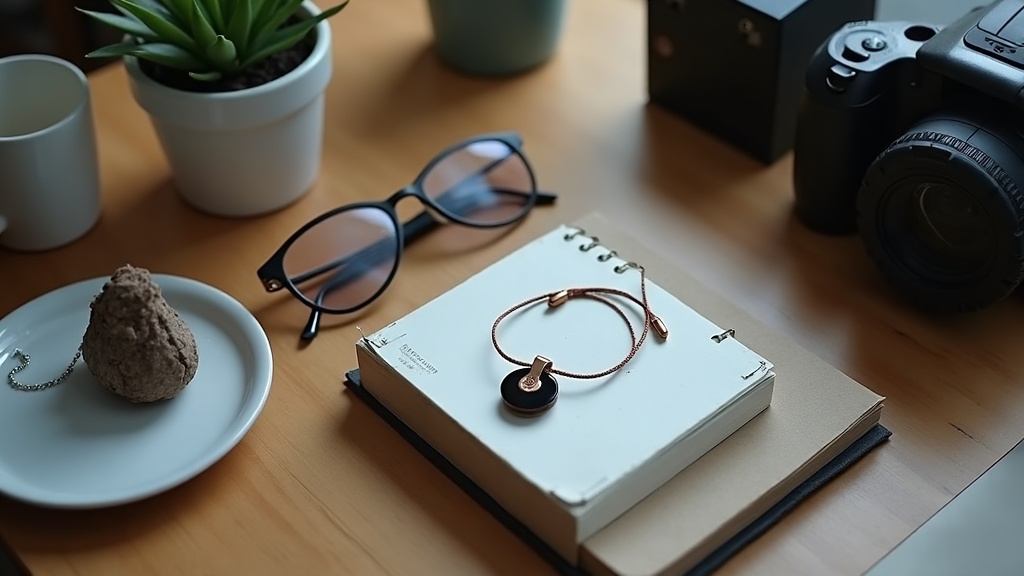
Meta wants a microphone on your body all day, and it is willing to pay you to wear it to work. The company is preparing an AI pendant built on technology from Limitless, the recording-gadget startup it quietly acquired at the end of 2025, alongside a business subscription called Wearables for Work and a wave of new smart glasses. The pitch is ambient AI that remembers everything you say. The unspoken question is whether anyone outside a Meta product meeting actually wants that.
What Actually Happened
According to reporting that surfaced in early June 2026, Meta is developing a clip-on AI pendant derived from Limitless, a startup whose original device recorded conversations and generated transcripts, meeting recaps, and searchable personal records. Meta acquired Limitless at the end of 2025 and is now folding its always-listening technology into a broader wearables strategy. The internal target for pendant testing is reportedly spring 2027, which means the device is a roadmap signal rather than an imminent launch, but the strategic intent is already concrete.
The glasses pipeline is more immediate. Meta is preparing a new pair codenamed Modelo for release as soon as June, with models named Luna and an RBM2 refresh following in the fall, and a higher-end pair called Mojito VIP slated for December. Further out, the company is testing devices codenamed Artemis and SSG, the latter standing for supersensing glasses. The cadence amounts to as many as five distinct wearables in a single year, a pace that signals Meta now treats face-worn and body-worn AI hardware as a core product line rather than an experiment.
The commercial wrapper is the part that matters most. Meta is launching Wearables for Work, a business subscription aimed at signing up at least ten companies as launch customers, with an internal goal of selling roughly 10 million wearables in the back half of 2026. This reframes the entire effort. The Ray-Ban smart glasses were sold as a consumer lifestyle gadget. Wearables for Work positions the same hardware as enterprise equipment, the way a company issues a laptop or a phone, with AI features pitched as productivity rather than novelty.
Why This Matters More Than People Think
Meta has spent more than a decade and tens of billions of dollars searching for the device that comes after the smartphone, because the smartphone era was defined by Apple and Google, and Meta does not own the platform it depends on. Every Instagram ad and WhatsApp message flows through an operating system controlled by a rival who sets the rules and takes a cut. Wearables are Meta's bid to own the next interface layer directly, and ambient AI is the feature that finally gives a face computer or a body microphone a reason to exist. The pendant and the glasses are not gadgets. They are a platform play.
The financial stakes explain the urgency. Meta's Reality Labs division has burned well over $60 billion since 2020 chasing the metaverse and wearables, with annual operating losses that have alarmed investors and forced repeated public defenses from Mark Zuckerberg. Smart glasses, unlike the headset business, have actually shown consumer traction through the Ray-Ban line, which gives Meta its first credible argument that the spending will eventually produce a real platform. Wearables for Work is partly a strategy and partly a justification, a way to show that the device unit can generate recurring enterprise revenue rather than only consuming capital.
The enterprise framing is a sharper wedge than the consumer one. Convincing a hundred million people to wear camera glasses is a cultural battle Meta has been losing slowly since Google Glass. Convincing ten companies to issue AI wearables to field technicians, warehouse staff, surgeons, or sales teams is a procurement decision, and procurement decisions do not require social acceptance, only a return on investment. If a wearable cuts documentation time or surfaces the right information hands-free, a business will buy it in bulk and mandate its use, sidestepping the adoption problem that has stalled consumer wearables for years.
The data implications are enormous, and they cut both ways. A pendant that transcribes every conversation and glasses that see what you see generate the richest behavioral dataset any company has ever collected, far beyond what a phone in your pocket captures. For Meta, whose entire business is targeting, that is a strategic prize of the first order. For everyone else in the room with you, who never agreed to be recorded, it is a privacy problem with no clean solution. The value of the product and the danger of the product come from the exact same capability.
The Competitive Landscape
Meta is not first to the ambient-AI-hardware idea, and the graveyard is instructive. Humane's AI Pin raised more than $230 million, launched to brutal reviews in 2024, and was sold off for parts after failing to find a market. Rabbit's R1 became a punchline. The Limitless pendant itself, before the Meta acquisition, was a niche product for a small community of quantified-self enthusiasts. The pattern is consistent: standalone AI wearables from startups have repeatedly failed because the AI was not good enough and the hardware had no distribution. Meta is betting that better models and its own distribution change the equation.
The serious competition is the incumbents. OpenAI and Jony Ive's hardware venture have been openly developing a screenless AI companion device, and Apple is widely expected to bring its own AI wearables and continue evolving the Apple Watch and AirPods into ambient sensing platforms. Amazon has its Alexa-powered Echo Frames, and Google is back in the glasses game with Android XR. The difference is that Meta already ships the only smart glasses anyone actually buys, the Ray-Ban line, giving it a manufacturing relationship with EssilorLuxottica and real retail distribution that the startups never had.
The historical parallel is the smartphone-to-wearable transition that the Apple Watch navigated. When the Watch launched in 2015, critics dismissed it as a solution in search of a problem, and early sales underwhelmed. It found its footing only when Apple narrowed the pitch from general-purpose computer to health and fitness, a concrete job people would pay for. Meta appears to have learned the lesson: rather than selling ambient AI as a vague lifestyle upgrade, Wearables for Work narrows it to a specific buyer with a specific budget. Whether that narrowing is enough to escape the AI Pin's fate is the open question.
One more competitive wrinkle separates Meta from the field: it controls the models, the social graph, and the hardware at once, a vertical integration none of the failed startups possessed. Humane had to license a model and build distribution from scratch. Meta runs its own Llama models, owns the advertising and identity layer through Facebook, Instagram, and WhatsApp, and manufactures at scale with EssilorLuxottica. That stack is the genuine differentiator, because ambient AI needs cheap inference, a reason to keep wearing the device, and a channel to sell it. Meta is the only company chasing this category that already owns all three pieces, which is exactly why its attempt is harder to dismiss than the ones that came before.
Hidden Insight: The Real Product Is the Permission to Always Be Listening
Strip away the hardware codenames and the strategic story is about normalization. Every previous attempt to put an always-on microphone or camera on the human body failed partly on technology and partly on the social allergy to being recorded. Google Glass users were called glassholes. Meta's quiet bet is that the social allergy is curable, and that the cure is workplace mandate plus incremental exposure. Once a few million people wear AI pendants to the office because their employer issued one, the cultural baseline shifts, and the consumer version that failed in 2024 suddenly has a normalized context to launch into.
This is why the enterprise channel is the strategy, not a side experiment. Workplaces have always been where surveillance technology gets normalized before it reaches private life. Email monitoring, badge tracking, and screen-recording software all entered through the office, where consent is a condition of employment rather than a genuine choice, and then softened public resistance to the same tools elsewhere. An AI pendant issued by your employer is the perfect Trojan horse for an AI pendant you eventually buy for yourself. Meta is using the workplace to manufacture the social license that the consumer market refused to grant.
The bear case, however, is that the workplace is also where the legal and cultural blowback will land hardest, and fast. The risk is regulatory: two-party-consent recording laws in states like California and Illinois, plus the EU AI Act and GDPR, make a device that transcribes every conversation a liability minefield, because the people being recorded around the wearer never consented. Critics argue that the first wrongful-termination suit built on pendant transcripts, or the first works-council revolt in Europe, could freeze enterprise adoption before it scales. Meta is betting normalization outruns regulation, and that is a genuinely uncertain bet.
There is a deeper strategic risk that the privacy debate obscures. Even if Meta wins the consent fight, ambient AI hardware only matters if the AI is genuinely useful, and the bar is brutal. A pendant that surfaces the wrong meeting note, mishears a name, or floods you with low-value summaries is worse than no pendant at all, because it adds cognitive load instead of removing it. The AI Pin did not fail because people hated the concept. It failed because the product did not work well enough to justify the friction. Meta's models are far better than Humane's were, but ambient, real-time, always-correct assistance is a harder problem than chat, and shipping it at a price an employer will pay ten million times over is harder still.
What to Watch Next
In the next 30 to 90 days, watch the Modelo glasses launch and the Wearables for Work announcement specifics. The tells are pricing, the named launch customers, and whether Meta discloses any concrete enterprise use case beyond hands-free video and translation. If the launch partners are warehouses, field service, and healthcare, the strategy is real and targeted. If the pitch stays generic and consumer-flavored, Meta is still searching for the job the hardware does, and the 10 million unit goal is aspirational marketing rather than a demand signal.
Over the next 90 to 180 days, track the regulatory and labor response. Watch for state attorneys general, European works councils, and privacy regulators to weigh in on always-on recording in the workplace, because their posture will determine whether enterprise buyers see the devices as productivity tools or legal hazards. Also watch the competitive clock: if OpenAI and Jony Ive ship their companion device, or Apple reveals AI wearables at its fall events, Meta's window to define the category narrows, and the race becomes about whose ambient AI is actually worth wearing.
Watch the developer and integration story as well. The thing that turned the smartphone from a gadget into a platform was third-party software, and ambient wearables will follow the same rule. If Meta opens Wearables for Work to enterprise software vendors, letting a Salesforce or a ServiceNow build hands-free workflows on top of the glasses and pendant, the category gains the gravity that no standalone device ever achieved. If Meta keeps the platform closed and tries to build every use case itself, it inherits the same narrow ceiling that capped the AI Pin. The presence or absence of a developer platform in the launch materials will say more about Meta's seriousness than any unit-sales target.
The longer-horizon marker, into 2027, is the pendant itself and the reorder rate on the glasses. A flashy launch means nothing if the 10 million units sit in drawers, so the number that matters is how many companies renew Wearables for Work after the first contract and how many employees keep the device on after the novelty fades. If reorders are strong, Meta will have found the post-smartphone interface it has chased for a decade. If they collapse, the AI pendant joins the AI Pin in the museum of devices that answered a question almost nobody was asking.
Meta is not selling you an AI pendant. It is using your employer to buy the social permission that the consumer market already refused to give it.
Key Takeaways
- Meta is building an AI pendant from Limitless, the recording-gadget startup it acquired at the end of 2025, with internal testing targeted for spring 2027.
- Wearables for Work is the commercial wedge, a business subscription aiming to sign at least 10 launch companies and sell roughly 10 million wearables in the back half of 2026.
- Up to five new glasses are slated for 2026, including Modelo as soon as June, plus Luna, an RBM2 refresh, and a high-end Mojito VIP in December.
- The hardware graveyard looms large, with Humane's $230M+ AI Pin and Rabbit's R1 both failing because the AI underdelivered and lacked distribution.
- Always-on recording is a legal minefield, exposed to two-party-consent laws, the EU AI Act, and GDPR because bystanders never consent to being transcribed.
Questions Worth Asking
- If consumers rejected always-listening AI hardware in 2024, does routing it through the workplace actually change minds, or just remove the right to say no?
- Who owns the transcript of a meeting recorded by one person's employer-issued pendant, and what happens the first time it surfaces in a lawsuit?
- Is ambient AI a genuine interface shift, or the latest expensive answer to a question most people never asked about their own day?