Twenty-three years after Microsoft began hunting for a physics phenomenon that most scientists considered theoretical, the company announced it has built a chip that could reset the entire quantum computing race. Majorana 2, unveiled on June 2 at Microsoft Build 2026, claims qubits that last 20 seconds on average, some reaching a full minute, and promises a commercial-grade quantum computer by 2029. If those numbers hold up, the timeline for practical quantum computing just collapsed by half a decade.
What Actually Happened
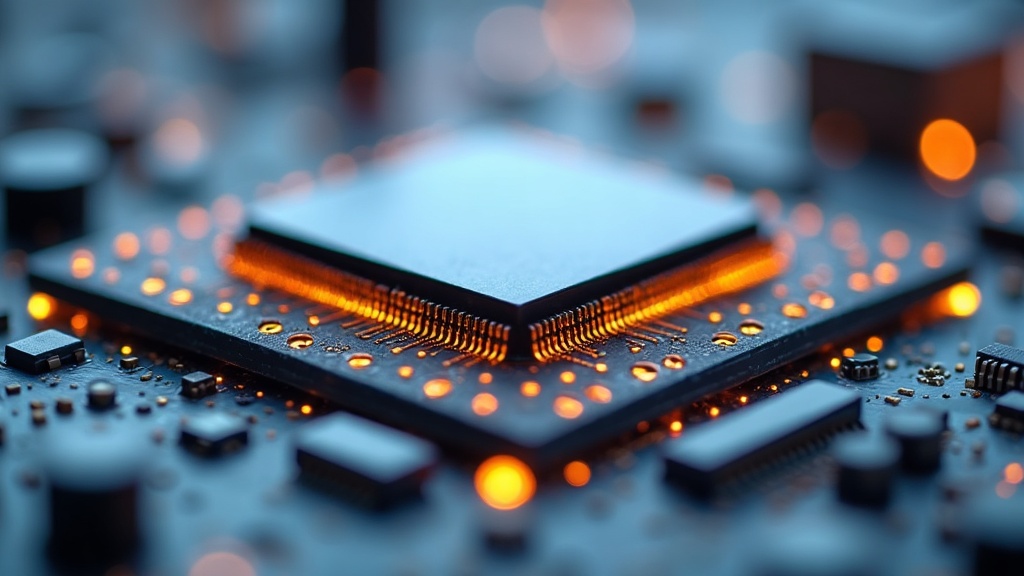
Microsoft unveiled Majorana 2 during Satya Nadella's keynote at Build 2026 in San Francisco, positioning it as the direct successor to Majorana 1, which the company first revealed in February 2025. The new chip replaces Majorana 1's aluminum superconductor with lead, and upgrades the semiconductor active region from pure indium arsenide to a combination of indium arsenide and indium arsenide antimonide. That material change, Microsoft says, is what produced the 1,000x improvement in qubit reliability and the dramatic jump in qubit lifetime to 20 seconds, with some instances clocking as long as 60 seconds. The transition from aluminum to lead as the primary superconducting material is not an incremental refinement. It represents a complete rethinking of the chip's physical substrate, driven by years of materials science research that Microsoft now says was accelerated by its own AI systems.
Microsoft developed Majorana 2 in collaboration with its agentic AI research platform Microsoft Discovery, an autonomous agent system that the company says accelerated the materials science research needed to find the winning material combination. That detail is easy to overlook in the quantum headlines, but it is strategically important: Microsoft is positioning quantum and AI as mutually reinforcing investments, with AI speeding up quantum hardware research and quantum eventually supercharging AI computation. According to Microsoft, the combination of topological qubit design and these new materials is what gives Majorana qubits their stability advantage over superconducting qubits used by rivals IBM and Google, which require near-absolute-zero temperatures and still produce error rates that demand extensive classical error-correction overhead. Topological qubits, in theory, encode information in ways that are physically protected from local noise, an intrinsic error resistance that conventional qubits must achieve through software alone.
The announced roadmap is the boldest in Microsoft's quantum history. The company believes Majorana 2 puts it on track to build a scalable, commercially useful quantum computer as early as 2029, halving its previously stated timeline. That machine would have enough reliable qubits to outperform classical computers on tasks like molecular simulation for drug discovery, logistics optimization at planetary scale, and cryptographic applications that currently require decades of classical compute time. Microsoft is framing this not as a laboratory curiosity but as an engineering milestone with a specific commercial date attached, the kind of claim that either cements a technology's credibility or triggers a massive reputational reckoning. The 2029 date is the most aggressive target any major quantum computing organization has publicly committed to, surpassing IBM's stated target of commercially useful quantum advantage in the early 2030s.
Why This Matters More Than People Think
The mainstream coverage will focus on the 1,000x reliability number. The story that deserves more attention is what 2029 actually means for the industries quietly waiting on quantum's arrival. Drug companies have been modeling quantum computing into their 10-year R&D roadmaps since 2022. Chemical manufacturers are doing the same with catalyst and materials design workflows. Financial institutions are running parallel classical-quantum research programs because the question of when quantum breaks today's RSA-2048 encryption is not abstract. It determines when they need to begin retrofitting their entire security stack. A credible 2029 date forces every one of those private timelines to compress immediately. Even if the actual delivery slips by two or three years, the planning cycle for regulated industries means the announcement alone triggers procurement reviews and vendor evaluations that did not exist last week.
Microsoft's bet on topological qubits has always been the minority position in quantum computing. IBM, Google, and IonQ have built their programs on superconducting or trapped-ion approaches that produce more qubits faster but with higher error rates. The Microsoft theory, that topological qubits based on Majorana particles are intrinsically error-resistant and require far fewer error-correction overhead qubits, would mean that a smaller number of high-quality Majorana qubits beats a much larger number of noisy conventional qubits. If Majorana 2 delivers on its lifetime numbers in independent testing, Microsoft's minority bet becomes the majority architecture almost immediately. That is a winner-take-most dynamic: quantum computing hardware is not a market where multiple architectures coexist at scale the way multiple smartphone chip vendors do. The architecture that achieves commercial utility first will likely attract the lion's share of enterprise cloud contracts, making the 2029 date a competitive race with existential stakes for every other quantum program currently in development.
The integration with Azure is where this becomes a platform business story rather than a physics experiment. Microsoft has already positioned Azure Quantum as the cloud interface for quantum services, with enterprise contracts, developer tooling, and a marketplace of quantum software already in place. The moment a reliable quantum device is available on Azure, every enterprise with an Azure contract gains instant access without new procurement cycles. That distribution advantage is something neither IBM Quantum nor Google's quantum services can replicate at the same scale. For enterprise software vendors, quantum on Azure is a signal to accelerate compatibility planning, because their largest clients will ask about quantum readiness at the next contract renewal. The platform advantage Microsoft has built over five years of Azure Quantum investment suddenly has a hardware foundation to stand on, and the enterprise pipeline effect begins before a single Majorana 2-based system ships commercially.
The Competitive Landscape
IBM's quantum roadmap targets 100,000 qubits by 2033 using superconducting designs, with error correction as the primary engineering challenge. The approach relies on volume: enough physical qubits that error-corrected logical qubits can be assembled from clusters of physical qubits, rather than relying on any intrinsic qubit stability. Google's Willow chip, demonstrated in late 2024, achieved a specific benchmark task faster than any classical supercomputer ever could, but that benchmark was chosen to showcase quantum's theoretical speed advantage, not to solve a commercially relevant problem. Both programs use architectures fundamentally different from Microsoft's topological approach, and neither company has made comparable topological qubit announcements. The gap between these design philosophies is widening, and Majorana 2 is Microsoft's strongest argument yet that its approach reaches commercial utility before volume-based architectures do.
IonQ, which trades publicly, uses trapped-ion qubits that offer high fidelity but struggle to scale to the qubit counts needed for complex optimization or drug discovery problems. Quantinuum, which closed a $1.68 billion IPO round in early 2026, pursues a similar trapped-ion strategy with early commercial use cases in chemistry and financial risk modeling. Neither company's architecture benefits from the topological qubit breakthrough directly. But both face the same strategic threat: if topological qubits prove out, the market revalues the entire quantum sector around Microsoft's platform and architecture. Quantinuum's IPO timing, coming just weeks after Majorana 2's announcement, raises an uncomfortable question about whether public market investors are distinguishing between fundamentally different quantum architectures or pricing a hot sector category without the technical depth to evaluate the claims.
The closest historical parallel is the shift from spinning-disk hard drives to NAND flash storage. Every incumbent hard-drive manufacturer understood the trajectory intellectually, most bet on improving existing designs, and the market ultimately reorganized around a different substrate faster than any competitor's transition plan anticipated. The incumbents that survived did so largely by becoming large buyers of flash technology rather than manufacturers of it. If Majorana 2's claims are validated over the next 12 to 18 months, IBM and Google face an analogous strategic choice: pivot to topological research, license Microsoft's IP, or accept a structural disadvantage in the quantum platform market. Microsoft, as both the hardware inventor and the cloud distribution platform, would occupy the position of the company that simultaneously owned the flash chip technology and the storage channel through which enterprises accessed it.
Hidden Insight: The Skeptics Are the Real Story
The bear case for Majorana 2 is not vague concern. It is loud, credentialed, and specific. Researcher Legg's assessment, published in Science News, is direct: "Nothing in the presented data proves the existence of a topological qubit or Majoranas in these devices." Scientific American ran a headline stating "Microsoft's upgraded Majorana quantum computing chip fizzles with physicists." That level of external pushback at a major corporate conference is rare. It means one of two things is true: Microsoft has made the most consequential quantum computing announcement in two decades, or it has once again over-claimed on a technology it cannot yet demonstrate to independent satisfaction. History adds weight to the second possibility. Microsoft retracted a high-profile Majorana paper in 2021 after peer reviewers found methodological problems in the underlying data, a retraction that was embarrassing precisely because the company had built institutional credibility around the Majorana program over 18 years and more than $1 billion in cumulative research investment.
What makes Majorana 2 different from that 2021 episode is the corporate stakes. Microsoft is now a $3.4 trillion company with Azure generating over $100 billion in annual cloud revenue. The cost of another Majorana retraction at this scale is not a laboratory embarrassment. It is a platform credibility event that could affect enterprise cloud contract renewals and erode trust in Microsoft's broader AI and research claims. That corporate context creates a genuine incentive for more rigorous internal standards before a public announcement at Build. But it also creates pressure to present optimistic interpretations of ambiguous data, which is precisely what critics are alleging. The question of whether Microsoft's topological qubit is physically real is not resolved by Majorana 2's Build 2026 announcement. It is restated at higher stakes and with more urgency than the 2021 episode ever carried, and the resolution will come from independent labs, not from Microsoft's own publications.
The AI-accelerated materials research angle deserves scrutiny that it has not received in the mainstream coverage. Microsoft says its Discovery AI research agent helped identify the lead-based superconductor formulation that produced Majorana 2's stability improvements. If accurate, this is a bold claim about AI's ability to accelerate materials science, a domain where experimental cycles previously took years of laboratory iteration. But AI research agents are powerful at finding patterns in existing scientific literature and suggesting experiments that fit a model. They are not immune to the problem of accelerating the confirmation of a flawed hypothesis if the underlying model of what a Majorana qubit looks like is itself contested by the physics community. The possibility that an AI agent accelerated the confirmation of a theoretically appealing but physically undemonstrated result is not remote, and it has received almost no attention in the Majorana 2 coverage despite being a failure mode that responsible AI research governance is supposed to prevent.
The 2029 commercialization target also deserves context against quantum computing's forecasting history. IBM's 2019 roadmap targeted systems capable of demonstrating quantum advantage on commercial problems by 2023. That target was met for narrow, carefully chosen benchmarks, but commercially useful quantum advantage on real-world problems has remained elusive in the three years since. Google's 2019 claim of quantum supremacy on a specifically selected benchmark did not translate into a single commercially deployed quantum application in the following five years. Microsoft's 2026 claim of a 2029 commercial system adds to a long list of confident timelines that the field has consistently failed to deliver on. That track record is not proof that Majorana 2 won't deliver. It is the correct prior to carry into any evaluation of the new announcement, and it argues for waiting for independent peer review before adjusting enterprise quantum readiness roadmaps or investment theses.
What to Watch Next
The most important indicator in the next 30 days is independent peer review of the Majorana 2 technical data. Microsoft published materials alongside the Build 2026 announcement, and the quantum physics community will produce formal responses quickly. Watch for preprints on arXiv from groups at Delft University of Technology, MIT's Research Laboratory of Electronics, and Caltech's Institute for Quantum Information and Matter. These institutions have the technical depth to assess topological qubit claims and the independence to publish findings that contradict Microsoft if warranted. If independent groups confirm the qubit lifetime measurements and validate the topological nature of the qubits by early July, Majorana 2 becomes the most consequential quantum announcement in the field's history. If they find the same methodological issues that led to the 2021 retraction, the correction will arrive faster and with far more visibility than last time given the scale of the Build 2026 announcement.
In the 90-day window, watch Azure Quantum enterprise pipeline signals. Microsoft will use the Build 2026 announcement to generate enterprise interest in quantum-ready architecture. If large financial institutions, pharmaceutical companies, and logistics firms sign exploratory agreements by September, it signals that sophisticated buyers are treating Majorana 2's claims as credible enough to plan around. The absence of those signals by October would suggest that enterprise buyers are waiting for independent validation before adjusting quantum roadmaps. On the competitive side, IBM will likely accelerate publication of its own error-correction milestones to reframe the narrative, and Google will push announcements about its next-generation chip to reassert its quantum credibility before the 2029 Majorana date becomes the industry planning anchor.
At the 180-day mark, the critical signal is whether Microsoft invites external quantum labs to run benchmarks on Majorana 2 hardware and publishes those results regardless of outcome. The 2021 retraction happened because Microsoft's claims outran reproducible, independently verified evidence. A willingness to expose Majorana 2 to external testing at Delft, MIT, or ETH Zurich would signal genuine confidence in the underlying physics in a way that no corporate press release can substitute for. If Microsoft keeps external access limited and controls the narrative through its own publications through December 2026, the credentialed skeptics' concerns gain weight that no roadmap announcement can overcome. The difference between a genuine breakthrough and a costly overclaim often comes down to one question: who gets to run the tests, and what happens when they publish the results independently?
If Majorana 2's qubit lifetime data survives independent review, the 2029 commercial quantum computer is not a roadmap: it is a deadline every industry needs to start planning around today.
Key Takeaways
- 1,000x qubit reliability improvement claimed: Majorana 2 reports average qubit lifetimes of 20 seconds, with some qubits lasting a full 60 seconds, versus Majorana 1's baseline.
- 2029 commercial quantum computer target: Microsoft says Majorana 2 puts it on track to ship a scalable commercial quantum system, cutting its previous timeline estimate in half.
- Credible expert pushback on core physics: Independent physicists state the published data does not prove the existence of a topological qubit, echoing concerns that led to Microsoft's 2021 Majorana paper retraction.
- Lead-based superconductor replaces aluminum: Microsoft switched from aluminum to lead and updated the semiconductor alloy to achieve the stability improvement, a materials discovery accelerated by the Microsoft Discovery AI research agent.
- Azure Quantum platform stakes are high: If validated, Majorana 2 gives Microsoft a quantum hardware advantage that integrates directly into Azure at enterprise scale, putting commercial quantum access on a single cloud platform.
Questions Worth Asking
- If Microsoft's topological qubits prove physically real and stable under independent testing, does IBM's entire superconducting-qubit investment and the enterprise contracts built around it become a stranded asset before it ever reaches commercial utility?
- Should enterprises planning quantum-readiness strategies treat the 2029 date as a ceiling for their post-quantum encryption migration timelines, or does quantum computing's consistent history of missed forecasts argue for treating 2032 or later as the responsible planning assumption?
- If AI systems like Microsoft Discovery can accelerate materials science research enough to halve quantum timelines, which other hardware domains, including solid-state battery chemistry, next-generation semiconductor fabrication, and photonic interconnects, are next on the AI-assisted research curve?