The biggest AI infrastructure deal of 2026 does not involve a single chip, model, or data center. It is a utility merger. NextEra Energy agreed to buy Dominion Energy for nearly $67 billion, creating the largest regulated electric utility on the planet, and the entire rationale rests on one bet: that AI data centers will consume more electricity than the existing grid can deliver, and whoever controls the power controls the bottleneck.
What Actually Happened
NextEra Energy announced an all-stock agreement to acquire Dominion Energy in a transaction valued at nearly $67 billion on May 18, 2026. The combination unites two of the largest players in American power generation and transmission at the precise moment electricity demand is spiking after two decades of being flat. The merged entity will become the largest regulated electric utility in the world, with a market capitalization near $249 billion and an enterprise value around $420 billion, making it the third-largest company in the energy sector behind only oil majors Exxon Mobil and Chevron.
The transaction is structured as an all-stock merger, which lets NextEra preserve its balance sheet capacity for the enormous capital expenditure the combined company will need to fund grid expansion. Dominion shareholders will receive NextEra shares at a premium to Dominion's recent trading price, and the combined company is expected to be led by NextEra's management team, which has built the most valuable utility in America on the back of an early and aggressive renewables strategy. Closing is contingent on approvals from multiple state utility commissions, federal energy regulators, and antitrust review, a gauntlet that typically takes twelve to eighteen months for deals of this size. Until those approvals land, the deal is an agreement, not a done transaction, and the gap between signing and closing is where utility mergers most often die.
The strategic logic is the surge in electricity demand from data centers running artificial intelligence workloads. Training and serving frontier models consumes staggering amounts of power, and the hyperscalers building those clusters need guaranteed, large-scale, reliable electricity in a way the grid has not had to provide before. NextEra brings the largest renewable energy portfolio in the United States and deep expertise in wind, solar, and storage. Dominion brings regulated utility territory in Virginia, home to the densest concentration of data centers in the world, plus nuclear assets and offshore wind. Together they control both the generation and the wires in the markets where AI demand is most acute.
Why This Matters More Than People Think
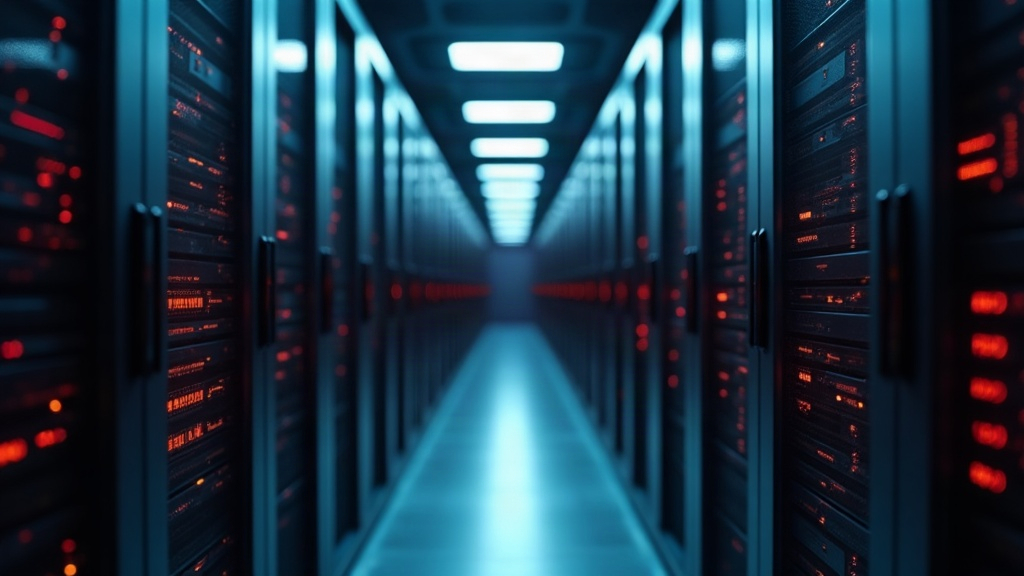
The headline is the price, but the real story is what NextEra is actually buying: Virginia. Dominion's service territory includes Loudoun County, often called Data Center Alley, which already routes a large share of global internet traffic and hosts the largest cluster of data centers anywhere on earth. The demand pipeline in that single region is enormous, with utilities reporting data center interconnection requests that exceed the entire current peak load of many states. By acquiring Dominion, NextEra is not just buying a power company. It is buying first claim on the fastest-growing electricity market in the developed world.
The numbers behind the demand are difficult to overstate. US electricity consumption was essentially flat for two decades, but utilities now project that data centers alone could add the equivalent of multiple states worth of new load by the end of the decade. In Northern Virginia, the local grid operator has fielded interconnection requests measured in tens of gigawatts, a scale that would have been unthinkable five years ago. A single large AI training campus can request as much power as a mid-sized city. When that demand collides with a grid that takes years to permit and build new transmission, the result is a structural shortage, and structural shortages are where the owner of scarce capacity captures outsized economics. That is the engine NextEra is buying.
This matters because power, not chips, is becoming the binding constraint on AI. For two years the bottleneck was GPUs. That is easing as Nvidia, AMD, and the hyperscalers' custom silicon ramp production. The new bottleneck is electrons: the ability to actually energize a gigawatt-scale data center campus, with the transmission lines, substations, and generation to back it. A company can buy all the chips it wants, but if it cannot get the power interconnection approved and built, the data center sits dark. NextEra just positioned itself as the gatekeeper of that constraint across the most important AI geography in America.
The Competitive Landscape
The competitive implications ripple across the entire energy sector. Constellation Energy, the largest nuclear operator in the country, has been signing direct power purchase agreements with hyperscalers and reviving plants like Three Mile Island for AI loads. Vistra, GE Vernova, and Talen Energy have all seen their valuations re-rate on the same thesis. By combining the largest renewable developer with one of the most data-center-exposed regulated utilities, NextEra is making a bid to be the single dominant counterparty for hyperscalers that need tens of gigawatts over the next decade. The merger is a land grab for the right to serve that demand.
The bottleneck extends beyond generation to the physical equipment that moves power. Large power transformers, the hulking units that step voltage up and down across the grid, now carry lead times measured in years, and manufacturers like GE Vernova, Siemens Energy, and Hitachi Energy cannot build them fast enough. Switchgear, high-voltage cable, and skilled transmission labor are all constrained. This means even a well-capitalized utility cannot simply spend its way to instant capacity, which paradoxically strengthens the position of an incumbent like the combined NextEra-Dominion that already owns rights-of-way, interconnection queue positions, and operating assets. Scarcity of the inputs needed to build new supply protects the value of existing supply, a dynamic that makes the merger more defensible than a simple demand bet would suggest.
The deal also reshapes the negotiating table between Big Tech and Big Power. Until recently, hyperscalers held most of the leverage: they chose where to build, and utilities competed to attract them with cheap rates and fast interconnection. A combined NextEra-Dominion controlling the generation and the grid in the most data-center-dense market in the world inverts some of that leverage. When the supply of deliverable power is scarce and concentrated in fewer hands, the price of that power, and the terms attached to it, shift toward the supplier. That is precisely the kind of pricing power that justifies a $67 billion bet.
Hidden Insight: AI Just Became an Infrastructure Story, Not a Technology One
The hidden insight is that this merger marks the moment the AI buildout stopped being a technology story and became an infrastructure story. The narrative for three years was about models, parameters, and benchmarks. The constraint quietly migrated underneath that narrative, from algorithms to compute to, now, raw energy and the physical grid. The companies that win the next phase of AI may not be the ones with the best models. They may be the ones that locked up the power, the land, the cooling water, and the transmission rights years in advance. NextEra is betting tens of billions that the decisive AI asset of the late 2020s is a kilowatt-hour delivered on time.
This reframes how investors should think about the AI value chain. Enormous attention and capital have flowed to chipmakers and model labs, the glamorous top of the stack. Far less attention has gone to the unglamorous bottom: the utilities, the transformer manufacturers, the transmission builders, and the nuclear operators. Yet the bottom of the stack is where the hard physical limits live, and physical limits are where pricing power accrues. NextEra-Dominion is a bet that the market has been overvaluing the top of the AI stack and undervaluing the bottom, and that the correction is coming.
Nuclear power sits at the center of the next phase, and it is where this deal gets most interesting. Dominion operates a fleet of nuclear plants and has been exploring small modular reactors, while hyperscalers have grown willing to sign decades-long contracts and even fund new reactors directly to secure carbon-free, always-on power. The emerging model is behind-the-meter and dedicated generation, where a data center is paired directly with a power source rather than drawing from the shared grid. A combined NextEra-Dominion, holding both the largest renewables portfolio and a regulated nuclear fleet, can offer hyperscalers a menu no pure-play competitor can match: solar and wind for cost, storage for shaping, and nuclear for the baseload that AI clusters need around the clock. That bundle is the real product being assembled here.
There is a deeper historical parallel. Every major technology platform shift has eventually been gated by physical infrastructure: railroads needed steel and land, the internet needed fiber and data centers, electrification needed the grid itself. The pattern is that early value accrues to the inventors and the application builders, but durable, compounding value often accrues to whoever controls the chokepoint infrastructure. Standard Oil controlled refining and pipelines. The Bell System controlled the wires. NextEra is positioning to control the electrons that AI cannot run without, and it is using a once-in-a-generation merger to do it.
The bear case, however, is serious and must be weighed honestly. Regulated utility mergers of this scale face brutal regulatory scrutiny: state public utility commissions in Virginia, Florida, and elsewhere must approve the deal, and they answer to ratepayers who do not want their electric bills subsidizing the data centers of trillion-dollar tech companies. The risk is that regulators block the merger, force punishing concessions, or impose rate structures that cap the very pricing power that justifies the premium. Critics argue that NextEra is paying a steep price for assets whose returns are ultimately capped by regulators who are increasingly hostile to letting AI demand raise consumer prices.
There is also the risk that AI electricity demand has been overestimated. If model efficiency improves faster than expected, if inference moves to dramatically more efficient chips, or if the AI capital expenditure cycle cools, the gigawatt-scale demand projections underwriting this deal could prove inflated. Several analysts have warned that some announced data center projects are speculative and may never be built. A combined NextEra-Dominion that has committed $67 billion on the assumption of relentless demand growth would be badly exposed if that growth stalls. Skeptics point out that utilities have a long history of overbuilding capacity into demand forecasts that did not materialize, leaving ratepayers and shareholders holding stranded assets.
What to Watch Next
Over the next 30 days, watch the initial regulatory reaction, particularly from the Virginia State Corporation Commission and Florida regulators, because early signals of hostility or support will move the probability of completion sharply. Over the next 90 days, track whether hyperscalers publicly support or oppose the deal, since their stance reveals whether they see a combined utility as a reliable partner or a monopolistic threat to their power costs. Over the next 180 days, watch for competing bids or regulatory conditions, and for whether other utilities pursue their own data-center-driven mergers in response, which would confirm that the entire sector is consolidating around the AI power thesis.
Watch the ratepayer politics most closely of all. The central tension of the entire AI power story is who pays for the grid expansion: the tech companies driving the demand, or the ordinary households and businesses who share the same wires. Regulators are under growing pressure to ring-fence data center costs so that consumers are not subsidizing hyperscaler profits, and several states are already drafting special rate classes for large loads. How NextEra-Dominion navigates that politics, whether it can strike deals that satisfy regulators while preserving its returns, will determine whether this merger delivers the economics its price implies. The technology is the easy part. The political economy of who pays is the hard part, and it is where the deal will ultimately be won or lost.
The single most important indicator to track is the spread between data center power demand growth and new generation coming online. If demand keeps outrunning supply, NextEra-Dominion's pricing power grows and the deal looks prescient. If a wave of new nuclear, gas, solar, and storage closes the gap faster than expected, the scarcity premium that justifies this merger erodes. The next several quarters of interconnection queue data and capacity auction prices will reveal which way the balance is tipping, and whether the largest utility merger in history was visionary or overpriced.
The race to build AI was never really about chips. It was always going to come down to who could plug the data centers in, and NextEra just made the biggest bet in history that the answer is electricity.
Key Takeaways
- $67 billion all-stock deal for NextEra to acquire Dominion, announced May 18, 2026
- World's largest regulated utility with a ~$249 billion market cap and ~$420 billion enterprise value
- Northern Virginia data center demand is the prize, the densest cluster of data centers on earth
- Power, not chips, is becoming the binding constraint on the AI buildout
- Regulatory approval across multiple states is the chief risk to the deal closing
Questions Worth Asking
- If electricity is the real AI bottleneck, are investors overvaluing model labs and chipmakers relative to utilities and grid infrastructure?
- Should ratepayers subsidize the grid expansion that AI data centers require, or should hyperscalers bear the full cost?
- If AI demand projections prove inflated, who is left holding the stranded assets, and how much of this premium evaporates?