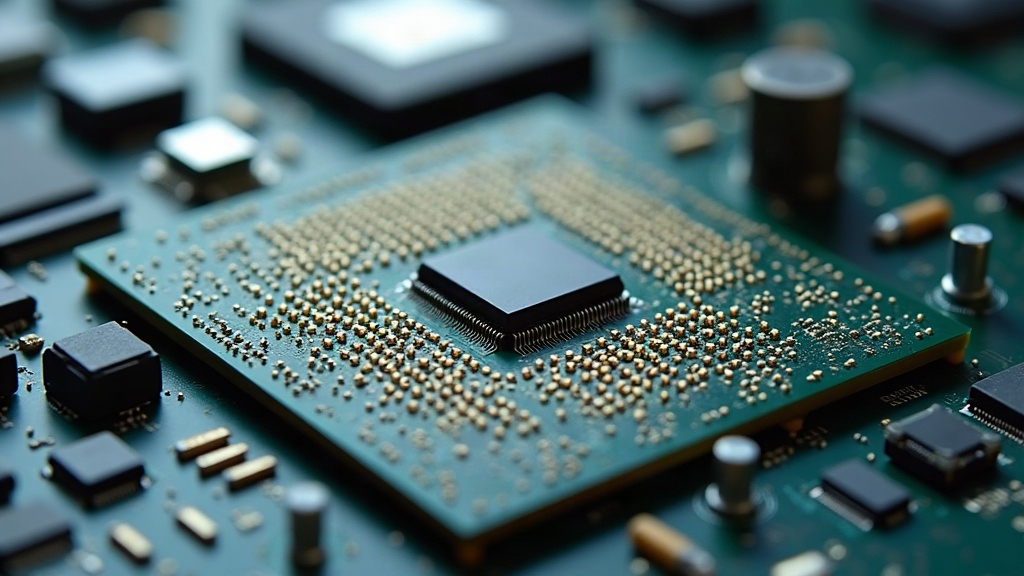
A free, open-source multimodal model that processes video, audio, images, and documents simultaneously, and outperforms every paid commercial API on throughput benchmarks, is not a product announcement you expect to read quietly. Yet NVIDIA's Nemotron 3 Nano Omni arrived on April 28, 2026 with exactly those claims, and the benchmarks support every one of them. For enterprises currently paying per-token rates to closed AI providers for multimodal workloads, the release raises a question that is uncomfortable in its simplicity: why are you still paying?
What Actually Happened
NVIDIA launched Nemotron 3 Nano Omni on April 28, 2026, as the first publicly available member of the Nemotron 3 family. The architecture is a hybrid mixture-of-experts (MoE) design with 30 billion total parameters and 3 billion active parameters per inference pass, a design that allows the model to run on 25 gigabytes of RAM, within reach of a single NVIDIA RTX 4090. Despite this hardware footprint, the architecture unifies three separate perception modalities: a vision encoder for images and video frames, an audio encoder for speech and sound events, and a language generation backbone, all operating within a single model with a 256,000-token context window. Model weights are released openly on Hugging Face and NVIDIA's NGC platform under a permissive commercial license.
Nemotron 3 Nano Omni is the first of three planned tiers. NVIDIA announced Nemotron 3 Super with 120 billion total parameters and 12 billion active parameters, targeting complex multi-step agentic reasoning at enterprise scale. A third Ultra tier was announced without detailed specifications. Both Super and Ultra are expected in the first half of 2026. NVIDIA described the Nano tier specifically as a model for "sub-agent" roles within larger multi-agent pipelines, the discrete reasoning units that perform high-volume tasks like document classification, audio transcription, or video frame annotation where throughput and cost efficiency matter more than maximum single-task accuracy.
Why This Matters More Than People Think
The throughput benchmarks deserve to be read with care, because they reframe what "efficient" means for multimodal AI in 2026. On a single NVIDIA B200 GPU at maximum concurrency, Nemotron 3 Nano Omni produces 5,000 output tokens per second on multi-document workloads. At an iso-interactivity target of 50 output tokens per second per user, the comfortable real-time reading rate, that single GPU simultaneously serves 100 concurrent users. Against Qwen3-Omni, Alibaba's acknowledged throughput leader among open multimodal models, Nemotron 3 Nano Omni delivers 9x higher output throughput. That margin is not a rounding difference. It is a generation-defining gap that effectively moves Qwen3-Omni to a different performance category.
The video processing benchmark from Coactive's MediaPerf evaluation makes the cost implications immediately concrete. Nemotron 3 Nano Omni processed 9.91 hours of video content per processed hour at a total inference cost of $14.27, the highest throughput and the lowest cost of every model tested, including closed commercial APIs from Google and OpenAI that charge anywhere from $50 to more than $100 for equivalent video intelligence workloads. For organizations running content moderation, media analysis, surveillance analytics, or e-learning content processing at scale, the annual cost difference between per-token API pricing and deploying Nemotron 3 Nano Omni on owned hardware is measured in millions of dollars.
The Competitive Landscape
The open multimodal model space in 2026 has become genuinely competitive. Alibaba's Qwen3-Omni set a high bar for throughput efficiency and became the default recommendation for teams that wanted high-performance multimodal capabilities without vendor lock-in. Meta's Llama 4 brought multimodal capabilities to the Llama family for the first time, adding image and document understanding to a model line that already had extraordinary ecosystem adoption. Google's Gemma 4, released under Apache 2.0 in Q1 2026, added competitive multimodal benchmarks to an openly licensed, commercially usable model. Into this competitive field, NVIDIA's Nemotron 3 Nano Omni arrives not with incremental improvements but with a 9x throughput margin over the prior open-model leader. That gap suggests NVIDIA was not competing in this space, it was trying to end competition in this performance tier.
For closed commercial API providers, the challenge is different in character. Anthropic's Claude Haiku and Google's Gemini 3.1 Flash are both designed for high-throughput, cost-sensitive enterprise workloads, and they are genuinely good models at competitive prices. But they require per-token payment, API rate management, data privacy agreements with a third party, and operational dependency on the provider's uptime and pricing decisions. Nemotron 3 Nano Omni eliminates every one of those constraints for organizations willing to operate NVIDIA hardware in their own infrastructure. The question enterprise AI teams now face is no longer "is the open model good enough?" It is "is a 9x throughput advantage and zero per-token cost worth the operational overhead of self-hosting?"
Hidden Insight: The Free Model Is a Hardware Sales Strategy
Every analysis of Nemotron 3 Nano Omni will focus on what it means for the open-source AI model ecosystem, and those analyses will be correct. They will also be incomplete. NVIDIA's model release strategy is categorically different from what every other organization does when it publishes open weights. When Anthropic, OpenAI, or Google release a model, paid or free, they are selling inference access through cloud platforms. When NVIDIA releases an open model, it is selling physical GPUs. The benchmarks and the business model are the same document, written in different languages for different audiences.
The 5,000 tokens-per-second benchmark, the 9x throughput advantage over Qwen3-Omni, the $14.27 video processing cost, all of these numbers are measured on NVIDIA hardware, specifically on the B200 Blackwell-generation GPU with tensor core optimizations that NVIDIA engineered this model architecture to exploit. You can run Nemotron 3 Nano Omni on AMD hardware, on ARM-based cloud instances, or on a CPU cluster. You will not achieve these benchmarks. The performance envelope that makes this model commercially compelling is inseparable from NVIDIA's silicon architecture. The model is free. The hardware that fully realizes it is not.
This is NVIDIA's most elegant competitive strategy, and it has been hiding in plain sight since the first Nemotron releases. By releasing open models that are genuinely best-in-class in their performance category, specifically on NVIDIA hardware, NVIDIA creates a self-reinforcing commercial cycle: developers discover the model is fast and cheap, they recommend it to their organizations, organizations buy NVIDIA hardware to realize the benchmarked performance, NVIDIA records the GPU revenue. Meta has used an adjacent strategy with Llama: release the best open model, get the ecosystem building on it, watch inference hardware demand increase. But Meta is a software company that benefits from hardware demand indirectly. NVIDIA is the hardware company. Every enterprise that adopts Nemotron 3 Nano Omni in production is a direct NVIDIA revenue event. The open-source generosity and the commercial incentive are perfectly and permanently aligned in a way that no other organization in the AI ecosystem can match.
What to Watch Next
Nemotron 3 Super, 120 billion total parameters, 12 billion active, is the next critical release to track. If Super maintains the same efficiency-per-active-parameter ratios as Nano Omni demonstrated, it will place direct competitive pressure on frontier closed models including GPT-5.x and Claude Opus 4.x on complex agentic reasoning tasks. The benchmark that matters most is SWE-bench Verified, the software engineering task evaluation that has become the industry's standard for agentic coding quality. Nemotron 3 Super's SWE-bench score will determine whether NVIDIA's open stack can displace closed APIs in enterprise coding pipelines, the highest-value AI application category in 2026, where organizations are paying the largest per-token bills and where switching costs to a self-hosted alternative are most justified by potential savings.
In the six-month window, watch for hyperscaler adoption decisions. AWS, which has an existing NVIDIA GPU partnership but also manages the competing Bedrock model catalog, faces a strategic choice: add Nemotron 3 to Bedrock (normalizing it as a first-class enterprise option) or keep Bedrock curated around closed commercial APIs (protecting partner relationships with Anthropic and AI21). If a major hyperscaler adds Nemotron 3 to its managed inference catalog, it signals that the industry has accepted NVIDIA as a peer model provider alongside the AI labs, a position NVIDIA has never occupied before, and one that would have significant implications for who controls the enterprise AI model tier over the next 18 months. The hardware company is becoming the model company, and the industry has not yet fully priced that shift.
NVIDIA's most powerful AI strategy has never been a model, it has been making sure that every organization that discovers how fast AI can run immediately needs more NVIDIA hardware to run it on.
Key Takeaways
- 30B total / 3B active parameters via hybrid MoE architecture, Nemotron 3 Nano Omni runs on 25GB RAM, bringing multimodal frontier-tier performance to single-GPU consumer hardware
- 9x higher output throughput than Qwen3-Omni at iso-interactivity, produces 5,000 output tokens per second on a single NVIDIA B200 at maximum concurrency
- $14.27 per hour of video processed in Coactive MediaPerf benchmarks, the lowest inference cost of every open or closed model tested, processing 9.91 hours of video per hour
- 256,000-token context window unifying vision, audio, and text processing in a single model architecture, no separate perception models required for multimodal agent workloads
- Nemotron 3 Super (120B total, 12B active) and Ultra arriving H1 2026, targeting frontier-level accuracy for complex multi-agent reasoning workloads at scale
Questions Worth Asking
- If a free open model now outperforms paid commercial APIs on throughput and cost for multimodal workloads, what justification remains for per-token API pricing in your organization's AI infrastructure budget?
- As NVIDIA releases increasingly capable open models optimized for its own hardware, does this strengthen or weaken the business case for AI software companies that sit between the model layer and enterprise applications?
- Is your organization's AI deployment infrastructure positioned to benefit from NVIDIA's open model ecosystem, or are you paying for proprietary API access that a hardware investment could permanently replace?