Nvidia just named the first big buyers of its newest processor, and the list reads like a who's who of companies it also happens to fund: OpenAI, Anthropic, and SpaceX. On the same day, Jensen Huang signaled that the era of Nvidia writing giant checks to those same firms is ending. Read together, those two facts reveal a strategy far more deliberate than a routine product update.
What Actually Happened
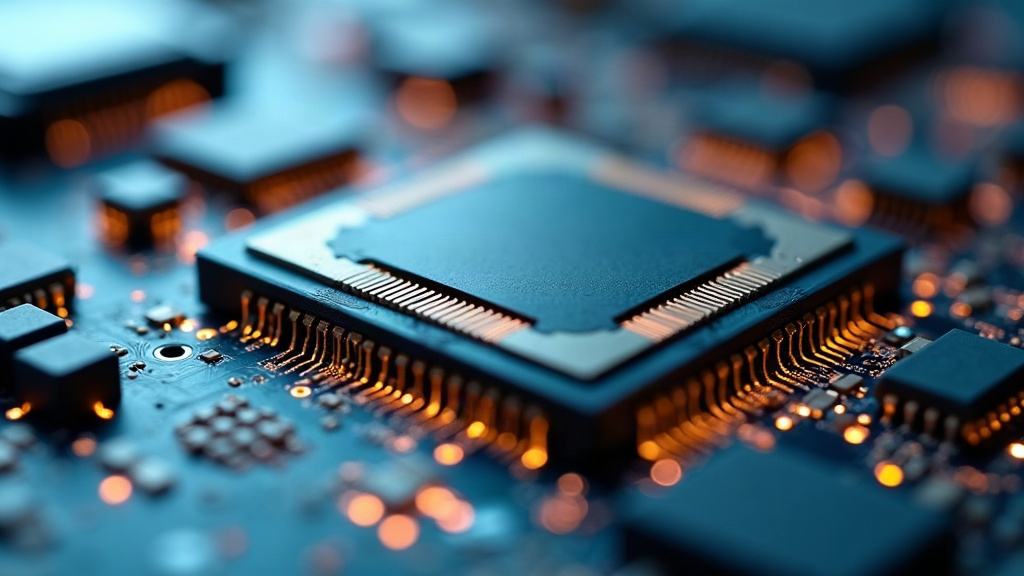
Nvidia said that OpenAI, Anthropic, and SpaceX are among the first major customers for its upcoming Vera microprocessor, the custom CPU that anchors the company's next-generation Vera Rubin platform. The chip is scheduled to enter full production in the third quarter of this year, and securing marquee buyers ahead of that ramp locks in demand for one of Nvidia's most strategically loaded launches. Vera is the processor half of the platform, designed to feed and coordinate the Rubin GPUs that handle the heavy lifting of training and inference.
The customer reveal arrived alongside a pointed shift in tone from CEO Jensen Huang on the financing side. Huang said Nvidia's roughly $30 billion investment in OpenAI "might be the last" before that company goes public, and that the chipmaker's $10 billion stake in Anthropic was "probably the last," with both labs now preparing for IPOs. In other words, the relationship is maturing from one where Nvidia seeds its biggest customers with capital into one where those customers simply buy its silicon at scale.
The Vera chip itself is the successor to Nvidia's Grace CPU, an Arm-based design built to sit beside Rubin GPUs and move data between memory and accelerators fast enough that the expensive GPUs never sit idle. In modern AI data centers, the CPU is no longer an afterthought; it is the traffic controller that determines how efficiently a rack full of accelerators actually runs. Naming SpaceX alongside the two largest AI labs also signals that Nvidia sees demand spreading beyond pure language-model labs into aerospace, simulation, and other compute-hungry frontiers.
Why This Matters More Than People Think
Locking in OpenAI, Anthropic, and SpaceX before a chip even reaches full production is how Nvidia keeps its flywheel spinning. Each named customer is both a revenue anchor and a reference that pulls in the next tier of buyers, the sovereign clouds, enterprises, and neoclouds who follow wherever the frontier labs lead. By announcing demand early, Nvidia reduces the risk of its most important launch and reinforces the perception that its roadmap is the default substrate for serious AI work. Demand signaling is itself a competitive weapon.
The financing pivot matters just as much. For two years Nvidia has been criticized for circular dynamics, investing billions into the very companies that then spend those billions buying Nvidia chips, a loop that flatters everyone's growth numbers. Huang calling these the last such investments is an attempt to defuse that critique on the eve of customer IPOs. It reframes the relationship as a normal supplier arrangement rather than a closed financial circle, which is precisely the story public-market investors and regulators will want to hear.
There is a deeper point about where the value sits. The CPU has historically been the quiet partner to the GPU in AI systems, but as clusters scale to hundreds of thousands of accelerators, the cost of idle GPUs waiting on data becomes the dominant inefficiency. By selling Vera and Rubin as a tightly coupled pair, Nvidia is moving from selling chips to selling the entire rack-scale system, capturing more of each data-center dollar and making it harder for customers to mix in someone else's components.
The Competitive Landscape
Nvidia's most direct rival, AMD, is pushing its own accelerator and CPU roadmap hard, and has won design slots at several large AI buyers precisely because customers want a second source. But the more existential competition comes from the named buyers themselves. Google has its TPU line, Amazon builds Trainium and Inferentia, and the very labs on Nvidia's customer list are developing custom silicon: OpenAI has its own chip program, Anthropic has leaned on alternative accelerators, and Meta is shipping MTIA. Every one of these efforts exists to reduce dependence on Nvidia.
That tension is the subtext of the entire announcement. The same companies buying Vera are also spending billions to eventually not need it. Nvidia's defense is to make each new generation so much faster and so tightly integrated that designing around it is irrational on a cost-per-token basis, even for a hyperscaler with its own fab relationships. Selling the CPU and GPU as a unit is part of that defense: it raises the engineering cost of substituting any single component.
SpaceX's appearance on the list widens the competitive frame in a different direction. It suggests Nvidia is courting demand from aerospace, defense, and physical-simulation workloads that sit outside the language-model arms race, hedging against any slowdown in pure LLM spending. If the next wave of compute demand comes from robotics, satellites, and world simulation rather than chatbots, Nvidia wants to be the default there too, before AMD or custom silicon can establish a beachhead.
Hidden Insight: Nvidia Is Becoming the Bank and the Supplier at Once
The real story is vertical and financial integration happening simultaneously. Nvidia has spent the past two years acting as venture investor, chip supplier, and increasingly system integrator to the same handful of companies. The Vera customer list and the "last investment" comments are two sides of one maneuver: Nvidia is converting equity relationships into pure commercial ones at exactly the moment its customers go public, harvesting the strategic positioning it bought with those early checks while shedding the optics of circular financing before regulators and IPO underwriters scrutinize it.
This is a textbook move for a dominant supplier managing antitrust and concentration risk. When you supply nearly every important customer in a category and also own stakes in them, you invite questions about whether demand is real or manufactured. By declaring the investment phase essentially over and pointing to arms-length chip purchases instead, Nvidia gets to keep the benefits of having been early, board-level relationships, roadmap influence, preferential allocation, without carrying the liability of looking like it props up its own market.
The under-appreciated technical thread is that the CPU is quietly becoming a strategic chokepoint. Everyone obsesses over GPU FLOPS, but the bottleneck in giant clusters is increasingly data movement and orchestration, which is exactly what Vera is built to own. By making the CPU and GPU co-designed and co-sold, Nvidia extends its moat from the accelerator into the connective tissue of the data center. Competitors who only make a GPU, or only a CPU, are now selling a part where Nvidia sells the whole machine.
The bear case, however, is real and worth stating plainly. Critics argue that Nvidia's customer concentration is a vulnerability, not a strength: a handful of buyers account for an outsized share of revenue, and every one of them is actively funding alternatives to escape that dependence. The risk is that the "last investment" framing reads less like confidence and more like a company quietly stepping back from bets that are getting harder to justify as its customers' own silicon matures. Skeptics also point out that pre-production customer names are commitments of intent, not binding volume, and that a single delay in the Q3 ramp or a credible AMD or TPU alternative could turn today's lock-in into tomorrow's overhang. Dominance this complete tends to attract both regulators and well-funded escape plans.
To see how unusual Nvidia's position is, compare it to any other dominant supplier in tech history. Intel sold chips but did not take equity in Dell and HP; Microsoft licensed Windows but did not bankroll the PC makers that shipped it. Nvidia has done both, seeding its largest customers with capital and then selling them the silicon that capital pays for. That dual role gave it unmatched visibility into demand and unmatched influence over roadmaps, but it also created a dependency that cuts both ways: Nvidia's reported growth and its customers' spending power have become entangled in a way that makes each look stronger than either might be alone.
The "last investment" framing should therefore be read as risk management as much as confidence. Once Anthropic and OpenAI are public, every dollar Nvidia has invested in them and every dollar they spend on Nvidia chips becomes a line item analysts and short sellers will scrutinize for circularity. By drawing a clear line under the investment era now, Nvidia gets ahead of that scrutiny and can present its forward revenue as ordinary commercial demand. The timing is not accidental; it is choreographed to the IPO calendar of its two most important customers.
The rack-scale strategy is the part with the longest tail. Nvidia has steadily moved up the stack from selling GPUs, to selling GPU-plus-CPU pairs, to selling networking with NVLink and InfiniBand, to selling reference data-center designs. Each step captures more of the customer's budget and raises the cost of substituting any single Nvidia component. Vera is the CPU piece of that strategy made explicit. A customer who adopts the Vera Rubin platform is not buying a chip; it is buying an architecture, and architectures are far stickier than parts.
That stickiness is precisely what the hyperscalers and labs are spending billions to break. Google's TPU program is more than a decade old and now trains and serves models at a cost-per-token its rivals envy. Amazon's Trainium and Inferentia are designed to make AWS the cheapest place to run inference. The very labs buying Vera are funding alternatives because they understand that a single supplier holding this much pricing power is an existential business risk. The question is not whether they want to diversify; it is whether they can move fast enough to matter before the next Nvidia generation widens the gap again.
What to Watch Next
Over the next 30 days, watch for confirmation of the Q3 production timeline and any pricing or allocation details, because the gap between named interest and committed volume is where these announcements either harden or soften. In the next 90 days, track whether OpenAI's or Anthropic's own custom-silicon programs hit milestones that would let them shift a meaningful share of workloads off Nvidia, and whether AMD wins any additional marquee design slots at the same buyers. Those are the leading indicators of whether the lock-in holds.
By the 180 day mark, the IPO calendar becomes the variable to watch. As Anthropic and OpenAI move toward public markets, their S-1 disclosures will reveal exactly how dependent they are on Nvidia and how much they are spending to diversify, numbers that will either validate or puncture the tidy "last investment" narrative. Also watch whether Nvidia formally repositions Vera Rubin as a full rack-scale system rather than a set of chips, which would confirm the shift from component vendor to data-center supplier. The clearest signal of all will be the names Nvidia adds to this buyer list next.
Nvidia spent two years funding its biggest customers. Now it is selling them chips and calling the checks off, harvesting the influence it bought right before they go public.
Key Takeaways
- OpenAI, Anthropic, and SpaceX are named as first major buyers of Nvidia's new Vera CPU, anchoring the Vera Rubin platform.
- Full production starts in Q3, and locking in marquee customers ahead of the ramp de-risks one of Nvidia's most strategic launches.
- Jensen Huang called Nvidia's $30B OpenAI and $10B Anthropic stakes likely its last, signaling a shift from investor to pure supplier.
- The CPU is becoming a chokepoint: co-designing Vera with Rubin GPUs lets Nvidia sell whole systems, not just accelerators.
- Every named buyer is also building custom silicon, from OpenAI's chip program to Amazon Trainium and Google TPU, to escape Nvidia dependence.
Questions Worth Asking
- If Nvidia's biggest customers are all funding their own chips, how durable is a moat built on selling to companies racing to leave?
- Does ending the investment phase signal confidence, or a quiet retreat from bets that are harder to justify as customer silicon matures?
- When one supplier sells the entire data-center system rather than parts, what happens to the buyers' leverage and to the regulators watching?