For three years, OpenAI has been the most powerful company in AI without a single piece of hardware to show for it. That changes in 2027. With a custom MediaTek chip being manufactured on TSMC's most advanced 2nm-class process, and projections of 30 million units in the pipeline, OpenAI isn't building a phone, it's building an escape route from Apple and Google's platforms, and the implications for the entire mobile industry are larger than anyone is publicly acknowledging.
What Actually Happened
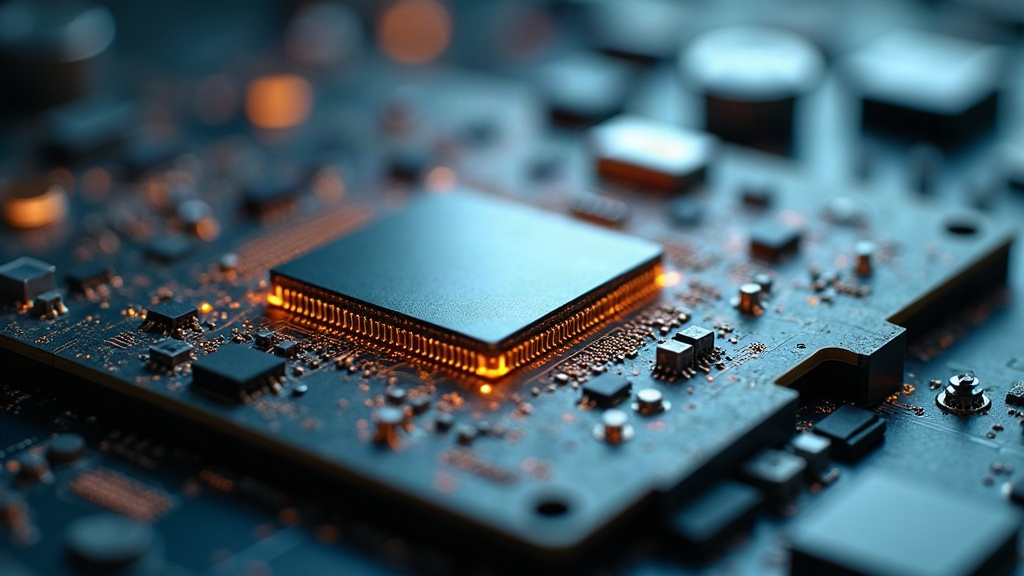
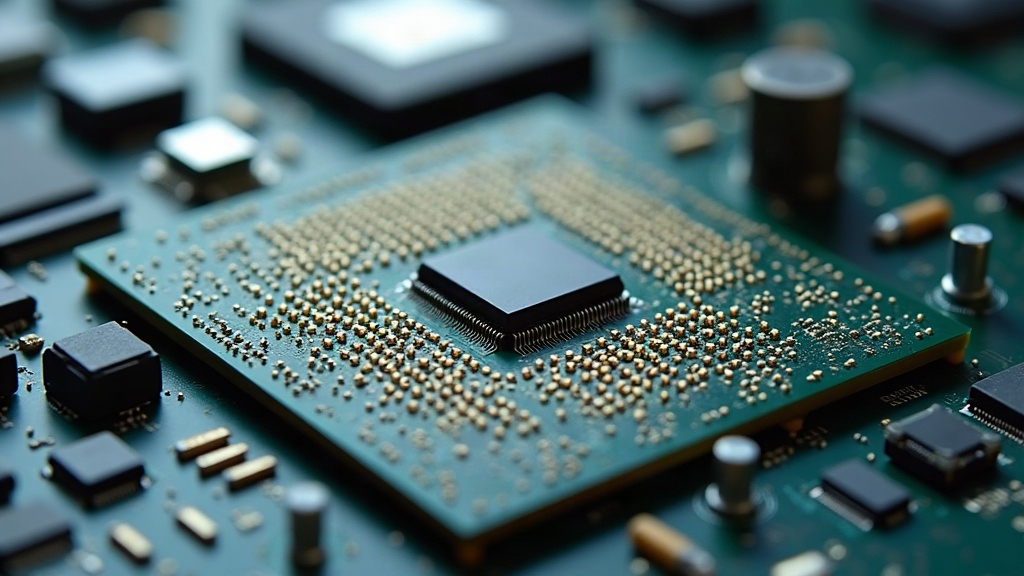
Reports surfaced in early May 2026 that OpenAI has accelerated development of its first AI agent smartphone, now targeting mass production as early as the first half of 2027. The device will be powered by a custom variant of the MediaTek Dimensity 9600 system-on-chip, manufactured using TSMC's N2P (2nm-class) process in the second half of 2026. The chip features a dual-NPU architecture specifically designed for layered AI computing, not as an afterthought, but as the foundational design principle. Memory specifications reportedly include LPDDR6 RAM and UFS 5.0 storage, both optimized to handle continuous AI workloads without the performance bottlenecks that degrade mobile AI inference on existing hardware.
Crucially, OpenAI chose MediaTek over Qualcomm, a decision that surprised most hardware analysts. Qualcomm has historically dominated premium Android chipsets and has been aggressively courting AI device makers, including through its Snapdragon X Elite platform. The MediaTek choice signals that OpenAI prioritized deep customization and pricing flexibility over brand association. MediaTek's manufacturing partnership with TSMC on N2P also gives OpenAI access to cutting-edge silicon without the negotiating leverage imbalance that would come with Qualcomm. If production stays on schedule, shipments could reach 30 million units combined across 2027 and 2028, a market entry larger than most hardware companies achieve in their first five years of existence.
Why This Matters More Than People Think
The significance of OpenAI entering hardware is not about the phone itself, it's about platform independence. Right now, every ChatGPT user on a smartphone is operating through Apple's iOS or Google's Android. Both platforms extract app store commissions, control distribution through review policies, enforce content guidelines, and can restrict or remove OpenAI's applications at any moment. Apple has already demonstrated willingness to use its platform control as a negotiating tool with AI companies, the reported tensions between Apple and OpenAI over ChatGPT's integration into Apple Intelligence are not abstract. OpenAI's device ambition is fundamentally a hedge against that leverage, and an offensive move to own the full stack of its consumer relationship.
The software approach OpenAI is reportedly building doesn't rely on apps in the traditional sense. Instead, AI agents handle tasks directly based on user intent, with deep hardware-software integration that no existing platform can cleanly replicate without restructuring its entire business model. This is Sam Altman's vision at its most complete: an AI-first computing paradigm where the interface is conversational, the execution is agentic, and the device is purpose-built for that workflow. If OpenAI can deliver this UX reliably, and that's a significant if, it wouldn't just be competing with existing smartphones. It would be proposing a fundamentally different answer to what a personal computing device is supposed to be in 2027.
The Competitive Landscape
OpenAI is not the first company to attempt AI-native hardware. The Humane AI Pin and Rabbit R1, both launched in 2024, attempted to offer AI-native computing experiences without smartphones. Both failed commercially, not because the underlying idea was wrong, but because their AI wasn't capable enough to replace what apps deliver. OpenAI's structural advantage is that its AI actually is capable enough. GPT-5.5, running on a device with LPDDR6 memory and a dual NPU optimized for continuous inference, could plausibly handle a substantial share of daily smartphone interactions without the app-switching paradigm that currently governs mobile usage.
Apple is the adversary OpenAI won't publicly name. Apple Intelligence has been moving aggressively to make AI integral to iOS, with the strategic goal of positioning OpenAI as a feature licensee rather than a platform peer. By building its own device, OpenAI is choosing direct competition over indefinite platform dependency. Samsung and Google have both announced AI-first hardware initiatives, but neither is structurally capable of building an OS-level AI integration that bypasses their own platform interests, Samsung still ships Android; Google still ships Android. OpenAI ships nothing, which means it carries no installed-base legacy to protect and no existing app ecosystem to appease. That competitive freedom is something no incumbent can replicate without cannibalizing its own business model.
Hidden Insight: The Platform Shift That Nobody Is Pricing
Here is the uncomfortable calculation that hardware analysts are avoiding: if OpenAI ships 30 million AI-native phones by 2028, it doesn't have a product, it has a platform. Thirty million devices with a proprietary operating environment, a proprietary AI stack, and a direct commercial relationship with users is larger than the installed base of many entire operating systems from the desktop computing era. And platform economics are non-linear: once a critical mass of developers or enterprises build for OpenAI's device environment, the switching costs compound in ways that are difficult to reverse.
The deeper implication is what happens to the app economy at scale. OpenAI's agent-first design philosophy doesn't need apps in the traditional sense, it treats the underlying services (ridesharing, food delivery, travel booking, e-commerce) as APIs that agents call, without requiring users to install, update, or consciously navigate discrete applications. Every developer who currently pays for distribution through the App Store or Google Play is watching this development with existential concern. The $100+ billion annual App Store and Google Play revenue model depends on users needing apps as the atomic unit of mobile computing. AI agents that execute intent directly may render that assumption obsolete within a decade.
The MediaTek chip choice also carries geopolitical dimensions that deserve more scrutiny. MediaTek is a Taiwanese company with a foundational manufacturing relationship with TSMC, another Taiwanese company. The entire supply chain for OpenAI's flagship device is concentrated in Taiwan, at exactly the moment when U.S.-Taiwan relations face maximum geopolitical pressure and when the U.S. government is actively incentivizing semiconductor onshoring through the CHIPS Act. The choice signals either that OpenAI has assessed Taiwan conflict risk as manageable, or that the manufacturing access TSMC provides is too valuable to sacrifice for supply chain diversification. For a device meant to carry OpenAI's entire future consumer hardware business, that geopolitical concentration deserves serious attention from investors and policymakers alike.
What to Watch Next
The most critical milestone to track is TSMC's N2P tape-out schedule for OpenAI's custom Dimensity 9600 chip in H2 2026. If the chip enters production on schedule, a 2027 mass production date is credible. Any slip in the tape-out timeline, which requires finalizing the chip design months in advance, would push the commercial launch to 2028, compressing the projected shipment window significantly. Also watch for OpenAI software announcements that hint at an OS-level build: any new agent runtime, device-native ChatGPT API, or "OpenAI OS" framing in late 2026 would be the clearest forward signal that the software stack is progressing alongside the hardware.
The carrier and retail distribution partnerships are the variable that will determine whether 30 million units is an achievable projection or optimistic marketing. Getting to that volume in two years requires major carrier agreements or mass retail partnerships at global scale. Watch for announcements between OpenAI and T-Mobile, AT&T, Softbank, or major Asian carriers in H2 2026. Apple's response is also worth monitoring: if Apple begins restricting ChatGPT's iOS capabilities, through App Store policy changes, technical API limitations, or any other mechanism, in ways that seem designed to disadvantage a competitor hardware play, it confirms that Apple is treating OpenAI as a direct platform threat, not merely a content licensing partner.
OpenAI isn't building a phone. It's building the first piece of infrastructure that lets it look Apple and Google in the eye and say: we don't need you anymore.
Key Takeaways
- Custom MediaTek Dimensity 9600 on TSMC N2P, OpenAI chose MediaTek over Qualcomm for its first AI smartphone, targeting H1 2027 mass production.
- 30 million units targeted by 2028, A combined 2027-2028 shipment target larger than most hardware companies achieve across their first five years.
- Dual-NPU architecture, agent-first design, Built for AI agents handling tasks directly from user intent; no traditional app-switching paradigm.
- Platform independence from Apple and Google, Every ChatGPT user currently operates on iOS or Android; OpenAI's hardware play is a direct structural hedge against platform leverage.
- Taiwan supply chain concentration, Both MediaTek and TSMC are Taiwanese, creating geopolitical supply chain exposure at a moment of maximum U.S.-Taiwan geopolitical tension.
Questions Worth Asking
- If AI agents can execute tasks without opening apps, what happens to the $100B+ annual App Store and Google Play economy, and how quickly could that transition actually occur?
- At what point does Apple decide that OpenAI building competing hardware means the ChatGPT integration in Apple Intelligence becomes a competitive liability rather than a feature?
- If you are building a startup today that relies on mobile app distribution, how does your go-to-market strategy change if 30 million users shift to an agent-native computing environment by 2028?