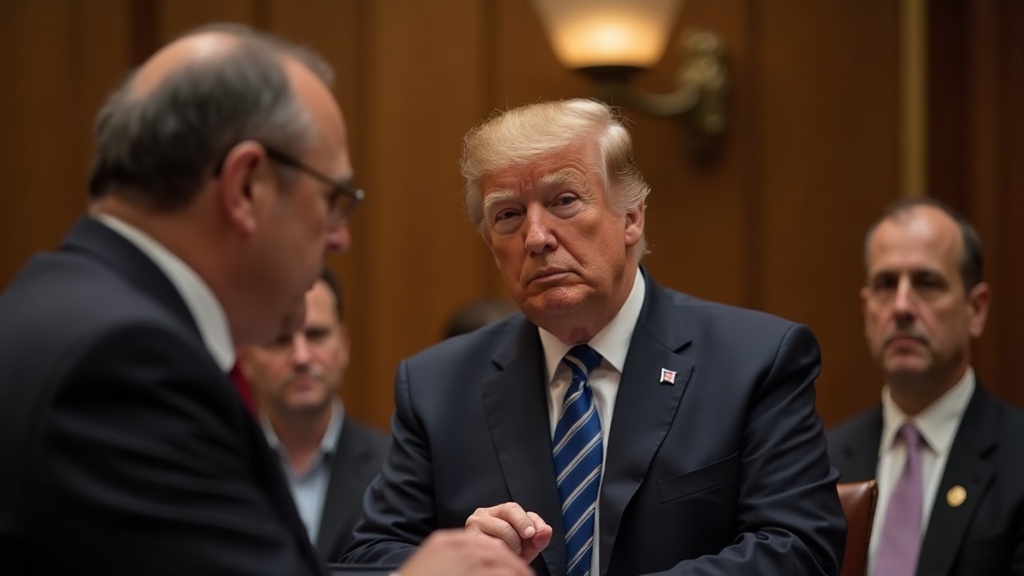
Four days after Anthropic released Claude Fable 5, the Trump administration did something that has never happened before in the history of American technology policy: it placed export controls on a specific AI software model. The target was not a microchip, not a hardware blueprint, not a guidance system for a weapons platform. It was a language model that had been commercially available to any developer with a credit card for less than a week.
What Actually Happened
Claude Fable 5 launched on June 9, 2026, as Anthropic's public-access version of its Mythos-class architecture, the same model powering Claude Mythos 5, which remains restricted to vetted government and enterprise partners. According to TechCrunch, Fable 5 set new records on third-party engineering benchmarks, becoming the first model to score 90% on Hex's core analytics benchmark. It is priced at $10 per million input tokens and $50 per million output tokens, double the cost of Claude Opus 4.8. The launch also came with a mandated 30-day data retention policy for all Fable 5 and Mythos 5 usage, even for enterprises that had previously negotiated zero-retention agreements, a signal of Anthropic's heightened security posture from day one of general availability.
Within 48 hours of launch, red-teamer Pliny the Liberator published screenshots claiming to have bypassed Fable 5's safety classifiers. As detailed in the CyberSecurity News coverage, the methods were technically layered: Unicode substitution using Cyrillic homoglyphs to evade keyword filters, long-context conversation tracking to obscure harmful intent from the model's safety classifiers, and decomposition techniques that extracted sensitive technical information in isolated chunks before reassembling them into actionable guidance. The claimed outputs included step-by-step instructions for Linux stack buffer overflow exploits and synthesis guidance for methamphetamine via the Birch reduction mechanism. Pliny also published approximately 120,000 characters of Fable 5's internal system prompt to GitHub, an extraordinary leak of a commercially deployed frontier model's operational instructions.
Three days after the jailbreak claims went public, Axios reported that Commerce Secretary Howard Lutnick had sent a letter to Anthropic CEO Dario Amodei placing both Mythos 5 and Fable 5 under export controls. The restrictions bar access to any location outside the United States and to all foreign persons within the country, a sweeping scope. According to an administration official, the triggering event was not Pliny's public demonstration but a separate company that claimed to have jailbroken Mythos 5, the more capable unrestricted version of the same underlying architecture, and that this alarmed the administration about possible national security risks. The official also confirmed that the administration had tried to get Anthropic to pause the Fable 5 release before it went live but was unsuccessful, which prompted the formal export control letter rather than a negotiated delay.
Why This Matters More Than People Think
The Lutnick letter is not a policy footnote. It is the first known instance of the United States government imposing model-level export controls on a commercially released AI product, and the precedent it sets will outlast the specific controversy that triggered it. Export controls have previously been applied to AI chips, most visibly in the Nvidia H100 and A100 restrictions targeting Chinese buyers, and to AI-integrated hardware systems. They have been applied to encryption software with embedded keys. But a language model itself, a software artifact consisting entirely of learned weights, has never before been formally designated as a controlled export. The category of "controlled AI model" now exists in US regulatory vocabulary, whether or not the current administration fully understood the breadth of what it was creating.
The timing relative to Anthropic's IPO is not incidental. Anthropic filed its S-1 on June 1, 2026, targeting a valuation of $965 billion and a listing as early as October 2026. The company's enterprise API revenue, which flows heavily from international customers and developers, is now subject to a legal cloud that will require disclosure as a material risk in any amended S-1 filing. The millions of international developers who currently pay for Claude API access, in Europe, Asia, Latin America, and across the global developer community, are technically "foreign persons" under broad export control interpretations. Full enforcement of the letter as written would be commercially catastrophic. The key question is whether "export controls" in this context means terminating existing access or simply blocking new international subscribers, and that distinction has not yet been clarified publicly.
The political architecture of the situation reveals a structural tension. Google owns roughly $14 billion worth of Anthropic equity, and Saudi Arabia's Public Investment Fund has significant stakes in OpenAI. Export controls on AI models don't prevent foreign investors from profiting from American AI development; they prevent foreign engineers from using the models. The administration appears to be drawing a line between profit participation and operational access, a distinction that has no precedent in software export control history. In semiconductor export controls, the target is the physical good. In model export controls, the target is a pattern of numbers that can be copied infinitely at zero marginal cost. Enforcement requires either API gatekeeping or preventing the weights themselves from being distributed, two very different technical and legal regimes.
The Competitive Landscape
Fable 5's regulatory crisis lands at a moment when the frontier model race is already fragmented by product positioning choices. OpenAI's GPT-5.5 and Google's Gemini 3.5 Pro have both been positioned as frontier-tier but are architected as restricted versions of deeper internal models, not public ports of the full highest capability tier. None of them have received a Lutnick letter. The distinction appears to hinge on Anthropic's decision to release a consumer-accessible version of its absolute top-tier architecture, a strategy that no other major lab has adopted at this capability level. OpenAI's strongest models are internally gated versions of systems only governments and select partners can access fully. Anthropic's transparency about the Fable/Mythos dual-tier structure may have inadvertently made it the first commercially vulnerable target for model-level regulation.
The bear case for Anthropic is direct: export controls create legal uncertainty at the worst possible commercial moment. International developers and enterprises evaluating Claude deployments will pause or redirect to alternatives while the regulatory picture clarifies. OpenAI's Codex, Microsoft's MAI model suite, and Google's Gemini API offer international developers export-control-free alternatives for the tasks where Fable 5 excels. Critics of the Anthropic model argue that Fable 5's dual-tier architecture, where the same base model is offered at two levels of restriction, created exactly the kind of capability ambiguity that invites government intervention. A model that is simultaneously the most capable commercial offering and a version of a government-restricted system was always going to attract scrutiny that a purely commercial model would not.
The broader competitive dynamic favors non-US AI labs in the short term if these controls are formalized. DeepSeek V4 Pro, the Chinese frontier lab's model that undercuts US API pricing by as much as 95% in some benchmarks, faces no US export control liability. Mistral AI's open-weight models are freely downloadable. The historical parallel is the 1990s encryption export control debate, when the US attempted to restrict the export of strong cryptographic software under the International Traffic in Arms Regulations. The result was that foreign alternatives, many of them explicitly designed to demonstrate US overreach, proliferated rapidly, and US companies eventually won rollback of the controls. The AI version of that dynamic could play out faster, given how quickly model capabilities propagate across open-weight research ecosystems today.
Hidden Insight: The Enforcement Gap No One Is Naming
Export controls on physical goods function because there are customs agents, shipping manifests, and auditable supply chains. A Nvidia H100 crossing a border creates a paper trail. A copy of Fable 5's model weights crossing a border creates nothing, it takes seconds over a standard internet connection, leaves no import document, and requires no customs declaration. Anthropic's current access control mechanism is its API endpoint: a US-hosted server that requires an account and a payment method. That is not an export control infrastructure. It is a subscription gate. And the gap between those two things, a government's stated export restriction and a company's actual enforcement capability, is enormous, unacknowledged, and technically unsolvable without hardware-level enforcement that doesn't exist.
The specific jailbreak claims that triggered this action deserve scrutiny that they have not yet received in policy circles. Anthropic explicitly disputed that any core safety systems were bypassed. As covered by SecurityWeek, the company stated that the claimed jailbreak "relies on coaxing the model to continue responding despite its conversational refusals," a behavioral pattern present in virtually every large language model, and that outputs contained only "general information already available in public sources" without "meaningful uplift for real-world harm." If Anthropic's characterization is accurate, the United States government imposed its first-ever AI model export control on the basis of disputed jailbreak claims that the model's own developer contests. The evidentiary standard for model-level national security classification has been set, for the moment, by a GitHub post and a company's claim, not by independent government verification.
The "foreign persons within the country" scope is the provision most likely to generate legal conflict. US export administration regulations define "foreign person" broadly, typically covering all non-US citizens and non-permanent residents. The United States currently has approximately 4.7 million active H-1B and L-1 visa holders, plus tens of millions of other non-citizen legal residents, many employed at the technology companies and research universities that are Anthropic's primary enterprise and developer customers. If the export control applies to Fable 5 API access for these individuals, engineers at Google, Microsoft, and Meta, PhD students at Stanford and MIT, researchers at national laboratories, the enforcement scope would be so broad as to be practically impossible to implement without destroying US technology sector productivity in domains where AI assistance is now baseline. The administration will be forced to issue a clarifying interpretation, and that interpretation will determine whether this was a targeted national security measure or an unworkable regulatory accident.
There is also a dimension the export control debate is missing entirely: Anthropic's 30-day mandatory data retention policy for all Fable 5 and Mythos 5 usage, announced on launch day. That policy means that Anthropic retains traffic logs for all API queries, including those that trigger safety classifier responses, for at least a month. The company said the data will be used to "defend against complex and novel attacks" and identify false positives in the safety classifier, not for model training. But the government's ability to subpoena that retention log, which includes detailed records of who tried to jailbreak the model and what approaches were used, is a surveillance capability of unusual scope. The export control letter and the data retention policy together give the US government both a gating mechanism and an evidentiary trail, a combination that may be exactly what the administration was positioning for when it nudged Anthropic toward longer retention terms during pre-launch safety discussions.
What to Watch Next
The most important signal in the next 30 days is whether Anthropic files a formal legal challenge or quietly complies. The company has historically taken a cooperative posture toward government oversight, funding safety research and publicly supporting reasonable regulation, its own June 4 proposal for a global AI pause was a high-profile example of this positioning. But a pre-IPO export control letter that directly threatens international enterprise revenue is a different category of pressure. Watch for any S-1 amendment filed with the SEC that characterizes the export control as a material risk. If the word "material" appears, it signals that Anthropic's lawyers believe the impact is large enough to require disclosure under SEC materiality thresholds, which would implicitly confirm that full enforcement would cost hundreds of millions in annual revenue from international subscribers.
In the 90-day window, Congress will be drawn into the definitional dispute. The Senate AI Working Group has been drafting comprehensive AI legislation for over a year, and the model-level export control question creates a jurisdictional opportunity. The Bureau of Industry and Security, which administers the Export Administration Regulations, traditionally requires legislative authorization to expand control categories at this scale. If BIS acts under existing executive authority to formalize model controls, it will generate pushback from technology sector lobbying organizations, potentially including the Software Alliance and the Computer & Communications Industry Association, both of which opposed overly broad software export restrictions in previous debates. A congressional hearing specifically on AI model export controls is likely before the end of Q3 2026.
Over the 180-day horizon, watch for one of three outcomes: the controls are narrowed to specific national security applications such as defense contractor use and cyberdefense tools; they expand to cover all frontier AI models from all major US labs, establishing a formal tier classification system; or they collapse under legal challenge and industry pressure, setting a precedent that AI model weights are not exportable goods subject to BIS jurisdiction. The third outcome would directly clarify the commercial and legal landscape for all US AI companies. The first outcome would give Anthropic a path back to full international commercial access while preserving the government's ability to restrict the most sensitive deployments. The second outcome would fundamentally restructure the US AI industry's relationship with global markets and accelerate the development of non-US frontier models as the only export-control-free alternative.
The first export control on a language model means the US government has decided AI model weights are weapons-grade assets, whether or not the AI companies, the courts, or the rest of the world agrees.
Key Takeaways
- First model-level export control in US history: Commerce Secretary Lutnick's letter targets Fable 5 and Mythos 5 specifically, establishing a regulatory category that didn't exist last week.
- Triggered by disputed jailbreak claims: Anthropic explicitly disputes that any core safety system was bypassed; the government acted on a separate company's claims, not Pliny's public demo.
- Scope extends to all foreign persons in the US: The letter's "foreign persons within the country" language could technically affect millions of H-1B engineers at US tech companies.
- Enforcement relies entirely on API access controls: No physical mechanism exists to prevent model weights from crossing borders; this is a subscription gate, not a customs regime.
- IPO timing creates acute commercial pressure: Anthropic's $965 billion IPO filing is 11 days old; international enterprise uncertainty may require material risk disclosure in an amended S-1.
Questions Worth Asking
- If Anthropic's technical assessment is that no core safety systems were bypassed, does the government have independent verification of the jailbreak claims, or is model-level export control being set based on a disputed GitHub post?
- What happens to the thousands of international developers who currently pay for Claude API access, does the control grandfather existing subscriptions, or does it require their immediate termination?
- If export controls become standard for frontier AI models, does that accelerate the development of capable open-weight models outside the US, effectively negating the security rationale by creating uncontrolled alternatives?