AMD announced the acquisition of Taalas on August 7, 2026, and the deal terms stood out for what they did not include: a price. Taalas, a Toronto-based startup that raised $219 million in venture funding over three years, built chips that embed a neural network's trained weights directly into silicon during manufacturing, bypassing the high-bandwidth memory layer that every other AI accelerator on the market relies on. The undisclosed price tag, combined with AMD's urgent need to answer Nvidia's $20 billion Groq acquisition from seven months prior, tells you more about the deal's strategic weight than any announced valuation would have.
What Actually Happened
According to the official AMD press release, the company is acquiring Taalas to advance compute solutions for the rapidly growing AI inference market. The transaction is expected to close in Q4 2026, pending regulatory review. AMD plans to integrate Taalas technology into its Helios rack-scale systems, running alongside Instinct GPUs and EPYC CPUs to offer customers a spectrum of inference solutions from general-purpose to model-specific. Vamsi Boppana, AMD's Senior Vice President of AI, stated that the acquisition strengthens the company's AI portfolio at a critical juncture as the industry transitions from training-dominated to inference-dominated workloads. The deal was announced after US market close on August 6 and covered widely by the technical press on August 7, with no acquisition price disclosed.
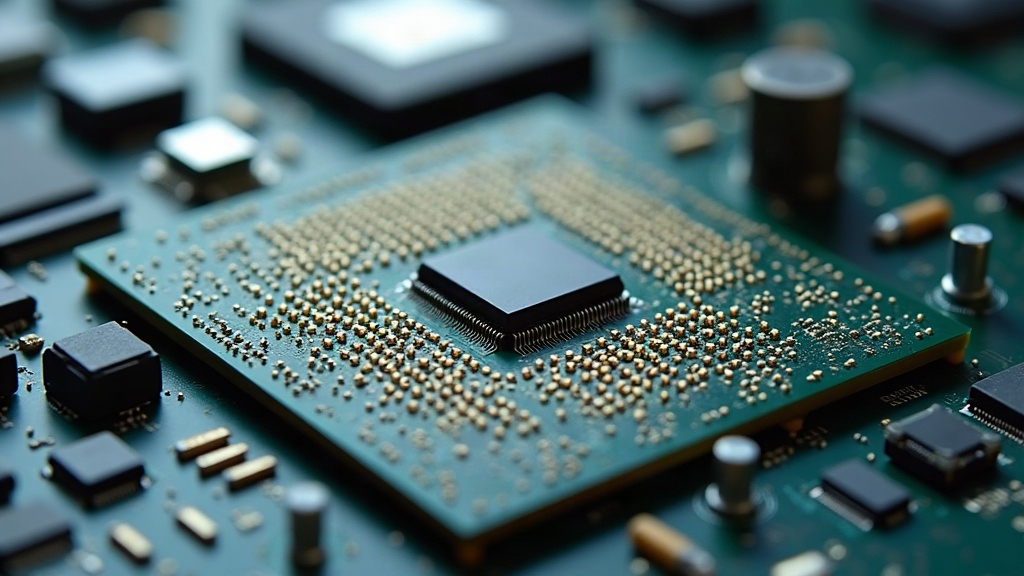
The Decoder reported the technical core of Taalas's approach in detail: during the chip fabrication process, the startup encodes a model's architecture and all of its trained parameters directly into the silicon substrate. Each chip is therefore permanently bound to the specific model it was manufactured to run. The trade-off is complete and intentional. The chip cannot execute a different model without being refabricated, but within its single-model domain, it eliminates every layer of memory access latency, kernel dispatch overhead, and data movement cost that a general-purpose accelerator incurs. In benchmark testing, a Taalas demonstration chip running Meta's Llama 3.1-8B achieved over 16,000 tokens per second per user, a figure no GPU-based system has matched at comparable power draw. That performance gap is not a matter of optimization; it reflects a fundamentally different architecture where the model's weights are a physical property of the silicon, not a dataset loaded into memory at runtime.
CNBC contextualized the acquisition within AMD's broader inference positioning. The company has been working to rebuild its AI narrative since losing ground to Nvidia's H100 and H200 during the 2023 to 2025 training-hardware supercycle, when AMD's Instinct GPUs were competitive on paper but lagged in the software ecosystem that made Nvidia's CUDA practically unbeatable for model training. With inference now representing a growing share of AI infrastructure spend, and with specialized inference hardware beginning to demonstrate clear advantages over general-purpose GPUs on specific workloads, AMD has a window to establish differentiated positioning before the market consolidates around Nvidia's integrated stack. Taalas gives AMD a capability that no other major chip company has shipping at production scale, and it provides a concrete answer to the question AMD has struggled to answer since 2023: what does AMD offer that Nvidia cannot?
Why This Matters More Than People Think
The transition from AI training to AI inference as the dominant compute workload is not subtle or distant. Training a frontier model requires months of concentrated GPU time on a fixed dataset; inference runs continuously, indefinitely, on every request from every user of every deployed application. As AI adoption scales, the economics of inference increasingly determine which companies can profitably serve AI at scale and which cannot. Goldman Sachs estimates that inference workloads will represent more than 60 percent of total AI compute spend by 2027, up from roughly 30 percent in 2024. In that environment, a chip that runs a specific model at 16,000 tokens per second at lower power draw than a comparable GPU cluster is not a curiosity. It is a potential structural disruption to the economics of running AI in production.
The key strategic insight embedded in the Taalas technology is that the vast majority of real-world AI deployments do not require model flexibility. A customer service platform runs the same fine-tuned model for months or years before a forced update cycle. A document processing pipeline uses the same embedding model on every invoice it processes. A fraud detection system calls the same classifier on every transaction. For these applications, the ability to swap models at runtime has no operational value; what matters is speed, cost per token, and energy efficiency per inference. Taalas-style etched chips address exactly those metrics at the cost of the one thing those deployments do not need. The market segment that fits this profile, stable high-volume inference on fixed models across financial services, logistics, healthcare, and manufacturing, is enormous and is growing faster than the general-purpose AI accelerator market will expand through 2028.
The bear case, however, is straightforward and deserves honest engagement. The AI model landscape updates faster than silicon fabrication cycles have historically operated. The Llama 3.1-8B benchmark chip that achieved 16,000 tokens per second was built for a model that may be functionally obsolete within twelve to eighteen months as successor architectures compound in capability. If enterprises need to commit to refabricating chips every time their model provider releases a new version, the operational lead time and capital commitment could outweigh the performance benefits, particularly for organizations whose AI governance processes require extensive testing and certification before any model transition. Taalas co-founder Ljubisa Bajic acknowledged in SiliconAngle that the technology targets "long-tailed" enterprise workloads where a model is deployed at scale for an extended period, not environments where model updates happen on quarterly release cycles.
The Competitive Landscape
The competitive framing for this acquisition is impossible to understand without Nvidia's acquisition of Groq, announced in January 2026. Nvidia paid $20 billion for Groq, which had built the Language Processing Unit, a fixed-function chip that processes transformer architectures through deterministic dataflow design rather than GPU-style general-purpose parallelism. The Groq acquisition gave Nvidia a specialized inference product to offer alongside its H-series GPUs, and it sent an unambiguous signal to the rest of the industry that specialized inference hardware would command premium acquisition multiples in the near term. AMD's Taalas acquisition follows that signal seven months later, with a technically distinct but strategically parallel approach: where Groq optimizes the execution path of a transformer, Taalas eliminates the memory hierarchy entirely by encoding the model into the physical substrate.
Google is reportedly developing an analogous technology internally under the codename "Frozen V2," a next-generation TPU variant designed for Gemini inference that encodes model parameters at the hardware level, per reporting from industry analysts monitoring Google's custom silicon roadmap. If that development track is accurate, all three largest AI infrastructure players will each have a model-in-silicon offering within the next eighteen months. The company that establishes the first successful large-scale enterprise deployment of etched inference hardware will define the reference architecture for the rest of the industry, and that architectural choice will shape datacenter purchasing decisions for years. The historical precedent is IBM's ASIC-based speech recognition hardware in the 1990s: the deployment economics were compelling, but the market moved to general-purpose silicon before the ASIC pipeline could scale, and the technology became a cautionary case study in the risks of hardware specialization in fast-moving software markets. Whether the current AI inference market moves slowly enough for etched-silicon economics to compound is the central open question.
Intel is the absence that sharpens this competitive picture. The company's Gaudi accelerator line has struggled to gain traction against Nvidia's installed base, and Intel's foundry business, while strategically important for US semiconductor sovereignty, has not been positioned around AI inference specialization. If the etched-inference paradigm gains traction, Intel will need to acquire its way into the space or pivot Gaudi's roadmap in a direction it has not publicly indicated. AMD's Taalas acquisition accelerates the clock on Intel's response window. Tenstorrent, d-Matrix, and Rebellions are the remaining pure-play inference hardware startups of scale, and the race between AMD, Nvidia, and Google to acquire or replicate their capabilities will likely produce additional consolidation in the specialized inference space before the end of 2027.
Hidden Insight: When Immutability Becomes a Feature
The standard criticism of model-in-silicon chips is model obsolescence risk, and that criticism is real. But this framing misses the economic logic of enterprise AI governance. When a large financial institution deploys an AI model for fraud detection, contract review, or regulatory reporting, it does not update that model casually. Compliance requirements, audit trails, model risk management frameworks, and regulatory approval processes mean that deployed model versions are often formally frozen for quarters at a time. For these institutions, the inability to update a chip's model is not a constraint. It is a governance property. A chip that can only run the model it was manufactured for is, from a compliance perspective, a chip that cannot be tampered with at runtime, cannot be remotely updated with a model version that has not passed the organization's internal validation process, and cannot accidentally route to a non-approved inference endpoint due to a misconfiguration. That framing has not appeared prominently in acquisition coverage, but it is almost certainly a central part of AMD's enterprise pitch for the technology.
The energy efficiency story is equally underexamined. A general-purpose GPU running large language model inference at scale requires constant high-bandwidth memory access to load model weights into compute units during each generation step. At datacenter scale, that memory bandwidth is a large, measurable portion of total power draw, with HBM memory subsystems consuming energy that scales with every token generated. An etched inference chip eliminates that energy cost entirely: the weights are permanent properties of the silicon, not data to be fetched from memory, and the energy footprint per token shrinks dramatically. At the power densities modern AI datacenters operate at, with server racks drawing between 30 and 120 kilowatts and datacenter operators facing grid capacity constraints that are delaying expansion timelines by twelve to twenty-four months in key US markets, a 30 to 50 percent reduction in per-inference energy consumption for a fixed-model workload could represent tens of millions of dollars annually for a hyperscaler. That economic signal will drive serious evaluation even from organizations that would otherwise prefer the flexibility of GPU-based inference.
The $219 million Taalas raised before acquisition, compared to Nvidia's $20 billion for Groq, suggests AMD paid somewhere in the range of $1 to $5 billion for a company that had not yet shipped a production chip. That implied multiple is high for hardware startup at the pre-production stage, but it reflects a specific competitive dynamic: AMD had limited options for entering the etched-inference space organically, the field of acquisition candidates was narrowing as competing offers accelerated, and the cost of arriving without a defensible etched-inference product before the market consolidates was higher than the acquisition premium. The strategic calculus is classic defensive M&A: pay a premium for a technology you cannot build fast enough on your own, or cede a permanent structural position in a market that will shape the next decade of AI infrastructure economics.
What AMD now needs to execute is the transition from a compelling demo chip to a productized offering that hyperscalers and large enterprises can order on defined lead times, integrate into existing operational workflows, and support through the full lifecycle of a deployed AI application. That transition from research chip to production SKU typically takes 18 to 24 months even with full manufacturing partner support, and AMD's integration pathway through Helios rack systems gives Taalas a distribution channel and credibility backstop it could not have built independently. The deal's success will ultimately be measured not by the acquisition price, which remains undisclosed, but by how many Taalas-derived chips are running production inference workloads at hyperscalers by the end of 2028, and what cost-per-token benchmarks they achieve against H200-based alternatives at that scale.
What to Watch Next
Within 30 days, watch for AMD's Instinct GPU roadmap update at its Next Horizon AI event, expected in September 2026. If AMD announces a Helios rack configuration that explicitly bundles Instinct GPUs with a Taalas inference tier for fixed-model workloads, it will confirm that integration execution is proceeding faster than the Q4 2026 regulatory close timeline implies. A public reference architecture pairing general-purpose and model-specific silicon in a single rack system would be a direct competitive signal to Nvidia's Groq integration roadmap and would give AMD a product story it has lacked since the inference market began accelerating.
Over the next 90 days, the key validation metric is whether any hyperscaler publicly announces an evaluation program for etched inference hardware in production workloads. Amazon Web Services, Microsoft Azure, or Google Cloud adopting Taalas-derived hardware for even a single high-volume fixed-model workload would shift the narrative from compelling acquisition to market-changing technology faster than any benchmark paper or analyst note could. A hyperscaler commitment also establishes the manufacturing volume signal that AMD's chip fabrication partners need to confirm production capacity planning, which in turn determines how quickly the technology can scale beyond the initial niche deployment stage.
By the six-month mark, Nvidia's competitive response will be the most informative data point in the market. The company could accelerate its Groq integration roadmap, announce a new inference-optimized SKU from within its own chip design pipeline, or pursue additional acquisitions among the remaining specialized inference hardware startups. Tenstorrent, d-Matrix, and Rebellions are the most likely acquisition targets given their technical differentiation and funding stage. If Nvidia moves against any of them before the end of Q1 2027, the inference hardware consolidation race will effectively be over, with the three major platforms locked in and little remaining acquisition optionality for Intel, Qualcomm, or the hyperscalers considering vertical integration into custom silicon.
When AMD paid an undisclosed premium for a three-year-old startup, the company was not buying chips. It was buying the answer to a question every AI datacenter will be forced to ask within two years: when your model is frozen and your throughput demand is massive, why are you still paying for GPU flexibility you cannot use?
Key Takeaways
- AMD acquired Taalas on August 7, 2026, a Toronto startup that raised $219 million and builds chips that embed model weights directly into silicon during fabrication, achieving over 16,000 tokens per second per user for Meta's Llama 3.1-8B model
- Acquisition price undisclosed, but the deal arrives seven months after Nvidia's $20 billion Groq acquisition, establishing a competitive benchmark for how much the industry values specialized inference hardware at this stage of the market
- No runtime model flexibility by design: each Taalas chip runs a single model, trading deployment versatility for speed and energy efficiency gains that could reduce AI datacenter power costs by 30 to 50 percent on fixed-model workloads
- Integration target is AMD's Helios rack-scale system, pairing etched inference chips alongside Instinct GPUs and EPYC CPUs to offer a spectrum from general-purpose to model-specific inference within a single rack configuration
- Google reportedly building Frozen V2 using a similar hardware-encoded approach for Gemini inference, meaning all three major AI infrastructure players could have model-in-silicon products within eighteen months
Questions Worth Asking
- If etched inference chips cannot update their model without being physically refabricated, should regulated industries like financial services and healthcare treat hardware-level model immutability as a governance feature rather than a limitation?
- At what cost-per-token differential does the operational complexity of managing both general-purpose and model-specific inference hardware in the same datacenter become worth it for an enterprise running mixed workloads?
- If AMD, Nvidia, and Google all ship model-in-silicon products within two years, what happens to pure-play inference hardware startups like Tenstorrent and d-Matrix that are still racing to reach production scale?