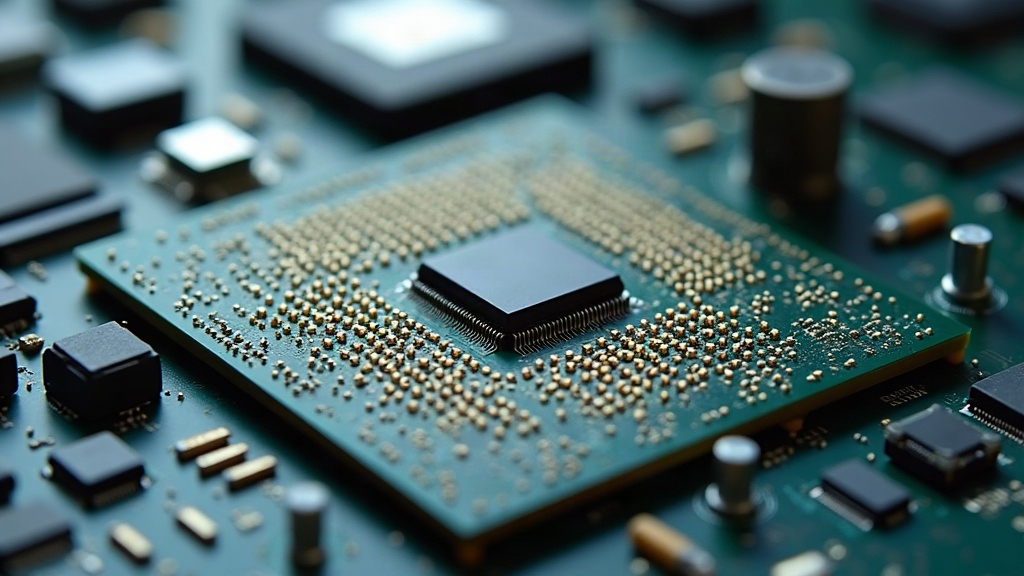
Two announcements arrived from Anthropic within 24 hours that look like contradictions but describe a single coherent bet. On August 4, the company signed a $10 billion, six-year compute deal with Volta, a startup that is seven months old, to secure 133 megawatts of Nvidia Vera Rubin capacity in a hydroelectric-powered Norwegian data center. Then on August 5, it confirmed that it is building an in-house silicon team to design custom chips for Claude, offering salaries between $320,000 and $485,000 for engineers who can design front-end logic, verify silicon pre-production, and optimize the physical layout of chips built specifically for neural network inference. These two moves are not competing strategies: they are sequenced bets. The Volta deal buys the compute runway to remain a frontier lab through 2027. The silicon team builds the option to stop paying Nvidia's prices by 2029. What both announcements confirm, and what Anthropic has now said explicitly through its actions, is that neither the existing cloud compute market nor the existing chip market can reliably supply what a frontier AI lab needs to stay competitive through the rest of the decade.
What Actually Happened
On August 4, 2026, Bloomberg and TechCrunch reported that Anthropic had agreed to a six-year, $10 billion cloud compute deal with Volta, a newly founded AI infrastructure startup led by former executives from hyperscaler infrastructure organizations. According to TechCrunch, Volta will partner with Bitdeer Technologies, a Bitcoin miner that has converted a large share of its Nordic operations to AI data center infrastructure, to build a 133-megawatt facility in Tydal, Norway, running on Nvidia's next-generation Vera Rubin chip architecture. The capacity delivery is structured across two phases: the first tranche is targeted for December 31, 2026, and the second for March 31, 2027. The $10 billion figure represents total contracted compute value over the six-year term at commercial cloud pricing rates, not a single upfront capital payment, meaning the actual cash commitment in the first year is a fraction of the headline number but the long-term obligation runs to roughly $1.7 billion per year and is legally binding.
Volta confirmed signing a deal with a leading AI lab that it declined to name publicly. Bloomberg attributed the deal to Anthropic based on people familiar with the matter. What makes this deal structurally unusual is not the dollar amount but the counterparty: Volta was founded in January 2026, making it roughly seven months old at the time of the announcement. Anthropic is not contracting with AWS, Google Cloud, or Azure for this capacity: it is betting a decade of compute access on a startup that has not yet operated a single commercial data center at AI lab scale. The choice of an emerging infrastructure provider over an established hyperscaler raises questions about availability, reliability guarantees, and the SLA frameworks that govern what happens if Volta fails to deliver capacity on schedule or at the specified performance level.
On August 5, exactly one day after the Volta deal became public, Anthropic confirmed to Business Insider that it is building an in-house silicon engineering team focused on designing custom chips for the Claude model family. The confirmation came alongside a job listing for a Silicon Engineer posted to Anthropic's careers portal, seeking candidates across eight specializations: front-end design, pre-silicon verification, physical design, design-for-test, analog and mixed-signal engineering, technology and foundry relations, design infrastructure, and packaging with signal and power integrity. According to Technology.org, the salary range of $320,000 to $485,000 reflects the genuine scarcity of engineers who can work across the full silicon design stack, a skill set that has historically concentrated at companies such as Apple, Qualcomm, and the major hyperscalers rather than at AI software labs that have until now focused entirely on model research and product development. Anthropic described the initiative as a multi-chip strategy, emphasizing that in-house silicon will coexist with hardware from AWS, Google, Nvidia, and AMD rather than replacing those commercial relationships.
Why This Matters More Than People Think
The Volta deal and the silicon team announcement together reveal the same underlying constraint with unusual clarity: there are not enough AI chips in the world to train and run frontier models at the scale that Anthropic needs to remain competitive through the second half of the decade. Nvidia's Vera Rubin chips, the architecture that the Norwegian facility will deploy, are not yet widely available at commercial scale as of August 2026, and demand from hyperscalers, sovereign AI programs, and frontier labs has created allocation queues that extend well into 2027 and 2028. By locking in 133 megawatts of Vera Rubin capacity through a dedicated infrastructure partner that will build a facility specifically for Anthropic's workloads, the company is effectively bypassing the standard cloud marketplace and securing compute capacity at a level of commitment that most of its smaller rivals cannot match either financially or contractually.
The Norway location is not an accident of geography, and understanding why it matters reveals the strategic logic behind the partnership structure. Hydroelectric power in Norway delivers electricity at roughly $0.02 to $0.04 per kilowatt-hour, compared to $0.07 to $0.12 per kilowatt-hour in most US grid-connected data centers. At 133 megawatts of continuous draw over six years, that difference in energy cost represents hundreds of millions of dollars in operational savings over the contract term, a savings that flows directly from the energy cost structure of the facility rather than from any negotiating advantage Anthropic has with a hyperscaler. The Bitdeer partnership is also important for a non-obvious reason: a former Bitcoin mining operation has infrastructure already engineered for high-density power delivery, high-capacity immersion or direct liquid cooling, and 24/7 uninterrupted operations, without the multi-year permitting backlogs, grid interconnection queue delays averaging five to seven years, and substation upgrade costs that new US data center construction currently faces. Anthropic is not simply buying compute: it is buying pre-built physical infrastructure in a low-cost clean-energy environment that would take multiple years and several hundred million dollars to replicate from scratch in any US location.
The custom silicon initiative touches a deeper and more structurally important problem. Every time Anthropic trains a new generation of Claude, the model is somewhat larger and requires somewhat more compute than the previous generation to train to the same quality threshold on the same benchmark set. If Anthropic relies entirely on commercially available Nvidia chips, the cost of training each successive Claude generation grows in proportion to Nvidia's pricing power, and Nvidia's pricing power in the AI chip market is currently constrained by no serious competitor offering equivalent performance at the cutting edge. Custom silicon designed specifically for the inference workloads of large language models can in principle deliver the same throughput at dramatically lower power consumption and total cost of ownership, which is precisely what Google's Tensor Processing Units have demonstrated for Google's own model serving over the past eight years. Anthropic's custom chip program is, in structural terms, a bet that the company can build sufficient silicon design capability to replicate Google's vertical integration in the inference domain before it runs out of the capital required to keep buying compute at market rates from a supplier with no incentive to reduce prices.
The Competitive Landscape
The compute infrastructure arms race among frontier AI labs in 2026 has produced a landscape where scale of infrastructure investment is increasingly the primary differentiator between companies that can train frontier models and companies that cannot. OpenAI has the $500 billion Stargate commitment with SoftBank, Microsoft, and Oracle, constructing dedicated AI data centers across the US with physical infrastructure designed specifically for OpenAI's training requirements. Google has its TPU infrastructure, accumulated over a decade of sustained internal investment, with the latest TPU v5p generation delivering training throughput that reportedly exceeds anything available on the commercial market for transformer workloads. Meta has committed more than $65 billion to AI infrastructure in 2026 alone, including its custom MTIA chips designed specifically for recommendation system inference at social media scale, which it is now extending toward large language model workloads. Anthropic, operating at a substantially smaller capital base than any of these three, is attempting to remain competitive for frontier compute resources in an environment where the structural advantages of the largest players compound with every year of additional investment.
However, skeptics point out that the Volta deal carries counterparty risk that the headline number obscures. A seven-month-old startup delivering 133 megawatts of Vera Rubin compute on a December 31, 2026 deadline is an aggressive timeline for infrastructure that requires not just the building itself but chip delivery from Nvidia at an uncertain allocation priority, power infrastructure upgrades in Norway's grid to handle a new 133-megawatt load, cooling system commissioning, network connectivity to Anthropic's US-based engineering teams, and the full operational readiness testing that any serious AI compute facility must pass before it can be trusted with model training workloads. If any element of that chain is delayed, the compute runway that Anthropic is counting on for its 2027 model training schedule shrinks proportionally. The risk is not that Volta is dishonest but that the operational complexity of delivering this at speed exceeds what a company founded seven months ago can reliably execute on its first major customer's timeline.
The historical parallel for the custom silicon initiative is Amazon's development of its Graviton CPU series, which began as an internal project to reduce the cost of running Amazon's own services on AWS infrastructure without paying Intel's x86 licensing fees and margin. The first Graviton chip launched externally in 2018, years after the program started, and did not reach broad commercial relevance until Graviton2 in 2020 delivered performance competitive with Intel Xeon at a 40% lower cost per compute unit. Anthropic appears to be at roughly the stage Amazon was in 2016: acknowledging the strategic problem, posting the engineering jobs, beginning to build the team, but not yet committed to a specific chip architecture, a manufacturing partner, or a production deployment timeline that it is willing to put in a public announcement. The distance between that starting point and a chip in production that measurably outperforms Nvidia Vera Rubin on Claude inference is measured in years of engineering work and billions of dollars of capital that Anthropic will need to continue raising from investors who are themselves watching the OpenAI and Google infrastructure investments scale well beyond Anthropic's current capitalization.
Hidden Insight: The AI Chip Supply Chain Is More Fragile Than Anyone Publicly Admits
The Volta deal reveals something that the publicly available analysis of AI compute supply has consistently underweighted in its assessment of frontier lab competitive dynamics: the concentration risk in Nvidia's production capacity and in the specific sub-supply chains that Nvidia's chips depend on. All 133 megawatts of the Norwegian facility will run on Vera Rubin chips, which means the entire six-year compute contract is structurally dependent on Nvidia successfully manufacturing and shipping those chips at the scale and timeline that the facility requires. Nvidia's historical production ramps have been constrained not only by silicon wafer capacity at TSMC but by the availability of high-bandwidth memory from SK Hynix and Samsung, by advanced packaging capacity using CoWoS and SoIC technology that has been in chronic short supply since 2023, and by the logistics of shipping hardware that is both extremely sensitive and extremely high-value across global supply chains subject to export control reviews that can impose unpredictable delays. Any disruption in any of these sub-supply chain segments delays the compute that Anthropic's research roadmap depends on, and the downstream effect of a delay in delivering Vera Rubin chips to Norway is a direct delay in Anthropic's ability to train the next version of Claude.
The Norway location also adds a geopolitical dimension that will become more strategically important over the next three to five years. As US-China technology tensions continue to restrict access to advanced semiconductors in China and in countries with close Chinese technology partnerships, the nations that can offer a combination of cheap clean energy, long-term political stability, favorable data protection regulations, and proximity to both US and European research talent are becoming increasingly attractive for frontier AI compute deployment. Norway checks all of those boxes, and the Bitdeer partnership suggests that the infrastructure ecosystem for high-density AI compute in Nordic countries is developing faster than most industry observers expected when they were focused primarily on US and Irish data center construction. If Anthropic's Norway facility delivers reliably, it will not be the last frontier AI lab to evaluate Nordic hydroelectric infrastructure as a structurally lower-cost alternative to expensive, grid-constrained, and increasingly politicized US data center markets.
The custom silicon program connects directly to the Volta deal in a relationship that has not been widely analyzed. Building proprietary chips for Claude inference means that Anthropic would eventually be able to deploy Claude on its own hardware rather than renting capacity on Nvidia GPU clusters operated by cloud providers at commercial cloud margins. But building competitive custom chips requires a semiconductor manufacturing partner, and the only foundries capable of manufacturing the advanced node silicon required for competitive AI inference chips at production scale are TSMC, operating at 3 nanometers and below for cutting-edge designs, and Samsung's advanced node fabs, both of which have their own allocation constraints, geopolitical exposures, and strategic priorities that may not align with a company of Anthropic's current revenue scale. The chip program and the infrastructure deals are not separate strategic pillars: they are two legs of a three-legged stool whose third leg, secure and affordable access to advanced semiconductor manufacturing capacity, remains entirely unaddressed in any public announcement Anthropic has made. Until that third leg is disclosed, the silicon program's path to production remains speculative regardless of how many engineers Anthropic hires to design the chip.
The bet Anthropic is making across both announcements is ultimately about time horizon and capital efficiency. The company is navigating between a near-term constraint, it needs enough compute right now to train the next generation of Claude and maintain competitive research velocity, and a long-term opportunity, if it can design chips that run Claude inference more efficiently than Nvidia's general-purpose Vera Rubin GPUs, it can offer better API pricing, lower response latency, and structurally higher operating margins than competitors who remain permanently dependent on the commercial GPU market. The Volta deal buys the near-term runway by securing non-hyperscaler compute at a cost structure that does not flow through Amazon or Google's margin expectations. The silicon team builds the long-term option by beginning the multi-year process of designing chips that could eventually reduce Anthropic's per-inference compute cost by 50% or more. Whether Anthropic has sufficient capital and sufficient time to reach the point where the silicon option pays off before the near-term compute constraint forces the company into an acquisition or a dilutive fundraising round is the central strategic question that investors, enterprise customers, and competitors are all trying to answer with incomplete information.
What to Watch Next
The 30-day signal is whether Anthropic discloses the name of its silicon manufacturing partner. The job listings cover the full chip design stack comprehensively but say nothing about where the resulting chips will actually be fabricated. A partnership announcement with TSMC's advanced packaging group, a development agreement with Intel Foundry Services, or any other foundry commitment would be a concrete signal that the program has moved beyond conceptual team-building into an actual tape-out roadmap with defined process node selection and manufacturing capacity reservations. Without a foundry partner on the record, the silicon team is building in a technical and commercial vacuum, and Anthropic's multi-chip hedging language may indicate that the company's internal assessment of the program's timeline is more cautious than the public job postings and press coverage suggest.
The 90-day signal is whether the first tranche of Vera Rubin capacity at the Norwegian facility actually comes online as contracted on December 31, 2026. Volta is a seven-month-old startup, Bitdeer is scaling a facility type it has not previously operated at AI lab density, and Nvidia's Vera Rubin chip allocation for a non-hyperscaler customer in a startup's first data center is not guaranteed by any publicly known priority agreement. Delays in power infrastructure upgrades, permitting, chip delivery, or operational readiness testing could push the December date into Q1 or Q2 of 2027, which would compress the compute runway for whatever model Anthropic is planning to train in that window and raise difficult questions about the due diligence behind the choice to contract with a startup infrastructure provider over an established hyperscaler.
The 180-day signal is whether any other frontier lab or major enterprise AI deployment follows Anthropic's template of securing compute through a dedicated infrastructure partnership with an emerging cloud provider rather than adding capacity through AWS, Google Cloud, or Azure. If xAI, Cohere, Mistral, or a major enterprise AI deployment at a financial institution or pharmaceutical company announces a similar deal structure, building a dedicated compute facility through a new infrastructure company in a low-cost energy environment outside the US, it will signal that the hyperscaler oligopoly on frontier AI compute is beginning to fracture in ways that neither the infrastructure market nor the hyperscalers' investor relations teams have yet priced into their forward guidance.
Anthropic is spending $10 billion on Norwegian hydroelectric compute and building its own chips because the alternative, depending on Nvidia's allocation decisions and hyperscaler pricing indefinitely, is no longer a viable strategy for a company trying to remain at the frontier of AI through 2030.
Key Takeaways
- $10 billion Volta compute deal signed August 4, 2026: six-year contract for 133 megawatts of Nvidia Vera Rubin capacity in Tydal, Norway, operated by Bitdeer Technologies on hydroelectric power at roughly $0.02 to $0.04 per kilowatt-hour
- Anthropic confirmed custom silicon team on August 5, 2026: offering salaries of $320,000 to $485,000 across eight chip design specializations, with a stated multi-chip strategy that keeps existing Nvidia, AMD, AWS, and Google commercial relationships active during the transition
- First compute tranche targeted December 31, 2026: second tranche March 31, 2027; both phases depend on Volta and Bitdeer delivering Vera Rubin infrastructure on schedule, a first for both companies at this scale and workload density
- No foundry partner disclosed for the custom chip program: Anthropic's silicon job listings cover the full design stack but do not name a manufacturing partner, leaving the timeline from design to tape-out to production deployment entirely unconfirmed
- Anthropic joins Google, Amazon, Apple, and Meta in the custom silicon race: the last major frontier lab to pursue proprietary chip development, and the only one to simultaneously bet on a startup infrastructure provider for near-term compute while building the long-term option in parallel
Questions Worth Asking
- If Anthropic's custom silicon program takes three to five years to produce chips that outperform Nvidia Vera Rubin on Claude inference workloads, does the company have enough capital to fund both the chip development and the commercial compute required to train and serve frontier models throughout that development period without a new funding round?
- Does Norway's hydroelectric grid have sufficient available capacity to absorb multiple 100-plus-megawatt AI data centers if other frontier labs follow Anthropic's template, or will Nordic grid constraints replicate the same bottleneck that US data center markets are facing in 2026?
- What happens to Volta's business model, and to Anthropic's compute access, if Anthropic's research roadmap shifts toward a chip architecture or geographic compute requirement that the Norwegian facility cannot accommodate before the end of the six-year contract term?