Every major frontier AI lab now designs its own chips. Google has TPUs. Amazon has Trainium and Inferentia. Microsoft has Maia. Meta has MTIA. OpenAI has undisclosed custom silicon in development. As of August 5, Anthropic officially joined the list. The announcement is expected. What makes it worth examining closely is what it reveals about where inference costs are going and why even a heavily funded lab can no longer afford to treat hardware as someone else's problem.
What Actually Happened
On August 5, Anthropic confirmed it is assembling an in-house silicon design team to develop custom chips for its Claude AI models, according to TechCrunch. The team will focus on chip design, not fabrication: Anthropic is not attempting to build its own wafer fabs, a capital expenditure that would require tens of billions of dollars and a decade of manufacturing expertise. Instead, the company is hiring engineers to design chips optimized for Claude's specific computational workloads, then outsource manufacturing to existing foundry partners. Job listings circulating on August 5 paid between $320,000 and $485,000 annually and specified candidates who have "shipped silicon", industry shorthand for completing the full cycle from chip design through tape-out to production deployment. An equally telling phrase from the listing: the role requires engineers "comfortable making consequential calls without a large organization behind them," which signals a lean, senior team moving fast rather than a large engineering program building consensus.
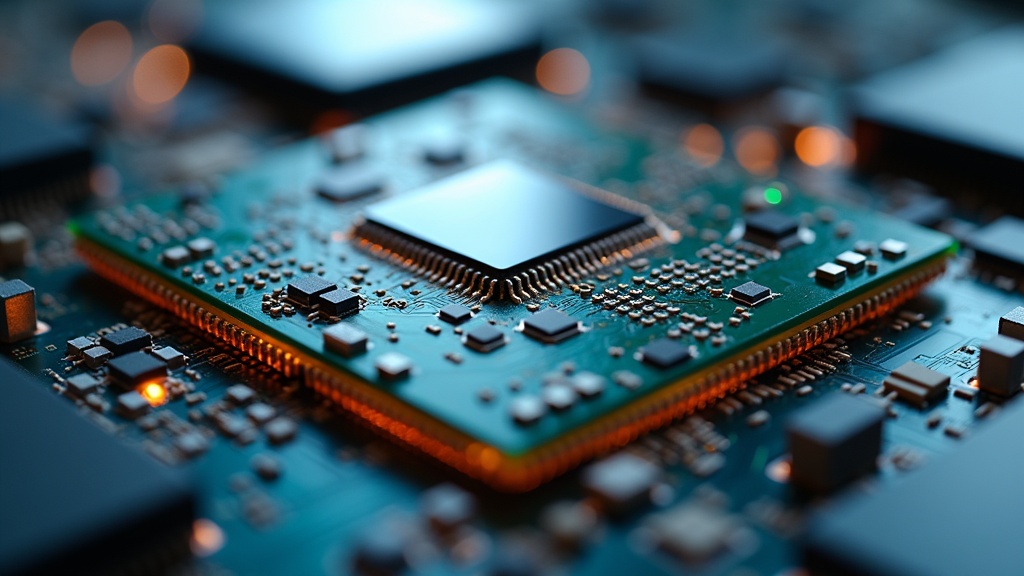
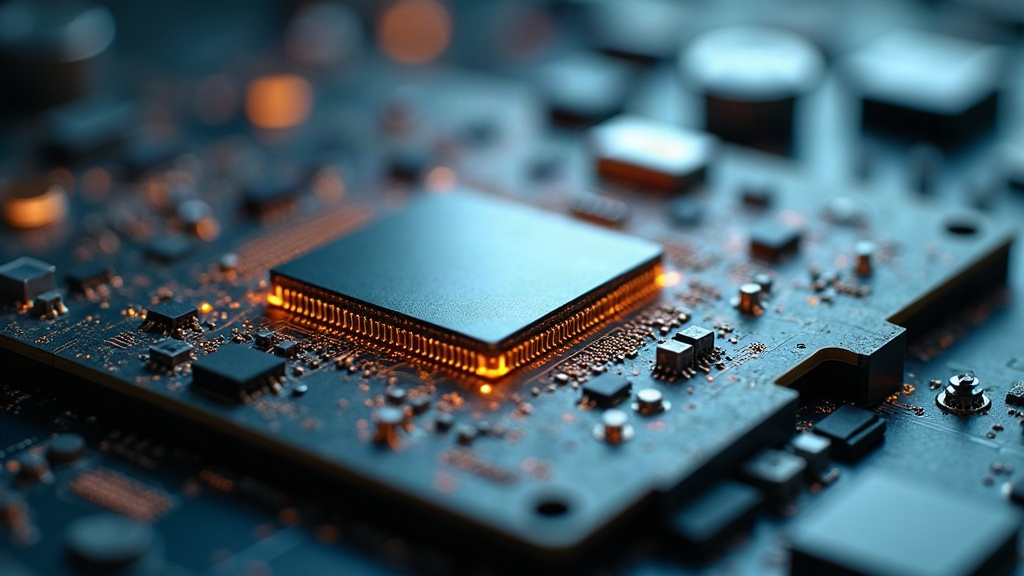
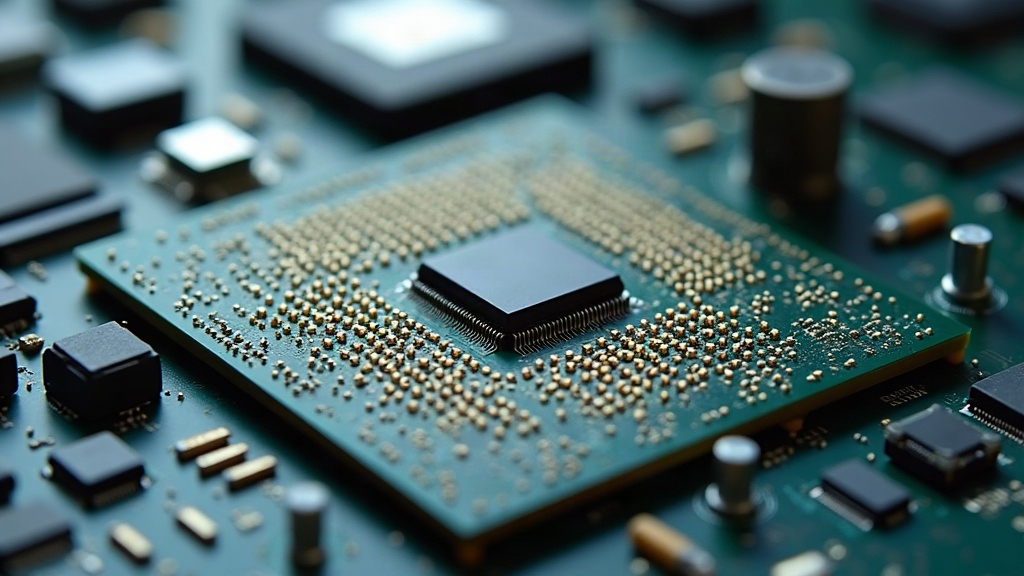
The technical goal is ambitious but specific. According to TechTimes, Anthropic is targeting roughly a 50 percent reduction in per-token inference costs by co-designing silicon and Claude models together. The core insight behind that target is that general-purpose GPUs are optimized for a wide range of mathematical operations, not specifically for transformer attention mechanisms, which constitute the dominant computational workload in running Claude. A chip designed explicitly for transformer attention, with memory bandwidth, precision formats, and on-chip interconnects matched to the attention computation pattern, can execute the same operation using a fraction of the energy and time that a Nvidia H100 or B200 requires. That efficiency gain does not require a breakthrough in semiconductor physics. It requires careful architectural choices guided by an intimate understanding of Claude's specific model structure.
Samsung has been explored as a potential manufacturing partner for the custom chips, though no foundry agreement has been announced, according to Yahoo Finance. Anthropic explicitly confirmed it will maintain its existing multi-chip partnerships throughout the development process: AWS Trainium capacity (the basis of the Amazon partnership that underpins Anthropic's cloud infrastructure), Google TPU capacity, and ongoing procurement of Nvidia and AMD accelerators. Custom silicon would not replace these partnerships at deployment scale for years. The realistic near-term outcome is that custom chips handle specific high-volume inference workloads where Claude usage patterns are most predictable and stable, while general-purpose GPU clusters handle the long-tail of variable workloads that custom silicon cannot anticipate in advance.
Why This Matters More Than People Think
Inference cost is not an engineering detail. It is the single most important variable in whether frontier AI becomes a broadly profitable industry or remains a capital-intensive service that generates revenue but not sustainably positive unit economics. At the current scale of Claude deployments across Anthropic's enterprise customers and the Claude.ai consumer product, inference costs represent a dominant fraction of the company's cost of goods sold. Every token processed requires electricity, chip compute time, and data center cooling capacity. The cost of each token declines as Anthropic improves model efficiency, but it rises as usage grows. At some scale of adoption, the growth in total inference volume outpaces the efficiency gains from software optimization alone, and hardware becomes the controlling variable in the cost equation.
The 50 percent inference cost reduction target is not arbitrary. It is approximately the improvement that Google achieved by switching from standard GPU workloads to custom TPU workloads for its own large-scale AI deployments. Amazon achieved comparable gains with Trainium for its AWS AI service workloads. If Anthropic can replicate that improvement for Claude-specific inference, it changes the company's fundamental business arithmetic. At a 50 percent cost reduction, Anthropic can either cut Claude API prices by 30 to 40 percent while maintaining margins, or hold prices constant and add 20 to 30 percentage points of gross margin, depending on competitive pressure. Either outcome transforms Anthropic's path to profitability, which the company has stated it expects to reach by 2029. Custom silicon could accelerate that timeline by one to two years if the design succeeds and reaches production scale by 2027 or 2028.
There is a strategic dimension to the announcement that sits above the cost arithmetic. By building its own chips, Anthropic gains leverage in its relationships with Nvidia, Google, and Amazon. Currently, the company's inference infrastructure is entirely dependent on the pricing and allocation decisions of its hardware suppliers. Nvidia can adjust H100 and B200 lease pricing. Google can change TPU reservation terms. Amazon can renegotiate Trainium access as part of the broader partnership arrangement. Custom silicon gives Anthropic a credible outside option that changes the negotiating dynamics in all three of these relationships simultaneously, even if the custom chips never achieve the cost target that justifies replacing general-purpose GPU capacity at scale. The announcement itself shifts the balance of power, regardless of the ultimate technical outcome.
The Competitive Landscape
The timing of Anthropic's chip announcement relative to its competitors' custom silicon strategies reveals a wider pattern in the AI industry. OpenAI reportedly has custom inference chips in advanced development, with several confirmed chip design hires from AMD and Apple's silicon teams over the past 18 months. Google's TPU program, now in its sixth generation, represents roughly 15 years of sustained investment and is widely credited with giving Google a structural cost advantage in training and serving its own models. Amazon's Trainium 2 chips, used to train and serve AWS Bedrock models, have been deployed at scale across Amazon's own AI product stack. Anthropic is entering this competition late but with a specific advantage: it can co-design its first chip generation against a known model architecture (Claude 5 and its successors) rather than building general-purpose silicon that must serve a range of future model designs.
The risk is that Anthropic is also entering at a moment when general-purpose GPU efficiency is improving at an unusually rapid pace. Nvidia's Blackwell and Vera Rubin architectures have delivered documented 2x to 4x improvements in transformer inference throughput per watt compared to the Hopper generation. AMD's MI350 and MI400 series are narrowing the gap with Nvidia on inference-specific workloads. If general-purpose GPU inference efficiency continues to improve at the current pace for another three to four years, the cost advantage of custom silicon shrinks, because the gap between general-purpose and custom narrows from 50 percent to perhaps 20 to 25 percent. At that gap, the capital expenditure and engineering overhead of a custom chip program may not justify the cost savings, particularly for a company that must also invest in frontier model research, safety evaluations, and global enterprise sales infrastructure simultaneously.
The historical analogy worth examining is Apple's transition to custom silicon, which began with the A4 chip in 2010 and culminated in the M-series architecture that now powers every Mac. Apple's chip design program took more than a decade to become the dominant performance-per-watt story in consumer computing. The program succeeded because Apple controlled the full vertical stack: hardware design, operating system, and applications, all optimized together. Anthropic's situation is different because it does not control the deployment environment. Claude runs on customer infrastructure, in data centers operated by Amazon and Google, and on end-user devices that Anthropic does not manufacture. Custom silicon that runs only on Anthropic-controlled inference servers captures part of the efficiency gain, but not the full-stack integration advantage that made Apple's chip strategy work so decisively.
Hidden Insight: The Attention Mechanism Is the Actual Target
The announcement characterized the chip design goal as "tailoring chip architecture to Claude's attention mechanisms." That phrase deserves unpacking because it identifies the specific computational bottleneck that every custom AI chip program is ultimately trying to solve. Transformer models, which underlie all frontier language models including Claude, spend a disproportionate share of their compute budget on the attention operation: computing pairwise relationships between every token in a sequence and every other token. For a long-context model like Claude, which can process inputs exceeding one million tokens, the attention computation scales with the square of the sequence length. That quadratic scaling means that inference costs grow much faster than linearly as context length increases, and long-context inference is precisely where Claude's enterprise customers get the most unique value. Custom silicon that handles attention computation more efficiently than a GPU's matrix multiplication units would disproportionately reduce the cost of Claude's most differentiated capability.
There is a second non-obvious implication in the Samsung manufacturing partnership exploration. TSMC is the default foundry for advanced AI chip production, used by Apple, Nvidia, AMD, and most AI custom silicon programs. Samsung's foundry division is competitive at comparable process nodes but has historically had lower yields on leading-edge processes, which is why most chip design teams default to TSMC despite Samsung's sometimes lower quoted prices. The fact that Anthropic is exploring Samsung rather than assuming TSMC suggests either that TSMC capacity is constrained (which the broader semiconductor industry has confirmed throughout 2025 and 2026), or that Anthropic is prioritizing speed-to-first-silicon over production yield optimization. Either interpretation suggests the chip team is moving faster than a typical enterprise silicon program would, which aligns with the "consequential calls without a large organization" language in the job listings.
Skeptics point out that the 50 percent cost reduction target assumes Claude's model architecture remains stable enough for custom silicon to be optimized against it. In practice, Anthropic has released new Claude major versions approximately every 12 to 18 months, and each new model architecture potentially requires chip redesign to maintain the optimization advantage. Google's TPU program works because Google has sufficient engineering resources to redesign TPU generations in parallel with model architecture evolution. Anthropic's lean chip team, which appears to be starting with a small number of senior engineers, may not have that parallel development capacity. If a Claude 6 or Claude 7 model architecture diverges far enough from Claude 5's attention computation pattern, the first-generation custom chip risks becoming optimized for a model generation that is no longer at the frontier by the time the chip reaches production.
The announcement also reveals something about Anthropic's competitive positioning that has not been explicitly stated. Anthropic has consistently positioned Claude as a premium product for enterprise customers who value safety, reliability, and deep context window capabilities over raw benchmark performance. Premium positioning requires premium margins, and premium margins are impossible to sustain if inference costs grow faster than revenue. The chip program is, at its core, an acknowledgment that Anthropic cannot maintain its premium positioning through model quality alone as the inference cost curve steepens. Building custom silicon is how the company intends to protect its margin structure while continuing to invest in frontier model research and safety infrastructure simultaneously. That is not a statement about engineering ambition. It is a statement about business model survival at scale.
What to Watch Next
The first concrete indicator of the program's progress will be job posting velocity over the next 30 days. A chip design program that intends to reach tape-out within 24 months needs a team of 30 to 60 senior engineers across RTL design, physical design, verification, and post-silicon validation. If Anthropic's public listings expand to cover all of those specializations within the next month, it would indicate the company is moving toward a committed first-generation design. If hiring slows or the role descriptions remain vague, it would suggest the program is still in the exploratory phase and the announcement was as much a signal to investors and hardware partners as it was a concrete engineering commitment.
Samsung's response over the next 90 days will clarify the manufacturing timeline. Tape-out commitments at leading semiconductor foundries require 18 to 24 months of lead time from design signoff to first silicon samples. If Anthropic and Samsung reach a framework agreement by November, the earliest plausible first silicon date would be late 2027 or early 2028. That timeline aligns with Anthropic's 2029 profitability target if the chips reach production volume by mid-2028 and achieve even 40 percent of their 50 percent cost reduction target. Watch for any mention of Samsung foundry capacity in Anthropic's future communications, as a confirmed foundry relationship would validate the seriousness of the program far more than engineering hires alone.
The 180-day indicator to watch is whether Nvidia adjusts its inference pricing for Anthropic's accounts. If Nvidia perceives the custom chip program as a credible threat to its inference revenue from Anthropic, it has several tools available: volume discounts, extended lease terms, or priority access to next-generation Rubin architecture chips before they reach general availability. Any of these moves would validate that Anthropic has successfully changed its negotiating position with its primary hardware supplier, which is arguably the most immediate economic benefit of the announcement even before a single custom chip reaches production. If Nvidia's pricing and allocation terms for Anthropic remain unchanged over the next six months, it would suggest the market does not yet view the program as a near-term competitive threat to GPU inference dominance.
Anthropic's custom chip bet is not about building better hardware. It is about whether a frontier AI lab can survive the economics of its own success at scale.
Key Takeaways
- 50% inference cost reduction target: Anthropic is co-designing silicon and Claude models together, tailoring chip architecture specifically to transformer attention mechanisms to halve per-token costs
- $320K to $485K job listings: Engineers who have "shipped silicon" are being recruited for a lean, senior team expected to make consequential design decisions independently and quickly
- Samsung explored as foundry partner: No TSMC commitment confirmed, suggesting either capacity constraints at the dominant AI chip foundry or a deliberate speed-over-yield manufacturing strategy
- Existing partnerships remain intact: AWS Trainium, Google TPU, Nvidia, and AMD relationships continue; custom silicon would handle specific high-volume workloads rather than replacing general-purpose GPU infrastructure at scale
- Profitability timeline implications: A successful custom chip program reaching production by mid-2028 could add 20 to 30 percentage points of gross margin, potentially accelerating Anthropic's stated 2029 profitability target by one to two years
Questions Worth Asking
- If Claude's model architecture changes enough before the first custom chip reaches production, does the co-design approach become a liability rather than an advantage, and how does Anthropic avoid the trap of optimizing for yesterday's model?
- Anthropic does not control the deployment environment the way Apple controls iOS, so custom silicon cannot deliver full-stack integration benefits. At what point does the partial efficiency gain from chip-level optimization fail to justify the sustained engineering investment?
- If Anthropic's chip announcement changes its negotiating position with Nvidia well before any custom silicon ships, what does that reveal about how much of the AI chip market's pricing power is based on genuine technical lock-in versus the perception of alternatives?