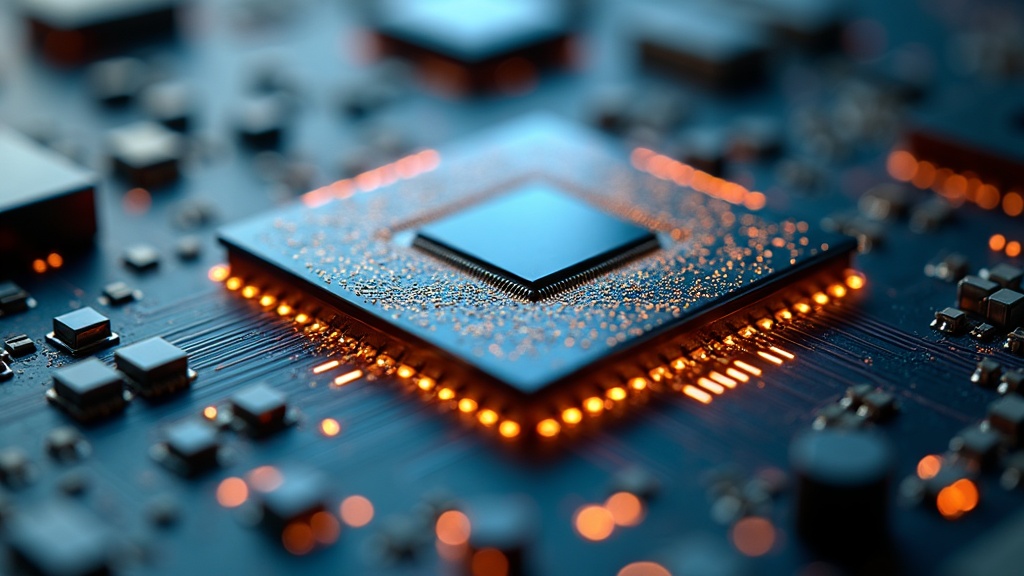
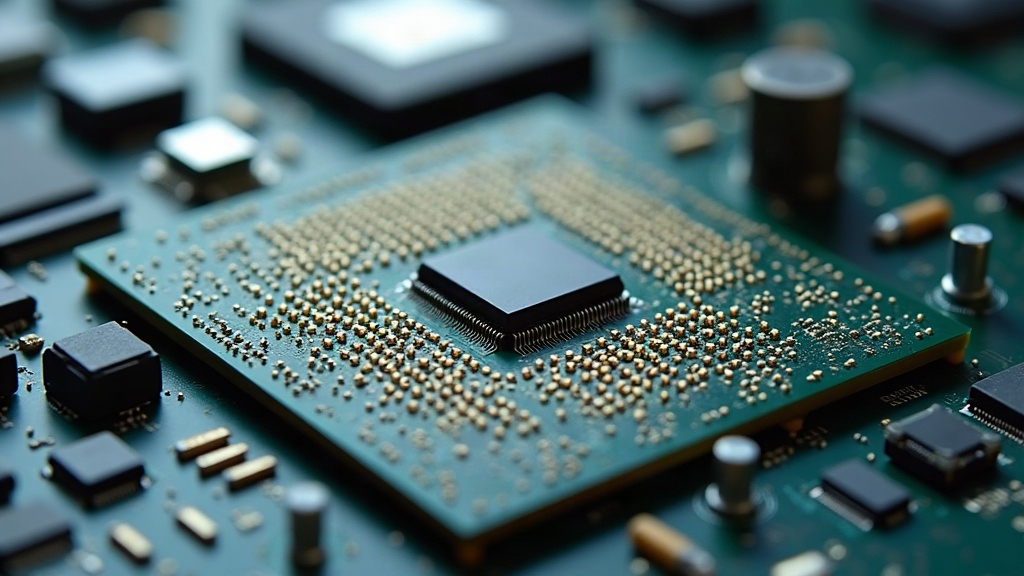
Anthropic confirmed on August 5, 2026, that it is assembling an in-house team to design custom AI chips for its Claude models. The announcement is noteworthy not for being unexpected but for being inevitable, and because Anthropic is the last major frontier AI lab to make this move. OpenAI, Google, Amazon, and Microsoft all started custom silicon programs years ago. The fact that Anthropic waited until it had a $380 billion valuation and a $30 billion capital base to join them tells you something about both the difficulty of the problem and the company's confidence that it now has the scale to make it pay.
What Actually Happened
Anthropic confirmed it is hiring engineers to build a dedicated custom silicon team for Claude's inference workloads, as reported by TechCrunch. Job listings specify candidates with direct experience contributing to semiconductor designs that reached production, a strict filter that rules out academic researchers and pure software engineers. The compensation range is $320,000 to $485,000, competitive with top-tier GPU compiler engineers at Nvidia and AMD. The team is described internally as part of "a broader multi-chip strategy rather than a complete replacement" for processors supplied by Nvidia, AMD, Google, and Amazon Web Services. Anthropic is not planning to stop buying Nvidia H100s and Blackwell chips. It is planning to route a portion of its workload through hardware it controls.
The Samsung component adds strategic depth to the announcement. The Information reported, and Anthropic has not denied, that Anthropic held discussions with Samsung about potential chip manufacturing, specifically Samsung's 2-nanometer process node and its advanced packaging capabilities for high-bandwidth memory integration, according to reporting cited by Quartz. The 2nm process node matters because it is the same generation that Apple is using for its next M-series chips, and it represents the leading edge of what Samsung Foundry can produce in volume. Advanced packaging, specifically the ability to stack high-bandwidth memory directly adjacent to the processing die, is one of the most critical variables in AI inference performance. Anthropic is not shopping for commodity manufacturing. It is evaluating whether Samsung can produce something at the frontier of what semiconductor technology can currently deliver.
The context is a company that closed a $30 billion Series G at a $380 billion valuation in February 2026. That capital base is what makes a custom silicon program economically rational. First-generation chip design projects routinely cost $500 million to $1 billion before a single working silicon wafer is produced, accounting for engineering talent, electronic design automation tools, foundry tape-out fees, packaging, and the inevitable first-generation silicon respins. Without the capital to absorb those costs and the revenue scale to justify them, a chip program is a distraction. At Anthropic's current scale and funding, the math is different. The question is not whether a chip program makes sense. The question is whether Anthropic can execute one faster than the incumbents it is learning from.
Why This Matters More Than People Think
The inference cost problem at frontier AI scale is genuinely severe, and it is the core reason custom silicon becomes attractive. When you are serving hundreds of millions of Claude requests per day, every percentage point of inference efficiency is worth tens of millions of dollars annually. Nvidia's H100 and Blackwell chips are extraordinary general-purpose AI accelerators, but they are optimized for a broad range of workloads, not specifically for the attention patterns, context lengths, and token generation sequences that Claude's architecture produces. A chip designed around Claude's specific computation graph, its particular mixture of dense and sparse operations, its context window management, can deliver 20 to 40 percent better performance-per-watt on Claude's actual workload than a general-purpose accelerator ever could.
The strategic control argument matters as much as the cost argument, perhaps more. When Nvidia decides what capabilities to include in its next chip generation, every AI lab is constrained by those choices. If Nvidia optimizes for training workloads over inference, or builds memory bandwidth for one context window size rather than another, all of Nvidia's customers adapt their systems to the hardware rather than the other way around. Custom silicon inverts that relationship. Anthropic would be designing hardware to match Claude's evolving architecture rather than designing Claude to run efficiently on hardware it did not choose. That co-design feedback loop is how Google's TPU program helped Gemini, and how Apple's M-series chips reshaped what was possible in a laptop-class device.
The Samsung partnership angle reveals a deeper competitive calculation. Nvidia manufactures exclusively through TSMC, which gives TSMC outsized leverage over the AI chip supply chain and gives Nvidia a moat through manufacturing priority. A large AI lab that can design its own chips and manufacture through Samsung adds a second credible player to the foundry market for AI inference hardware. Samsung's yield rates at 2nm are not yet as mature as TSMC's, which is the bear case: the risk is that Anthropic invests years of engineering effort and hundreds of millions of dollars in a chip program that cannot achieve the manufacturing yields needed for cost-effective production. Samsung has been chasing TSMC's process leadership for a decade. Betting on Samsung catching up is a real bet, not a guaranteed outcome.
The Competitive Landscape
Google's TPU v6 (Trillium) is the most mature custom AI chip program among frontier labs, having gone through six generations of co-design with the models running on top of it. Amazon's Trainium 2 powers an estimated 30-plus percent of AWS's AI services and is specifically optimized for transformer architecture inference. Microsoft's Project Maia targeted Azure's AI workloads. OpenAI has been pursuing custom chip partnerships and designs, though its program has been less publicly detailed than Google's or Amazon's. The pattern across all of these programs is similar: they took three to five years from team formation to first production workload. Anthropic is starting now, which means the earliest realistic production timeline for a first-generation Anthropic chip is 2028 to 2029.
The historical parallel that best illustrates the potential outcome is Apple's transition from Intel to its M1 chip in 2020. Every analyst who covered Apple before the M1 launch understood, at an intellectual level, that custom silicon could be faster and more power-efficient than a general-purpose x86 processor. What almost nobody predicted was the magnitude of the advantage: M1 MacBooks were faster than Intel MacBooks at most tasks while using half the power and running cooler. The breakthrough came not from better transistors but from co-designing the hardware and the operating system together so that the chip's strengths exactly matched the workloads the OS was optimized to run. Anthropic has the same opportunity: Claude's inference patterns are known in exhaustive detail, and a chip designed specifically for them could deliver a performance advantage that surprises people who are only comparing transistor counts and memory bandwidth numbers.
However, critics argue that the comparison to Apple is misleading in one critical way. Apple had Tim Cook's supply chain expertise, a decade of A-series chip design experience, and TSMC as a manufacturing partner before it ever attempted the M1 transition. Anthropic is starting a chip program with no prior production silicon experience, a foundry partner (Samsung) that has not yet demonstrated 2nm yield parity with TSMC, and a timeline that requires it to stay competitive in frontier AI models simultaneously with building a semiconductor design organization from scratch. The bear case is not that the program fails technically. The bear case is that it succeeds technically in 2029 while consuming engineering resources that could have gone into model development during the critical 2026 to 2028 window when the AI market's winner may be determined.
Hidden Insight: The Independence Signal
Custom silicon programs are expensive, long-duration, and strategically risky. Companies only invest in them when they are confident they will still exist and need to own their infrastructure at the end of the development timeline. The fact that Anthropic is launching a chip program now is, among other things, a strong signal that the company's leadership believes Anthropic will remain independent. If Anthropic were positioning itself for acquisition by Google, it would not need its own chips: Google's TPUs would handle Claude's inference. If it were positioning for acquisition by Amazon, it would double down on Trainium. Building custom silicon only makes sense if you plan to be running Claude independently at massive scale for the next decade.
The Samsung manufacturing relationship, if it formalizes, also creates a direct dependency relationship that makes Anthropic a more important partner to Samsung's foundry business. Samsung Foundry has been competing aggressively against TSMC for AI chip contracts and has had limited success at the leading edge, as analyzed by Crypto Briefing. A formal partnership with Anthropic to manufacture custom inference chips at 2nm would give Samsung Foundry its first major reference customer win, and it would give Anthropic leverage to negotiate favorable capacity agreements during periods of high demand. The mutual dependency creates an incentive structure that is more durable than a simple supplier relationship.
There is a second-order implication for Nvidia that deserves attention. Nvidia's pricing power over AI labs has been extraordinary because there is no viable alternative for training frontier models at scale. Inference is different: it is more flexible, more workload-specific, and more amenable to custom optimization. As Anthropic, and potentially other large AI labs, develop inference-specific custom chips, Nvidia's most secure revenue stream, the ongoing purchase of large GPU clusters for inference at scale, becomes more contestable. Nvidia is aware of this dynamic and has been aggressively expanding its software ecosystem and enterprise contracts to lock in multi-year commitments. The chip program Anthropic announced today is a small but real threat to that lock-in strategy.
The talent dimension of this announcement is also worth examining. Anthropic is offering $320,000 to $485,000 for chip design engineers, which is competitive with but not dramatically above what Nvidia, Apple, and Google pay for the same roles. The compensation signals that Anthropic is not trying to simply outbid the incumbents. It is competing on mission and equity upside. The engineers who join this team are betting that Anthropic's chips will enter production, that the company will still be growing rapidly when those chips ship, and that their equity will be worth something in the 2028 to 2030 timeframe. That is a very different bet from joining Apple's chip program or Nvidia's compiler team. The quality of the hires will tell us a great deal about how the broader engineering community assesses Anthropic's long-term independence and trajectory.
What to Watch Next
The 30-day indicator is additional chip team job postings. The initial announcement describes a team formation stage, not a fully staffed program. If Anthropic posts five to ten additional chip design roles covering specific domains such as memory subsystem design, on-chip network architecture, post-silicon validation, and power management, it signals that the program is moving from concept to serious engineering. If the postings remain sparse or get pulled, it may indicate that the Samsung manufacturing discussions did not progress to a stage that justifies full team build-out. Watch the Anthropic careers page as the most honest real-time signal of program seriousness.
The 90-day indicator is whether the Samsung partnership formalizes into a public announcement. Samsung Foundry has commercial incentives to announce large customers publicly, and Anthropic has incentives to use a Samsung partnership as evidence of technical credibility with investors and enterprise customers. A formal manufacturing agreement announced within 90 days would confirm that the chip program has moved past feasibility study and into active design engagement. The absence of an announcement within that window is not disqualifying but would suggest that the manufacturing partner selection is still open, which adds timeline risk.
At the 180-day horizon, watch Anthropic's API pricing. If the custom silicon program is on track and Anthropic's inference costs are declining from existing optimizations while the chip roadmap is advancing, the company has strong incentives to cut Claude API prices to gain market share ahead of the chip's availability, similar to how OpenAI used price cuts to grow the developer ecosystem before GPT-4o. A series of Claude API price reductions in the second half of 2026 would signal that Anthropic's inference cost structure is improving and that the company is positioning for market share expansion rather than margin protection, which would be consistent with a company that is confident in its infrastructure roadmap.
Anthropic building its own chips is not a cost-saving measure. It is a declaration that the company intends to control its own destiny from the transistor up.
Key Takeaways
- Anthropic is hiring custom silicon engineers at $320K to $485K: the team will design inference chips specifically optimized for Claude's architecture as part of a multi-vendor strategy that does not replace Nvidia
- Samsung 2nm process and advanced packaging under discussion: Anthropic held manufacturing conversations with Samsung's foundry division, targeting the same process node as Apple's next M-series chips
- First production silicon realistically 2028 to 2029: custom chip programs at Google, Amazon, and Microsoft each took three to five years from team formation to first production workload
- The program signals Anthropic intends to stay independent: building custom silicon only makes financial sense if you plan to be running Claude at massive scale for the next decade without an acquirer's infrastructure
- Nvidia's inference revenue is the long-term target: as inference-specific custom chips mature across AI labs, Nvidia's pricing power over its most predictable revenue stream faces its first serious contestation
Questions Worth Asking
- Apple's M1 advantage came from co-designing chip and operating system together over many years. Anthropic is starting a chip program while simultaneously competing in frontier model development. Which constraint binds first: engineering talent, capital, or calendar time?
- If Anthropic's custom chip delivers a 30 to 40 percent inference cost reduction by 2029, and the company passes that savings on as API price cuts, what does that do to the business models of AI application companies that are currently building on the assumption that inference costs will decline slowly?
- Samsung needs a marquee win against TSMC in the AI chip foundry market. Anthropic needs manufacturing at the leading process node without paying TSMC's premium pricing. Does that mutual need create a partnership that is stronger than either party's individual leverage suggests?