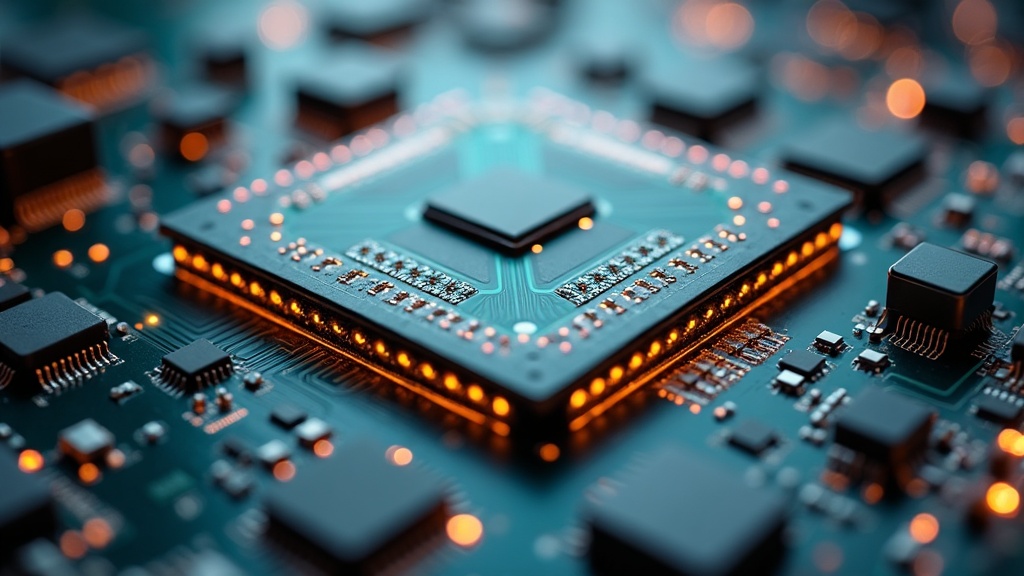
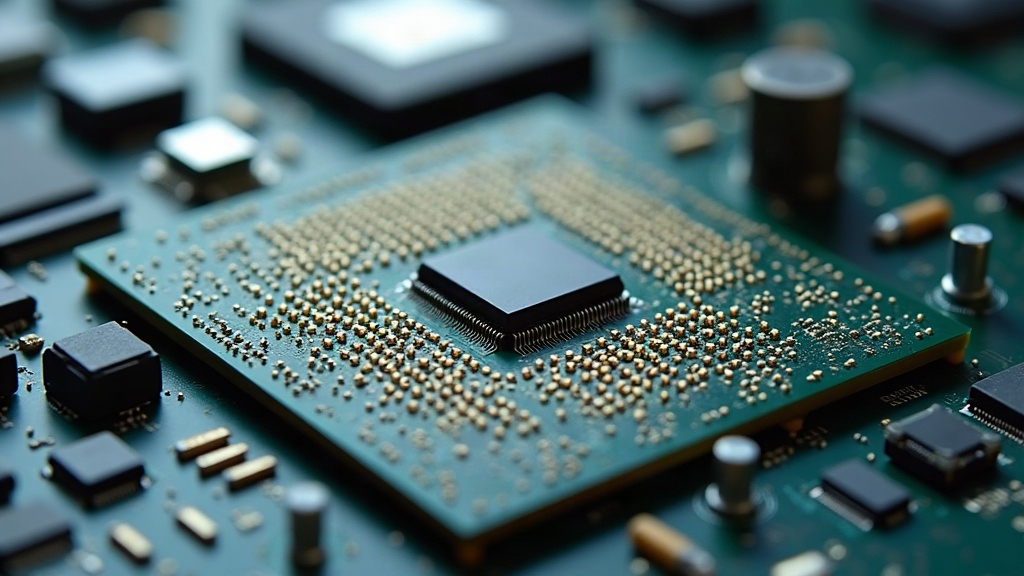
For decades, three companies have controlled the global market for DRAM memory: Samsung, SK hynix, and Micron. That oligopoly is starting to crack. HP, Asus, and Acer have quietly completed the qualification process for DRAM chips from China's CXMT, a company that barely existed as a serious memory producer four years ago, and have begun installing them in notebook PCs sold outside the United States. The trigger is not a deliberate shift in supply chain strategy. It's the fact that Samsung and SK hynix are too busy making AI memory to make enough regular computer memory, and PC makers are running out of alternatives.
What Actually Happened
Sources cited by TechNode and confirmed by Nikkei Asia on August 5, 2026 reported that HP, Asus, and Acer had completed qualification testing of DRAM chips from ChangXin Memory Technologies, known as CXMT, and were incorporating them into limited notebook PC production runs. The qualification process, which involves extensive compatibility testing with processors, operating systems, and system firmware, was completed around mid-2026. The chips are currently restricted to devices sold in markets outside the United States, a geographic limitation that reflects both regulatory caution and the fact that US chip import rules make CXMT's products difficult to bring to market domestically without legal risk.
CXMT is not a new company, but it has emerged as a serious DRAM producer with unexpected speed. The Hefei-based memory maker went public on Shanghai's STAR Market on July 27, 2026, with shares surging nearly 466% on the first day of trading. The world's first DRAM-focused ETF added CXMT to its portfolio in late July at a 2.52% weight, making it the eighth-largest holding in a fund that tracks the global memory chip industry. That kind of institutional attention signals that the market has decided CXMT is not a regional curiosity but a genuine participant in the global DRAM supply chain, according to coverage from ChinaTechNews.
The adoption is proceeding carefully. PC makers are explicitly aware that their primary memory suppliers, Samsung, SK hynix, and Micron, are watching the situation closely. None of the three PC makers has made a public statement about CXMT adoption, and the qualification process was conducted with minimal public disclosure. The chips are being used in a limited number of notebook models, not across entire product lines, and production volumes are constrained by CXMT's own capacity limitations. The company is prioritizing its largest domestic customer, Huawei, which uses CXMT DRAM across its smartphone and server product lines, leaving only a fraction of output available for international PC vendors.
Why This Matters More Than People Think
The surface-level story is that AI memory demand is tight and PC makers found an alternative supplier. The deeper story is about what AI infrastructure spending is doing to the economics of the entire semiconductor industry. Samsung and SK hynix are not limiting DRAM production because global demand has fallen. They are limiting standard DRAM production because every unit of manufacturing capacity they redirect toward high bandwidth memory, or HBM, used in AI training chips like NVIDIA's H100 and B200 series, is worth dramatically more revenue per wafer than standard DDR5 DRAM. HBM sells for roughly six to eight times the price per gigabyte of standard DRAM. When the choice is between selling memory to a PC maker at standard margins or selling it to NVIDIA at AI premium margins, the capacity goes to NVIDIA.
This creates a structural squeeze that has nothing to do with CXMT's quality or capability. The Big Three memory makers are rationally allocating capacity toward their highest-margin products, which are AI memory products, and the residual supply for standard DRAM is insufficient to meet PC market demand at historical lead times. CXMT, which does not yet produce HBM at scale, has excess standard DRAM capacity relative to its current customer base. The PC makers' adoption of CXMT is not a vote against Samsung or SK hynix; it is a direct consequence of the AI infrastructure investment wave that those companies are profiting from. The irony is that the more AI spending accelerates, the more PC makers will need Chinese DRAM alternatives.
The geopolitical implication reaches further than the supply chain numbers suggest. Every notebook PC shipped with CXMT memory outside the United States is a data point that the US export control strategy has an unavoidable leak. CXMT's chips cannot enter the US market cleanly under current rules. But the same chips are being qualified and used by HP and Asus, companies with large US government and enterprise sales, in their non-US product lines. As global supply chains continue to fragment by geography, the definition of "using CXMT chips" becomes increasingly complex for multinationals that design unified products but manufacture and sell them in different regulatory jurisdictions.
The Competitive Landscape
Samsung, SK hynix, and Micron have controlled the global DRAM market with a combined market share exceeding 90% for most of the last decade. The entry of CXMT as a qualified supplier for major PC brands represents the first credible challenge to that structure since Taiwan's Nanya Technology and Winbond retreated from the commodity DRAM market in the early 2010s. CXMT's current position is fragile: it lacks the manufacturing maturity for the most advanced HBM products, its customer base is dominated by Huawei, and its expansion into non-Chinese markets is constrained by both US export rules and Big Three customer relationship risk for PC makers. But the trajectory is the right direction, and the STAR Market IPO has given CXMT the capital base to invest in capacity expansion.
The historical parallel that matters here is not the DRAM market of a decade ago. It is the NAND flash market of the early 2010s, when Chinese state-backed companies like YMTC began a decade-long process of closing the technology gap with Samsung, SK hynix, and Micron. YMTC now produces 128-layer NAND that is competitive with Western products, and it has a waiting list of customers, constrained only by US restrictions on its expansion. CXMT appears to be following a similar playbook in DRAM: domestic manufacturing scale first, government capital support second, gradual international qualification third. The Big Three have seen this movie before and know how it ends if the gap closes enough to matter on price.
The bear case for CXMT's global expansion is straightforward. The company's current DRAM is competitive at current process nodes, but the most demanding applications, including server DRAM for AI inference and HBM for training, require process maturity that CXMT is still developing. Critics argue that PC qualification is a low bar. The much harder test is qualifying CXMT DRAM for data center use, where reliability requirements are more demanding and switching costs for failure are dramatically higher. Skeptics point out that the enthusiasm reflected in CXMT's 466% IPO day surge reflects a market pricing in a trajectory that requires CXMT to clear a much more demanding qualification process than notebook PC integration before it can meaningfully challenge the Big Three's core revenue base.
Hidden Insight: The AI Memory Tax on the Entire Economy
The CXMT adoption story is best understood not as a China technology story but as a tax story. Every dollar that hyperscalers like Microsoft, Google, Meta, and Amazon spend on AI training infrastructure creates a hidden cost that gets distributed across the rest of the economy through semiconductor supply chain effects. Samsung and SK hynix redirecting capacity from standard DRAM to HBM is the mechanism through which AI infrastructure spending raises the cost of notebooks, smartphones, and consumer electronics for everyone who is not directly buying AI chips. The PC maker that cannot get enough DRAM from its primary supplier at historical prices passes that cost through to the consumer. The student buying a laptop, the small business replacing aging computers, the school district refreshing classroom devices: all of them are paying a fraction of the cost of the AI buildout through slightly more expensive or less available notebooks.
CXMT's entry into the PC supply chain is a market correction to that tax. By adding capacity at the standard DRAM tier, CXMT creates downward pressure on DRAM spot prices for non-HBM applications, which benefits PC makers' margins and eventually consumer prices. The irony is that Western export control policy, which is designed to slow CXMT's development, is inadvertently contributing to higher consumer electronics costs in the US and allied markets by restricting the supply of DRAM alternatives. The PC makers qualifying CXMT for non-US markets are not making a geopolitical statement; they are solving a supply problem that Western policy has made worse.
The deeper structural question concerns the long-term economics of memory production if AI demand continues to grow at current rates. Forecasts from memory industry analysts suggest that HBM could represent more than 30% of total DRAM revenue by 2028, up from roughly 15% in 2025. If that forecast is correct, the fraction of standard DRAM capacity that Samsung and SK hynix maintain will continue to shrink relative to global PC and mobile demand. CXMT is not the only beneficiary of that dynamic. Micron, which has a more balanced HBM and standard DRAM product mix, could gain share in the PC segment as Samsung and SK hynix increasingly focus on AI. The result would be a DRAM market that looks structurally different from the one that existed at the start of the AI investment cycle: more fragmented, more geographically complex, and priced at premiums that reflect not just the cost of making memory but the opportunity cost of not making AI memory instead.
The most consequential near-term implication, however, concerns Micron specifically. Micron is the only US-based DRAM manufacturer, and it sells into both the AI and standard DRAM markets. If CXMT captures meaningful standard DRAM market share in Asia and Europe while Samsung and SK hynix focus on HBM, Micron faces a squeeze from two directions: AI memory competition from Samsung and SK hynix at the high end, and price pressure from CXMT at the standard DRAM tier in markets where US regulatory protection does not apply. That competitive dynamic is one that US trade policy cannot easily resolve, because the tool that restricts CXMT's US market access is the same tool that prevents CXMT from qualifying for the most demanding US enterprise contracts, not the tool that helps Micron compete on price in Asian PC markets where US rules don't reach.
What to Watch Next
The 30-day metric to track is CXMT's STAR Market trading performance relative to its IPO price. The 466% first-day surge reflects euphoria about the memory cycle and national champion sentiment in Chinese equities, but a stock that opens at 466% above its IPO price has an extremely high bar to maintain. If CXMT trades down sharply in its first month, it will create pressure on the company's ability to raise additional capital for the manufacturing capacity expansion that its PC market ambitions require. A sustained trading price above 200% of IPO would signal durable institutional confidence in the CXMT story and would likely accelerate its ability to secure additional government-backed financing for fab construction.
The 90-day development to watch is whether any of the Big Three memory makers respond to the CXMT qualification news with targeted pricing actions in the PC DRAM market. Samsung in particular has a history of using aggressive spot price cuts to defend market share when new entrants threaten its position. If Samsung offers HP, Asus, and Acer far better terms on standard DRAM in exchange for reduced CXMT engagement, the qualification wins announced this week could prove short-lived. The Big Three have the balance sheet to sustain losses in the standard DRAM segment while HBM margins subsidize the strategy. CXMT does not have that same buffer, which means pricing discipline matters more for its long-term viability than its current technology progress suggests.
At six months out, watch for CXMT's first attempt to qualify server DRAM for data center use. Notebook DRAM qualification is the proof of concept. Data center DRAM is the revenue prize. A successful data center qualification from a major US or European cloud provider, even in a non-US geography, would transform the CXMT investment thesis from a China domestic play into a genuine global memory market disruptor. That qualification process typically takes 12 to 18 months, meaning the results of any applications already in progress will start to emerge in early 2027. The Big Three will be watching that process more carefully than they are watching the notebook PC news, because data center DRAM is where the real margin is, and that is the market they cannot afford to cede.
The world's PC makers are buying Chinese memory chips not because they want to, but because the AI infrastructure boom has made every other option more expensive.
Key Takeaways
- HP, Asus, and Acer are using CXMT DRAM: qualification was completed in mid-2026, with chips being installed in notebook PCs sold outside the United States amid a global standard DRAM shortage
- CXMT's STAR Market IPO surged 466% on day 1: the July 27 debut gave the company public market capital to invest in manufacturing capacity expansion, and a DRAM ETF added it at 2.52% weight shortly after
- AI HBM demand is the root cause: Samsung and SK hynix are redirecting manufacturing capacity from standard DRAM to high-bandwidth memory for AI chips, creating a supply gap that CXMT is filling
- PC makers are walking a tightrope: adoption is limited to non-US markets and small volumes to avoid damaging relationships with Samsung, SK hynix, and Micron, whose premium products remain essential
- Data center qualification is the real test: notebook DRAM is the entry point; if CXMT can qualify for server and data center DRAM in global markets, the competitive threat to the Big Three becomes structural rather than marginal
Questions Worth Asking
- Samsung and SK hynix are rationally prioritizing HBM over standard DRAM because AI margins are higher. But if that creates enough space for CXMT to build scale in standard DRAM, have the Big Three inadvertently funded the growth of their next serious competitor?
- HP, Asus, and Acer are qualifying CXMT chips for non-US product lines while maintaining US government and enterprise contracts that require compliance with US export control rules. At what point does geographic segmentation of supply chains become legally or contractually untenable?
- The AI memory tax on standard consumer electronics is being partially offset by CXMT supply entering the market. If the US extends export restrictions to prevent CXMT chips from reaching US-allied countries, who bears the cost, and is that cost politically sustainable?