A 22-year-old who dropped out of MIT now runs a weapons company worth $1.8 billion. Mach Industries, founded by Ethan Thornton barely three years ago, just raised $300 million in a Series C that nearly quadrupled its valuation in twelve months. The number is striking, but the real story is what it signals about where defense capital has decided the war of the next decade will be won: not in the prototype, but on the production line.
What Actually Happened
Mach Industries closed a $300 million Series C at a $1.8 billion valuation, a roughly 4x jump from the $470 million mark it carried after raising $100 million in June 2025. The round was led by deep-tech fund Infinite Capital alongside Ribbit Capital, with Bedrock Capital, Sequoia Capital, and Khosla Ventures all participating. For a company whose founder was in high school five years ago, assembling that roster of blue-chip backers in a single round is its own kind of statement about how seriously Silicon Valley now takes hard defense manufacturing.
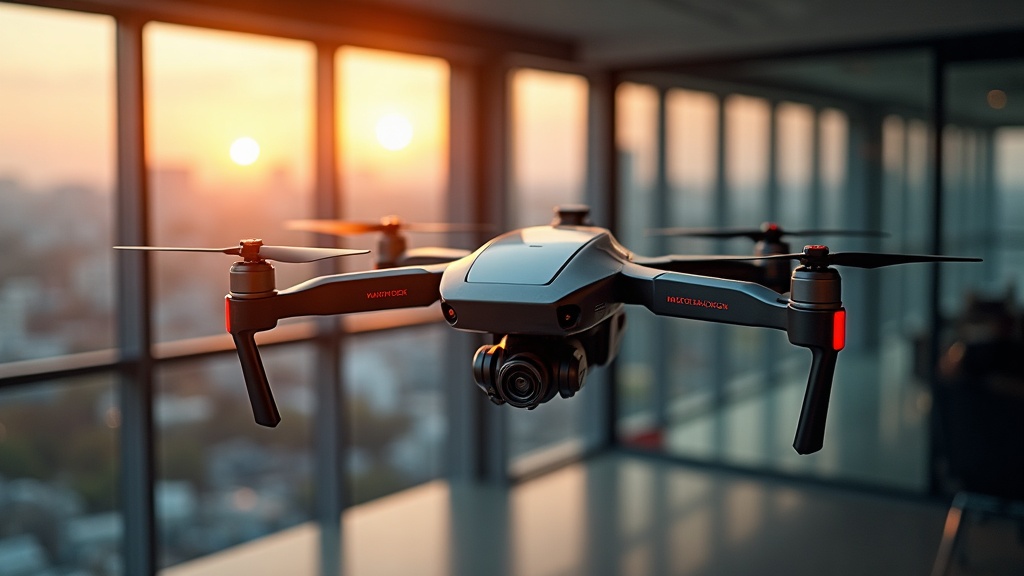
The company builds drones and strike systems, and it runs five active vehicle programs. There is Viper, a jet-powered vertical-takeoff one-way attack vehicle. There is Glide, a high-altitude strike glider capable of launching weapons. Stratos is an airborne surveillance platform that functions like a low-cost satellite that never leaves the atmosphere. Dart is a cheap counter-drone interceptor, and Pike is a long-range strike munition. Together they sketch a portfolio aimed at the exact gap the Pentagon keeps complaining about: affordable, mass-producible systems rather than exquisite, irreplaceable ones.
Mach also moved up its own supply chain. Last month it acquired solid-rocket-motor startup Exquadrum in a $50 million cash-and-equity deal, then spun up a new commercial arm, Mach Energetics, to sell rocket motors to other buyers. Controlling propulsion in house matters because rocket motors are a notorious bottleneck in US munitions production, with lead times that have stretched to years. By owning that capability, Mach turns a chronic industry constraint into a product it can sell to competitors.
Why This Matters More Than People Think
The headline is the valuation, but the meaning is the phase change. For most of the last decade, defense-tech startups sold a story about better technology: smarter autonomy, cheaper sensors, slicker software. Mach's raise is explicitly about volume. The pitch to investors was not a clever prototype but a credible path to manufacturing strike systems at a rate and price the legacy primes cannot match. That shift, from demonstrating capability to demonstrating output, is what separates a science project from a defense contractor, and the market just priced that distinction at $1.8 billion.
This reflects a hard lesson from Ukraine, where the decisive constraint has not been the sophistication of any single weapon but the ability to produce attritable systems faster than they are destroyed. Drones that cost a few thousand dollars have neutralized armor and ships worth millions, and the side that can replace losses fastest holds the initiative. Mach's entire portfolio is built around that arithmetic: cheap enough to lose, numerous enough to matter, and producible at a tempo that legacy procurement cycles simply cannot sustain.
The investor logic follows directly from that arithmetic. A weapon you can afford to lose changes the entire risk calculus of how it gets used, which in turn expands how many you need, which is exactly the demand curve a manufacturing-first company wants to sell into. Expensive platforms are hoarded and rarely risked; cheap ones are spent freely and constantly replenished. Mach is effectively betting that the Pentagon is shifting from a procurement model built around scarcity and preservation to one built around abundance and attrition, and that the contractors who thrive in that world will look more like high-volume factories than like cathedral builders. The $300 million is capital to build that factory before the demand fully arrives.
There is a structural reason this resonates with the Pentagon right now. The Department of Defense has spent years warning that its industrial base cannot surge. Munitions stockpiles drawn down by aid to Ukraine and Israel have exposed how thin US production really is, and how long it takes to refill. A startup that promises mass production of strike systems is selling directly into that anxiety. Mach is not pitching a better missile. It is pitching the ability to make missiles at all, at scale, which is a capability the established primes have allowed to atrophy.
The Competitive Landscape
Mach is now part of a defense-tech cohort that has stopped being a curiosity and become a capital category. Anduril raised $5 billion and doubled toward a $61 billion valuation. Defense AI startups collectively pulled in a record $14.6 billion this year. Foundation won contracts to send robotic systems to Ukraine, and Picogrid raised to wire up the broader US defense stack. Mach's $1.8 billion mark places it firmly in the second tier of this wave, ambitious enough to matter but not yet at Anduril's scale.
The incumbents it is circling are the primes: Lockheed Martin, Raytheon, and Boeing, companies built for an era of small numbers of extraordinarily expensive platforms. The historical parallel is SpaceX versus the legacy launch establishment. SpaceX did not win by building a more elegant rocket than United Launch Alliance, it won by driving cost and cadence to levels the incumbents structurally could not reach. Mach is making the same bet against the primes: that vertical integration and a manufacturing-first culture beat decades of cost-plus contracting habits.
The SpaceX comparison is more than rhetorical. SpaceX spent years being dismissed as a vanity project until reusable rockets made the incumbents look structurally obsolete, and the lesson defense investors drew is that the moment of dismissal is precisely the moment to buy. That pattern recognition is part of why a 22-year-old founder can command a $1.8 billion valuation: the people writing the checks have seen this movie, and they would rather overpay early than miss the next Anduril. Whether Mach is that company or merely benefiting from the comparison is the question every one of its backers is privately wrestling with.
The competitive risk runs in two directions. Above Mach sits Anduril, far better capitalized and already deep inside Pentagon programs of record, capable of crushing a smaller rival on contract access alone. Below it sits a swarm of cheaper drone startups and a flood of low-cost foreign systems that could commoditize the very attritable-munitions category Mach is betting on. Winning requires Mach to be both cheaper than the primes and more capable than the commodity drones, a narrow lane that demands flawless execution on manufacturing it has only begun to prove.
Hidden Insight: The Production Line Is the Weapon
The non-obvious truth in this raise is that Mach is not really valued as a maker of drones. It is valued as a maker of manufacturing capacity. The acquisition of Exquadrum and the launch of Mach Energetics reveal the actual strategy: own the chokepoints, especially solid rocket motors, that throttle everyone else's output. In a production-constrained war, whoever controls the bottleneck inputs controls the tempo of the entire conflict. Mach is positioning to be the company that sells not just weapons but the ability to make weapons, which is a far scarcer and more defensible asset.
The bear case, however, is that defense procurement does not reward speed or even price. It rewards relationships, compliance, and the patience to survive multi-year contracting cycles. Critics argue that a 22-year-old founder and a three-year-old company, however brilliant, have not yet been tested by the bureaucratic grind that has broken many promising defense startups before a single program of record materialized. The risk the market may be underpricing is that Mach's valuation is built on production promises that the Pentagon's own procurement machinery is structurally incapable of absorbing at the speed investors are modeling.
Skeptics point out a further danger specific to defense-tech valuations: they tend to track headlines about conflict rather than booked revenue. A $1.8 billion mark set during a period of heightened global tension can compress quickly if a ceasefire holds, if a budget cycle tightens, or if the attritable-munitions thesis turns out to favor even cheaper foreign producers. Defense booms have historically been cyclical, and capital that rushes in during a surge has a long record of rushing back out when the threat environment cools. Mach's challenge is to convert today's enthusiasm into durable contracts before the cycle turns.
Yet there is a reason the smart money is comfortable with that risk. The deepest shift Mach represents is generational and cultural. A founder who grew up watching software eat the world is applying that mindset to ordnance: vertically integrate, control your inputs, iterate fast, and optimize for throughput. The legacy primes optimize for margin on a handful of golden platforms. If the future of conflict genuinely belongs to mass, then the cultural advantage of a manufacturing-obsessed startup may matter more than the incumbents' decades of relationships, and the $1.8 billion valuation is a wager on exactly that inversion.
There is one more layer worth naming. By launching Mach Energetics to sell rocket motors externally, Mach is quietly building a second business that is arguably more durable than its weapons line. Component supply is less glamorous than strike vehicles, but it is stickier, less dependent on winning headline contracts, and positioned at a bottleneck the whole industry shares. If the vehicle programs stumble in procurement, the propulsion business could still anchor the company, the way a picks-and-shovels supplier outlasts the prospectors. That optionality, a weapons maker that is also an arms-industry supplier, is an underappreciated part of why the valuation cleared $1.8 billion despite the thin contract history.
It is worth situating Mach within the funding numbers that frame its entire bet. Defense-tech absorbed a record $14.6 billion this year, and Mach captured a meaningful slice of it precisely because investors have concluded that the production gap, not the technology gap, is where outsized returns now sit. The capital is chasing throughput. That is a sharp reversal from the prior decade, when defense venture money flowed toward software, sensors, and autonomy layers that promised high margins and asset-light scaling. Hardware-heavy manufacturing was considered unfundable. Mach raising $300 million to build physical strike systems, rocket motors included, is evidence that the thesis has flipped and that patient, capital-intensive defense manufacturing is suddenly back in favor with the same funds that once avoided it.
What to Watch Next
In the next 30 to 90 days, watch for Mach to convert its programs into named contracts. A vehicle program is a demonstration; a signed Pentagon order is validation. The single most important leading indicator is whether any of the five vehicles, Viper, Glide, Stratos, Dart, or Pike, moves into a program of record or a major foreign military sale. Watch also for Mach Energetics to announce its first external rocket-motor customer, which would prove the vertical-integration thesis is a business and not just a slogan.
Over the next 180 days, the metric that matters is production rate. Mach has promised mass; the question is units per month at what cost per unit. Any disclosed manufacturing throughput, a new factory, a stated output target, would let outsiders judge whether the $1.8 billion valuation rests on real capacity or aspiration. Keep an eye on the broader defense-tech funding flow as well: if the record $14.6 billion pace continues, Mach has room to raise again; if it cools, the company will need revenue to justify its mark.
The longest arc to track is consolidation. A field with Anduril at the top, Mach in the second tier, and dozens of smaller drone startups below is primed for mergers. Watch whether Mach becomes an acquirer, using its valuation as currency to roll up component makers the way it absorbed Exquadrum, or a target for a prime desperate to buy the manufacturing culture it cannot build internally. Either path would reshape the map, and the next twelve months will likely decide which role Mach plays. For now, the company sits in the rare position of having both the valuation to acquire and the manufacturing story to be acquired, and the direction it chooses will say as much about the maturing defense-tech market as it does about Mach itself.
The next war will not be won by the most advanced weapon. It will be won by whoever can build a good-enough weapon fastest, and Mach is betting its valuation on that single sentence.
Key Takeaways
- $300 million Series C at a $1.8 billion valuation, roughly 4x the $470 million mark Mach carried a year earlier.
- Five active vehicle programs (Viper, Glide, Stratos, Dart, Pike) target affordable, mass-producible strike and surveillance systems.
- $50 million Exquadrum acquisition gives Mach in-house solid rocket motors, attacking a chronic US munitions bottleneck.
- 22-year-old founder Ethan Thornton attracted Sequoia, Khosla, Bedrock, Ribbit, and lead investor Infinite Capital.
- Defense AI startups raised a record $14.6 billion this year, with Anduril at $61 billion towering over the field.
Questions Worth Asking
- If mass production is the real weapon, why have the legacy primes allowed their manufacturing capacity to atrophy for so long?
- Can a three-year-old company survive the Pentagon's multi-year procurement cycles before its valuation needs to be justified by revenue?
- When defense valuations track conflict headlines more than booked contracts, how much of Mach's $1.8 billion is capability and how much is fear?