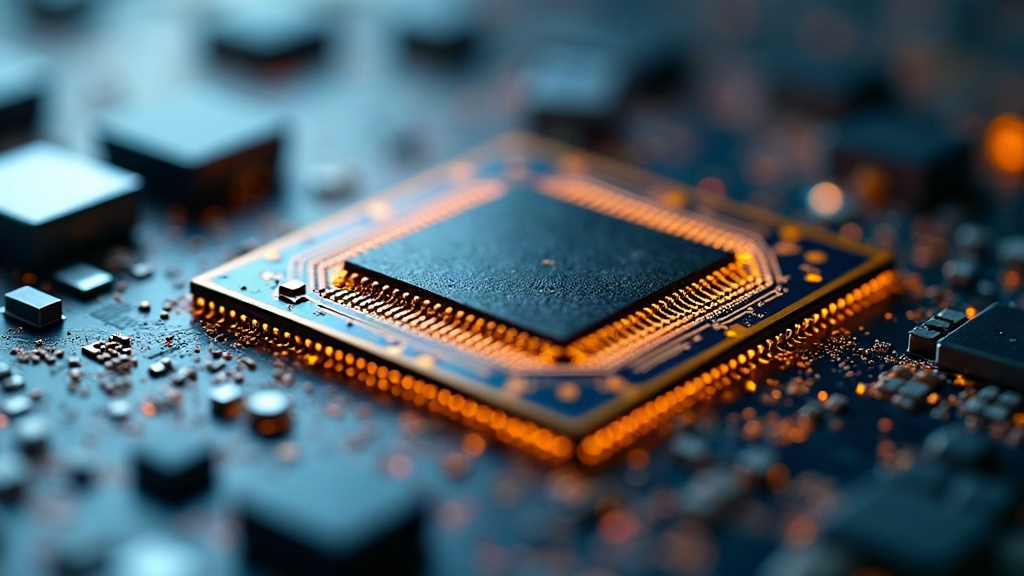
OpenAI just released three versions of GPT-5.6 on July 9, 2026, each optimized for different tradeoffs between capability, speed, and cost. Sol is the flagship: $5 input, $30 output per million tokens. Terra is the value option at $2.50 input, $15 output. Luna is the budget tier at $1 input, $6 output. The release marks a shift in OpenAI's strategy away from a single frontier model toward a tiered family that serves different customer segments and workloads. But the most important detail is not the three models themselves. It is where they run. Sol runs on Cerebras wafer-scale chips at 750 tokens per second, a speed that is 15 times faster than inference on traditional GPU clusters. That speed unlock changes everything about how frontier AI models are deployed: instead of batching requests to maximize GPU utilization, companies can now serve users with single-digit millisecond latency. The inference bottleneck just moved from chips to software.
The three-tier release strategy reveals that OpenAI is no longer chasing performance records. It is chasing market share. Anthropic's Claude Sonnet 5, released last month, redefined the pricing floor for capable intermediate models: $3 input, $15 output on the standard tier. OpenAI's Terra ($2.50, $15) undercuts Anthropic and signals that API pricing is now a commodity competition. Luna ($1, $6) targets price-sensitive customers and open-source model users who might otherwise use Ollama or open-weight models. Sol targets high-throughput production workloads where speed and quality matter more than cost. This is market segmentation, not innovation. It is also a sign of maturity in the frontier AI business: OpenAI went public with the premise that it would lead on model capability. It is now leading on price and deployment flexibility instead.
The bear case is simple: pricing pressure on OpenAI's core business. GPT-5.6 pricing is lower than GPT-5.5 at the same capability level, meaning customers using GPT-5.5 today will upgrade to GPT-5.6 at lower cost, compressing revenue per query. Luna at $1 input token pricing may cannibalize higher-margin workloads if customers shift tasks to the cheaper model even when they do not need the cost savings. The bigger risk is that this pricing race is unsustainable. OpenAI's training costs for frontier models are estimated at $500 million to $1 billion per model. If API pricing drops below $1 per million tokens on the most basic tier, the payback period for training investment extends to years or becomes negative. Competitors with lower training costs (Meta, Alibaba) or access to subsidized compute (China) can undercut OpenAI indefinitely. OpenAI may be pricing itself into a loss on basic inference.
What Actually Happened
OpenAI announced GPT-5.6 on July 9, 2026, with three model tiers: Sol, Terra, and Luna. The release followed a limited preview that began on June 25, 2026. Sol ($5 input, $30 output per million tokens) is positioned as the flagship for complex reasoning tasks. Terra ($2.50 input, $15 output) is positioned for production workloads where GPT-5.5-level performance is sufficient. Luna ($1 input, $6 output) is the budget tier for high-volume, cost-sensitive applications. The critical innovation is deployment: Sol runs exclusively on Cerebras wafer-scale processors, delivering up to 750 tokens per second throughput, 15 times faster than GPU-based inference. Cerebras, a Silicon Valley startup, has spent the past three years developing specialized hardware for large language model inference. OpenAI's partnership signals that Cerebras hardware is production-ready and cost-competitive with NVIDIA's inference GPUs.
The release is available across ChatGPT, the OpenAI API, and via a new Codex IDE integration. GPT-5.6 pricing represents a strategic shift from maximizing margin per token to maximizing market share per tier. Terra's $2.50 input / $15 output matches Anthropic Claude Sonnet 5's standard pricing, directly competing for the "best value mid-tier model" positioning. Luna at $1 input / $6 output is below open-source alternatives and designed to capture cost-sensitive customers and price-shopping developers. Notably, OpenAI announced a "Sol Fast" premium option at $12.50 input / $75 output for customers willing to pay a 2.5x premium for guaranteed 750 tokens-per-second throughput without queuing. This introduces a new pricing dimension: latency guarantees rather than just capability or capacity. Customers with strict SLA requirements (financial trading, real-time reasoning, time-critical inference) can pay for priority queue access, allowing OpenAI to extract margin from latency-sensitive use cases while keeping base pricing competitive.
Strategically, the release positions OpenAI ahead of Anthropic in deployment flexibility and behind Anthropic in marketing differentiation. Anthropic's recent Claude Sonnet 5 announcement emphasized "agentic" capabilities and emphasized use cases (autonomous coding, tool use, workflow automation). OpenAI's announcement emphasizes speed, price tiers, and hardware partnerships. Neither company is claiming technical superiority anymore. Both are claiming they are "best for your use case and budget." This convergence signals that the frontier model market has matured from "which model is smartest?" to "which model is cheapest and easiest to deploy for my workload?" In that market, OpenAI's scale (billions of API calls per month, established partnerships with cloud providers) is a stronger moat than Anthropic's technical reputation.
Why This Matters More Than People Think
GPT-5.6's three-tier release is the moment when frontier AI shifts from a capability arms race to a pricing and deployment war. For five years (2018-2023), the question was "whose model is smarter?" That question had a clear technical answer: each major release from OpenAI or DeepMind was demonstrably better than the previous generation on benchmarks. That era is ending. GPT-5.6 is not demonstrably smarter than GPT-5.5. It is cheaper, faster, and available in different configurations. Anthropic's Claude is not claiming to be smarter than GPT-5. It is claiming to be safer, more interpretable, and better at agentic workflows. Google's Gemini is not claiming to be smarter. It is claiming to be more integrated with Google's ecosystem. The technical differentiation between frontier models has collapsed. Now vendors compete on everything else: price, latency, ecosystem integration, safety positioning, deployment flexibility.
This shift has three major implications. First, frontier AI model pricing will continue to decline toward marginal cost. Marginal cost for inference is the cost of the compute to run one token through the model (electricity + hardware amortization). For a well-optimized Transformer running on modern GPUs or specialized hardware like Cerebras, that cost is approximately $0.0001 per token or lower. Luna at $1 per million tokens ($0.000001 per token) is 100x markup over marginal cost. As competition intensifies, that markup will compress. Within two years, expect Luna-tier pricing to drop below $0.50 per million tokens, and budget tiers to emerge at $0.10 per million tokens. OpenAI and Anthropic will be forced to compete on integration, ecosystem, and brand rather than on model quality or pricing per token.
Second, deployment will shift from cloud API to edge and local inference. If Luna-tier models cost $1 per million tokens and a small business processes 100 million tokens per month, the monthly cost is $100 for cloud API access. That same business can run an equivalent open-weight model (Llama, Mistral, or similar) on local hardware for $200-500 per month in electricity and amortized equipment. As pricing pressure increases, more customers will deploy locally rather than use APIs. This is the shift that killed cloud email companies 15 years ago: once cloud became cheap, everyone realized they could run local servers for the same cost and keep data private. The same will happen with frontier models. Local inference will expand from niche (privacy-sensitive) to mainstream (cost-optimized) by 2027.
Third, model vendors will shift from selling inference to selling fine-tuning, custom training, and vertical integrations. If commodity inference commodities, the profit margin moves upstream to training and adaptation. OpenAI's enterprise customers will increasingly ask: can you fine-tune Claude on our internal data? Can you build a private version for our industry? Can you license weights so we can run the model ourselves? The API business becomes a low-margin volume business, and the high-margin business becomes custom model development. Companies like Anthropic, which have deep relationships with enterprise customers, are better positioned for this shift than commodity API vendors.
The Competitive Landscape
GPT-5.6's pricing is aggressive relative to competitors but restrained relative to OpenAI's market power. Anthropic Claude Sonnet 5 is pricing at $3 input / $15 output on the standard tier, higher than GPT-5.6 Terra ($2.50 / $15) on input tokens. Google's Gemini 3.5 (preview access only as of July 2026) is priced at $1.50 input / $6 output, beating both OpenAI and Anthropic. Meta's open-weight Llama models (free to download, but expensive to run at scale) are used by customers who want to avoid per-token costs entirely. Alibaba's Qwen models (popular in Asia, subsidized by Chinese government) are essentially free to Chinese customers. The market is fracturing into four tiers: premium capability (OpenAI Sol, Anthropic for enterprise), mid-tier value (Google Gemini, OpenAI Terra, Anthropic Sonnet), budget API (OpenAI Luna, Google budget tiers), and local inference (open-weight models).
The historical parallel is the PC software market of the 1980s and 1990s. In the 1980s, software was premium: Microsoft Office cost $500 per license. By the 1990s, office productivity software had commodified, and Microsoft competed on ubiquity and ecosystem lock-in rather than price. OpenAI and Anthropic are following the same pattern. In 2021-2023, frontier AI APIs were premium products ($0.10+ per token). In 2026, they are competing on price and features within a narrowing band. By 2029, frontier AI inference will be a commodity utility, priced like electricity. The winners will not be the companies with the smartest models but the companies that own the consumption platform (Amazon AWS, Microsoft Azure, Google Cloud) and the companies that own vertical integrations (Anthropic with enterprise customers, OpenAI with ChatGPT subscriptions).
Notably, OpenAI's partnership with Cerebras signals a strategic bet that specialized hardware will matter more than general-purpose GPU scale. Cerebras builds wafer-scale processors that are optimized specifically for Transformer models and large-batch inference. By partnering with Cerebras instead of relying on NVIDIA GPU clusters, OpenAI is saying: "We are willing to lock into one hardware vendor to get better latency and unit economics." This is a significant shift. For the past five years, cloud vendors and OpenAI have been vendor-agnostic, running on NVIDIA, AMD, and other GPU options to maintain flexibility. Locking into Cerebras for Sol suggests OpenAI expects Cerebras to dominate inference hardware the way NVIDIA dominated training hardware. If Cerebras succeeds, OpenAI gets a cost and speed advantage on flagship inference. If Cerebras fails, OpenAI is stranded on deprecated hardware.
Hidden Insight: The Real Moat Moved from Model Quality to Customer Lock-in
The deepest story in GPT-5.6's release is that OpenAI is no longer confident that model quality is a sustainable moat. If OpenAI believed GPT-5.6 was meaningfully smarter than all competitors, it would be marketed on that basis: "GPT-5.6 solves problems that other models cannot solve." Instead, OpenAI is marketing on speed, price tiers, and ecosystem integration. This signals that internally, OpenAI has concluded that frontier models are converging: Anthropic Claude, Google Gemini, and Meta Llama are all close enough in capability that switching costs matter more than incremental quality gains. When switching costs are what matter, the winner is not the smartest model. It is the model most integrated into your workflow, the one that has the most documentation, the one that has the most third-party extensions, the one that your team already knows. That is OpenAI's moat: ChatGPT has 200+ million users. Every new feature OpenAI adds to ChatGPT is a switching cost for users to leave for Anthropic's Claude or Google's Gemini. The model itself is almost secondary at that point.
This shift is visible across the industry. Anthropic is now emphasizing "Constitutional AI" and enterprise safety features, not raw intelligence. Google is emphasizing Gemini's integration with Google Workspace (Gmail, Docs, Sheets) and Android. Meta is emphasizing open-weight models and licensing flexibility. Microsoft is emphasizing Copilot integration across Office, Windows, and GitHub. None of these companies is claiming "our model is smartest." All of them are claiming "our model works best in your workflow." That is the sign of a mature market where technology has converged and differentiation has moved to distribution, integrations, and switching costs.
The long-term implication is that frontier AI will become a commodity input to broader platforms. In 10 years, "What model should I use for this task?" will be as meaningless a question as "What CPU should I use for this computation?" The answer will be "whatever is integrated into your platform." Amazon developers will use Amazon Bedrock's models. Google developers will use Vertex AI's models. Microsoft developers will use Copilot Studio's models. Independent developers might use OpenAI or Anthropic, but they will be the minority. The economics will favor platform integration over API access. This is a loss for OpenAI if OpenAI wants to be an independent AI infrastructure company. It is a win for OpenAI if OpenAI controls the platform (ChatGPT subscriptions, enterprise contracts) that the models are embedded in.
What to Watch Next
Over 30 days, watch for customer migration announcements. Companies that were using GPT-5.5 exclusively will announce they are switching to a multi-model strategy (GPT-5.6 + Claude + Gemini). Each announced migration validates OpenAI's strategy of competing on price and availability rather than exclusive quality. Watch also for open-weight model updates. Meta Llama will release 5.6-equivalent open-weight models within weeks, forcing OpenAI to compete on price even more aggressively. If Llama 5.6 matches GPT-5.6 Luna's capability at cost-of-compute pricing, it validates the thesis that frontier models have converged and that proprietary pricing power is gone. By August 10, we should see at least three major announcements of companies deploying Luna in production, each describing Luna as "fast and cheap enough to replace 80% of our GPT-5.5 workloads." That would validate Luna's market positioning.
Over 90 days, monitor OpenAI's API usage and revenue. Public statements suggest OpenAI's API business is profitable, with healthy margins on each inference token. If GPT-5.6 pricing pressure causes API revenue to decline despite increased usage, it signals that OpenAI is losing the pricing war. If revenue stays flat or grows despite price cuts, it signals strong demand growth that offsets margin compression. Watch also for Cerebras deployment announcements. If major cloud providers (AWS, Azure, Google Cloud) adopt Cerebras hardware for their own inference clusters, it validates OpenAI's bet on specialized hardware and increases probability that Cerebras becomes the inference standard. Conversely, if GPU vendors respond with aggressive price cuts and latency improvements, it signals that Cerebras' advantage is temporary and GPUs remain dominant.
Over 180 days, the key metric is OpenAI's gross margin on API business. If margins compress below 40%, it indicates pricing pressure is unsustainable and OpenAI will be forced to pivot to higher-margin services (fine-tuning, training, enterprise contracts). If margins stay above 50%, it indicates OpenAI's efficiency improvements (specialized hardware, optimized inference) are offsetting price competition. Watch also for OpenAI's next model release. If GPT-5.7 (expected late 2026) adds new capabilities that justify a quality premium (multimodal reasoning, world modeling, agent autonomy), it signals OpenAI is betting the moat is back on model quality. If GPT-5.7 is priced lower than GPT-5.6 at similar capability, it signals OpenAI has given up on quality differentiation and is instead betting on platform integration and speed.
GPT-5.6 is not smarter than its predecessors. It is cheaper, faster, and available in more configurations. That shift from capability competition to price and deployment competition marks the moment when frontier AI went from moonshot to infrastructure.
Key Takeaways
- OpenAI released GPT-5.6 on July 9, 2026 with three tiers: Sol ($5/$30), Terra ($2.50/$15), and Luna ($1/$6) per million tokens — positioning to compete on price across customer segments.
- Sol runs on Cerebras wafer-scale processors at 750 tokens per second, 15 times faster than GPU inference — shifting the inference bottleneck from hardware to software optimization.
- Pricing for GPT-5.6 is lower than GPT-5.5 despite similar capability, signaling that frontier model pricing is commoditizing — projected to reach marginal cost ($0.0001 per token) within two years.
- Competitors (Anthropic, Google, Meta) are converging on mid-tier pricing ($1-3 per million tokens) and competing on ecosystem integration rather than model quality — frontier AI capability has reached parity.
- The market is shifting from "which model is smartest?" to "which model is best integrated into my platform?" — moat has moved from technology to lock-in and distribution.
Questions Worth Asking
- If frontier AI pricing converges to marginal cost within two years, how will OpenAI and Anthropic remain profitable, and will they pivot to higher-margin services like fine-tuning and enterprise consulting?
- Does Cerebras' partnership with OpenAI signal that specialized AI inference hardware will displace NVIDIA's GPUs, or is it a temporary niche for specific workloads?
- What does it mean for smaller AI startups and open-source projects if pricing for frontier-quality models drops below $1 per million tokens?