Microsoft has spent the last four years and hundreds of billions of dollars paying Nvidia for the GPUs that power Copilot, Azure AI, and its OpenAI partnership. On October 12, 2026, the company announced Maia 300, its third-generation custom AI inference chip, built on TSMC's newest manufacturing process and designed to replace a growing fraction of that Nvidia spend starting in 2027. The numbers Microsoft is claiming deserve careful attention: 40 percent more tokens per megawatt than leading GPU systems, and seven times the rack-scale throughput of its own previous generation.
What Actually Happened
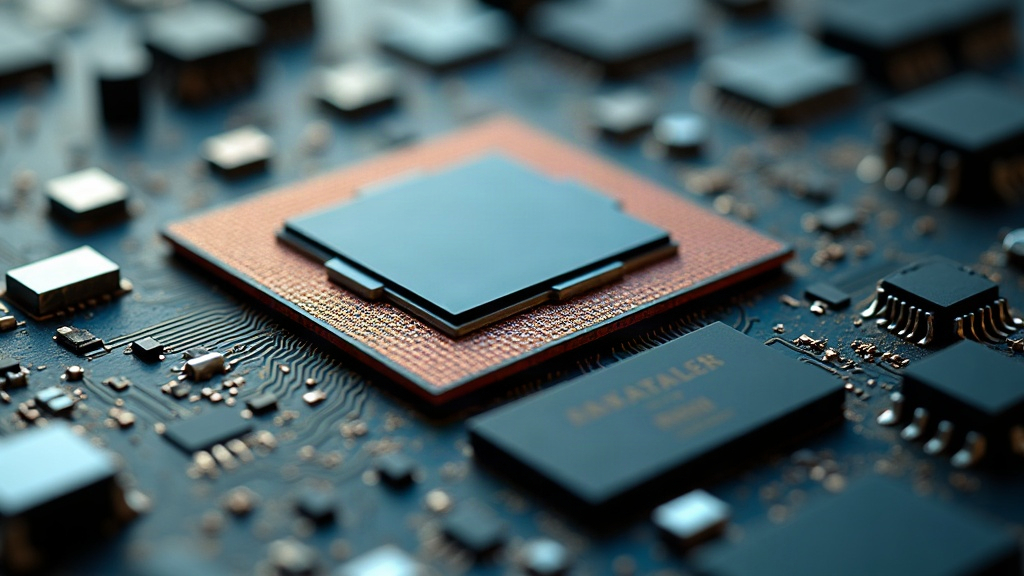
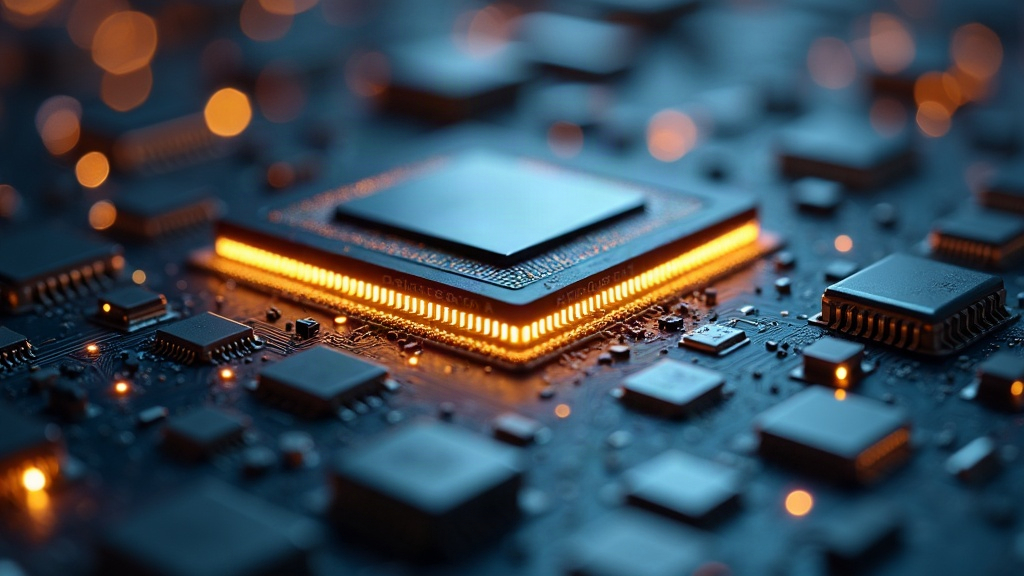
Microsoft unveiled Maia 300 on October 12, 2026, as the successor to its Maia 200 accelerator, according to the official Microsoft Source announcement and confirmed by UPI. The chip uses a multi-chiplet design, with compute chiplets fabricated on TSMC's N2P process, eight HBM4 memory stacks, and a 950-watt power budget per accelerator. Microsoft's racks will hold 96 Maia 300 accelerators each, doubling the 48-accelerator density of racks designed for Maia 200. The company claims this architecture delivers 40 percent more tokens per megawatt than competing GPU-based systems, along with a seven times improvement in rack-scale token throughput compared to the previous generation. Production is scheduled to begin in 2027, and Microsoft is negotiating an order of more than 300,000 units with TSMC for that first production window, a reservation that represents billions of dollars in wafer commitments on the most contested process node in the semiconductor industry.
The strategic framing around Maia 300 is explicit and goes beyond the hedging language Microsoft used when it first introduced Maia 200. Scott Guthrie, Microsoft's executive vice president for cloud and AI, said the company will scale its Azure Maia family to multi-gigawatt deployments starting in 2027, making Maia the primary inference system for Microsoft products and services. As reported by Computerworld, Microsoft is planning to power its flagship AI products, including Microsoft 365 Copilot, Teams AI features, Bing AI search, and Azure's inference services, primarily through its own silicon rather than through Nvidia GPUs by the end of 2027. That statement repositions Maia from a cost-optimization experiment to a core infrastructure commitment with organizational accountability attached. The shift in language from "we are exploring custom silicon" to "Maia will be our primary inference system" is a strategic declaration that changes how Microsoft's suppliers, competitors, and customers should price the company's dependence on any single chip vendor.
Volume production and organizational commitment are distinct from proven performance, and the gap between them matters for assessing this announcement. As of the unveiling date, no third-party benchmarks of Maia 300 performance have been published, and all throughput and efficiency claims come from Microsoft's internal testing. According to Technology.org, Microsoft is negotiating with TSMC for more than 300,000 chips in the 2027 production window, a figure that would make this one of the largest non-GPU AI accelerator orders ever placed. One Evercore ISI estimate puts the Maia family at roughly 10 percent of Microsoft's total AI chip spending by early 2027, suggesting the shift away from Nvidia is real but still at an early stage relative to Microsoft's overall compute budget. The company has a history of publishing its own performance figures before outside validation, as it did with Maia 200, and those figures were broadly confirmed by Azure operators running production workloads; but Maia 300 represents a substantially larger leap in specifications than any previous generation jump and will face correspondingly more intense scrutiny.
Why This Matters More Than People Think
The strategic significance of Maia 300 is not the chip itself but the inflection point it marks in the economics of AI infrastructure. For the past three years, every major tech company paid Nvidia's pricing on H100 and H200 GPUs because there was no viable alternative at scale. Nvidia held this position not only because its chips were technically superior but because its software ecosystem, CUDA, was so deeply embedded in every AI training and inference pipeline that switching carried enormous engineering costs beyond the hardware price. Custom silicon from hyperscalers changes this calculus at the margin: Microsoft, Google with its TPU family, and Amazon with Trainium and Inferentia are all now in a position to serve a fraction of their inference workloads on hardware they control, giving them pricing leverage against Nvidia that did not previously exist. The leverage does not require them to replace Nvidia entirely; it requires only that Nvidia believe they could, which is enough to change contract negotiations.
The 40 percent tokens-per-megawatt improvement over leading GPU systems, if it holds under third-party validation, represents an energy cost advantage with compounding implications at Microsoft's scale. Azure runs an estimated one million AI requests per hour across its global infrastructure by current analyst estimates, a number growing substantially as Microsoft embeds Copilot more deeply into Microsoft 365 products used by more than 400 million commercial users. At that volume, a 40 percent reduction in energy cost per inference request translates to billions of dollars in annual savings on electricity alone, separate from any reduction in chip acquisition costs. Microsoft's stated plan to scale to multi-gigawatt deployments of Maia hardware suggests the company is sizing this for a workload footprint that would otherwise require an amount of Nvidia hardware carrying a capital cost in the tens of billions of dollars. The energy efficiency story is also increasingly a political story: data center electricity consumption in the United States grew by an estimated 25 percent in 2025 driven largely by AI, and a chip that demonstrably reduces energy per useful task gives Microsoft a regulatory defense that generic GPU-based infrastructure cannot provide.
The bear case for Maia 300, however, is real and deserves equal weight. Microsoft's previous custom silicon efforts, Maia 200 and the Cobalt CPU, took longer to reach production readiness than originally announced, and the transition from a GPU-based inference stack to a custom accelerator stack requires rewriting and re-optimizing inference code that took years to build on Nvidia's CUDA platform. Skeptics point out that every hyperscaler has announced ambitious custom silicon programs and most have underdelivered against initial timelines; Microsoft's Maia 200 deployment covered only a small fraction of Azure's inference workload after two years in production. The Evercore ISI estimate of 10 percent Maia share by early 2027 is modest compared to the ambition of Guthrie's "primary inference system" language; achieving 30 or 40 percent would require a software ecosystem migration that Nvidia will actively resist through exclusive developer tools, preferential pricing, and technical integration advantages that compound over time.
The Competitive Landscape
Microsoft is not alone in this transition, and the competitive dynamics among hyperscaler silicon programs are shaping up to define AI infrastructure economics for the next five years. Google's TPU v5 family has been running the company's most demanding AI workloads internally for years, and Google claims its in-house silicon now handles the majority of training and inference compute for Gemini models. Amazon's Trainium 2 chips are available on AWS and have attracted interest from startups building custom training pipelines that want to avoid Nvidia's pricing. The hyperscaler custom silicon market is developing its own ecosystem of compiler toolchains, model optimization libraries, and deployment frameworks that, while still less mature than Nvidia's CUDA stack, are now capable enough to handle production inference workloads for the companies that built them. The competitive picture has shifted from "Nvidia versus nothing" to "Nvidia versus a collection of credible alternatives that are cost-competitive for specific workload types."
Nvidia's response to this trend has been to accelerate its own roadmap while defending its software moat. The company released the Blackwell Ultra architecture in early 2026 and is already announcing its Rubin line for 2027, maintaining a performance edge that makes custom silicon less compelling for training workloads where raw throughput matters more than energy efficiency. Nvidia has also expanded CUDA to support more types of AI workloads and introduced NIM microservices designed to make deploying optimized inference on Nvidia hardware as operationally simple as deploying a container. The company's strategy is to stay far enough ahead on training performance that hyperscalers keep buying Nvidia for that workload even as they shift inference to custom silicon, splitting the market rather than losing it entirely. That strategy has worked for three years, and there is no clear evidence that Maia 300 changes it for the training-focused portion of Microsoft's compute spend.
The historical parallel that best illuminates this moment is the transition from general-purpose CPUs to application-specific silicon in mobile, which began around 2010 when Apple introduced the A4 chip in the first iPad. For several years, Intel and Qualcomm competed on general-purpose mobile processors; by 2014, Apple's custom ARM-based chips had redefined what performance-per-watt meant in the category, and the competitive dynamics of the entire mobile silicon market reorganized around the capabilities Apple was setting. Microsoft is not Apple, and the AI accelerator market is more fragmented than mobile, but the underlying dynamic is similar: once the largest and most technically sophisticated customers start building their own silicon, the performance and efficiency bar for incumbent suppliers shifts in ways that compress pricing power even when the incumbents still lead on raw performance metrics. Nvidia's most exposed product line is inference, not training, which is exactly where Maia 300 is aimed.
Hidden Insight: The Real Nvidia Threat
The deeper story inside the Maia 300 announcement is not about replacing Nvidia's training chips, where Nvidia's performance advantage remains substantial and the CUDA ecosystem lock-in is deepest, but about making inference the battleground for Microsoft's silicon strategy. Training is expensive and infrequent: a large frontier model trains once or a few times per year and costs hundreds of millions of dollars in compute. Inference is far cheaper per request but runs continuously at billions of requests per day, every day, indefinitely. If Microsoft can serve 30 percent of its inference volume on Maia 300 by end of 2027, the financial impact on Nvidia's Azure revenue is measurable in hundreds of millions of dollars annually. That is a different strategic threat than replacing training GPUs, which would require a level of software ecosystem disruption that Microsoft is not attempting and Nvidia can more easily defend.
The multi-gigawatt deployment language in Guthrie's announcement signals something about Microsoft's long-term infrastructure ambitions that goes beyond chip economics. Multi-gigawatt AI compute implies data centers specifically designed around Maia's power envelope, cooling requirements, and rack density, which means Microsoft is planning specialized facilities rather than general-purpose data centers optimized for mixed workloads. Companies that design purpose-built silicon for specific workloads eventually design purpose-built facilities around those chips, as Google did with its AI supercomputing campuses and as Amazon has done with its Trainium-specific compute clusters. Microsoft appears to be signaling intent to build the equivalent of its own custom AI compute stack from silicon to facility, which would represent the most consequential step away from commodity infrastructure in the company's history and would substantially reduce its exposure to any single supplier's pricing decisions.
The TSMC N2P process choice for Maia 300's compute chiplets also tells us something about where Microsoft expects the performance boundaries to be in 2027 and how seriously it is taking this commitment. N2P is TSMC's most advanced available node, and its allocation is heavily competed between Apple, Nvidia, Qualcomm, AMD, and now Microsoft. Securing 300,000 chips on N2P for 2027 means Microsoft has made a wafer reservation commitment likely involving billions of dollars in prepayments or guaranteed minimum purchases. That level of financial commitment is qualitatively different from the hedged silicon experiments most hyperscalers ran in the early years of their custom chip programs; it creates real organizational pressure to hit the deployment targets Guthrie announced, because the alternative is an expensive wafer order with no corresponding revenue. Microsoft is treating Maia 300 as a production system rather than a research project, and that changes the accountability structure inside Azure significantly.
The energy efficiency argument may ultimately be the most durable competitive advantage Maia 300 creates, not because of direct cost savings but because of regulatory positioning. Several US states and the federal government are examining whether large-scale AI compute should face energy caps, carbon pricing, or grid access restrictions. A chip that delivers 40 percent more useful work per megawatt gives Microsoft a quantifiable story for regulators: the company can argue that deploying more of its AI on Maia hardware reduces the total grid demand for its workload growth. That argument matters increasingly as data center power demand creates real stress on regional grids in Virginia, Texas, and the Pacific Northwest. Competitors running predominantly on general-purpose GPUs cannot make the same efficiency argument with equivalent specificity, which could give Microsoft an edge in securing future data center construction approvals and power purchase agreements in constrained markets.
What to Watch Next
The 30-day indicator to watch is whether Microsoft publishes or enables third-party verification of Maia 300's efficiency claims. The 40 percent tokens-per-megawatt figure will be scrutinized by Nvidia, AMD, and independent analysts immediately, and any gap between Microsoft's internal numbers and external validation will affect investor perception and the purchasing decisions of cloud customers choosing between Azure and competing platforms. Microsoft's credibility on custom silicon improved with Maia 200, where early performance claims held up under production conditions; but Maia 300 is a more ambitious leap in specifications and will face more rigorous examination before the AI infrastructure community accepts the efficiency numbers as reliable benchmarks for procurement decisions. An independent third-party validation from a cloud operator or academic research group before end of October would strongly reinforce the announcement; the absence of such validation by mid-November will raise questions.
Over 90 days, watch for Google and Amazon's responses. Google is expected to announce its next-generation TPU at its annual hardware event in early 2027, and the Maia 300 announcement gives Google's silicon team a clear performance bar to beat or match in its marketing materials. Amazon has been quieter about Trainium 2 deployments than the initial launch suggested; if Microsoft's Maia 300 announcement accelerates AWS's own silicon roadmap communications, it signals that hyperscaler custom silicon competition is entering a more aggressive phase where announcements and customer commitments, rather than production performance alone, carry strategic weight. The second question to track is whether any major Azure enterprise customers announce plans to migrate inference workloads to Maia-optimized configurations, which would provide the first real-world economic validation of the efficiency claims Microsoft is making.
The 180-day marker is the beginning of Maia 300 production in 2027. At that point, the Azure operator community will begin reporting real-world performance data for inference workloads on Maia hardware, and those numbers will either validate or undercut Microsoft's efficiency claims. If Maia 300 performs as advertised, expect Microsoft to accelerate its Nvidia replacement timeline and announce Maia 400 specifications sooner than the historical two-year cadence would suggest. If performance falls short of the 40 percent efficiency claim, Microsoft will face a difficult conversation with the Azure customers it has been telling to plan for a Maia-first inference infrastructure, and Nvidia's pricing power on new Azure contracts will increase rather than decrease heading into 2028. The production data from 2027 will be the most important single dataset for understanding where the AI chip market goes in the decade's second half.
Microsoft is not trying to out-Nvidia Nvidia; it is trying to make Nvidia's pricing irrelevant for the one AI workload it runs more than any other.
Key Takeaways
- 40% more tokens per megawatt than leading GPUs : Maia 300 uses TSMC's N2P process with 8 HBM4 memory stacks and a 950-watt per-accelerator power budget
- 7x rack-scale throughput improvement vs Maia 200 : enabled by doubling accelerator density per rack from 48 to 96 units on redesigned hardware
- Multi-gigawatt deployments planned from 2027 : Microsoft intends Maia to become the primary inference system for all its AI products and services globally
- 300,000 chips negotiated with TSMC for 2027 : one of the largest non-GPU AI accelerator orders ever placed, representing billions in wafer prepayments
- Roughly 10% of Microsoft's AI chip budget by early 2027 : per Evercore ISI estimates; the Maia ramp is real but still at an early stage relative to total Azure compute spend
Questions Worth Asking
- If Microsoft proves 40% energy efficiency gains at production scale, does that change the political viability of AI data center expansion in ways that give Microsoft an advantage in securing future power capacity over competitors still running on general-purpose GPUs?
- What happens to the companies that built their entire AI business on Azure's current Nvidia GPU infrastructure if Microsoft's Maia transition forces a software migration with real engineering costs and timeline risk?
- At what point does hyperscaler custom silicon create enough pricing competition that Nvidia's gross margins compress, and what does Nvidia look like as a business if those margins fall from the current 78% toward 55%?