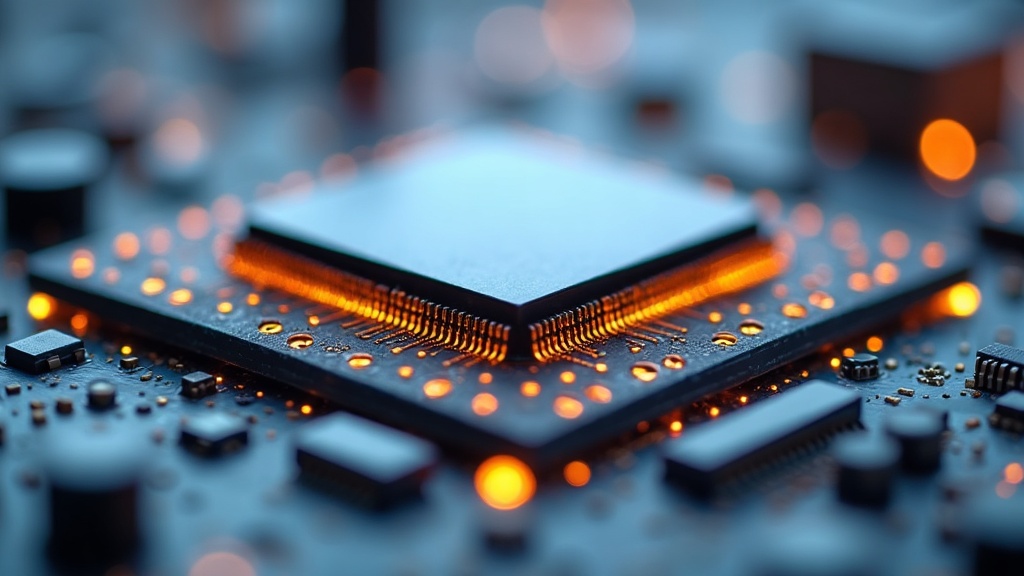
Microsoft's quantum team just pulled off something that even skeptics inside the company thought was years away. At Build 2026, the company unveiled Majorana 2, a topological quantum chip that packs more than 1 million qubits onto a piece of silicon smaller than a credit card, and it has cut its own deadline for delivering a practical quantum computer from 2031 to 2029. That is a two-year compression in a field where timelines historically slip, not accelerate.
What Actually Happened
Majorana 2 is Microsoft's second-generation topological qubit processor, announced on June 3, 2026 at Build. The chip extends the Majorana 1 architecture first disclosed in February 2025 and resolves two critical manufacturing bottlenecks that had slowed the original design: qubit reliability and scalability. The new material stack swaps aluminum for lead in the Josephson junction layer, producing topological qubits with a mean lifetime of 20 seconds and peak lifetimes exceeding one minute. That compares to microsecond-scale coherence times in most competing superconducting qubit designs, a difference that dramatically reduces error-correction overhead and the number of physical qubits required per logical qubit.
The key architectural breakthrough is density. More than 1 million topological qubits can be fabricated on a single chip using the same photolithographic processes that already run at scale in semiconductor fabs. Microsoft's quantum hardware team estimates that Majorana 2 achieves qubits that are 1,000 times more reliable than those in the original Majorana 1 processor. The implications are compounding: higher fidelity qubits require fewer physical qubits per logical qubit for error correction, meaning the path to practical fault-tolerant quantum computation shrinks on two dimensions simultaneously, both in the number of physical qubits required and in the cycles needed for error-corrected operations to complete reliably.
Microsoft's CEO Satya Nadella stated directly at Build that AI-accelerated materials discovery was responsible for compressing the company's internal roadmap by two years. Research teams used internal simulation models to evaluate millions of lead-based superconducting material configurations that would have taken decades of laboratory trial-and-error to assess manually. The result is not just a better chip but a validated workflow for using AI to design the next generation of quantum hardware. The 2029 target now represents Microsoft's official public commitment to deliver what it calls a "scalable quantum computer," defined as a machine capable of solving commercially relevant problems beyond the reach of classical simulation at any cost.
Why This Matters More Than People Think
The phrase "scalable quantum computer" sounds abstract, but the use cases Microsoft is targeting are highly specific and commercially enormous. The first wave of quantum advantage is expected to arrive in molecular simulation and drug discovery, where quantum systems can model protein folding and chemical bond formation at a level of precision that classical computers cannot achieve without exponential compute resources. Every major pharmaceutical company is watching this timeline: a practical quantum computer by 2029 means that clinical drug candidates discovered via quantum simulation could enter Phase I trials before 2033, compressing the standard twelve-year drug discovery cycle by a third or more and delivering candidate drugs to patients who currently have none.
The second wave is optimization at scale, particularly in supply chain logistics, financial portfolio construction, and energy grid management. Problems that require evaluating combinatorial search spaces of 10^80 or more configurations, which no classical computer can solve to global optimality within a human timescale, become tractable on a fault-tolerant quantum machine. The $50 trillion global supply chain management market has already been investing in quantum-readiness programs at firms like DHL, FedEx, and Toyota. A credible 2029 date changes those programs from exploratory to operational planning mode, shifting budget from research departments into infrastructure teams with concrete deployment targets and vendor contracts.
The third and most politically sensitive implication is cryptography. RSA-2048 and elliptic-curve cryptography, the foundational encryption schemes protecting most banking systems, government communications, and internet infrastructure, are theoretically breakable by a sufficiently large fault-tolerant quantum computer running Shor's algorithm. A 2029 scalable quantum machine does not immediately break RSA-2048 since that requires on the order of 4,000 logical qubits running continuously for extended periods. But it advances the "harvest now, decrypt later" threat timeline that the NSA and NIST have been warning about since 2022 by an estimated three to five years based on current qubit scaling projections. Organizations that have not begun migrating to post-quantum cryptography standards are now operating with three to five years less runway than previously projected.
The Competitive Landscape
Microsoft's topological qubit approach has always been the outlier in the quantum computing field, and the Majorana 2 announcement lands in a competitive environment that has shifted considerably over the past eighteen months. IBM leads in superconducting qubit count, with its Condor-class processors now exceeding 1,000 physical qubits, but IBM's error rates remain well above what topological qubits promise at equivalent physical qubit counts. IBM's public quantum roadmap targets error-corrected logical qubits at scale by 2029 as well, meaning both companies are racing toward the same finish line from entirely different technological bases. The convergence of timelines is not coincidental: both teams have incorporated AI-assisted materials and circuit design, compressing roadmaps that had looked immovable just two years ago.
Google's quantum team published results in late 2024 demonstrating quantum error correction below the break-even threshold on its Willow processor, a landmark moment that proved logical qubits were achievable in superconducting architectures. Google has been quieter about hardware since then, suggesting internal focus has shifted to scaling up logical qubit counts rather than publishing milestone papers. IonQ, the publicly traded trapped-ion quantum company, has a fundamentally different architecture with better gate fidelity than superconducting designs but faces serious challenges in scaling qubit counts beyond the low hundreds. D-Wave's quantum annealing approach solves specific optimization problems but not general quantum computation, and trades on a distinct market position that the Majorana 2 announcement does not directly threaten.
The historical parallel that best illuminates this moment is the early transistor era in the 1950s, when multiple competing semiconductor architectures, germanium bipolar transistors, silicon field-effect transistors, and thin-film devices, were all advancing simultaneously with credible technical advocates for each approach. The winner was not predetermined by physics but by manufacturing scalability and cost. Microsoft's bet on topological qubits has always been that the superior noise properties would eventually justify the harder manufacturing path. Majorana 2 is the first independent data point suggesting that bet might pay off on the timeline that matters commercially, not in a physics lab a decade from now but in enterprise software and drug discovery within the current decade.
Hidden Insight: The AI-Quantum Feedback Loop Is Now Real
The most underappreciated element of the Majorana 2 announcement is not the chip itself but the mechanism that produced it. Microsoft's quantum researchers used AI models to accelerate materials discovery by simulating the behavior of lead-doped superconducting alloys at scales and speeds that laboratory experiments could not match. This is not a metaphor for "we used computers faster." AI models ran generative exploration across millions of candidate material configurations, evaluated their topological properties in simulation, and surfaced a handful of candidates for physical synthesis. The lead-for-aluminum substitution that defines Majorana 2's qubit reliability improvement emerged from this AI-driven search, not from traditional materials science intuition or years of iterative lab work that characterizes most advances in condensed matter physics.
What this creates is a feedback loop with compounding value. Better quantum chips will eventually run quantum simulation workloads that improve the AI models used to design the next generation of quantum chips. The loop has not fully closed yet, since Majorana 2 is not powerful enough to run quantum simulation workloads at commercial scale. But Microsoft's 2029 target is premised on the loop tightening with each generation: each new chip, designed with incrementally better AI simulation, produces better chips faster than the previous generation allowed. If the feedback loop holds to form, the quantum computing industry's trajectory curve bends upward more sharply than current linear roadmap projections suggest, and organizations planning quantum strategy around 2035 or 2040 commercialization dates may need to revise those assumptions before the next annual strategy cycle.
The drug discovery application deserves closer examination because the financial stakes are quantifiable at the portfolio level. A single successful Phase III drug candidate that reaches market generates $1 billion to $5 billion in peak annual revenue for the developing firm. Quantum simulation could realistically identify five to ten viable drug candidates per year that classical methods would fail to surface, not because quantum is universally superior to classical simulation but because specific classes of molecular interaction problems, particularly those involving transition metal catalysis and protein-ligand binding in complex biological environments, exceed classical simulation fidelity at any affordable compute budget. At a conservative $2 billion average peak revenue per successful drug, quantum-accelerated drug discovery at commercial scale represents $10 billion to $20 billion in incremental annual pharmaceutical revenue by the mid-2030s, not including the cost savings from earlier-stage candidate elimination, which may ultimately prove even larger in aggregate.
The bear case, however, is grounded in a recurring pattern in quantum computing history: timelines announced at product launches have consistently missed by two to five years. Majorana 1's debut in February 2025 came with engineering claims that physicists at external institutions were unable to independently verify at the time of announcement, with Scientific American noting that peer review of the topological qubit properties was incomplete. Majorana 2's announcement comes from inside Microsoft, at a developer conference optimized for momentum rather than peer scrutiny. The 2029 date is a business commitment, not a physics guarantee, and if qubit coherence times under realistic operating conditions fall short of laboratory measurements, or if error-correction overhead proves higher than modeled, the practical quantum computer timeline slips again into the next decade.
What to Watch Next
In the next 30 days, watch for independent academic labs attempting to replicate Microsoft's published Majorana 2 qubit coherence measurements. Physical Review Letters and Nature Physics are the two journals where credible peer review of these claims will land. If the 20-second mean lifetime holds under third-party measurement, the Majorana 2 specifications are real and the 2029 timeline is technically grounded. If external labs cannot reproduce the coherence numbers at equivalent fidelity, the timeline compresses back toward the historical Microsoft quantum pattern of ambitious announcements followed by slower-than-announced follow-through. Microsoft's own quantum research blog will publish full technical specifications within 30 days of Build, and the fidelity benchmarks in those specifications are the first leading indicator to track closely.
The 90-day window is about commercial partnerships. Microsoft's Azure Quantum platform will begin offering Majorana 2 access to enterprise customers in a closed preview program targeting pharmaceutical and materials science companies as primary use cases. Watch specifically for announcements from the top ten global pharmaceutical companies by R&D spend: Roche, Johnson and Johnson, Pfizer, Merck, AstraZeneca, Novartis, AbbVie, Bristol-Myers Squibb, Sanofi, and Eli Lilly. A named partnership with any of these firms in the 90-day window is a strong signal that the industrial use case has cleared internal technical validation and that enterprise budget allocation is following the Build 2026 announcements rather than waiting for further peer review.
At the 180-day mark, the competitive response from IBM and Google will be visible. IBM's next planned hardware announcement is expected at its annual quantum summit in November 2026, where it has historically disclosed the next processor in its multi-year roadmap. If IBM accelerates its error-correction timeline in response to Majorana 2, it signals that the internal IBM quantum team views Microsoft's claims as credible and sees a real competitive threat. Google's 2026 quantum publication calendar is less predictable, but a Nature or Science paper on logical qubit scaling would be the most consequential external validation signal in the broader industry. The six-month window after Build 2026 will determine whether Majorana 2 is remembered as the moment quantum computing crossed a credibility threshold, or as another benchmark announcement in a long series that delivered slower than promised.
When AI accelerates the design of quantum chips that will accelerate AI, the roadmap stops being a straight line.
Key Takeaways
- 1 million qubits on one chip: Majorana 2 achieves qubit density that competing superconducting designs cannot match at equivalent error rates, using existing fab-compatible manufacturing processes.
- 20-second mean qubit lifetime: 1,000x more reliable than Majorana 1, reducing error-correction overhead and shrinking the physical qubit count required per logical qubit dramatically.
- 2029 practical quantum computer target: Two years earlier than previous estimates, attributed to AI-accelerated materials discovery using lead-for-aluminum substitution in the Josephson junction layer.
- Post-quantum cryptography urgency: A credible 2029 machine tightens the migration window for organizations relying on RSA-2048 and elliptic-curve encryption by three to five years beyond prior projections.
- AI-quantum feedback loop confirmed: AI designed Majorana 2; Majorana 2 will eventually run quantum simulation that improves the next AI model, creating a compounding acceleration cycle with no historical precedent.
Questions Worth Asking
- If Microsoft's 2029 timeline is real, which sectors face the highest near-term disruption: pharmaceuticals that depend on molecular simulation, financial services that depend on RSA encryption, or government agencies that depend on classified communications?
- What is the actual cost per logical qubit on Majorana 2 at production scale, and does the manufacturing advantage over IBM's superconducting approach hold when the comparison moves from laboratory qubits to commercially deployed quantum processors?
- If AI-accelerated materials discovery has already compressed Microsoft's quantum roadmap by two years without public disclosure until Build 2026, what other hardware categories, neuromorphic computing, photonics, custom silicon, are being similarly accelerated in private?