A French startup with a fraction of OpenAI's compute just lit up a data center outside Paris and called it a fight for Europe's technological independence. Mistral's new facility packs 13,800 of Nvidia's most advanced chips into a building south of the capital, and the company is framing it not as a server room but as a declaration that Europe will not rent its intelligence from American clouds forever. The numbers are real. The question is whether they are big enough to matter.
What Actually Happened
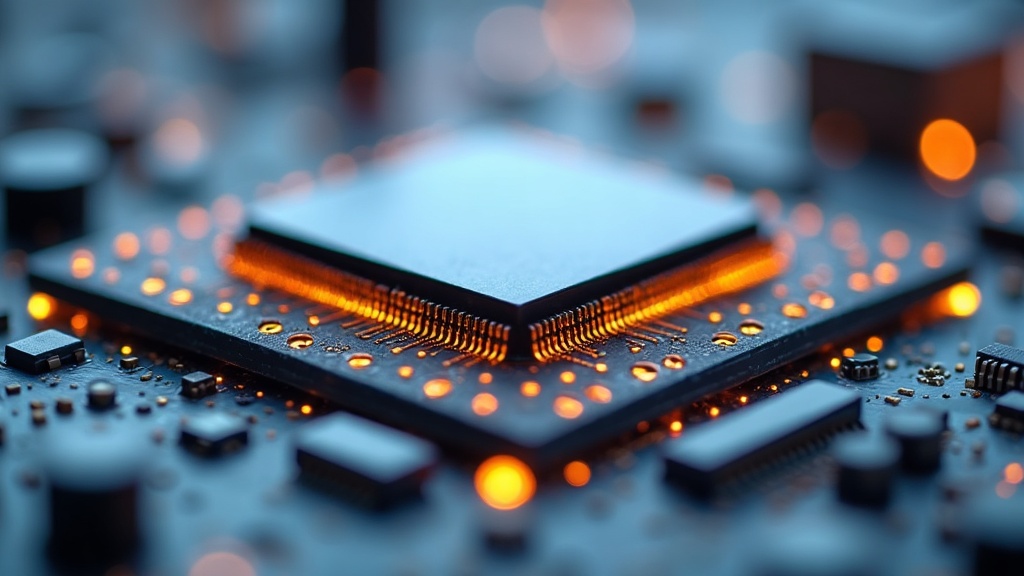
Mistral is bringing online a 44-megawatt data center in Bruyeres-le-Chatel, south of Paris, operated by the French data center firm Eclairion, with the facility expected to open by the end of June 2026. Inside sit 13,800 Nvidia GB300 GPUs from the Blackwell Ultra generation, each carrying 288GB of HBM3e memory, packed into racks that draw up to 200 kilowatts each. The cluster delivers roughly 276 exaflops of aggregate FP4 compute, making it one of the largest dedicated AI training sites on European soil rather than a regional outpost of a US hyperscaler.
The financing structure matters as much as the silicon itself. Mistral raised $830 million in debt, structured by a seven-bank consortium that reads like a roll call of French and allied finance: Bpifrance, BNP Paribas, Credit Agricole CIB, HSBC, La Banque Postale, MUFG, and Natixis Corporate and Investment Banking. Using debt rather than equity to fund compute is a deliberate choice. It lets Mistral build physical infrastructure without diluting ownership further, treating GPUs and power contracts like the project-financed assets that telecom towers and power plants have long been, with predictable cash flows backing the loan.
This is not a standalone bet. Combined with a separate data center deal in Sweden announced earlier in 2026, Mistral is targeting 200 megawatts of compute capacity across Europe by the end of 2027. The company has also signaled it is exploring custom chip designs to reduce its dependence on Nvidia over time, the same vertical-integration logic that pushed Google to build TPUs and Amazon to build Trainium. For now, the Paris site is the flagship, the visible proof that a European lab can assemble frontier-scale infrastructure on its own continent rather than leasing it from Virginia or Oregon. The Eclairion partnership matters here too, because it means Mistral is not trying to become a data center operator overnight; it is buying purpose-built capacity from a French specialist while keeping control of the chips, the models, and the data, a division of labor that lets the lab scale faster than if it had to pour concrete and run cooling systems itself.
Why This Matters More Than People Think
Europe has spent three years watching the AI race happen somewhere else. The frontier labs are American, the chips are American or Taiwanese, and the clouds that train the models are run by Microsoft, Amazon, and Google. Every European bank, hospital, and ministry that wanted to use a frontier model has effectively had to route its most sensitive data through US-controlled infrastructure, with all the legal and political exposure that implies under regimes like the CLOUD Act. Mistral's Paris facility is the first credible attempt to offer a full European stack: a European model, trained on European hardware, hosted on European soil, financed by European banks.
The sovereignty argument is not abstract for Mistral's customers. Defense ministries, regulated financial institutions, and industrial giants like Airbus and BMW have signed on partly because they cannot, for legal or strategic reasons, put their crown-jewel data on American clouds. A 44-megawatt site that Mistral controls end to end changes the sales conversation from trust us with a US subprocessor to the data never leaves France. That is a procurement unlock no benchmark score can buy, and it is why President Macron's government has thrown its political weight, and through Bpifrance its capital, behind the project as a matter of national strategy.
The deeper signal is about who gets to build foundation models at all. Training frontier systems requires capital, power, and chips at a scale that has so far concentrated the field into a handful of US firms backed by hyperscaler balance sheets. By proving it can debt-finance a 44-megawatt cluster, Mistral is testing whether a well-connected European challenger can stay on the frontier without selling itself to a US cloud. Critics argue the answer is already no, that the gap is too wide. The bear case is blunt: 13,800 GPUs is a rounding error next to the multi-gigawatt campuses OpenAI and Anthropic are financing, and no amount of European pride closes a 50-to-1 compute deficit.
The Competitive Landscape
The scale comparison is unforgiving. OpenAI's Stargate program is measured in gigawatts and hundreds of billions of dollars. Anthropic has lined up tens of gigawatts of Google TPU capacity and a reported $30-billion-plus financing pipeline. xAI's Colossus cluster in Memphis crossed hundreds of thousands of GPUs. Against those numbers, a single 44-megawatt site with 13,800 chips is modest. Even Mistral's 2027 target of 200 megawatts across Europe is a fraction of what a single US frontier campus will consume by then. On raw compute, Mistral is not competing with the leaders; it is trying to stay close enough to remain relevant.
But raw compute is not the only axis, and the historical parallel that fits is Airbus, not a doomed national champion. When Airbus was founded, Boeing and McDonnell Douglas owned commercial aviation, and the idea that a politically assembled European consortium could challenge them looked quixotic. It took decades and heavy state backing, but Airbus became a co-leader of a global duopoly because aviation was strategic enough that Europe refused to cede it entirely. AI sovereignty is following the same script: governments have decided that depending wholly on foreign intelligence infrastructure is a strategic risk worth spending public money to avoid, regardless of whether the pure economics pencil out today.
Mistral's real competitors for the sovereign-AI prize are therefore not just the US labs but the US clouds offering European regions. Microsoft, Google, and AWS all market EU-resident data centers and sovereign-cloud arrangements designed to neutralize exactly the argument Mistral is making. Their pitch is simple: you get frontier models and local data residency without betting on a startup. Mistral's counter is ownership and independence, that a Microsoft sovereign region is still Microsoft, subject ultimately to US law and US corporate priorities. The risk is that for most buyers, a credible data-residency promise from a hyperscaler is good enough, and full sovereignty is a premium few will actually pay for.
There is also a timing argument that cuts in Mistral's favor. The GB300 generation is the current frontier of Nvidia hardware, and securing 13,800 of them in mid-2026 means Mistral is not training on last year's silicon. Many sovereign-AI efforts in other countries have stumbled precisely because they announced ambitions but could not actually procure top-tier chips at scale against hyperscaler demand. By locking in Blackwell Ultra parts and the power to run them, Mistral has cleared the two hardest bottlenecks in the build, which is more than most national-champion projects outside the US and China have managed to do on their own soil.
Hidden Insight: Sovereignty Is a Financing Story, Not a Chip Story
The headline is 13,800 Nvidia GPUs, but the more revealing detail is the seven-bank debt consortium. Mistral did not raise this round from venture investors chasing returns. It raised it from French and allied banks, anchored by the state-owned Bpifrance, structured as debt against an infrastructure asset. That structure tells you the Paris data center is being treated less like a startup gamble and more like national infrastructure, the way a country finances a port, a grid, or a rail line. The capital is patient, politically motivated, and willing to accept utility-like returns because the strategic payoff is independence, not a quick multiple.
This reframes what Mistral actually is. On the surface it is a model lab competing on benchmarks with Le Chat and its open-weight releases. Underneath, it is becoming the anchor tenant of a European compute utility, with the model business providing the demand that justifies the infrastructure and the infrastructure providing the sovereignty that justifies the state backing. The two reinforce each other in a way a pure US startup cannot replicate, because no US lab can credibly promise a European ministry that its data and its intelligence will never touch American jurisdiction.
The custom-chip exploration fits the same logic. Mistral knows that as long as it buys every GPU from Nvidia, its cost structure and supply are hostage to a single American vendor, and true sovereignty has a hole in the middle of it. Designing its own silicon, even years out, is the only way to close that gap, just as Google's TPUs eventually freed it from paying Nvidia's full margin. The Paris site running Nvidia hardware today is therefore a transitional step, not the destination. The destination is a stack Mistral controls from chip to model to data center, and the debt financing is what buys the runway to get there.
The uncomfortable truth is that sovereignty and frontier competitiveness may be in tension. Every euro Mistral spends proving it can build independent European infrastructure is a euro not spent matching the sheer scale of US training runs. A company optimizing purely for model quality would rent the cheapest, largest compute available, wherever it sits. Mistral is deliberately not doing that, and that choice could leave its models a generation behind the frontier even as its infrastructure story gets stronger. The bet is that being the trusted European option matters more to enough customers than being the single best model, and that wager is exactly what the next two years will settle.
What to Watch Next
Over the next 30 days, watch whether the facility actually comes online on schedule by the end of June and whether Mistral discloses what it trains there first. A new flagship model trained on the Paris cluster would be the proof point that the infrastructure translates into capability, not just press releases. Watch too for the utilization question: 13,800 GB300 GPUs are useless if they sit idle, so early signs of paying enterprise and government workloads filling the cluster will tell you whether demand matches the build.
Over 90 to 180 days, track the path toward the 200-megawatt 2027 target. Does the Sweden site break ground on schedule, and does Mistral announce additional debt facilities to fund expansion, or does the financing stall? Watch the custom-chip program for any concrete tape-out or foundry partner news, since that is the signal that Mistral is serious about escaping Nvidia rather than just floating the idea. And watch the customer roster: each named European bank, defense ministry, or industrial firm that commits is a data point on whether sovereignty actually sells at a premium.
The broadest marker is political. France and the EU have committed tens of billions of euros to AI infrastructure, and Mistral is the obvious national champion to absorb much of it. Watch whether public money continues to flow toward sovereign compute or whether budget pressure and the gravitational pull of cheaper US clouds erode the commitment. If Europe stays the course, Mistral has a multi-decade runway like Airbus. If political will fades the moment a hyperscaler offers a good-enough sovereign region at a lower price, the Paris data center risks becoming a monument to an ambition the continent could not afford to finish.
For builders and investors outside Europe, the Paris cluster is a template worth studying regardless of how Mistral itself fares. It shows that frontier-scale compute can be financed with infrastructure debt rather than dilutive equity when a strategic buyer base and patient capital are aligned, and it shows that data residency and jurisdictional control are becoming product features that command real demand from regulated industries. Any region or company that wants a seat at the AI table now has a concrete financial and political playbook to copy, and the next few sovereign-AI announcements will likely borrow directly from how Mistral structured this one.
Mistral's Paris cluster is not trying to out-compute Silicon Valley. It is trying to prove that Europe can own its own intelligence, and that is a financing decision before it is a technical one.
Key Takeaways
- 13,800 Nvidia GB300 GPUs fill a 44-megawatt data center near Paris, delivering roughly 276 exaflops of FP4 compute, opening by end of June 2026.
- $830M in debt from a seven-bank consortium anchored by state-owned Bpifrance funds the build, treating compute like project-financed infrastructure.
- 200 megawatts by end of 2027 is the Europe-wide target, combining the Paris site with a separate Swedish facility.
- Sovereignty is the product: a fully European stack lets banks, defense ministries, and firms like Airbus and BMW avoid routing sensitive data through US clouds.
- Scale gap remains huge: 13,800 GPUs is a fraction of the gigawatt-scale campuses OpenAI, Anthropic, and xAI are financing in the US.
Questions Worth Asking
- Will enough customers pay a premium for full sovereignty, or is a hyperscaler's data-residency promise good enough for most?
- Can a lab that spends on independence instead of pure scale stay on the model frontier, or does sovereignty mean staying a generation behind?
- If compute is now project-financed like a power plant, who else should be funding AI infrastructure with debt rather than equity?