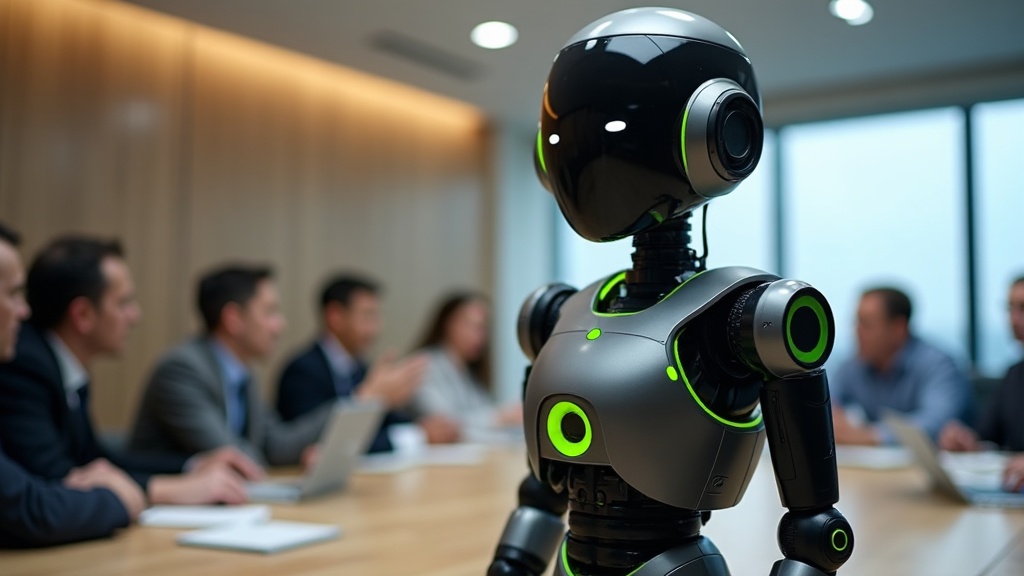
Nvidia just decided that the reference humanoid robot for the world's research labs will be Chinese. The company picked Unitree's H2, a nearly six-foot, $29,900 humanoid, as the body for its new Isaac GR00T reference platform, pairing it with a Jetson Thor brain built around a Blackwell GPU. For a US chipmaker that sells the silicon powering nearly every American robotics startup, choosing a Beijing-based partner as the default research robot is a stranger and more consequential move than the spec sheet suggests.
What Actually Happened
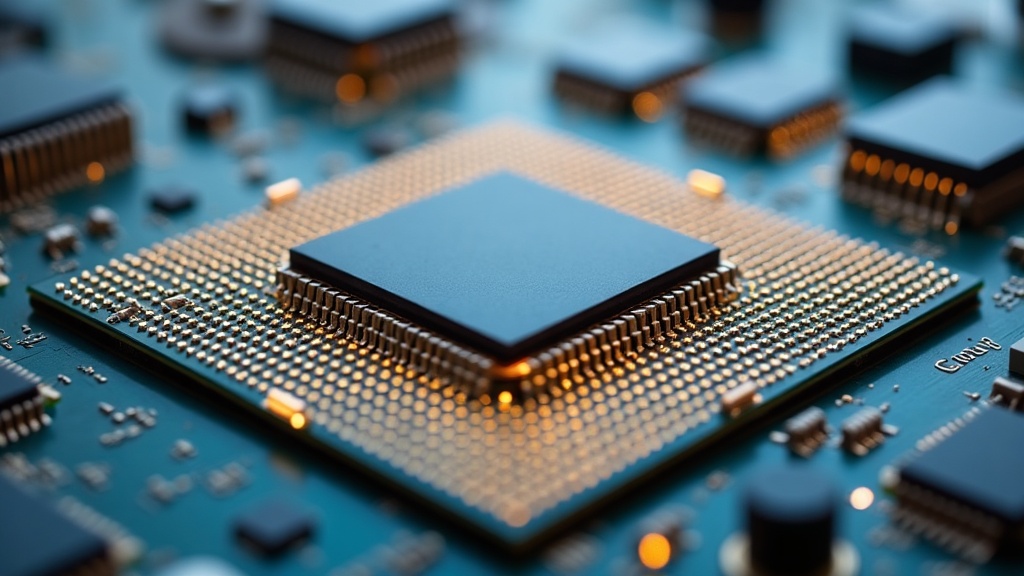
At Computex, Nvidia unveiled the Isaac GR00T reference platform and named Unitree's H2 Plus as the standard humanoid body for it, the first complete robotics system Nvidia will sell directly to researchers. The robot combines Unitree's hardware with Nvidia's Jetson AGX Thor T5000 onboard computer, which carries a Blackwell GPU and 128GB of unified memory. The chassis weighs 150 pounds and offers 31 degrees of freedom, enough articulation to study whole-body manipulation, locomotion, and bimanual tasks that simpler research platforms cannot attempt.
The economics are the headline as much as the hardware. At $29,900, the H2 lands at a price that a single research grant can cover, against the six-figure sums that comparable advanced humanoids have commanded. Nvidia says sales, aimed primarily at research institutions, begin later this year, and at least four labs have already committed: Seattle's Ai2, ETH Zurich in Switzerland, the Stanford Robotics Center, and UC San Diego's Advanced Robotics and Controls Laboratory. That roster spans two continents and some of the most cited robotics groups in the field.
The timing is loaded. The partnership lands as Unitree pursues an initial public offering on Shanghai's STAR board, seeking to raise 4.2 billion yuan, roughly $620 million. An Nvidia endorsement as the reference body for a global research platform is the kind of validation money cannot easily buy, arriving precisely when Unitree needs to convince public-market investors that it is the default hardware layer for humanoid robotics rather than one vendor among many. The deal turns a hardware sale into a strategic blessing.
Why This Matters More Than People Think
Reference platforms decide ecosystems. When Nvidia makes the Unitree H2 the default body that ships with Isaac GR00T, it is not just selling robots, it is choosing the hardware that thousands of graduate students will learn on, write papers about, and carry into the startups they found. The robot a researcher trains on becomes the robot they design for, and the foundation models they build inherit assumptions about that body's kinematics, sensors, and degrees of freedom. Nvidia is effectively setting the physical-AI equivalent of an instruction set.
This is the missing piece in Nvidia's robotics stack, and it completes a vertical that no competitor can match. Nvidia already owns the training silicon, the simulation environment in Isaac Sim, the GR00T foundation models, and now the reference body and the onboard inference computer. A lab can take a policy trained in simulation on Nvidia GPUs, deploy it to a GR00T model running on Jetson Thor, and run it on a standard Unitree chassis without re-engineering the integration. That end-to-end coherence is exactly what has been missing from humanoid research, where every lab previously stitched together incompatible parts.
For the broader humanoid market, the move pulls the timeline forward. The single biggest bottleneck in physical AI has been data: robots need enormous amounts of real-world interaction to learn dexterous tasks, and fragmented hardware made it impossible to pool that data across labs. A common reference body changes the math. If hundreds of institutions run the same H2 platform, the trajectories, failures, and successes they generate become poolable, and the resulting dataset could compress years off the path to genuinely useful general-purpose robots. Standardization is the unlock, and Nvidia just chose the standard.
Consider what a shared body does to reproducibility, the chronic weakness of robotics research. Today a manipulation result from one lab is nearly impossible to verify in another, because the hardware differs in subtle ways that change everything from grip force to camera latency. When hundreds of labs run an identical H2 with identical Jetson Thor compute, a published policy can actually be rerun, validated, and improved by anyone. That turns robotics from a collection of bespoke demos into something closer to a cumulative science, and cumulative sciences advance far faster than artisanal ones. Nvidia is not just selling hardware, it is supplying the controlled variable that the entire field has lacked.
The Competitive Landscape
The humanoid field is crowded with well-funded rivals, and most of them are American. Figure AI, fresh off a raise that valued it near $39 billion, runs its own Figure 02 robots and recently logged over 30,000 BMW vehicles built with humanoid help at a Spartanburg plant. Boston Dynamics has its production Atlas heading into Hyundai factories, Apptronik raised $520 million for its Apollo robot, and Tesla continues to push Optimus as a consumer-scale play. Each of these builds vertically integrated hardware and software, and each now faces a research ecosystem standardizing on a competitor's stack.
Nvidia's choice of Unitree weaponizes price and openness against those vertically integrated players. Figure, Boston Dynamics, and Tesla keep their platforms closed and expensive because the robot is their product. Unitree, by contrast, sells hardware cheaply and lets Nvidia own the intelligence layer, which is precisely the division of labor Nvidia wants. By making the cheap, open body the research default, Nvidia ensures that the next generation of robotics talent is fluent in its tools, not in the proprietary stacks of Figure or Tesla. The closed players win deployments today, but Nvidia is buying the mindshare that compounds into tomorrow's deployments.
There is a margin story underneath the strategy too. Nvidia earns almost nothing on the robot chassis and does not want to; its money is in the Jetson Thor module, the GPUs that train the policies, and eventually the software and services around GR00T. By steering the low-margin, capital-intensive business of bending metal to a partner willing to do it cheaply, Nvidia keeps its own balance sheet light and its margins high while still controlling the part of the stack that matters. This is the fabless logic that built Nvidia applied to robotics: own the design and the silicon, let someone else run the factory.
The historical parallel is Nvidia's own CUDA playbook, recast in atoms. In the 2010s Nvidia gave researchers cheap, accessible GPUs and free CUDA tooling, and a decade later every serious AI lab was locked into its software because that is what everyone trained on. The reference humanoid is the same strategy applied to physical AI: subsidize and standardize the research layer, and the commercial lock-in follows as those researchers graduate into industry. The Unitree partnership is CUDA for robots, and Nvidia has run this play to a trillion-dollar outcome once already.
Hidden Insight: The Geopolitics Are the Real Story
The detail everyone will gloss over is the most explosive one: Nvidia, an American company under intense scrutiny over chip exports to China, just made a Chinese robot the global research standard. This is the inverse of the export-control logic that governs Nvidia's GPU business, where Washington restricts what flows to Beijing. Here the hardware flows the other way, a Chinese body carrying an American brain, distributed to Western universities. That arrangement sits in a regulatory gray zone that has not yet been tested, and it almost certainly will be.
The bear case, however, is that this partnership becomes a political liability the moment it scales. Critics argue that seeding US and European research labs with Chinese-manufactured humanoids creates exactly the supply-chain dependency that policymakers have spent years trying to eliminate in chips, telecom, and batteries. The risk is concrete: a research humanoid carries cameras, microphones, and network connectivity into sensitive university labs, some of which do defense-adjacent work, and skeptics point out that a future executive order could bar federally funded institutions from buying the platform overnight, stranding the labs that standardized on it.
There is a deeper strategic tension inside Nvidia's own position. The company's robotics thesis depends on the widest possible adoption of its reference stack, which argues for the cheapest available body, and today that is Unitree. But Nvidia also depends on the goodwill of a US government that views Chinese robotics with suspicion and has already curbed Blackwell sales to Chinese firms abroad. Nvidia is betting it can keep one foot in each world, selling restricted chips into China while exporting Chinese robots out of it, and that balancing act gets harder every quarter the geopolitical temperature rises.
The non-obvious winner, regardless of how the politics resolve, is the foundation-model layer that sits above the hardware. If Nvidia succeeds in standardizing the body, the robot itself becomes a commodity and the value migrates to the GR00T models and the data flywheel they feed. That is the same pattern that played out in PCs, where the hardware commoditized and the value pooled in the operating system and applications. Nvidia is positioning to own the operating layer of physical AI, and the choice of a cheap Chinese body is a feature of that strategy, not a bug, because commoditizing the body is the whole point.
It is worth sitting with how unusual this asymmetry is. In almost every other strategic technology, the United States has spent the past five years trying to move supply chains away from China, not deeper into them. Yet in humanoid robotics, the cheapest capable hardware comes from Chinese makers like Unitree, and the most advanced AI brains come from American firms like Nvidia. The two halves fit together commercially even as they pull apart politically. Whoever resolves that contradiction first, by either reshoring the body or ceding the brain, will shape the structure of the robotics industry for a decade.
What to Watch Next
In the next 30 days, watch whether additional research institutions announce GR00T platform commitments and whether any US-government-funded labs conspicuously decline, which would be the first sign that the China-provenance question is biting. Watch Unitree's IPO reception on the STAR board too: strong demand would confirm investors see the Nvidia partnership as a durable moat, while a tepid listing would suggest the market is pricing in geopolitical risk.
Over 90 days, the key indicator is whether competing humanoid makers respond with their own cheap research platforms or open their stacks to Nvidia's tooling. Figure, Apptronik, or Agility could counter by offering grant-priced research units, and Nvidia could just as easily add a second reference body from a non-Chinese vendor to defuse the political risk. Track also the early research output: the first papers and shared datasets built on the H2 platform will reveal how quickly the standardization-driven data flywheel actually spins.
Watch the deployment side as a leading commercial signal as well. Research adoption is the seed, but the real prize is industrial deployment, and the question is whether labs that prototype on the H2 carry it into the factories and warehouses that Figure and Boston Dynamics are already entering. If the research-to-production pipeline holds, Nvidia's reference platform becomes the on-ramp to the entire humanoid economy. If enterprises insist on different, more rugged bodies for real work, then the research standard and the deployment standard diverge, and Nvidia's mindshare advantage stops short of the revenue that actually matters.
By 180 days, the test is policy. Watch for any congressional or executive action addressing Chinese robotics in research settings, and watch whether Nvidia preemptively diversifies its reference hardware to insulate the platform from a single point of geopolitical failure. If the partnership survives that scrutiny intact, Nvidia will have locked in the research layer of humanoid robotics the way it once locked in AI. If it does not, the episode becomes a case study in how fast a brilliant ecosystem play can collide with the politics of where things are built, and a reminder that in physical AI the supply chain is never just an engineering detail. The companies that internalize that lesson early will design their robotics bets around political durability, not only price and performance, and that discipline may prove to be the real moat in a market where the politics can shift faster than the technology does.
Nvidia did not just sell researchers a robot. It chose the body that an entire generation of physical-AI engineers will design around, and it chose a Chinese one.
Key Takeaways
- Unitree H2 at $29,900 becomes the reference body for Nvidia's Isaac GR00T platform, grant-priced for research labs
- Jetson AGX Thor T5000 with a Blackwell GPU and 128GB unified memory supplies the onboard brain
- 150-pound chassis, 31 degrees of freedom enables whole-body manipulation and locomotion research
- Ai2, ETH Zurich, Stanford, and UC San Diego have already committed, with sales starting later this year
- Unitree is raising $620M on Shanghai's STAR board, with the Nvidia deal as pre-IPO validation
Questions Worth Asking
- If researchers standardize on a Chinese reference robot, who controls the physical-AI ecosystem a decade from now?
- Does commoditizing the robot body hand all the long-term value to Nvidia's GR00T model layer, exactly as the PC era handed it to software?
- What happens to the labs that standardized on the H2 if a future export rule bars Chinese humanoids from federally funded research?