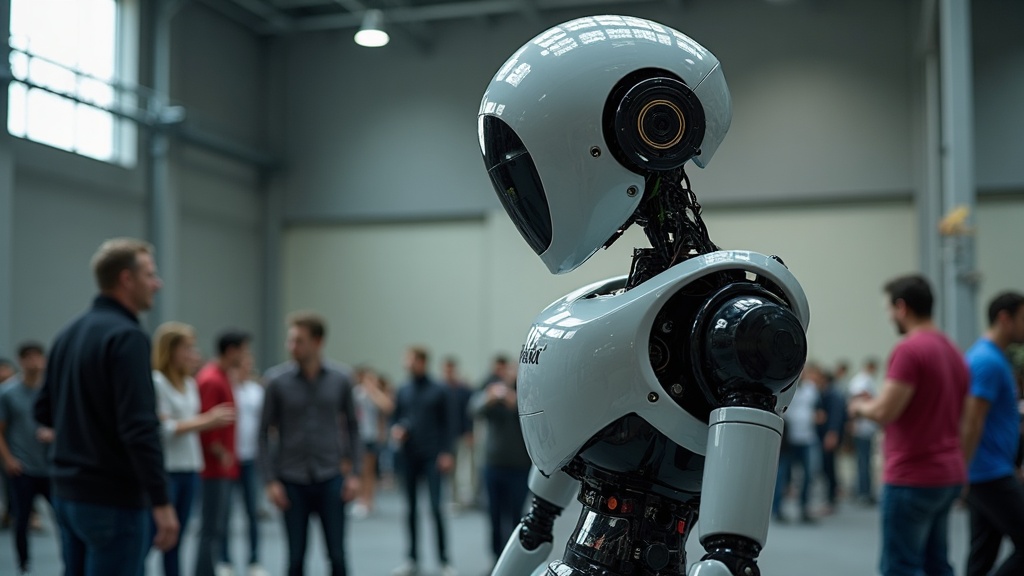
Jensen Huang walked onto the COMPUTEX stage and did something Nvidia almost never does: he gave the hardware away. The new Isaac GR00T Reference Humanoid Robot is a complete blueprint for building a six-foot, 150-pound humanoid that any university lab can order, and Nvidia is publishing the recipe rather than selling the robot. The move only makes sense once you see the real product underneath it. Nvidia does not want to be the company that builds humanoids. It wants to be the company every humanoid is built on.
What Actually Happened
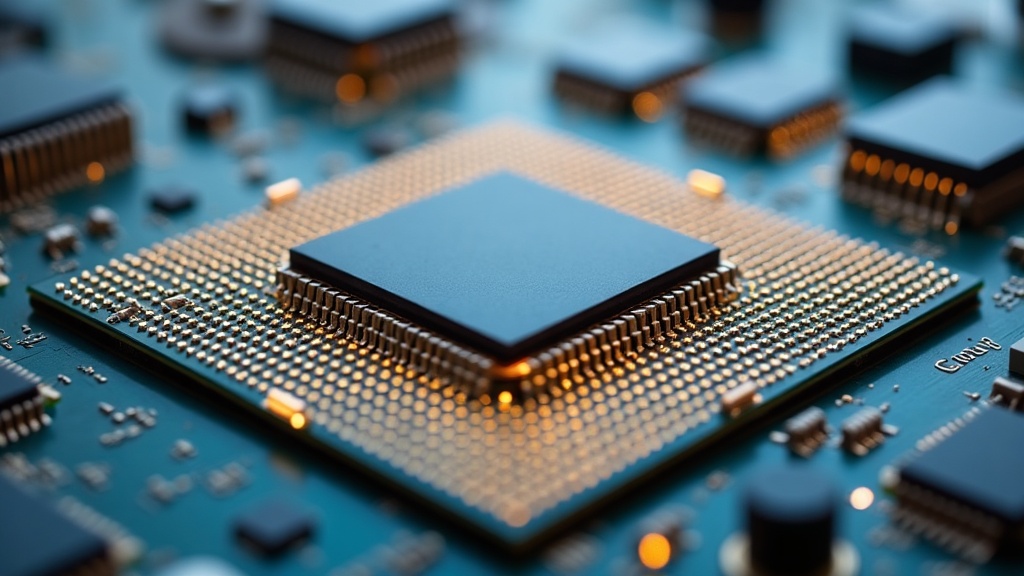
At COMPUTEX 2026 in Taipei, Nvidia unveiled the Isaac GR00T Reference Humanoid Robot, a standardized hardware and software design meant to collapse the cost and complexity of entering the humanoid market. The reference build is specific and buildable: a Unitree H2 Plus chassis, Sharpa Wave five-finger tactile hands, and a Jetson AGX Thor T5000 as the onboard brain, assembled into a roughly 6-foot, 150-pound robot with 75 degrees of freedom. Academic and research teams can buy the platform directly from Unitree, turning what used to be a multi-year hardware project into a purchase order.
The robot did not arrive alone. Nvidia paired it with a refreshed stack of physical-AI models: Cosmos Predict 2.5 and Cosmos Transfer 2.5, world models for generating synthetic training data and evaluating robot policies in simulation; Cosmos Reason 2, a reasoning vision-language model that lets a system perceive a scene and decide how to act; and Isaac GR00T N1.6, a vision-language-action model purpose-built for humanoids. Together they form a pipeline that runs from simulated training data to real-world action, with Nvidia supplying every layer in between.
The partner roster is the tell. Research institutions including Ai2, ETH Zurich, the Stanford Robotics Center, and UC San Diego's Advanced Robotics and Controls Laboratory are adopting the reference design. Commercial robot builders such as Agility, Boston Dynamics, Dyna Robotics, Figure, FieldAI, Noble Machines, Richtech Robotics, and Skild AI are using core components of Nvidia's humanoid stack. And a separate wave of machines from Boston Dynamics, Caterpillar, Franka Robots, Humanoid, LG Electronics, and NEURA Robotics debuted at the show running on Nvidia technology, evidence that the platform play is already pulling the ecosystem into its orbit.
Why This Matters More Than People Think
The obvious story is that Nvidia released better robot models. The real story is that it standardized the body. For the past three years, every humanoid startup has burned capital solving the same undifferentiated problems: which actuators, which hands, which onboard computer, how to wire perception to control. By publishing a reference robot with named, purchasable components, Nvidia just told the entire field to stop reinventing the chassis and start competing on the software and data that actually matter. That is a profound act of market shaping, because the company defining the reference design also defines the defaults, and the defaults all run on Nvidia silicon.
This is the Android strategy applied to robotics, and the analogy is exact. Google did not build the most phones, it built the operating system that most phones ran, and it captured the ecosystem without owning the hardware margins or the manufacturing risk. Nvidia is running the identical play in humanoids: let Unitree, Figure, and Boston Dynamics fight over bodies and brands while Nvidia supplies the Jetson brain, the Cosmos world models, and the Isaac training stack that every one of them depends on. The reference robot is the developer kit that makes the whole platform legible, and platforms win by being the thing everyone else builds against.
The economic logic is what makes this dangerous for competitors. Hardware is a low-margin, capital-intensive, painful business, and Nvidia is happily handing it to Unitree and the others. Compute and software are high-margin and defensible, and Nvidia is keeping all of it. By giving away the reference design, Nvidia lowers the barrier to entry for dozens of robot makers, expands the total number of humanoids in the world, and ensures that nearly every one of them is a recurring customer for its chips and models. It is subsidizing the commoditization of the parts it does not want to own to protect the monopoly on the parts it does.
There is a financial dimension that makes the giveaway look less generous and more inevitable. Nvidia's data-center business has carried the company to a multi-trillion-dollar valuation, but that growth eventually needs a second act, and physical AI is the largest untapped frontier left. Every humanoid that ships with a Jetson Thor brain is a new high-margin compute socket, and every lab training on Cosmos and Isaac is a recurring software relationship rather than a one-time hardware sale. By spending a modest amount to specify and seed a reference robot, Nvidia is buying its way into the ground floor of a market that analysts expect to grow into the tens of billions of dollars, on terms where it captures the most defensible layer rather than the most capital-intensive one.
The Competitive Landscape
The most exposed players are the chip and platform rivals who hoped robotics would be a fresh market rather than another Nvidia stronghold. Intel has pushed its Core Ultra and Jetson-class alternatives into robot brains, and Qualcomm has its own edge-AI ambitions, but neither has anything resembling the Cosmos-to-Isaac pipeline that lets a developer go from synthetic data to deployed policy inside one vendor's tools. Nvidia is not competing on the chip alone, it is competing on the entire vertical stack, and a reference robot that hard-codes Jetson Thor as the brain makes that stack the path of least resistance for every new entrant.
For the humanoid makers themselves, the calculus is double-edged. Figure, Agility, Boston Dynamics, and Skild AI gain enormously from a standardized stack that cuts their engineering burden and accelerates time to market. But adopting the reference design also means accepting Nvidia as the foundation of their product, which deepens a dependency that already worries the most ambitious among them. Figure has publicly signaled it wants to own more of its own AI, and the tension is structural: the same platform that helps you ship faster today is the platform you may spend years trying to escape tomorrow, because building on Nvidia is easy and building away from it is not.
The historical parallel is Microsoft Windows in the PC era. Microsoft did not make computers, it made the layer every computer needed, and it used reference designs and developer tooling to ensure that the entire industry standardized around its platform. The hardware makers competed fiercely and earned thin margins while Microsoft collected the high-margin software rent. Nvidia is reconstructing that exact position in physical AI, and the reference humanoid is its IBM PC moment: the open-enough blueprint that seeds a thousand machines, all of them quietly paying the platform owner on every unit and every model update.
What makes the position durable is the switching cost baked into every layer. A robot maker that builds on Jetson Thor, trains policies in Isaac, and generates synthetic data with Cosmos is not using three products, it is committing to one integrated pipeline where each piece assumes the others. Migrating off Nvidia later means re-engineering the brain, retraining every model on a new simulation stack, and abandoning the shared data advantage of the reference embodiment all at once. That is the same trap that kept the PC industry on Windows for thirty years: not a single dramatic lock-in, but a thousand small dependencies that make leaving more expensive than staying, compounding with every robot a company ships.
Hidden Insight: The Blueprint Is a Data Acquisition Engine
The part almost everyone is missing is what a fleet of standardized robots does for Nvidia's models. The hardest problem in humanoid robotics is not the body, it is the data: real-world demonstrations of robots manipulating messy, changing environments are scarce, expensive, and locked inside individual companies. By seeding hundreds of identical reference robots into universities and labs, Nvidia is engineering the conditions for a shared, comparable, large-scale stream of robot interaction data, all generated on hardware it specified and software it controls. The reference design is not just a developer kit, it is a sensor network for training the next generation of GR00T.
Standardization is what makes that data valuable. When every lab runs a different robot with different actuators and sensors, their data cannot be pooled, because the embodiment changes the meaning of every motion. When hundreds of labs run the same 75-degree-of-freedom reference robot, their demonstrations become composable, and a behavior learned on one machine transfers to all of them. Nvidia has solved the embodiment-fragmentation problem not by building one robot, but by convincing the field to converge on a shared one. The Cosmos world models then turn that real data into limitless synthetic variations, compounding the advantage with every robot deployed.
This is the flywheel that should worry every robotics lab that thinks of Nvidia as a neutral supplier. More reference robots produce more standardized data, which trains better GR00T models, which make the reference robots more capable, which sells more robots and more Jetson brains, which produces still more data. Each turn of the loop widens the gap between Nvidia's models and anything a single company could train on its own private dataset. The company that controls the reference embodiment controls the data substrate of physical AI, and Nvidia just made itself that company at COMPUTEX without buying a single robotics firm.
Consider how unusual this is for a chip company. Nvidia could have sold a humanoid robot, booked the hardware revenue, and competed directly with Figure and Unitree. Instead it chose to be invisible inside everyone else's robot, the way it became invisible inside every AI data center. The pattern is the same one that built its empire: never own the visible product, own the indispensable layer beneath it, and let the market's own competition drive demand for that layer. The reference humanoid is that philosophy made physical, a robot whose entire purpose is to make Nvidia the unavoidable foundation of an industry it will never have to manufacture.
The bear case, however, is that humanoids remain a solution in search of a market, and that standardizing the body does nothing to fix the part that has stalled the field for a decade: reliable, general manipulation in unstructured environments. Skeptics point out that impressive demos have never translated into deployed economics, that the unit costs are still far above what most industrial tasks justify, and that a reference design lowers the cost of building a humanoid that still cannot do useful work reliably. If general-purpose manipulation stays unsolved, Nvidia will have built an elegant platform for an industry that never reaches scale, and the data flywheel spins on demonstrations that never become deployments.
What to Watch Next
Over the next 30 days, watch how many of the named partners actually order and deploy the reference robot versus how many merely endorsed it on stage. Adoption announcements are cheap at a trade show, and the real signal is purchase volume from Unitree and the first independent reports of labs running the platform. If Ai2, ETH Zurich, Stanford, and UC San Diego publish work built on the reference design within weeks, the data flywheel is starting to turn. If the robot is praised and not purchased, the blueprint is marketing rather than infrastructure.
Over 90 days, the model performance is the number to track. Isaac GR00T N1.6 and Cosmos Reason 2 have to demonstrate measurable gains in real-world manipulation success, not just simulation benchmarks, for the platform thesis to hold. Watch for independent evaluations comparing GR00T-driven robots against in-house stacks from Figure or Boston Dynamics. The whole strategy rests on Nvidia's models being good enough that building your own is irrational, and the moment a major maker shows its private stack beating GR00T is the moment the platform lock-in starts to crack.
Over 180 days, the decisive question is whether any first-tier humanoid company defects. The platform play succeeds only if the ambitious builders stay on it, and the clearest sign of trouble would be a Figure, a Skild AI, or a well-funded newcomer publicly committing to a non-Nvidia brain and training stack. Equally telling will be whether Intel or Qualcomm can assemble a credible end-to-end alternative rather than competing chip by chip. If the ecosystem consolidates around the reference design, Nvidia owns physical AI the way it already owns AI training. If a serious rival stack emerges, the humanoid market becomes the first place Nvidia's platform dominance is genuinely contested.
Nvidia gave away the robot because the robot was never the product, the data and the silicon underneath it always were.
Key Takeaways
- Isaac GR00T Reference Robot a buildable 6-foot, 150-pound humanoid with 75 degrees of freedom that labs can order from Unitree
- Unitree H2 Plus plus Jetson Thor T5000 the standardized chassis, Sharpa Wave tactile hands, and onboard brain Nvidia specified
- New physical-AI models Cosmos Predict 2.5, Cosmos Reason 2, and Isaac GR00T N1.6 form a sim-to-real training-to-action pipeline
- Ecosystem adoption Ai2, ETH Zurich, Stanford, Figure, Boston Dynamics, and Skild AI are using the reference design or core stack components
- The platform play Nvidia gives away low-margin hardware to lock in high-margin compute, models, and a standardized robot data stream
Questions Worth Asking
- If standardizing the robot body pools the industry's training data on Nvidia's terms, can any single robot maker ever out-train the platform owner?
- Does adopting Nvidia's reference design accelerate a startup to market, or quietly lock it into a dependency it will spend years trying to escape?
- If general-purpose manipulation stays unsolved, does an elegant humanoid platform matter at all, or is it infrastructure for a market that never arrives?