Apple built a trillion-dollar empire on owning the chip inside your laptop. Nvidia just walked onto that lawn with a 128GB superchip and announced it intends to run your AI agents on the device, not in the cloud. At Computex 2026, Jensen Huang did not unveil another graphics card. He unveiled Nvidia's entry into the personal computer itself.
What Actually Happened
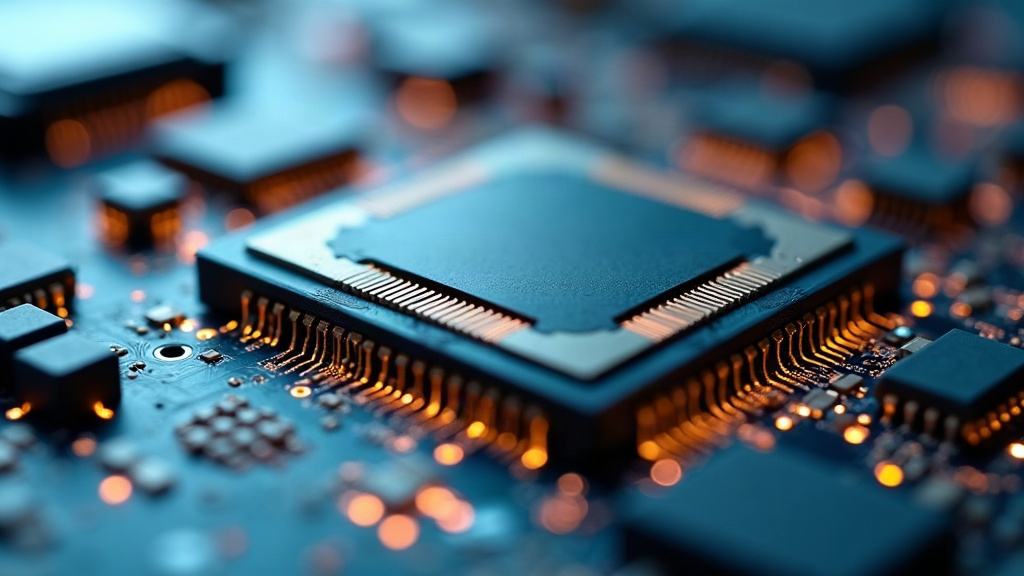
At his Computex 2026 keynote, Nvidia CEO Jensen Huang revealed the RTX Spark, a Windows on Arm platform built around the company's new RTX Spark Superchip. At full strength the chip offers up to 20 Arm CPU cores, split into 10 Arm Cortex-X925 performance cores peaking at 4.1GHz and 10 Cortex-A725 efficiency cores, paired with a Blackwell GPU carrying 6,144 CUDA cores. It ships with 128GB of LPDDR5X unified memory and up to 300 GB/s of memory bandwidth, all fabricated on TSMC's 3nm node. This is Nvidia's long-awaited entry into the consumer chip market, fusing an efficient Arm CPU with a full RTX GPU and the complete CUDA software stack on a single package.
The lineup is not a concept. RTX Spark will power high-end laptops and desktops from Dell, HP, Lenovo, Asus, and MSI, and Microsoft is building a new Surface Ultra laptop around it. Huang framed the focus bluntly: the point is running AI agents locally on your own machine, not just gaming or content creation, although the chip handles both with ease. Nvidia paired the launch with DLSS 4.5 Ray Reconstruction and a wave of partner hardware, but the strategic centerpiece is the Superchip. Systems will begin arriving in the fall of 2026, putting Nvidia silicon inside Windows machines for the holiday buying season.
The detail that should make competitors nervous is the unified memory. A pool of 128GB shared between CPU and GPU means a laptop can hold and run large language models that previously demanded a datacenter rental or a high-end workstation. Combined with the full CUDA stack, RTX Spark turns a consumer device into a local AI workstation capable of inference that used to live exclusively in the cloud. Nvidia is not selling a faster PC; it is selling a personal AI computer, and the distinction is the whole strategy.
Why This Matters More Than People Think
For three decades, the consumer PC chip was a two-horse race between Intel and AMD on x86, with Apple breaking away in 2020 by designing its own Arm silicon. Nvidia sat out that race entirely, content to sell the graphics card that slotted into someone else's machine. RTX Spark ends that arrangement. Nvidia now controls the CPU, the GPU, and the software layer on a single Windows device, which is the same vertical integration that let Apple dominate performance per watt. The company that already owns the datacenter is now reaching for the desk.
The timing is not accidental. Microsoft spent its Build 2026 keynote on June 2 declaring that Windows is no longer a platform for human users alone, with AI agents becoming first-class citizens of the operating system through the open-sourced Windows Agent Framework. An agent-first Windows needs hardware that can run models locally, privately, and instantly, without a round trip to a server. RTX Spark is the silicon that makes Microsoft's agentic Windows vision physically possible. The two announcements, one day apart, are halves of the same bet: that the next computer is one where software agents do the work and the chip in front of you is powerful enough to host them.
Local inference also rewrites the privacy and cost equation. Every prompt sent to a cloud model is a data-exposure decision and a metered expense. A machine that runs a capable model on-device keeps sensitive work local and turns inference into a fixed hardware cost rather than a recurring bill. For enterprises wary of shipping proprietary code or legal documents to an external API, and for the millions of professionals who now lean on AI hourly, that shift is the difference between adoption and hesitation.
The financial logic for Nvidia is just as compelling. The company's revenue is overwhelmingly concentrated in datacenter GPUs, a business that is booming but exposed to any slowdown in hyperscaler capital spending. The consumer PC market ships hundreds of millions of units a year, and capturing even the premium AI segment of it would diversify Nvidia into a second enormous revenue stream it has never seriously tapped. RTX Spark is not a side project; it is a hedge against the day the datacenter buildout cools, and a way to put the Nvidia brand directly in the hands of consumers rather than buried inside a server rack they will never see.
The Competitive Landscape
The most direct target is Apple. The M5 family has defined premium laptop silicon on performance per watt and unified memory, and RTX Spark is a frontal assault on exactly that position, matching the unified-memory architecture while adding Nvidia's CUDA ecosystem that Apple's Metal stack cannot replicate for AI developers. For the millions of machine-learning engineers who live inside CUDA, a Windows laptop that runs their existing tooling natively is a genuine reason to switch away from a MacBook Pro.
Qualcomm is the other casualty. Its Snapdragon X chips were Microsoft's flagship Windows on Arm story, and RTX Spark instantly outclasses them on raw GPU and AI throughput, relegating Qualcomm to the thin-and-light tier while Nvidia takes the high end. Intel and AMD, the x86 incumbents, face a more existential question: if the most desirable Windows AI laptops run on Arm with Nvidia inside, the architecture that defined the PC for forty years starts looking optional. AMD in particular, despite its Venice server wins, has no consumer answer that bundles a frontier GPU and CPU this tightly.
Nvidia's structural advantage is the software moat moving to the edge. CUDA is the lingua franca of AI development, and no rival has dislodged it in the datacenter. By putting the full CUDA stack on a consumer Arm chip, Nvidia extends that lock-in from the server room to the laptop bag. A developer who prototypes locally on RTX Spark and deploys to Nvidia datacenter GPUs never leaves the ecosystem. That continuity, from desk to cloud on one software stack, is something neither Apple nor Qualcomm nor Intel can currently offer.
Gaming gives Nvidia a beachhead that none of its AI-chip rivals possess. The RTX brand already commands fierce loyalty among PC gamers, and a laptop that delivers RTX 5070-class graphics alongside a 128GB AI workstation is a proposition Apple cannot answer at all, since macOS remains a marginal gaming platform. That dual identity, a serious gaming machine by night and a local AI workstation by day, lets Nvidia sell RTX Spark into two large markets at once. Apple sells to creatives and professionals; Qualcomm sells thin-and-light battery life; Nvidia is betting that the single most powerful all-purpose Windows machine wins the customer who refuses to compromise.
Hidden Insight: The Cloud Inference Business Just Got a Rival on Your Desk
The obvious story is Nvidia versus Apple. The deeper story is Nvidia versus the cloud inference business, including parts of its own customer base. For two years the dominant assumption has been that AI lives in datacenters and users rent access to it. RTX Spark plants a flag for a different future, where a meaningful share of inference happens on the device you already own. A 128GB unified-memory machine can run models that would otherwise cost real money per million tokens through an API. Multiply that across tens of millions of professional laptops and the economics of consumer AI start to fracture along a local-versus-cloud line.
This is a quietly radical move for Nvidia, because it sells the picks and shovels to the cloud providers it would now partly compete with. The resolution is that Nvidia wins either way: if inference stays in the cloud, it sells datacenter GPUs; if inference moves to the edge, it sells RTX Spark. By owning both ends, Nvidia hedges the single biggest uncertainty in AI infrastructure, namely where computation will actually happen. The company is not betting on local or cloud; it is positioning to collect the toll regardless of which road the industry takes.
It also changes Nvidia's relationship with Microsoft from supplier to co-architect. The Surface Ultra is the first time Microsoft has built a halo device around Nvidia silicon, and that partnership hands Nvidia a reference design and a marketing partner with global retail reach. If the collaboration deepens, Nvidia gains exactly what it has always lacked in consumer markets: a software and distribution ally that can carry its hardware into the living rooms and offices it could never reach alone.
The bear case, however, is the graveyard that Windows on Arm has historically been. Previous Arm-based Windows machines stumbled on app compatibility, with emulated x86 software running slowly and key professional tools missing entirely. Critics argue that no amount of raw silicon fixes a software ecosystem, and that Nvidia, for all its hardware genius, has never shipped a consumer operating system experience. The risk is that RTX Spark dazzles on benchmarks and disappoints in daily use when a developer's favorite x86 tool crawls under emulation. There is also a price question: a 128GB, 3nm superchip with a Blackwell GPU will not be cheap, and a premium that pushes these laptops well above MacBook Pro territory could confine RTX Spark to a niche of well-funded AI specialists rather than the mainstream.
There is a second-order signal worth naming. If the personal computer becomes a host for autonomous agents, the most valuable component is no longer the screen or the keyboard but the memory and bandwidth that let a model think locally. Nvidia is implicitly arguing that the spec sheet of the future PC will be written in gigabytes of unified memory and tokens per second, not gigahertz. That reframing, if it sticks, changes how every laptop is marketed and sold over the next five years, and it puts Nvidia at the center of the conversation rather than on the accessory shelf.
What to Watch Next
In the next 30 to 90 days, watch for independent benchmarks and pricing leaks ahead of the fall launch. The two numbers that matter are the local inference throughput on real large models and the starting price of a Surface Ultra or Dell flagship; together they determine whether RTX Spark is a mainstream contender or a specialist toy. Watch also for Microsoft's software story, because the value of local agent hardware depends entirely on Windows shipping the agent runtime to match. Any slip in the Windows Agent Framework timeline blunts the hardware.
Pricing disclosure will be the first real test. Nvidia has not published a price, and the gap between a flagship Surface Ultra and a mainstream Dell configuration will reveal how broadly Nvidia intends to compete. A starting price near premium ultrabooks signals a mass-market push; a price reserved for workstation buyers signals a deliberately narrow launch. Watch the battery life figures too, because a Blackwell GPU and a 20-core CPU are power-hungry, and Apple's efficiency lead is the one metric where RTX Spark could stumble badly in a thin laptop chassis.
By the 180-day mark, the holiday sales and developer adoption data will tell the real story. The leading indicators are how many CUDA developers report switching their daily driver to RTX Spark, how aggressively Apple responds with an M5 or M6 push on on-device AI, and whether Qualcomm and Intel concede the premium AI laptop tier or fight for it. If RTX Spark systems sell through and developers migrate, Nvidia will have done to the consumer PC what it already did to the datacenter. If app compatibility and price drag it down, it becomes a cautionary tale about hardware that outran its software.
Nvidia is no longer the card you put in a computer. With RTX Spark, it is trying to become the computer.
Key Takeaways
- RTX Spark Superchip combines up to 20 Arm cores, a 6,144-CUDA-core Blackwell GPU, and 128GB unified memory on TSMC 3nm.
- The focus is running AI agents locally, with Dell, HP, Lenovo, Asus, MSI, and a Microsoft Surface Ultra shipping in fall 2026.
- It is a direct strike at Apple M5 on unified memory while adding the CUDA ecosystem Apple cannot match for AI developers.
- The full CUDA stack on a consumer chip extends Nvidia's datacenter software moat all the way to the laptop.
- The bear case is Windows on Arm's history of app-compatibility failures and a likely premium price that could limit RTX Spark to a niche.
Questions Worth Asking
- If a 128GB laptop can run capable models locally, how much of today's cloud inference spending quietly moves back onto the device?
- Does Nvidia owning the CPU, GPU, and software on one Windows machine give it the same durable advantage Apple built with its own silicon?
- When the key PC spec becomes unified memory and tokens per second instead of gigahertz, who loses the most in the current chip hierarchy?