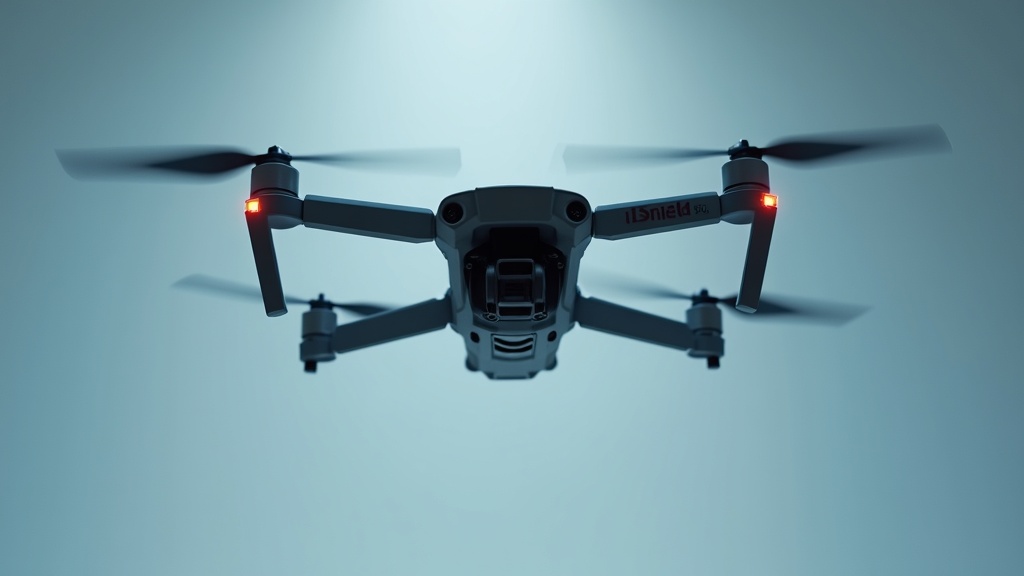
Defense AI just produced its biggest funding event of 2026. Shield AI closed a $1.5 billion Series G, part of a broader $2.25 billion capital package, at a $12.7 billion valuation, a 140% jump in one year. The capital follows the U.S. Air Force's selection of Shield AI's Hivemind platform for its Collaborative Combat Aircraft program, a selection that transforms Shield AI from a defense startup into a strategic military contractor in a category that governments are now funding as aggressively as semiconductor fabrication.
What Actually Happened
Shield AI announced the close of its $1.5 billion Series G as part of a total capital package of $2.25 billion. The round values the company at $12.7 billion post-money, representing a 140% increase from its Series F valuation roughly twelve months prior. The capital package structure combines equity funding with debt instruments, giving Shield AI the balance sheet to sustain multi-year government contracts while preserving equity optionality for an eventual public market debut. For a company operating primarily in long-cycle defense procurement, the hybrid equity-debt structure is deliberate: government contracts pay out over years, not quarters, and the debt component covers operating expenses during the gap between contract award and production milestone payments. The $2.25 billion total package is among the largest single defense-AI capital raises in the industry's history.
The valuation increase is directly tied to the U.S. Air Force's selection of Shield AI's Hivemind platform for the Collaborative Combat Aircraft (CCA) program, the Air Force's initiative to deploy autonomous drone wingmen that fly alongside manned fighters without requiring real-time human control inputs. The CCA program is one of the Air Force's highest-priority acquisition initiatives for the next decade, with estimated total program spending reaching tens of billions of dollars over the program's full life cycle. Shield AI winning the initial platform contract is not simply a revenue event. It is a classification event that places Hivemind in the same strategic tier as Lockheed Martin's F-35 software and Northrop Grumman's B-21 mission systems: defense-critical technology that the U.S. government will fund, protect, and scale regardless of civilian market conditions or budget pressures in other procurement categories.
Hivemind is Shield AI's core product. The platform enables aircraft to operate without GPS, radio communications, or real-time human control, a capability specifically designed for contested electromagnetic environments where adversaries can jam or spoof traditional control signals. The Air Force's selection means Hivemind has passed classified operational testing requirements that no competing platform has yet reached publicly. Shield AI has been flight-testing Hivemind on F-16s since 2023 and on various unmanned platforms before that, accumulating flight hours and edge-case training data that now represents a technical moat difficult to replicate on any compressed timeline even for well-capitalized competitors. The DARPA AlphaDogfight Trials of 2020, in which an AI pilot defeated a human F-16 pilot 5-0 in simulated combat, first established the performance threshold that Hivemind has since operationalized into a deployable military system.
Why This Matters More Than People Think
The CCA selection is strategically more consequential than the funding round. The U.S. Air Force's current doctrine is evolving toward collaborative combat: manned fighters commanding swarms of autonomous wingmen that can absorb threats, extend sensor range, and prosecute targets without risking human pilots in every engagement. That doctrine requires an AI pilot reliable enough to trust in the presence of manned aircraft and live crews. The Hivemind selection signals that the Air Force has concluded Shield AI's platform meets that reliability threshold in classified operational conditions. Once a defense technology clears that bar, the procurement flywheel becomes nearly self-perpetuating: the more Hivemind platforms fly, the more flight data Shield AI collects, the better Hivemind performs, the more mission profiles it qualifies for, and the more follow-on contracts it wins through the same platform program rather than open competition.
The 140% valuation increase in one year reflects something that civilian AI investors have been slower to price in: defense AI contracts are structured as monopolies, not competitive markets. When the Air Force selects a platform, it does not run a new competitive procurement annually. It maintains and expands that platform, typically with the original contractor, for the duration of the program lifecycle, which often spans a decade or more. The $12.7 billion valuation is not priced on Shield AI's current quarterly revenue. It is priced on the probability that Hivemind becomes the default AI pilot for an entire generation of Air Force aircraft, a positioning worth far more than the initial contract value alone. That is a fundamentally different risk-return profile than enterprise SaaS multiples or consumer AI company valuations, and the investors leading this round are explicitly betting on the monopoly structure of defense procurement rather than on competitive market-share dynamics.
Shield AI's positioning also matters for the trajectory of the broader defense technology sector. Anduril raised $5 billion at a $61 billion valuation earlier in 2026, and Palantir's government AI revenue has become its fastest-growing segment. These data points collectively signal that the U.S. government has concluded the commercial AI innovation rate is relevant to national security in ways that legacy prime contractors, Lockheed, Raytheon, and Boeing, cannot match through internal development programs. The implication for Shield AI is favorable: it sits at the intersection of a government increasingly willing to pay startup-tier valuations for AI capability that is operationally proven and an Air Force with a specific, funded requirement for a CCA platform. That combination of motivated buyer and defensible technology creates a market structure that has historically produced durable, compounding returns for the early platform winner.
The Competitive Landscape
The most direct competitor to Hivemind is Anduril's Lattice platform, which manages autonomous systems across air, sea, and land domains simultaneously. Anduril's recent $5 billion raise at $61 billion, nearly five times Shield AI's current valuation, reflects both its broader mission system scope and its closer integration with the Office of the Secretary of Defense on multiple classified programs. The valuation gap between the two companies is partly a product of portfolio breadth: Anduril touches counter-drone, maritime, and ground autonomous systems in addition to air. But it also reflects the fact that Shield AI's CCA win, while strategically definitive, is still an early-stage platform contract rather than full-rate production revenue. The next twelve months of Hivemind flight hours and operational validation will be the primary input into whether the valuation gap closes or widens as both companies approach the public markets.
Palantir occupies a different but increasingly overlapping niche. Its AI Platform for defense is a decision-support and data-integration system rather than an autonomous flight controller, and the company's government revenue grew 45% year-over-year in its most recent quarter as military adoption of AI-assisted battlefield planning accelerated. Palantir and Shield AI are more complementary than competitive in their current product forms: a Hivemind-equipped autonomous wingman generates sensor and engagement data that still needs to be processed and presented to human commanders through something like Palantir's interface layer. However, as autonomous systems become more capable and decision cycles shorten, the boundary between decision support for humans and autonomous decision-making by AI will blur, and that boundary is exactly where Palantir's and Shield AI's product roadmaps are converging. An eventual partnership or acquisition between the two companies would create a defense AI stack that spans sensor fusion, mission planning, and autonomous platform control.
The most instructive historical precedent for Shield AI's current position is Qualcomm in the mid-1990s. Qualcomm had won early CDMA technology contracts with the U.S. military for satellite communications before commercial wireless adoption took off, and that defense validation gave it the technology credibility and patent portfolio to dominate commercial cellular infrastructure licensing for the following two decades. Defense-first validation followed by commercial expansion is a proven deep-tech commercialization model, and Shield AI has explicitly stated plans to apply Hivemind to commercial aviation and autonomous cargo drone applications after the military validation phase. Regional air mobility, autonomous cargo delivery, and pilotless agricultural aviation are all addressable markets that could follow the same technology transition the CCA contract enables. The Air Force win is not just a defense contract. It is the validation event that could eventually open civilian aviation to fully autonomous operations without a human pilot onboard.
Hidden Insight: The Algorithmic Pilot Gap Is Already Closed
The deeper story behind Shield AI's success is a capability gap that the U.S. military identified years ago and began closing quietly. In simulated dogfight environments, AI pilots have been outperforming human fighter pilots since DARPA's AlphaDogfight Trials in 2020, where an AI system defeated a human F-16 pilot 5-0 in successive engagements. That result was covered briefly and largely forgotten in mainstream media, but it created a classified consensus within the Air Force that algorithmic pilots, properly developed, would eventually exceed human pilots in specific mission profiles, particularly high-g defensive maneuvering and coordinated multi-aircraft targeting where reaction time is measured in milliseconds. Hivemind is the operational translation of that insight into a deployable system that can fly alongside manned aircraft without relying on communications links an adversary can sever.
The 140% valuation increase also signals what the market now believes about autonomous military capability timelines. A year ago, Shield AI was valued as a promising defense AI startup developing interesting technology. Today, at $12.7 billion, it is valued as a company whose core product has cleared Air Force operational requirements under classified conditions. The delta between those two valuations is not the capital it raised. It is the credibility signal that a classified military platform selection conveys to every investor who understands how defense procurement works. No amount of private-sector AI benchmark performance can substitute for the Air Force's operational testing regime, which includes adversarial electronic warfare scenarios, contested airspace simulations, and classified threat assessments that no commercial AI lab has access to. The CCA selection is, in practical terms, the world's most rigorous and expensive product certification, and Shield AI just passed it.
The risk that critics and international law experts raise most consistently is the autonomous weapons accountability gap. Who bears responsibility when a Hivemind-equipped CCA makes an engagement decision that results in civilian casualties? The Air Force's CCA doctrine specifies that autonomous wingmen operate under the direction of a manned aircraft commander, preserving a human in the formal decision loop. However, critics at the Campaign to Stop Killer Robots and several NATO ethics working groups argue that at operational engagement speeds, the human in the loop becomes a rubber stamp rather than a meaningful check on autonomous lethal action. The legal and ethical frameworks governing autonomous weapons have not kept pace with the technology, and Shield AI's CCA win accelerates the timeline for that reckoning from theoretical to operational. Regulators and military ethicists who previously had years to develop governance frameworks now have months before Hivemind-equipped CCAs begin flying alongside manned fighters in operational exercises.
The bear case for Shield AI's valuation is program concentration risk. The $12.7 billion valuation is weighted heavily toward the CCA contract and the expansion potential it represents over a decade. But defense programs get cancelled, restructured, or defunded when administrations change, threat assessments shift, or budget negotiations force choices between competing priorities. The Air Force's CCA program has bipartisan congressional support today, but a future appropriations negotiation that pits CCA against Space Force modernization or Army readiness programs could delay production milestones by 18 to 24 months. Shield AI's $2.25 billion capital package provides a substantial runway, but a multi-year CCA production delay would force the company to accelerate its commercial aviation applications sooner than its roadmap currently requires, before that market has the regulatory framework to support fully autonomous commercial flight operations.
What to Watch Next
The 30-day indicator is the Air Force CCA program's milestone calendar as reflected in congressional budget markups. Shield AI's platform contract was announced publicly, but the production unit count, delivery schedule, and initial operational capability date remain classified. Watch for Armed Services Committee budget markup hearings in June and July, where CCA funding line items will be defended or contested in front of the committees that control appropriations. A reduction in the CCA budget line in the FY2027 markup would be an early warning signal for Shield AI's program timeline. An increase, which several committee members have publicly advocated, would signal production acceleration and validate the $12.7 billion valuation on a shorter timeline than even the most optimistic investors are currently modeling.
At 90 days, watch Anduril's product announcements and Shield AI's partnership deal flow. If Shield AI signs integration agreements with traditional prime contractors, Lockheed Martin, Northrop Grumman, or Boeing, in the next quarter, it signals that those primes have concluded they cannot develop a competing autonomous pilot on competitive timelines and need to license Hivemind rather than build their own. That would be a structural market shift: the legacy defense industrial base conceding the autonomous systems software layer to a startup rather than defending it through internal development and lobbying. If instead Anduril announces a direct CCA competitor with Air Force backing, the two-startup race accelerates and forces earlier IPO consideration for both companies as a mechanism to fund the production scaling each will need.
At 180 days, the critical signal is whether Shield AI files IPO documentation with the SEC. The $2.25 billion capital package provides enough runway that an IPO is not operationally necessary immediately, but the 140% valuation increase creates a favorable pricing window. Palantir's defense-AI-driven market capitalization of over $300 billion has created strong public market appetite for defense technology companies with government contract visibility. If Shield AI files before December 2026, it signals confidence that the CCA production ramp is fast enough to generate the revenue trajectory public market investors will pay a premium multiple for. A filing delay into 2027 suggests the company is waiting for more production revenue to land rather than selling on forward program projections that sophisticated public market investors may scrutinize more heavily than the private investors who backed this round.
When the U.S. Air Force selects your autonomous pilot for the next generation of combat aircraft, the question stops being whether the market is real and starts being how much of it you can capture before the primes build a wall around you.
Key Takeaways
- $1.5B Series G at $12.7B valuation: Shield AI's post-money valuation jumped 140% in one year as part of a broader $2.25B capital package combining equity and debt instruments.
- Air Force CCA platform selection: Hivemind was selected for the Collaborative Combat Aircraft program, the Air Force's initiative to deploy autonomous drone wingmen flying alongside manned fighters without real-time human control.
- GPS-denied autonomous flight is operational: Hivemind operates without GPS, radio communications, or human control inputs, a requirement specifically designed for contested electromagnetic environments where adversaries jam traditional control links.
- Defense monopoly economics drive the valuation: Air Force platform selections create decade-long procurement cycles with the original contractor, making the CCA win structurally different from competitive commercial market share in its durability and compounding effect.
- Commercial aviation expansion is the long-term thesis: Shield AI has stated plans to bring Hivemind to commercial cargo drones and regional air mobility after defense validation, following the Qualcomm defense-first commercialization model.
Questions Worth Asking
- If Hivemind-equipped autonomous wingmen prove more effective than human pilots in specific high-g and coordinated targeting missions, does the Air Force's pilot training program, which costs roughly $10 million per fighter pilot, face a structural reallocation of budget as autonomous systems mature and scale?
- The human-in-the-loop doctrine for autonomous weapons relies on a manned aircraft commander maintaining meaningful engagement authority. At the reaction-time speeds of modern air combat, is that doctrine operationally enforceable, or does it become a paperwork requirement that the technology renders structurally meaningless?
- Shield AI's valuation is concentrated in CCA program potential over a decade-long production cycle. If the Air Force restructures CCA due to budget pressure, how quickly can Shield AI's commercial aviation thesis, currently secondary on its roadmap, become the primary investment case without an existing regulatory framework for fully autonomous commercial flight?