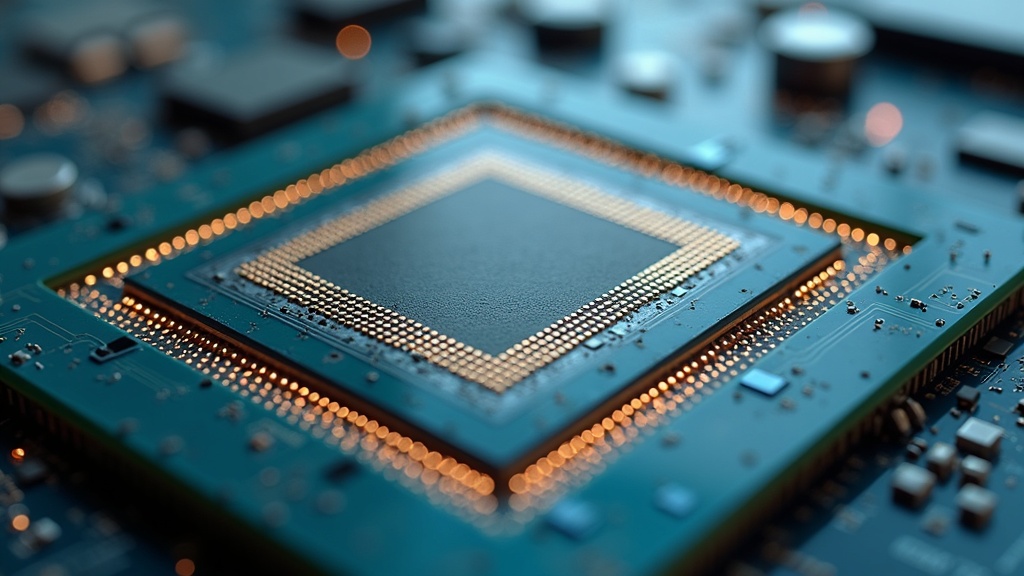
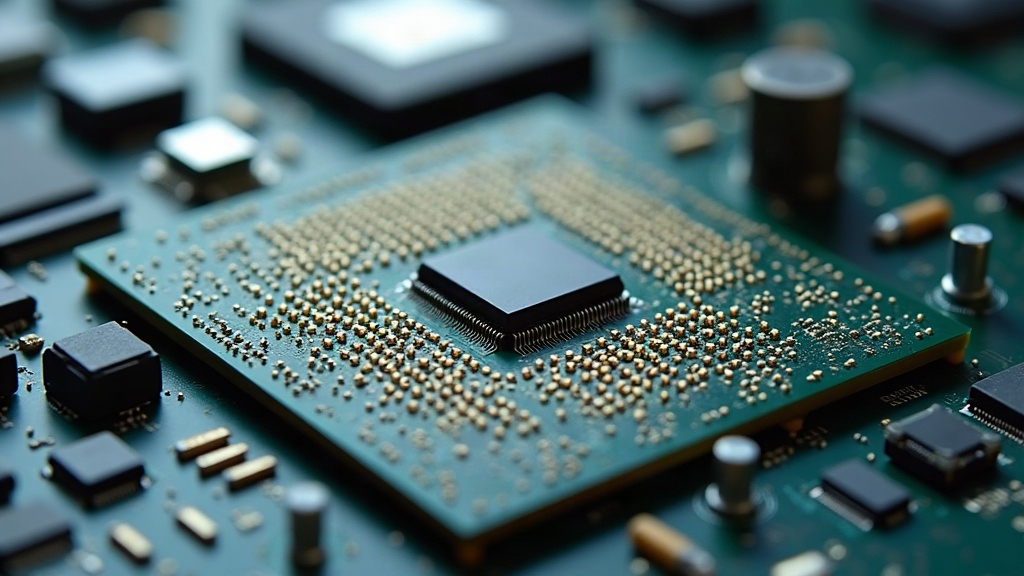
Elon Musk has been making public speeches about American semiconductor independence for several years. On August 6, 2026, Tesla and SpaceX stopped talking and jointly committed $16.8 billion to the first phase of a chip factory in Grimes County, Texas, that they are calling Terafab. The facility is designed to integrate logic fabrication, memory production, advanced packaging, and testing at a single site, a combination that does not exist anywhere in the United States today. Whether or not Terafab reaches completion on schedule, the announcement reframes what vertical integration in AI hardware actually looks like when a company is willing to write a check large enough to be taken seriously.
What Actually Happened
Tesla and SpaceX jointly confirmed on August 6 that their semiconductor facility, Terafab, will be built in Grimes County, Texas, with a first-phase investment of $16.8 billion and a minimum of 3,000 permanent jobs. According to TechCrunch, the facility's total footprint will exceed 100 million square feet, encompassing logic fabrication, memory production, chip packaging, and final testing under a single roof. The site was selected in part because it allows water to be drawn from the nearby Gibbons Creek Reservoir rather than local groundwater aquifers, a logistical detail that reveals the depth of advance planning behind the location and signals just how much water a facility at this scale requires for cooling and fabrication processes.
The primary customers for Terafab's chips are both companies' own product lines. Tesla's Optimus humanoid robots and Cybercab robotaxis will require custom AI inference chips at a scale no external foundry is currently designed to prioritize for a single captive buyer. SpaceX's space-based data centers, currently under development for its next-generation Starlink constellation and orbital compute platform, need semiconductor specifications that no commercial foundry currently offers: radiation-hardened, ultra-low-power, designed for vacuum thermal environments, and manufacturable in quantities that satellite constellation expansion requires. Electrek reported that Governor Greg Abbott's office extended a Texas Enterprise Fund grant of $30 million to SpaceX, and the project qualifies under the state's Texas Jobs, Energy, Technology, and Innovation program.
There are structural caveats that serious investors need to understand clearly. The $16.8 billion figure represents only the first phase; total project costs have not been publicly disclosed and are almost certainly much higher than disclosed. More critically, SpaceX's IPO filing, cited by Quartz, characterized Terafab as a "general framework" that carries no binding commitments and leaves both companies free to walk away from the arrangement. That language suggests the project is in a structured planning phase, with formal binding agreements likely contingent on regulatory approvals, permitting timelines, environmental impact assessments, and potentially federal CHIPS Act incentive applications that have not yet been publicly disclosed. The announcement establishes intent and site commitment at a credible scale. It does not yet establish a locked construction contract.
Why This Matters More Than People Think
The United States currently produces approximately 12% of global semiconductor output, almost entirely at trailing-edge process nodes. TSMC's Arizona facilities, Intel Foundry Services, and Samsung's Taylor Texas expansion are all attempting to reverse that, but they are building capacity for third-party customers in an already constrained global foundry market where Apple, Nvidia, AMD, and Qualcomm all compete for allocation from the same pool. Terafab is a structurally different model: vertical integration from chip design through fabrication, packaging, and testing, serving entirely captive internal demand from two companies with precisely defined and rapidly scaling requirements. If it reaches commercial production, it would be the first genuinely sovereign AI chip supply chain in American industrial history, purpose-built for the AI and robotics era rather than adapted from legacy semiconductor infrastructure.
The captive demand thesis is the real insight that makes the $16.8 billion plausible. Tesla needs custom AI inference chips for Optimus and Cybercab at a volume trajectory that TSMC cannot price competitively for a single customer, particularly when TSMC's allocation priorities are driven by the aggregate demands of Apple, Nvidia, and the rest of its customer base. SpaceX needs semiconductor specifications that no commercial foundry currently builds to at any price. By constructing Terafab, both companies are solving a supply chain dependency problem that they could not resolve by writing larger purchase orders to existing suppliers. The analogy is Apple's 2020 decision to design its M-series processors internally: the primary motivation was not margin improvement but capability control and supply chain independence, and the financial case became clear only after the product was shipping.
The energy dimension is the most underanalyzed aspect of this announcement, and it will likely be more consequential than the construction cost. A facility exceeding 100 million square feet running advanced semiconductor fabrication processes requires gigawatts of power, not megawatts. Texas's ERCOT grid has shown repeated strain under existing AI data center load, particularly during summer peak demand periods. Critics argue, and the risk is genuine, that a facility at Terafab's stated scale needs dedicated power generation infrastructure that has not been announced. At this scale, the realistic options for reliable baseload power are natural gas or nuclear. The energy infrastructure decision will almost certainly require a separate capital commitment that exceeds the $30 million state grant by several orders of magnitude, and until that decision is disclosed, the $16.8 billion figure describes the building, not the power source that makes the building functional.
The Competitive Landscape
The CHIPS Act-funded competitors to Terafab are building for open-market third-party customers, which creates a fundamentally different competitive dynamic. TSMC Arizona is producing 3nm and 2nm process node chips, but those chips go to Apple, Nvidia, AMD, and Qualcomm in a shared allocation pool where no single customer controls their own supply certainty. Intel Foundry Services is restructuring following leadership transitions and has not yet proven it can compete at the leading edge for external customers at commercial volume. Samsung's Taylor, Texas facility remains in ramp-up mode. Terafab sidesteps the foundry competition entirely by serving only captive demand, which eliminates the customer acquisition problem, the pricing negotiation problem, and the intellectual property sharing risk that make semiconductor foundries complicated businesses to operate profitably.
Nvidia's position is the most interesting secondary effect of this announcement, and Nvidia has not publicly commented on it. Nvidia currently supplies the AI accelerators that train and run the intelligence layers for Tesla's Optimus robots and autonomous driving systems, and for SpaceX's ground-based inference infrastructure. A Terafab that produces custom inference chips at scale for Tesla's robotics and autonomous vehicle platforms is a direct long-term displacement threat to that revenue. Simultaneously, Nvidia invested in Firmus, the Australian AI data center company that raised $2 billion on August 7 for Asia-Pacific infrastructure expansion. Nvidia is hedging across every layer of the AI compute stack: supplying chips to companies building their own data centers, investing in infrastructure operators, and continuing to develop its own chip architecture. However, it cannot hedge against a customer building its own chip foundry at $16.8 billion scale. That is simply a competitive fact it must absorb.
The historical parallel worth examining is not Intel or TSMC: it is Carnegie Steel in the 1890s. Andrew Carnegie built vertical integration from iron ore mining through steel production at a time when the industry assumed that each stage required specialist operators. He was right that full integration produced cost advantages competitors could not sustainably match, and he was also right that the capital required to copy the integrated model was prohibitive for any single competitor without his combination of capital access and operational scale. The critics who correctly note that Terafab's $16.8 billion comes with a non-binding qualifier are not wrong about the legal structure. But they are potentially underestimating how much the credible threat of vertical integration reshapes competitive dynamics even before a single chip is fabricated. TSMC will not raise Tesla's prices while Terafab is under construction. That is itself a form of value creation.
Hidden Insight: Terafab Is Partly a Space Chip Foundry
The mainstream read on Terafab focuses almost entirely on Optimus robots and Cybercab robotaxis, the Tesla product lines with the most visible consumer narrative. The detail that deserves far more attention is the third use case disclosed in the announcement: SpaceX's space-based data centers. SpaceX is developing orbital compute infrastructure, and the chips required for that application carry specifications that are simply not available from any current commercial supplier: radiation-hardened silicon that survives sustained particle bombardment in low earth orbit, ultra-low-power designs optimized for satellite power budgets measured in hundreds of watts, thermal management adapted for vacuum environments where convective cooling is impossible, and component-level reliability targets that no terrestrial consumer electronics supplier certifies to. Terafab is, at least in large part, a purpose-built space semiconductor foundry.
The orbital compute market is not speculative future fiction. SpaceX has been launching Starlink satellites with increasing onboard processing capability across successive generations, and the next constellation iteration is expected to handle AI inference at the edge of the network, reducing latency for AI-assisted applications that require near-real-time response from anywhere on Earth. A custom chip designed specifically for this workload, produced in a facility that SpaceX co-owns and can allocate production from without competing against Apple for foundry capacity, would give SpaceX a technical capability that Amazon's Project Kuiper and OneWeb currently cannot match even with unlimited purchasing budgets, because the supply does not exist yet anywhere.
The risk to the timeline is real and should not be minimized. Terafab's construction timeline is measured in years, and the AI hardware market evolves in quarters. By the time a facility of this scale begins producing chips at commercial volumes, which industry analysts place at 2029 at the earliest for a best-case permitting and construction scenario, the state of the art in AI inference silicon will have advanced by at least two full generations from today's leading edge. A custom chip designed today for Optimus Gen 3's inference requirements may be technically suboptimal for Optimus Gen 5's requirements at the time Terafab reaches volume production. Skeptics point out that this is precisely what happened to Intel's foundry investments in the 2015-2020 period: a company designed its own cutting-edge production process for a chip generation that was obsolete before the factory was profitable.
The deeper context is that this announcement lands in the same week that China's Unitree priced a $9 billion humanoid robot IPO backed by DeepSeek and the Chinese national power grid. Read together, the two events describe an AI hardware race that has expanded well beyond model benchmark competitions. It is now about who controls the physical infrastructure stack, from chip design through fabrication through robot assembly through deployment-scale power generation, that makes large-scale AI systems operate in the real world. Terafab is America's most concrete answer to date to the question of what sovereign AI compute infrastructure looks like when a private actor decides to build it rather than wait for government coordination. Its success or failure will matter far beyond Tesla's earnings per share or SpaceX's launch manifest.
What to Watch Next
The first concrete milestone to monitor is the formal binding agreement between Tesla and SpaceX, which the SpaceX IPO filing implies has not yet been executed. If the parties convert the current framework into binding construction contracts within the next 60 to 90 days, it will confirm that the $16.8 billion figure represents committed capital rather than announced intention. Watch for any amendment to SpaceX's IPO filing, any Tesla regulatory disclosure, or any joint press release that upgrades Terafab's legal status from general framework to binding commitment. An extended silence on the binding agreement front, stretching past 120 days, would reasonably be interpreted as the project encountering permitting or financing complications.
Watch for a CHIPS Act incentive application in the next 30 to 60 days. A facility at Terafab's announced scale almost certainly qualifies for federal semiconductor incentive funding under the CHIPS and Science Act, and the current administration has demonstrated willingness to fast-track applications from high-profile domestic manufacturing commitments, particularly those tied to companies with close relationships to the executive branch. A confirmed federal incentive package in the range of $1 to $3 billion would concretely de-risk the project for Tesla and SpaceX shareholders and would signal that the first-phase construction spending is genuinely locked in rather than contingent on future capital decisions.
Over the next 180 days, watch whether Nvidia responds to the combined pressure of Terafab and the broader AI infrastructure self-build trend. The Firmus $2 billion Nvidia-backed data center buildout and Terafab's captive chip production represent a scenario where two of Nvidia's largest addressable markets, AI inference chip sales to robotics companies and AI data center infrastructure sales, are simultaneously developing alternative supply chains that reduce Nvidia dependency. Nvidia's response options range from deeper GPU investment in the Rubin architecture to launching a formal foundry services offering that helps AI customers reduce TSMC dependency without building their own fabs. Which path Nvidia chooses in the next six months will define the competitive chip infrastructure landscape for the rest of the decade.
Terafab is not a chip factory. It is a declaration that whoever controls their own silicon controls their own AI future, and Tesla and SpaceX intend to be among them.
Key Takeaways
- Tesla and SpaceX committed $16.8 billion to Terafab in Grimes County, Texas, integrating logic fabrication, memory, packaging, and testing at a 100 million-plus square foot facility with 3,000+ planned jobs
- Chips will serve entirely captive internal demand: Tesla's Optimus robots and Cybercabs, plus SpaceX's space-based data centers, bypassing TSMC allocation competition and Nvidia supply dependency
- Texas provided a $30 million Enterprise Fund grant, but total project costs beyond the first phase have not been disclosed and will require additional capital for power infrastructure at this scale
- SpaceX's IPO filing characterizes Terafab as a non-binding framework, meaning the $16.8 billion represents committed intent rather than a legally locked construction obligation
- The space-based data center use case is the underreported angle: Terafab may be the first purpose-built foundry for radiation-hardened orbital AI inference chips, a specification no current commercial supplier produces at scale
Questions Worth Asking
- Terafab's economic case rests on captive demand from Optimus and Cybercab at scale. What production volumes does Tesla actually need to reach for a $16.8 billion-plus chip factory to be financially rational, and what happens to the economics if either product misses its deployment targets?
- The SpaceX IPO filing called Terafab a non-binding general framework. How should Tesla shareholders weight the difference between a committed capital allocation and a described strategic intention, particularly when the binding agreement has not yet been disclosed?
- If Terafab takes until 2029 to produce chips at commercial volume, which is a best-case scenario, how does the AI inference hardware landscape look at that point? Will custom Musk-company silicon still address a gap that Nvidia's Rubin and successor architectures have not already closed?