Microsoft has stopped paying Oracle to run its AI search. Bloomberg reported November 6 that the company has been switching off rented Oracle servers for months, quietly winding down a 2023 agreement that powered AI-driven Bing. The proximate cause: older Nvidia chips that no longer meet what Microsoft needs. Oracle shares fell roughly 3% on the news and have shed more than half their value since their June 2026 peak, with the company's credit rating now sitting one notch above junk.
What the 2023 Bing Deal Actually Covered
The agreement, struck in 2023, gave Microsoft access to Oracle servers it used to run AI-powered features inside Bing. The deal came at a moment when Microsoft was racing to integrate OpenAI's models into its search engine and needed compute capacity it couldn't provision fast enough in its own Azure data centers. At the time, Oracle was one of the few hyperscalers with enough spare Nvidia GPU inventory to meet demand on short notice, and renting capacity was faster than waiting for Azure's own build-out to catch up with Bing's inference load. The deal gave Oracle a headline enterprise customer at exactly the moment it was pitching cloud investors on OCI's AI credentials.
According to The Next Web's reporting on Bloomberg's investigation, Microsoft has been declining to renew portions of the contract and switching off the capacity in stages over recent months. The full scope of the deal has never been disclosed, and Bloomberg said it could not determine the total size of the wound-down arrangement. What is confirmed is that the servers ran an older generation of Nvidia chips, and that Microsoft chose not to renew rather than continue paying for infrastructure that no longer matches its specifications. Reporting from multiple outlets citing Bloomberg also confirmed that separate expansion talks collapsed in June 2026, months before the full wind-down became clear: Microsoft declined an opportunity to lease additional Oracle capacity, a signal the relationship was already cooling well before November.
The 2023 deal mattered at the time for reasons beyond its compute value. Having Microsoft, the most AI-aggressive hyperscaler on earth, pay Oracle for inference capacity was a marquee proof point for Oracle Cloud Infrastructure (OCI). It validated Oracle's argument that it could compete with AWS, Azure, and Google Cloud in the AI era. The quiet exit strips that signal value from Oracle's enterprise sales pitch at exactly the moment the company needs it most, and it does so without a public announcement that would allow Oracle to manage the narrative.
Why Older Nvidia Chips Are Now a Liability in AI Clouds
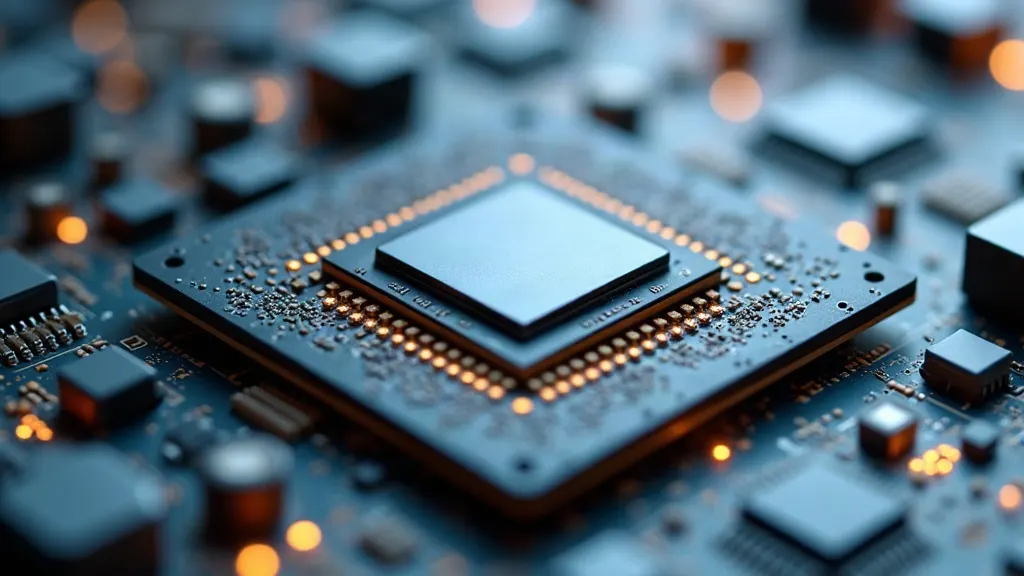
The specific chips Oracle used to service Microsoft's Bing deal have not been publicly identified, but the timeline points to H100-era Nvidia GPUs, the generation that dominated the market in 2022 and 2023. Since then, the chip landscape has shifted dramatically. Nvidia shipped its Blackwell B200 at scale in late 2024, followed by Blackwell Ultra variants in 2025 and the Vera Rubin VR200 series in 2026. Analysis from CoinPaper noted that the older Nvidia chips simply fall short of Microsoft's current specifications, which now require Blackwell-class or later architectures to meet performance and energy benchmarks for Bing-scale inference.
Running a search AI on hardware two or three chip generations old adds compounding costs. Throughput per dollar falls as newer chips deliver more tokens per second per watt. Latency rises when models designed for Blackwell run on H100s, because the memory bandwidth and tensor core improvements compound across inference steps. For a company serving billions of Bing queries daily, those inefficiencies translate directly into higher per-query compute costs and slower response times that affect user retention. The economics of staying on old silicon stopped making sense long before Microsoft made its exit official.
This creates a structural problem for any cloud provider that locked in large Nvidia purchases at H100 prices in 2022 or 2023: depreciation cycles for AI chips are now measured in 18 to 24 months, not the five to seven years that server infrastructure historically lasted. Companies that signed multi-year commitments at H100 prices are discovering that those assets have diminished value before the contracts expire, and that hyperscaler customers are willing to pay early-termination costs rather than wait out the cycle on underperforming hardware. Oracle bought into the AI race late and bought heavily. It is now holding inventory that its most visible customer has decided it doesn't need.
Oracle's Balance Sheet Shows the Cost of Betting Big on AI Hardware
Oracle entered the AI infrastructure race later than Amazon, Microsoft, and Google but committed hard once it did, signing large Nvidia GPU procurement deals and expanding OCI aggressively. Those bets have not generated the financial returns its projections implied. Oracle's heavy capital expenditure pushed its free cash flow negative, a significant departure from the reliable cash generation that underpinned its software-era valuation for two decades. A company that once generated billions in annual free cash flow is now burning cash to build data centers for a customer base that may not materialize at the speed needed to justify the capital outlay.
The stock has borne the burden. After peaking in June 2026 during the broader AI infrastructure rally, Oracle's shares have more than halved, one of the sharpest drawdowns of any major tech company in the current AI cycle. The free cash flow reversal has also pushed its credit rating to one notch above investment grade, a threshold that changes Oracle's cost of borrowing and raises questions about its capacity to continue funding data center expansion at the pace originally committed. Bond investors tend to price in deteriorating free cash flow faster than equity markets, and Oracle's credit trajectory suggests those investors are skeptical the revenue catch-up will come in time.
FourWeekMBA's coverage noted that Microsoft's Azure backlog still stands at $664 billion, meaning the Microsoft AI demand story has not changed, just who gets paid for the compute. That distinction is critical for Oracle's investors trying to separate the Microsoft exit from broader AI demand signals. The demand is real. The question is whether Oracle is positioned to capture it on hardware that meets current specifications, at prices that don't require sacrificing the financial stability the company built its reputation on.
Microsoft's $80 Billion Redirect to Newer AI Clouds
The Oracle exit does not mean Microsoft is retrenching from AI infrastructure; it means Microsoft is redirecting. Bloomberg's reporting, as summarized by MarketScale, confirmed that Microsoft has committed more than $80 billion in AI cloud capacity agreements with three companies: CoreWeave, Nscale, and Nebius. Each specializes in GPU clusters built around Nvidia Blackwell and later architectures, the chip generations that actually meet Microsoft's current compute requirements. CoreWeave holds the largest share of that commitment and has become the de facto overflow AI compute provider for Azure, absorbing inference and training workloads that Microsoft cannot serve in-house fast enough.
The composition of Microsoft's new supplier roster reveals its procurement logic. CoreWeave went public in early 2026 and built its infrastructure from the ground up around Nvidia H100 and B200 clusters, with no legacy hardware to manage. Nscale and Nebius, the latter spun out of Yandex's AI infrastructure division after Russia's invasion of Ukraine prompted a corporate restructuring, fill specific geographic and workload niches. None of them carries Oracle's legacy enterprise software cost structure, and none sold Microsoft H100 capacity at 2023 prices on a multi-year contract it now regrets.
The strategic nuance is worth noting: Microsoft is reassessing even its newer commitments. Bloomberg reported that the company turned down an option to expand an Nscale data center in Texas, suggesting it is actively calibrating rented capacity against its own Azure build-out. This is not a company pulling back from AI spend; it is one with enough negotiating leverage to exit agreements on its own schedule, forcing suppliers to compete on chip generation, price, and flexibility rather than on legacy relationships.
The Bear Case: Why Oracle Can Still Compete in AI Cloud
The counter-argument to the Oracle-is-finished narrative deserves a fair hearing. Oracle said in its response that demand for its AI infrastructure remains strong, including demand for older Nvidia chips. Critics argue that first-generation silicon is a liability, but Oracle is not exclusively chasing hyperscaler inference at Bing scale. For enterprise training jobs, batch processing, regulatory sandboxes, and workloads in regions where OCI's geographic presence and FedRAMP certification provide advantages over competitors, an older H100 cluster at a lower hourly rate is a rational choice for many buyers.
However, the risk is that this segment of the market is both price-sensitive and exposed to model compression trends. If models continue to shrink in parameter count while maintaining benchmark performance, as has consistently happened across the last four years, the compute requirements for enterprise AI workloads will fall, compressing the addressable market for first-generation cloud GPU providers. Oracle's bet requires enterprise AI demand to stay large and compute-intensive. The actual trend has been toward smaller, faster, cheaper models at the application layer, models that run efficiently on older silicon but generate less revenue per GPU hour for the cloud provider hosting them.
Some OCI customers have cited pricing advantages of 20 to 30 percent versus Azure or AWS for equivalent Nvidia GPU hours, particularly in regulated industries. That price advantage is real, but it narrows as Nvidia's newer chips deliver more compute per dollar at the chip level, making the cost gap between OCI's older hardware and CoreWeave's newer infrastructure harder to sustain over time. Oracle's path forward requires either rapidly refreshing its GPU fleet at capital costs it currently cannot afford, or finding enough price-sensitive enterprise buyers to fill the revenue gap left by Microsoft's departure. Neither path is straightforward given the current balance sheet trajectory.
What to Watch Before Oracle's Next Quarterly Report
Oracle's next quarterly earnings will be the first chance to quantify the damage. The company will need to address how the Microsoft wind-down affects its remaining cloud bookings pipeline, whether the free cash flow trajectory is stabilizing, and what its forward capital expenditure commitment looks like given the credit-rating pressure. Analysts will be watching the cloud revenue growth rate closely: if it slows below 20 percent year-over-year in a quarter when every other major AI infrastructure provider is reporting acceleration, the market will read that as confirmation the Microsoft exit left a gap that newer enterprise customers have not filled.
Watch also for signals from CoreWeave in the same reporting cycle. If CoreWeave revises its revenue guidance upward while Oracle's cloud growth slows, it will tell a clear story about where AI cloud dollars are moving. CoreWeave's CEO has previously indicated that Microsoft's capacity commitments are structured on rolling windows rather than fixed multi-year contracts, which means Microsoft can redirect spend to newer chip generations as they become available. That flexibility is exactly what Oracle's hardware-led model lacks, and it explains why the structural competitive disadvantage is likely to persist beyond any single quarterly miss.
A broader question to track: whether Amazon Web Services or Google Cloud hold any Oracle AI cloud agreements that follow a similar pattern. If Microsoft's exit is the first in a series of hyperscaler retrenchments from first-generation OCI contracts, the full financial impact on Oracle will be significantly larger than a single Bing AI server deal. The company's ability to service its debt and fund its next hardware refresh cycle depends on enterprise cloud bookings growing faster than its capital expenditure for the next two to three years. That math gets harder with each marquee customer that decides older chips are no longer good enough to justify the invoice.
Older Nvidia chips in cloud data centers are depreciating like last year's smartphones, and Oracle is holding the inventory.
Key Takeaways
- November 6 Bloomberg report: Microsoft has ended its 2023 Oracle AI cloud agreement powering Bing, declining to renew and switching off capacity in stages over recent months.
- Chip mismatch: The rented Oracle servers ran older Nvidia GPUs that no longer meet Microsoft's computing benchmarks, which now require Blackwell-class or later architectures.
- Oracle stock more than halved: Oracle shares have shed over 50% since their June 2026 peak, with free cash flow now negative and its credit rating at one notch above junk.
- Microsoft's $80 billion redirect: Microsoft has committed over $80 billion to CoreWeave, Nscale, and Nebius for newer-generation AI cloud capacity, while simultaneously reassessing those commitments against its own Azure build-out.
- June collapse: Separate expansion talks for Microsoft to lease additional Oracle AI capacity also fell apart in June 2026, months before the wind-down of the original Bing deal became public.
Questions Worth Asking
- If AI chips depreciate from enterprise-grade to legacy in under three years, how should cloud providers price multi-year GPU infrastructure deals, and who should bear the depreciation risk when a customer exits early?
- Microsoft is reassessing even its newer contracts with CoreWeave and Nscale. Does this signal that rented AI cloud capacity is a temporary bridge to owned Azure infrastructure, rather than a durable business model for independent providers?
- Oracle's OCI bet required enterprise AI demand to stay large and compute-intensive. If models keep shrinking while maintaining capability, does the market for older AI cloud hardware simply disappear before Oracle can recoup its data center investment?