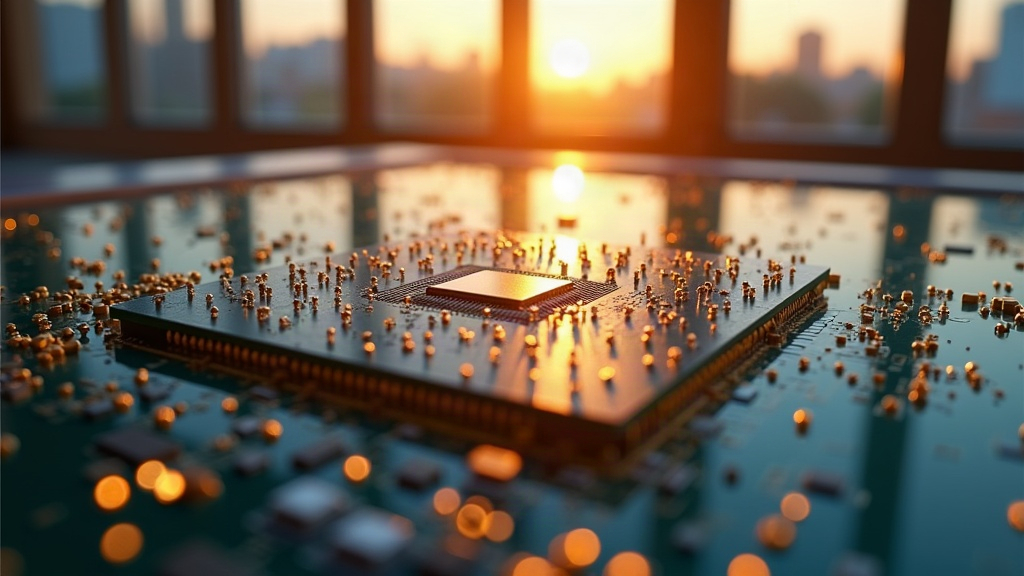
Microsoft just told Nvidia what every GPU buyer has been thinking for three years: we can build this ourselves. On October 12, 2026, Microsoft unveiled the Maia 300, its most aggressive custom silicon commitment yet, claiming 40% more AI tokens per megawatt than leading GPU-based systems. The announcement arrived alongside a production plan that puts over 300,000 units into Azure data centers in 2027, and it names the chip's primary purpose with uncommon directness: replace the dependency on Nvidia hardware for inference at scale.
What Actually Happened
Microsoft announced Maia 300 on October 12, 2026, publishing a technical overview that framed the chip as the successor to its 2024 Maia 200. The headline claim is a 40% improvement in AI tokens per megawatt compared to leading GPU systems, a power-efficiency metric that Microsoft chose deliberately because it maps directly to data center operating cost rather than raw computational performance. Axios framed the launch as part of a structural industry shift in which every major Nvidia customer, including Google, Amazon, Meta, and now Microsoft, is developing custom silicon to reduce dependence on Nvidia's GPU roadmap and pricing. The Maia 300 is not the first custom AI chip to challenge Nvidia, but it is the most explicitly positioned: Microsoft's materials describe it as a path to infrastructure independence at the inference layer, language that no prior custom chip program has used so openly in launch materials.
The rack-scale numbers are more dramatic than the per-chip headline suggests. A 96-chip Maia 300 rack delivers seven times the token throughput of a comparable Maia 200 rack, according to Microsoft's own internal testing. That improvement reflects both per-chip gains and a redesigned interconnect architecture that reduces the data movement bottleneck between chips in dense inference configurations. The chip carries a 950-watt thermal design power, which is aggressive by any standard, but the system-level efficiency claim holds because the throughput improvement outpaces the power draw increase by a wide margin. GeekWire described the announcement as Microsoft's biggest bet yet on its own silicon, noting that the Maia line has been in development since 2019 but has never previously generated this level of internal production commitment or executive sponsorship.
The production plan is the most consequential detail in the announcement. Slashdot cited reporting that Microsoft is in negotiations with TSMC for over 300,000 Maia 300 units for 2027 deployment. If that order materializes, it represents a substantial claim on TSMC's advanced packaging capacity for AI accelerators, competing directly with Nvidia, AMD, and other hyperscalers for the same foundry time. The chip is scheduled to become the primary inference system for Microsoft's own AI products, including Copilot, Azure AI Studio, and the production inference infrastructure that OpenAI depends on for its consumer and enterprise services. Cryptopolitan reported on the strategic framing, noting that Microsoft's AI products processed trillions of tokens per month across these surfaces in 2026, meaning even a partial transition to Maia 300 represents cost savings that could reach hundreds of millions of dollars annually at scale.
Why This Matters More Than People Think
The power-efficiency framing is not a marketing accident. The AI compute buildout is running into a hard physical constraint: electricity supply. Data center operators who were constrained by chip availability in 2023 and 2024 are now predominantly constrained by power access. Bloomberg's New Economy Forum coverage from New Delhi confirmed what operators have been saying privately for twelve months: power access and skilled labor now rank above chip supply as the primary bottlenecks for AI data center expansion. Against that backdrop, a chip that delivers 40% more work per watt is not just a performance improvement. It is a direct unlock on the total inference capacity a data center can provision within its existing power envelope, without waiting for utility interconnections that can take three to five years to finalize. Microsoft's data centers do not need to find new grid connections to run more AI inference. They can serve 40% more inference workload with the power grid connections they already have.
The cost structure implication is equally direct. Nvidia's H100 and H200 GPU clusters have been running at deployment costs that translate to roughly $2 to $3 per compute-hour for serious inference workloads at hyperscale. That cost flows directly into the per-token pricing that Microsoft and OpenAI charge their enterprise customers. A 40% improvement in tokens per megawatt, if the claim holds at production scale, translates to a meaningful reduction in the fully loaded cost of serving each token. Microsoft has not published a conversion factor, but rough analysis suggests the operating cost improvement could reach 20 to 30% once power savings are fully reflected. That is the margin that could allow Microsoft to reduce Azure AI pricing aggressively to win enterprise contracts away from AWS and Google Cloud, or to improve its own unit economics without adjusting customer pricing and simply capture the margin improvement internally.
The Competitive Landscape
The competitive effect on Nvidia's business model is structural, not purely financial. Nvidia's pricing power has historically rested on the assumption that no customer could build a credible alternative fast enough to matter on a commercial timeline. Google's TPU series has been a genuine competitor within the Google Cloud ecosystem but has not transferred as a commercial product to external customers. Amazon's Trainium has grown steadily but remains secondary to GPU deployments even within AWS. Microsoft's Maia 300 is the third serious custom silicon program from a top-three cloud provider advancing simultaneously. When three of the five largest AI infrastructure customers are building their own chips in parallel, the question is no longer whether custom silicon can challenge GPUs in principle. It is when Nvidia's market share in AI inference begins declining in a way that shows up in its revenue reporting.
Hidden Insight: The Real Target Is Infrastructure Leverage Over OpenAI
The conventional reading of Maia 300 is that Microsoft wants to reduce its Nvidia spending. That is true, but it is not the deepest strategic motivation behind this program. The real target is infrastructure leverage in Microsoft's relationship with OpenAI. Under the current partnership structure, Microsoft provides the compute infrastructure that OpenAI needs to train and serve its models. OpenAI's growth is partially constrained by the capacity that Microsoft can provision within its data centers. If Microsoft can serve 40% more OpenAI inference per megawatt of power consumed, it can grow the OpenAI partnership faster without hitting the physical limits of its data center expansion plans. In a market where OpenAI and Microsoft are competing for enterprise AI contracts that lock in commitments over multiple years, the ability to provision capacity faster and at lower cost than AWS or Google Cloud is not a cost-management story. It is a direct competitive weapon in the enterprise sales process.
The seven-times rack-scale improvement over Maia 200 deserves a closer technical reading. Most chip announcements emphasize per-chip metrics, which are straightforward to benchmark against competitors. Microsoft specifically chose to headline the rack-level number, which suggests the Maia 300's real technical advantage lies in the interconnect and system integration rather than the individual chip's compute density. That is a meaningful architectural signal. Nvidia's H100 and H200 systems are also highly optimized at the rack level through NVLink and NVSwitch interconnect technology, and the chip-to-chip bandwidth has been a core differentiator for training workloads. If Microsoft has matched or exceeded Nvidia's system-level integration for the inference configuration, the per-chip comparison understates the competitive position considerably. The seven-times improvement could reflect a system design that has been fundamentally optimized for large-scale inference rather than the training workloads where Nvidia's architecture has traditionally been strongest.
The historical parallel that best captures what is happening here is the progression of data center networking in the 2010s. When Facebook began deploying its own custom switch ASICs through the Open Compute Project in 2013, the conventional wisdom was that Cisco and Arista were too entrenched to be displaced. Within five years, every major hyperscaler was running custom networking silicon, and the merchant silicon market had shifted dramatically. The custom AI chip wave is following a similar trajectory: first the largest customers build for internal use, then the economics force the rest of the market to recalibrate. Microsoft is not a fast follower in this story. At 300,000 units for 2027 deployment, it is one of the two or three organizations whose decisions will shape what the AI chip market looks like in 2029 and beyond.
Critics argue the skeptical case is also strong. Custom silicon programs have a consistent history of looking compelling on the announcement whiteboard and disappointing in production deployment. Google's TPU program took nearly a decade to reach the point where it handles the majority of Google's own AI inference workloads, and it still has not been productized for external sale in the way GPU-based systems are available to any AWS or Azure customer. Microsoft's Maia 200 was announced in 2023 with similar efficiency framing, and actual deployment was partial and delayed by more than twelve months relative to original timelines. The risk is that the 40% efficiency claim was measured under optimized lab conditions that production inference workloads do not replicate. A real-world gain of 20 to 25% instead of 40 would still be commercially valuable but would not justify the full strategic disruption narrative that has accompanied the announcement.
The TSMC negotiation embedded in the production plan is also a geopolitical move that extends beyond procurement. TSMC's advanced packaging capacity, specifically CoWoS and SoIC technologies, is the binding constraint on how many advanced AI chips the world can produce in any given year. Every major customer negotiating a large TSMC order simultaneously negotiates for a position in a queue that has been oversubscribed since 2023. Microsoft securing over 300,000 units for 2027 deployment is not just a procurement decision about chip supply. It is a reservation of foundry capacity that would otherwise go to Nvidia, AMD, Google, or Amazon. Semiconductor analysts have argued since 2023 that TSMC CoWoS capacity is the true hidden constraint on global AI infrastructure expansion. Microsoft's TSMC negotiation is an attempt to own a portion of that constraint rather than bid against it competitively every planning cycle.
What to Watch Next
The 30-day indicator is whether independent benchmarking confirms the 40% efficiency figure at production-representative workloads. Microsoft's claims are currently based on internal testing without a specified comparison chip, workload type, or batch configuration. Semiconductor analysis firms, specifically Semianalysis and Anandtech, typically publish independent evaluations of major AI chip announcements within 30 to 45 days of launch. If independent testing confirms even a 30% tokens-per-megawatt improvement over current H200 configurations at production-scale inference workloads, the Maia 300 story becomes credible for enterprise procurement conversations. If independent analysis reveals the comparison was made against a prior Nvidia generation or under idealized batch conditions, the efficiency advantage narrative will need revision.
The 90-day indicator is the TSMC order status. Semiconductor supply chain reporting, particularly from analysts who track TSMC's CoWoS booking windows and advance purchase commitments, will surface whether Microsoft's 300,000-unit figure represents a signed purchase order or a letter of intent. The distinction matters directly for Nvidia's 2027 revenue visibility, because Azure GPU deployments have been one of Nvidia's most predictable revenue lines. If Microsoft converts a binding TSMC order before the end of Q4 2026, Nvidia's sales team will need to adjust forward capacity commitments for Azure, which has downstream effects on Nvidia's production planning and the allocation of advanced packaging capacity across all customers simultaneously.
The 180-day indicator is whether Microsoft opens Maia 300 compute to external Azure customers. Every successful custom silicon program eventually faces the question of whether the capital investment can be amortized more efficiently by selling capacity to external customers. Google opened TPU access on Google Cloud in 2018, four years after internal deployment. Amazon offers Trainium and Inferentia to any AWS customer today. If Microsoft announces that Maia 300 capacity will be available as an Azure service for external enterprise workloads, the chip moves from a cost-reduction tool to a competitive differentiation product for Azure's AI cloud business. That announcement, if it comes within the 180-day window, would represent a fundamental strategic escalation and a direct commercial challenge to Nvidia's relationship with every enterprise Azure customer currently purchasing GPU compute.
The AI chip race just split in two: who can sell the most GPUs, and who can need them least. Microsoft has decided which race it wants to win.
Key Takeaways
- 40% more AI tokens per megawatt than leading GPU systems: Microsoft's headline efficiency claim for Maia 300, translating directly to lower operating costs per inference request without waiting for new power connections
- 7x rack-scale throughput improvement over Maia 200: the rack-level headline suggests the interconnect design has been as thoroughly engineered as the chip itself, optimized specifically for inference rather than training
- 300,000+ units in TSMC negotiation for 2027: if the order converts, Microsoft becomes a top-tier TSMC customer and directly competes with Nvidia for scarce advanced packaging foundry capacity
- 950W thermal design power per chip: aggressive per-chip power consumption that the system-level efficiency claim overcomes, but requires meaningful data center cooling upgrades before deployment
- Axios confirmed every major Nvidia customer is now a competitor: Google, Amazon, Meta, and Microsoft are all developing custom AI silicon simultaneously, marking the structural end of Nvidia's captive-customer era at the inference layer
Questions Worth Asking
- Microsoft's Maia 200 deployment was delayed and partial relative to original timelines. What is substantively different about the organizational commitment to Maia 300 that makes the 2027 production timeline credible this time?
- If Maia 300 is optimized primarily for inference rather than training, does Nvidia's dominance in frontier model training workloads remain essentially unchallenged even as its inference market share erodes?
- Every major hyperscaler is now simultaneously negotiating large TSMC orders for custom silicon. At what point does the foundry capacity constraint become the binding limit on how fast all of these programs can scale, and who gets the chips?