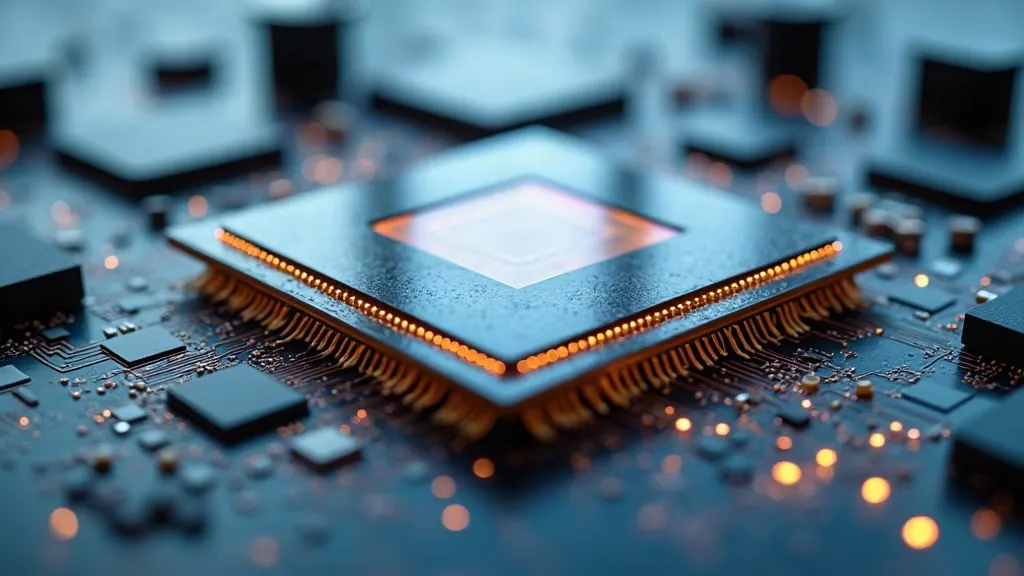
Nvidia stepped onto the SC26 floor in Chicago on November 16 and answered the question every national laboratory has been asking since Blackwell shipped: what comes after it for scientific simulation? The answer is Rubin HPC, a GPU architecture built from scratch around sparse computation, stencil patterns, and the data-movement bottlenecks that have made classical simulation software run poorly on training-focused accelerators. With more than 50,000 CUDA cores, seventh-generation NVLink, and a 2028 delivery target, it is the clearest signal yet that Nvidia intends to own not only AI training and inference, but the full stack of government and enterprise scientific computing for the next decade.
What Rubin HPC Adds That the Standard Rubin GPU Skips
The standard Rubin GPU, launched at GTC 2026, was designed for the AI training and inference workloads hyperscalers run at scale: dense matrix multiplications, transformer attention, and mixed-precision inference passes that fit cleanly into Nvidia's existing memory and execution engine architecture. Rubin HPC, by contrast, is engineered around an entirely different computational signature. Scientific simulation is dominated by sparse matrix operations, stencil computations, sorting and reduction passes, and irregular memory access patterns that punish chips optimized for the dense, predictable data layouts of neural network training.
Nvidia's decision to build a separate GPU architecture for science, rather than simply recommend the standard data center Vera Rubin chip with a software layer on top, reflects a hard-won lesson from the Volta and Ampere eras, when national labs frequently found that GPUs scored well on the LINPACK benchmark used to rank the Top500 list but underperformed by 30 to 50 percent on the actual application codes they were hired to run. The disconnect between benchmark results and production workload performance caused years of friction between Nvidia and HPC procurement offices, who faced funding agencies expecting the advertised benchmark numbers to materialize in operational deployments.
The 50,000-plus CUDA core count marks a step up in raw core density compared with the data center Rubin GPU, though Nvidia has not provided a direct comparison between the two variants. Seventh-generation NVLink provides the inter-GPU fabric at SC26, with per-GPU bandwidth still undisclosed at this stage. The architecture adds dedicated acceleration for sparse operations, which Nvidia says will speed climate modeling and genomic analysis workloads where data sparsity is structural rather than a side effect of pruning. The HPC SDK 26.11, released alongside the hardware announcement on November 16, is the software layer exposing these acceleration patterns through updated CUDA-X libraries, and a next-generation Fortran compiler is already in public beta, an unusually aggressive software push for silicon that will not ship until 2028. Coverage from the SC26 floor confirms that Nvidia positioned Rubin HPC primarily around climate modeling, engineering simulation, and genomic analysis as its three leading scientific use cases.
Vera HPC Racks Carry 300 TB and Claim 2.4x Energy Gains Over x86
While Rubin HPC is a 2028 story, Vera HPC racks are a 2027 procurement event that will begin appearing in data center capacity planning this quarter. Dell Technologies, HPE, Lenovo, and Supermicro plan to ship liquid-cooled Vera HPC racks beginning in early 2027. Each rack carries 192 processors connected by Quantum-X800 InfiniBand, with approximately 300 TB of memory, 1 PB of storage, and more than 200 TB/s of aggregate peak memory bandwidth across the system. Each Vera CPU has 88 Olympus cores and 176 threads. A comparable x86 compute rack in today's HPC deployments typically holds 10 to 20 TB of memory at the rack level, making Vera's density a potential 15-to-30x improvement for memory-bound workloads like molecular dynamics, climate ensembles, and large-scale fluid simulation.
The energy claim is equally pointed. Nvidia's Vera CPU launch documentation cites 1.9x the performance and 2.4x the performance per watt of x86 systems in the OpenFOAM motorBike Large test, a standard computational fluid dynamics benchmark used in automotive and aerospace simulation. For data center operators already managing utility contracts that price power at $0.08 to $0.12 per kilowatt-hour in energy-intensive HPC hubs, a 2.4x efficiency gain translates directly into fewer megawatts required per petaflop and lower operational costs per simulation run. HPC labs running continuous climate models around the clock have little tolerance for inefficient compute: electricity costs represent 30 to 50 percent of total annual supercomputer operating budgets at most national facilities, based on figures included in U.S. Department of Energy budget requests over the past three cycles. At the scale of a 10-petaflop facility, that efficiency ratio can mean the difference between staying within a facility power envelope and triggering a substation upgrade worth tens of millions of dollars.
The 1.8 TB/s of coherent CPU-GPU bandwidth delivered by NVLink-C2C inside the Vera rack, cited in Nvidia's Vera CPU announcement, is seven times the bandwidth of PCIe Gen 6, the interconnect standard used in conventional server architectures today. This matters for coupled simulation codes, where a climate model's ocean component runs on CPUs while its atmospheric dynamics component runs on GPUs, and the two exchange state vectors at every time step. Prior-generation CPU-GPU bottlenecks at the PCIe interface forced simulation teams to either restructure their codes around GPU-only architectures or accept a data transfer penalty that consumed a material fraction of their time-to-solution budget.
DKRZ, Los Alamos, and the Supercomputer Procurement Wave
The German Climate Computing Center, known as DKRZ, became one of Nvidia's earliest Vera HPC customers when it selected Vera CPUs for its HLRE-5 system, expected in early 2028. HLRE-5 combines Vera CPU nodes with GB200 Grace Blackwell systems and Quantum-2 InfiniBand, making it one of the most architecturally layered HPC systems in European science. DKRZ is not a marginal customer: its systems run global climate simulations that feed directly into the Intergovernmental Panel on Climate Change assessment process, and procurement choices at DKRZ tend to propagate to other European climate modeling centers within two to three procurement cycles. If HLRE-5 delivers on its specifications, France's IPSL, the UK Met Office computing center, and Sweden's ECMWF infrastructure will all be watching the acceptance test results before committing to their own next-generation procurements.
The broader cycle driving Nvidia's SC26 push is straightforward: the Top500 list is entering a generational refresh, with systems built on Intel Skylake and early AMD EPYC architectures reaching end-of-life between 2026 and 2029. National labs in the United States, Europe, and Japan are issuing requests for proposals at a pace not seen since the mid-2010s petascale buildout. Nvidia's June 2026 ISC announcement named Los Alamos National Laboratory, NERSC at Lawrence Berkeley, and LRZ in Germany as Vera Rubin customers, with LRZ's Blue Lion system expected to deliver roughly 30 times the computing power of its current HLRE-4 platform when it comes online in 2027. Jensen Huang described Vera Rubin as "a new instrument for science" at that announcement, framing it not as incremental improvement but as a generational platform shift. The SC26 Rubin HPC reveal adds a 2028 hardware target for labs whose planning horizons extend beyond what Vera CPU racks alone can satisfy.
Why HPC Labs Spent 15 Years Resisting GPU Architectures
The history of GPU adoption in scientific computing is not a story of rapid disruption. It is a story of painful and expensive software rewrites, decade-long vendor lock-in debates, and a persistent gap between benchmark performance and production throughput. When Nvidia first pushed CUDA into HPC in the late 2000s, nearly all major simulation codes were written for CPUs and would not benefit from porting without millions of dollars in engineering investment. The simulation software stacks at national labs, some with 30 years of accumulated code, physics models, and numerical methods developed for CPU cache hierarchies, were structurally incompatible with the GPU memory layouts of the Tesla and Fermi generations.
That history creates context for why Rubin HPC's sparse computation focus matters. The workloads that consistently underperformed on dense-matrix-optimized GPUs, stencil codes for weather prediction, sparse linear algebra in structural mechanics, irregular graph traversals in genomics assembly, are precisely the patterns Nvidia is now targeting with dedicated hardware acceleration. The company is essentially acknowledging that the HPC community's complaints about GPU fitness for scientific workloads were valid, and designing to address them rather than arguing that the application community should rewrite 30-year-old Fortran codes to fit GPU strengths.
The Fortran compiler announcement at SC26 reinforces this reading. Fortran remains the dominant language in production climate, plasma physics, and materials science codes at national labs. The fact that Nvidia is investing in a next-generation Fortran compiler, rather than relying solely on C++ and Python wrappers, signals a serious commitment to running legacy codes without forced rewrites. AMD's AOCC compiler for EPYC and Intel's Fortran compiler for Xeon have both been competitive advantages in HPC procurements where Fortran portability is a scoring criterion. Nvidia placing a Fortran compiler in public beta simultaneously with a hardware announcement is a direct play for those evaluation criteria.
The Bear Case: Missing Specs and a 24-Month Wait
The bear case, however, is straightforward: Nvidia has not disclosed the FP64 throughput, memory capacity, or power draw for Rubin HPC, and those omissions carry more weight in scientific computing procurement than they would in a consumer GPU or even a hyperscale data center chip announcement. For HPC, FP64, double-precision floating-point performance, determines how accurately a simulation can represent physical reality. Climate models, plasma physics simulations, and fluid dynamics codes all require FP64 for numerical stability over long integration times. Without a disclosed FP64 figure, national lab procurement officers cannot perform the standard performance-per-watt-at-precision comparisons that funding agencies require before committing to contracts worth hundreds of millions of dollars.
Critics also argue that the 2028 shipping date for Rubin HPC, combined with early-2027 Vera rack deliveries, creates an uncomfortable procurement sequence. Labs that want to build a Rubin HPC system must buy CPU-only Vera racks now, without knowing what GPU they will be paired with in 18 months, then commit additional budget to an unspecified GPU in a future procurement round. The two-step structure may suit Nvidia's revenue planning, but it creates funding cycle risk for lab administrators who must justify hardware investments to multi-year funding authorizations. As HPCWire has noted, Nvidia has not compared Rubin HPC against the standard Rubin GPU, against AMD's MI450, or against Intel's forthcoming Falcon Shores architecture, leaving independent benchmark comparisons unavailable at a stage when procurement cycles are already open. Skeptics point out that AMD's $14 billion infrastructure partnership announced in mid-2026 and AMD's strong MI300X adoption across multiple national labs mean that Nvidia's hold on HPC budgets is genuinely contested, not settled.
What to Watch Before the First Vera Racks Ship
The most important signal to watch is whether Nvidia discloses Rubin HPC's FP64 throughput at ISC 2027 in June, the next major HPC conference where national lab customers will be present in force. A strong FP64 figure with a credible performance-per-watt ratio would confirm that Rubin HPC is a full-stack scientific chip, not a marketing repositioning of AI training silicon. If Nvidia defers the question again at ISC 2027, it will signal that FP64 is a product weakness rather than a disclosure timing choice, and AMD and Intel will aggressively fill that message vacuum in the second half of 2027.
The second signal is Vera HPC rack acceptance testing at national labs. The first rack-scale acceptance reports from NERSC's Doudna system, expected to be published within 60 to 90 days of delivery in the first half of 2027, will give the industry the first independent data on whether the 1.9x performance and 2.4x efficiency claims survive contact with real production workloads. Those results will land during the peak procurement decision window for systems targeting 2028 operational dates. Infrastructure spending is already following the hardware signal: LS Electric's $94 million contract for switchgear serving a hyperscale AI data center, announced on the same day as Nvidia's SC26 presentation, illustrates how power and switching infrastructure spending is accelerating alongside GPU compute deployments. The energy infrastructure cycle that Rubin HPC and Vera racks sit inside is already in motion, regardless of how the chip benchmarks land.
Nvidia is betting that the first national lab to run climate models on Rubin HPC will make the next twenty pay for the right to follow.
Key Takeaways
- 50,000+ CUDA cores in Rubin HPC : Nvidia revealed the simulation-focused Rubin HPC GPU at SC26 on November 16, targeting a 2028 release with seventh-generation NVLink and acceleration for sparse computation, stencil codes, and genomics workloads
- Vera HPC racks ship early 2027 : Dell, HPE, Lenovo, and Supermicro will deliver liquid-cooled Vera HPC racks starting early 2027, each carrying 300 TB of memory, 1 PB of storage, and 200 TB/s of peak memory bandwidth
- 2.4x performance per watt over x86 : Nvidia's OpenFOAM benchmark shows Vera at 1.9x performance and 2.4x energy efficiency over x86 rack systems, a gap that matters most at the facilities running climate and physics codes around the clock
- DKRZ HLRE-5 anchors European adoption : Germany's climate computing center selected Vera CPUs for HLRE-5, expected in early 2028 and paired with GB200 Grace Blackwell systems, setting a procurement reference for other European modeling centers
- FP64 withheld for 2028 chip : Nvidia has not disclosed Rubin HPC's double-precision throughput, memory capacity, or power draw, leaving the figures most critical to scientific procurement unavailable two years before the ship date
Questions Worth Asking
- If Rubin HPC's undisclosed FP64 throughput turns out to be a weakness rather than a timing gap, how much of the 2028 HPC budget cycle does AMD capture by default?
- Does the 2.4x energy efficiency claim hold across the full application suite a climate or genomics lab runs daily, or only on the fluid dynamics benchmark Nvidia chose to publish?
- With Vera HPC racks shipping 18 months before Rubin HPC GPUs arrive, are labs effectively buying half a system today and trusting Nvidia to deliver the other half on a 2028 timeline they cannot yet verify?