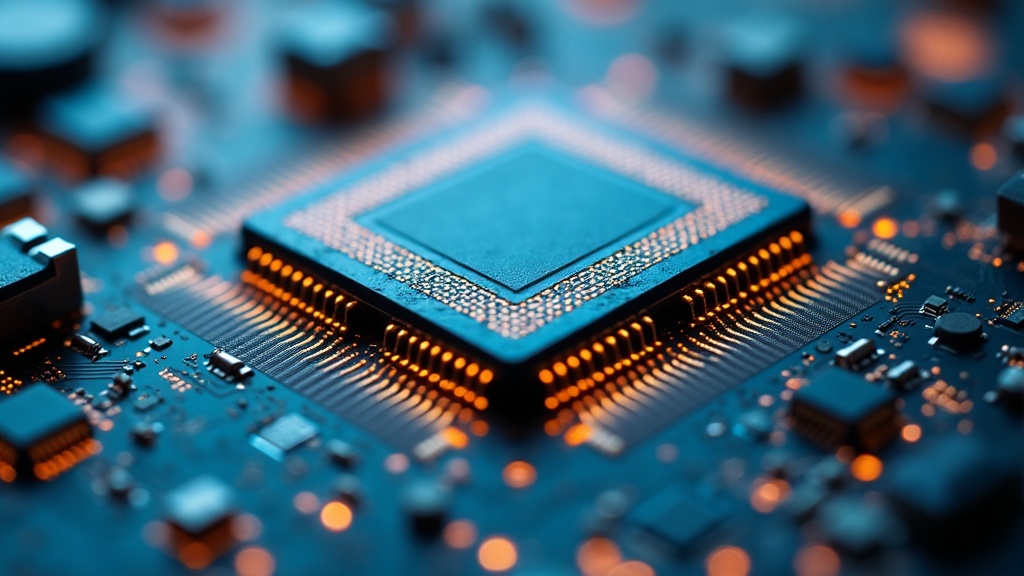
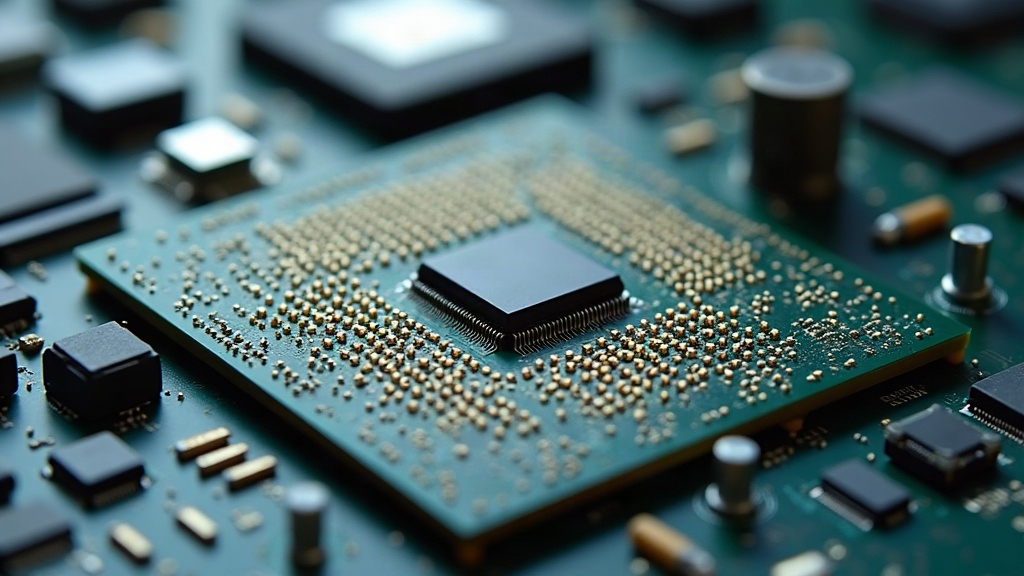
OpenAI just unveiled its first custom AI chip. The Jalapeño is not a toy prototype or a research concept. It's shipping into production data centers by the end of 2026, co-designed with Broadcom and built for one specific purpose: running LLM inference at the scale where GPU costs now dwarf compute gains. The partnership signals a fundamental shift: frontier AI labs are no longer waiting for chip vendors. They are building their own.
What Actually Happened
OpenAI and Broadcom announced a custom LLM inference accelerator designed from scratch for production LLM workloads. The Jalapeño took nine months from design to engineering samples, an unusually fast timeline that suggests both companies have been preparing this for longer than the public announcement window. Engineering samples are currently running production ML workloads at target frequency and power specifications, including demanding models like GPT-5.3-Codex-Spark. The chip targets deployment starting in Q4 2026, with gigawatt-scale rollouts beginning in 2027 across OpenAI's own infrastructure and strategic partnership data centers with Microsoft and others.
The technical win is efficiency. Early benchmarks suggest the Jalapeño achieves approximately 50% lower cost per inference compared to current NVIDIA inference hardware while maintaining or exceeding performance per watt. That margin matters at scale: a single gigawatt data center running inference on NVIDIA's current stack costs roughly $150-200 million annually in electricity and hardware amortization. Cut that by half, and the math shifts the entire competitive landscape. Broadcom is handling chip implementation and manufacturing partnerships, while Celestica joins as the board, rack, and system integration partner. The partnership also includes high-performance networking components, suggesting the Jalapeño is optimized for both single-node inference and distributed request handling across massive clusters.
This is not OpenAI building its own fab. The company is doing what every hyperscaler learned during the mobile revolution: design the silicon you need, outsource the manufacturing, and own the competitive moat. NVIDIA built its current margin on GPU versatility. The Jalapeño bet is the opposite: a chip optimized for a single, increasingly expensive workload, with none of the overhead of consumer graphics, data science flexibility, or the token tax of supporting a thousand different applications.
Why This Matters More Than People Think
The Jalapeño announcement breaks NVIDIA's inference moat. For five years, NVIDIA's dominance rested on a simple truth: there was no alternative. GPU compute was the only path, scaling was a solved problem, and NVIDIA's software ecosystem (CUDA, cuDNN, TensorRT) had no equal. Inference workloads are different from training. Training demands flexibility, massive parallelism, and the ability to swap algorithms week-to-week. Inference is stable, repetitive, and predictable. It is the perfect target for vertical integration. Once OpenAI proves the Jalapeño works in production, every other frontier lab (Anthropic, Google, Meta) will face an urgent choice: build custom silicon or accept a permanent cost disadvantage. The chip becomes a tax on staying independent.
The competitive implication cuts both ways. NVIDIA's data-center revenue depends on inference workloads to a degree few outsiders realize. Training is the prestige business; inference is the cash cow. CNBC's analysis estimates inference now accounts for 40-60% of NVIDIA's data-center GPU revenue, with the proportion climbing as inference deployments scale. If the Jalapeño delivers on its efficiency claims, OpenAI's own compute bill for inference drops by $500 million to $1 billion annually by 2028. That is not venture capital money. That is operating profit that was previously flowing to Jensen Huang. Every competitor that ships their own chip amplifies the effect.
The infrastructure implications are equally important. NVIDIA's H100 and H200 cards were designed as general-purpose accelerators. They support training, inference, data science, and research workloads with a one-size-fits-most architecture. The Jalapeño is the opposite: it sacrifices flexibility for focused optimization. Customers who needed a general-purpose platform before now face a choice. If they want inference, the Jalapeño costs half as much but only runs inference. If they want training, they still need NVIDIA (and Anthropic and Meta will eventually build training chips too). This fragmentation forces enterprises to adopt multi-vendor strategies, raising operational complexity and software integration costs. OpenAI has absorbed those costs; customers will now need to manage them too.
The bear case, however, is straightforward. Custom silicon is a graveyard littered with expensive failures. Apple's M-series chips work because they control the entire product ecosystem and can sacrifice compatibility for integrated design. OpenAI controls a training and inference pipeline, but it does not control the broader ecosystem of AI applications running on its platform, nor can it force third-party developers to optimize for the Jalapeño. If the chip turns out to have unexpected bottlenecks or architectural limits in production—say, issues with dynamic batch sizes or multi-modal workloads—OpenAI has a $500 million sunk cost and a three-year lag before the next generation ships. Broadcom, meanwhile, is hedging: the company still sells high-margin NVIDIA partnership chips and data-center switching gear. OpenAI is betting its capital. Broadcom is taking a small piece of upside while keeping its core business intact.
The Competitive Landscape
NVIDIA's position is not yet threatened, but the signal is unmistakable. The company ships H100s and H200s to every major lab, owns training, and now faces credible competition in inference. Anthropic has not announced a custom chip, but the company's recent strategic hires from semiconductor backgrounds (including ex-Tesla and ex-Apple chip engineers) suggest preparation is underway. Google has already shipped custom training silicon (the TPU) and now runs most of Gemini on proprietary hardware. Meta is less clear: the company has invested in AMD EPYC partnerships and custom networking but has not yet committed to a full custom inference chip. The industry faces a bifurcation: labs that build their own will own their margins; labs that depend on NVIDIA will compete on model quality alone.
The historical parallel is clear. In the 1990s, the server market faced a similar transition. IBM, HP, and others owned inference-like workloads until custom silicon (ASIC-based systems, then x86 optimizations) allowed companies like Amazon and Google to build proprietary infrastructure. NVIDIA's analogue is IBM's System/370 line: technically superior, widely adopted, but increasingly expensive for workloads that did not need the full feature set. The transition took a decade, but it was inevitable. Once you have the volume to justify the design cost, custom silicon wins every time.
For OpenAI, the Jalapeño is not just a cost play. It is a message: we control our own destiny. That message matters in the boardroom and in the capital markets. An IPO that includes a proprietary inference chip is worth more than an IPO dependent on NVIDIA for its core product. The chip becomes collateral, moat, and proof of technical independence all at once.
Here is the uncomfortable truth that the AI industry is not discussing: Broadcom's involvement means NVIDIA still wins. Broadcom and NVIDIA are not rivals in semiconductor design. NVIDIA designs cutting-edge data-center silicon; Broadcom does high-performance networking and infrastructure connectivity. Broadcom gets paid to implement, validate, and ship OpenAI's design. The manufacturing partnership likely flows through a foundry (TSMC or Samsung) that also manufactures NVIDIA's chips. The networking components are Broadcom's, but the ecosystem integration—power delivery, thermal management, rack-level orchestration—still depends on tools and standards NVIDIA helped establish.
In fact, the Jalapeño accelerates a hidden advantage for NVIDIA. As OpenAI, Anthropic, Meta, and others pour billions into custom silicon programs, they are diverting engineering talent and capital that could otherwise go to building training alternatives. NVIDIA's training monopoly is actually strengthened by the inference fragmentation. Training is still concentrated; inference is about to become a Tower of Babel with OpenAI, Google, Meta, and startups each shipping incompatible chips. That heterogeneity favors the platform with the largest, most flexible ecosystem. NVIDIA owns that. The Jalapeño is a threat to NVIDIA's inference margin, not to NVIDIA's strategic position. In fact, by forcing everyone to build custom silicon, the Jalapeño guarantees that NVIDIA will spend the next five years as the undisputed training provider while inference competitors spend that same period fixing manufacturing bugs and dealing with software fragmentation.
The second hidden insight is that OpenAI just committed to a seven-year hardware roadmap. The Jalapeño was designed in nine months, but that assumes a complete feature lock and minimal architectural risk. The next generation (let's call it the Habanero, if the naming pattern holds) will take 18-24 months. By 2032, OpenAI will have three generations of custom silicon in production. That is not a side project. That is a semiconductor company wearing an AI mask. It also means OpenAI is now competing with NVIDIA for the same engineering talent, the same foundry capacity, and the same strategic partnerships. Broadcom's infrastructure business becomes critical: the company has to sell the chips, the power systems, the networking, and the cabinet design all as a vertical stack. That is expensive, requires regulatory navigation, and introduces operational risk that NVIDIA has spent two decades perfecting.
The third angle: antitrust. OpenAI building its own chip is a defensive move against NVIDIA's market power, but it is also the beginning of vertical integration that regulators will watch carefully. If OpenAI uses the Jalapeño to underprice competitors or lock in exclusive partnerships, the FTC will have a case. NVIDIA faced antitrust pressure in 2024-2025 but survived it. OpenAI is about to learn that owning the entire stack (training, inference, custom silicon, and potentially foundry partnerships) puts a target on your back. Broadcom's role as a neutral implementer gives OpenAI some legal cover, but only temporarily. Once the Jalapeño ships at scale, questions about backward compatibility, licensing, and competitive access will become regulatory issues. The question is not whether the FTC will look; the question is whether the agency will move fast enough to matter before OpenAI's installed base makes the Jalapeño too important to touch politically.
What to Watch Next
The first measurable milestone is Q4 2026 deployment. If the Jalapeño ships on schedule, expect financial impact disclosures from OpenAI's latest funding rounds or IPO filing. The company will tout the cost savings, but investors will scrutinize the actual inference latency, power consumption under load, and whether the chip can handle the full diversity of production LLM queries (multi-turn conversation, function calling, image generation, etc.). A single bottleneck—say, tensor memory bandwidth or interrupt handling—could stall the rollout. Watch for press releases about "unexpected software optimizations" or "extended validation phases." These are code for: the hardware needs fixes.
Second, track Anthropic, Google, and Meta for competing announcements. If Anthropic ships a custom chip within 18 months, the inference market is genuinely fragmenting. If not, and only OpenAI has a production custom chip, the company has won a structural advantage that will echo through 2028-2030. Meta, in particular, is worth watching. The company has more compute infrastructure than any peer, more flexibility to sacrifice compatibility, and enough foundry relationships (via its TSMC partnerships) to execute faster than Anthropic. If Meta skips custom silicon and doubles down on NVIDIA partnerships, that signals the industry believes the 50% cost advantage claim is overblown.
Third, pay attention to the networking and power story. The Jalapeño is only half the battle. Broadcom's high-performance networking is the other half. Watch for announcements about PCIe successor standards, power delivery architectures, and cabinet redesigns. These are the unsexy parts of infrastructure, but they determine whether a custom chip becomes a production win or a prototype stuck in a lab. Within 12 months, look for customer case studies showing actual inference cost reductions and latency measurements at scale. Those numbers will determine whether every competitor copies the OpenAI playbook or decides the risk and capital commitment are too high. Keep an eye on NVIDIA's next inference accelerator roadmap too. If NVIDIA announces competing efficiency gains without custom silicon, the company has a strong response. If NVIDIA stays quiet and doubles down on training, the inference market is lost.
OpenAI just proved that NVIDIA's inference monopoly can be broken, but in doing so, the company also revealed why that monopoly exists: vertical integration at the scale of semiconductor manufacturing is capital-intensive, operationally complex, and carries enormous execution risk.
Key Takeaways
- The Jalapeño is production-ready, shipping end of 2026 across OpenAI's data centers with engineering samples already running GPT-5.3 workloads at scale.
- 50% cost reduction vs NVIDIA inference hardware translates to $500M-$1B annual savings for OpenAI alone; competitors will now face the build-vs-buy decision in custom silicon.
- Broadcom is the implementation partner, not a rival; NVIDIA's ecosystem advantage in training and networking remains intact, limiting the threat to inference margin only.
- Custom silicon is now table stakes for frontier labs; Anthropic and Meta are likely already in design phases, fragmenting the inference market while NVIDIA strengthens its training monopoly.
- Antitrust risk accelerates as OpenAI moves from pure AI lab to vertically integrated semiconductor company; regulatory scrutiny around backward compatibility and competitive access will follow shipping milestones.
Questions Worth Asking
- If the Jalapeño achieves 50% cost savings, why did OpenAI wait until now to design it? What changed in inference economics that made the nine-month development cycle suddenly attractive in mid-2026?
- Broadcom is implementing but NVIDIA still owns the power delivery, thermal, and networking ecosystems. Can OpenAI actually decouple from NVIDIA's infrastructure dependencies, or is the Jalapeño just a faster card in a NVIDIA-controlled stack?
- What happens to the Jalapeño roadmap if OpenAI goes public in 2027-2028 at a $1.5T valuation? Investors will demand ROI on semiconductor programs. Will the company continue long-term silicon R&D, or shift the cost to partners?