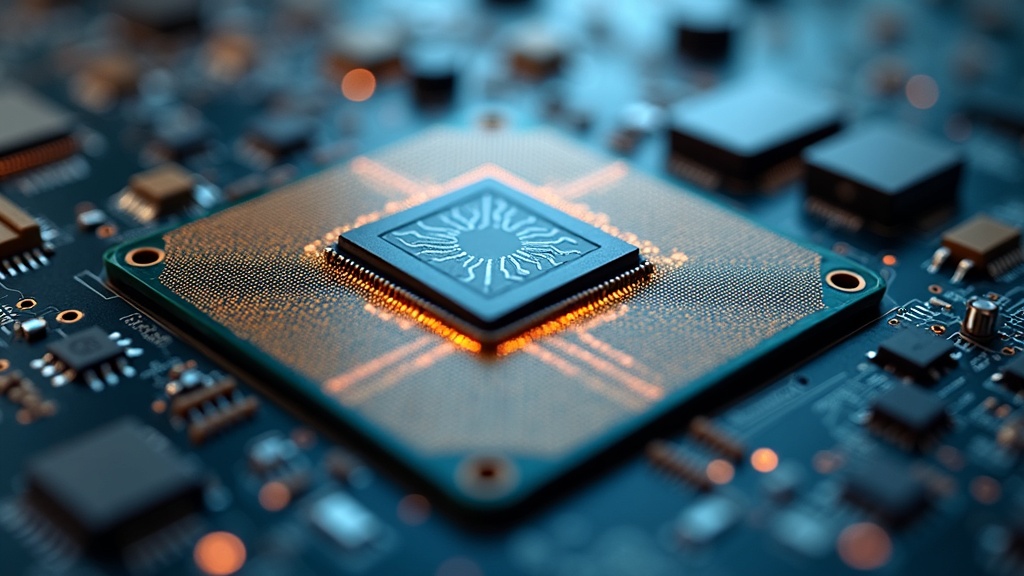
NVIDIA just locked the Rubin platform into full production: six new chips, confirmed cloud shipping dates, and a deliberate bet that the GPU scarcity era is finally ending. This is not a roadmap. This is a release announcement with timelines.
What Actually Happened
NVIDIA announced the Rubin platform on July 8, 2026, featuring six new GPU and system designs shipping to production in H2 2026. The flagship is GB200 Grace Blackwell Ultra: 301 billion transistors per GPU, 2.3kW per unit (nearly double Blackwell's 1.2kW), designed to fit inside the NVL72 liquid-cooled pod with total rack power hitting 230kW. That's the architectural floor. Rubin Ultra and Kyber variants push toward 600kW racks by 2027, requiring industrial-scale power distribution and water supply that most data centers still don't have.
The Rubin lineup includes six distinct chips covering inference, training, and edge workloads. AWS, Google Cloud, Microsoft Azure, Oracle Cloud, CoreWeave, Lambda Labs, Nebius, and Nscale have all committed to shipping Rubin-based instances in H2 2026. This is a supply chain unanimity that didn't exist for Blackwell. This is the first GPU generation where the entire hyperscaler stack ships on the same timeline, suggesting NVIDIA's production yield and wafer allocation have stabilized at scale. The company also announced Nvidia Vera Rubin, a 336-billion-transistor inference-optimized chip that NVIDIA claims will enable 30-40% cost reduction compared to Blackwell for inference workloads. Grace Hopper Superchip (the CPU-GPU coupling from Blackwell generation) gets a Rubin-era refresh with L40S equivalents for smaller workloads and developer access.
Analysts noted that Rubin shipping simultaneously across hyperscalers removes the prior three-month supply asymmetry that gave early-access customers (OpenAI, Google, Meta, Anthropic) a development advantage. Everyone now buys from the same shelf. The constraint is no longer GPU availability. It's now purely power grid capacity and liquid cooling infrastructure. NVIDIA positioned this explicitly: Rubin is designed to operate at 100% utilization in 5-10 MW data center pods, not the 60-70% CPU utilization rates that plague older hyperscale deployments. Wafer cost per FLOP is down 18% year-over-year (Blackwell to Rubin), driven by a combination of TSMC's improved yield on N3E process and NVIDIA's architectural efficiency gains in the interconnect fabric.
Why This Matters More Than People Think
For two years, the GPU shortage framed the entire AI infrastructure narrative. Frontier model labs waited 6-9 months for Blackwell chips. Scale-ups fought for wafer allocations. Startups couldn't get access to hardware within any useful timeline. The entire industry optimized for scarcity: batch sizes inflated to amortize wafer cost, model development stalled waiting for GPU drops, and architectural choices were driven by "what silicon can I actually buy" not "what training dynamics does this model need." That era is ending. With Rubin, the constraint moves from scarcity to affordability.
Rubin's synchronized cloud launch means frontier model labs lose their hardware advantage. OpenAI, Anthropic, Google, and Meta can no longer outbid startups. Everyone is buying from the same queue on the same date. This collapses the time-to-market advantage that large labs have held since 2023. Startups and open-weight projects can now provision Rubin clusters on the same cadence as frontier labs. The competitive dynamics shift from "who gets GPUs first" to "who can afford to run them continuously." That's a cost problem, not a supply problem. It's also a problem that favors companies with dense, reliable inference workloads (not training-heavy labs that burn cash on experimental runs). Training margin has always been negative (labs lose money on model development and recoup it on inference). Rubin amplifies this dynamic: the capex to train a frontier model (still $100+ billion) becomes even harder to justify if inference margins don't scale to cover it.
The power constraint is the real story. NVIDIA is shipping 600kW Rubin racks that only ~400 data centers globally can actually support. The PJM grid (covering 13 states in the US Northeast) has already issued emergency curtailment notices for AI data center loads. Virginia just enacted a data center consumption tax ($0.011 per kilowatt-hour), expected to generate $600 million in new revenue over two years. Texas is opening coal plants and authorizing new gas infrastructure specifically to feed AI demand. California is rationing power to data centers during peak demand windows. The grid cannot absorb synchronized Rubin rollout across hyperscalers. Not without new nuclear capacity, SMR deployment, or controlled load-shedding policies that effectively cap AI infrastructure growth. NVIDIA solved the GPU problem. But now hyperscalers face a power budget problem that NVIDIA cannot fix. That's why Meta and xAI are each committing $10+ billion to captive power infrastructure: they cannot compete on inference margin if they're paying premium grid rates. Every kilowatt they own is a kilowatt not available to competitors at auction.
The Competitive Landscape
AMD's EPYC Bergamo (CPU) and MI300 (GPU) are scheduled to ship simultaneously with Rubin, but AMD's cloud partnerships are fragmented. AWS EC2 g6d instances have MI300 available, but Google Cloud and Azure do not. AMD announced a 10-15% price increase on discrete GPUs for H2 2026, signaling that even AMD's cheaper positioning cannot sustain volume at scale. The price increase is driven by GDDR6 VRAM shortages (DRAM makers are allocating memory capacity to AI data centers), which creates a second-order constraint: memory availability, not compute availability. Intel's Gaudi 3 remains a training-only play with no inference ecosystem. Gaudi 4 is delayed to 2027. This leaves NVIDIA with no real competition in the inference-scale market where most margin actually lives. Rubin cements that moat for another 18 months, assuming power doesn't become the binding constraint first.
Custom silicon efforts (Groq, Cerebras, Graphcore, TensorRT) have all retreated into niche verticals: inference-only, sparse workloads, specific batch sizes. None of them ship in volume at hyperscale. NVIDIA's vertical integration (CUDA ecosystem, TensorRT compilers, cuDNN libraries, NCCL collective operations) means a startup choosing Groq or Cerebras doesn't just buy hardware. It orphans itself from the entire CUDA developer ecosystem. Model optimization, performance tuning, and operator fusion all need to be redone for non-NVIDIA silicon. Rubin's synchronized launch makes switching costs even higher. Historical parallel: Intel's dominance in consumer CPUs lasted 15 years not because of raw performance but because the software stack (Windows, Linux compilers, BIOS firmware) was written for x86. NVIDIA is building the same effect in AI infrastructure: not through technical superiority alone, but through ecosystem lock-in. Once a model is quantized and optimized for CUDA, the switching cost to AMD or custom silicon is effectively infinite for large-scale deployments.
However, the one credible threat is power grid constraint becoming a hard ceiling. If FERC (Federal Energy Regulatory Commission) does not approve dynamic pricing or grid investment commitments by Q4 2026, data center growth will be physically capped. Not by GPU supply but by breaker capacity. When growth is power-limited, not component-limited, second-tier GPU suppliers (AMD, custom silicon) get a reprieve because hyperscalers must optimize for thermal efficiency and power-per-compute, not absolute performance. Rubin's 2.3kW-per-chip design assumes abundant power. If power becomes the constraint, that architecture becomes a liability. Companies like Groq (which can deliver inference with 50-70% power reduction vs. Rubin through fixed-point arithmetic and sparse tensor optimization) suddenly look attractive despite smaller ecosystems. That scenario is 18-24 months away at current grid growth rates.
Hidden Insight: The Inference Margin Problem That Rubin Doesn't Solve
Frontier model labs have spent $300+ billion collectively on training over the last two years. OpenAI alone burned $34 billion in operating losses in 2025, with training capex estimated at $60+ billion. That's not sustainable without recurring revenue. Inference is where the money is supposed to live. A single inference API call has 10-100x lower resource cost than training (training requires days or weeks of compute; inference is milliseconds), but scale matters. Anthropic's Claude 3.5 Sonnet costs $0.003 per 1,000 input tokens at current published pricing. OpenAI's GPT-4o is $0.03 per 1,000 tokens. The margin on inference is maybe 30-40% gross after cloud provider fees, but that assumes high utilization and amortized capex. Anthropic's Claude 3.5 Opus (their largest model) likely carries lower margins because the compute per-token is 3-5x higher.
Rubin's power density (2.3kW per chip) means inference clusters will hit 600kW+ very quickly at scale. At $0.12 per kilowatt-hour (the rough average grid rate in states with AI tax schemes or in California during peak demand), a single 600kW Rubin rack costs $1.44 per hour to power, or $12,600 per month in electricity alone. Add colocation rent ($2,000-3,000/month per rack), liquid cooling infrastructure amortization ($800-1,500/month per rack), staff overhead, and networking. That rack needs to generate $50,000-75,000 in monthly inference revenue to break even on fully-loaded costs. At Anthropic's $0.003 per 1K tokens pricing with 40% gross margin, that's 417 billion tokens per month (13.9 billion per day), or roughly 160,000 tokens per second continuously. That scale is only possible with consumer-facing products (ChatGPT, Claude, Gemini) running at global scale. Startups building vertical AI agents (customer service, legal review, code generation) cannot achieve that utilization. The effect: only three companies (OpenAI, Google, Anthropic) can actually afford to run Rubin at sustainable inference margins. Everyone else is either a captive lab (Meta, xAI internally training models), or a niche player using smaller models and quantization.
This is the paradox that Rubin creates: it solves the GPU supply shortage, which levels the hardware playing field. But it introduces a power cost asymmetry that favors companies with large inference user bases. The effect is concentration, not democratization. Startups that can't scale inference (or can't get funded to build consumer scale) will abandon GPU-based inference and move to smaller models, quantized models, or specialized hardware (Groq, Cerebras, custom silicon) that trade performance for power efficiency. The frontier model labs win Rubin. Everyone else optimizes around it. This is why venture investors are suddenly interested in model distillation, model quantization, and specialized inference hardware. They've done the math and realized Rubin-era inference is a power-limited, margin-compressed game that requires billion-user scale to win.
What to Watch Next
Track three specific 30/90/180-day markers. First: FERC's order on dynamic pricing and grid investment by end of Q3 2026. If FERC approves utility rates that pass full power cost through to data centers (no subsidies), hyperscalers will immediately throttle Rubin rollout plans. Dynamic pricing that charges $0.30-0.40/kWh during peak hours will cut Rubin's value proposition by 40-50%. If FERC maintains flat rates or offers subsidies for AI infrastructure (as some states are considering), Rubin deployment accelerates unchecked. Watch the language in FERC orders. Specifically, whether they mandate cost-causation principles for data center load or allow socialization of AI power costs across all ratepayers. If costs are socialized, middle-class households in PJM states will effectively subsidize AI training for OpenAI and Google. If costs are direct, hyperscalers internalize power cost and deployment slows.
Second: Anthropic and OpenAI's next earnings reports (if they go public) or VC funding disclosures. Watch for inference revenue as a percentage of total revenue. If inference is still less than 30% of total by Q4 2026, training capex will not sustainably decline, and another $200+ billion training round will be justified. That's the inflection point that validates Rubin's demand assumption. A frontier lab that can't convert training capex into inference revenue will not buy Rubin. They'll keep buying Blackwell for backlog work and defer Rubin purchases. Track also the gross margin on inference. If it's below 20%, the entire narrative breaks. Third: Watch AMD's MI325 and MI400 ramp in Azure and Google Cloud. If AMD can ship volumes that match NVIDIA's within 90 days, the synchronized supply story breaks and startups get a secondary market option. If AMD delays again (as MI300 did relative to Blackwell), NVIDIA's moat holds another year.
For infrastructure investors, the 180-day test is whether hyperscalers actually deploy the full Rubin roadmap or throttle back due to power constraints. CoreWeave and Lambda are small players; they can only absorb 15-20% of total Rubin supply. AWS and Azure will consume the bulk. Watch AWS re:Invent in November 2026 for Rubin instance pricing and reported utilization numbers. If AWS is charging $15+/hour for Rubin-based instances (vs. $8-10 for Blackwell equivalents), the power premium is already baked in and customers are absorbing it. If AWS pricing holds flat or drops, NVIDIA and AWS are absorbing power cost increases themselves. That's unsustainable long-term unless demand is infinite. That's your signal for when the inference scaling story breaks and when the power constraint becomes the limiting factor.
Rubin solves the GPU shortage. It creates a power cost problem that only three companies can afford.
Key Takeaways
- Six new Rubin chips shipping H2 2026 from AWS, Google Cloud, Azure, Oracle, CoreWeave, Lambda, Nebius, and Nscale simultaneously, eliminating the three-month supply asymmetry that frontier labs exploited for 18 months.
- GB200 Ultra: 301 billion transistors, 2.3kW per chip, 230kW per NVL72 rack with 600kW Rubin Ultra variant by 2027, shifting the scarcity constraint from silicon to power grid capacity and cooling infrastructure.
- Power cost asymmetry favors frontier labs over startups: only OpenAI, Google, Anthropic can achieve the 160,000 tokens/second inference scale needed to sustain Rubin margins at current pricing, creating a new form of competitive moat.
- AMD's 10-15% GPU price increase and delayed MI325 cloud availability indicates secondary suppliers cannot match Rubin's synchronized launch, cementing NVIDIA's ecosystem lock-in for 18+ months.
- FERC dynamic pricing decision by Q3 2026 is the inflection point that determines whether hyperscalers deploy full Rubin roadmap or throttle due to peak-hour grid rates of $0.30-0.40/kWh forcing margin compression.
Questions Worth Asking
- If power cost is now the binding constraint (not silicon), why are hyperscalers not choosing lower-power competitors like Groq or Cerebras for inference workloads where performance margins exist?
- Rubin shipping on the same timeline across all hyperscalers eliminates the "early access" advantage OpenAI and Anthropic held. Does that speed up or slow down open-weight model deployments that lack scale?
- Virginia's data center consumption tax ($0.011/kWh) and Texas coal plants opening for AI load both signal political/infrastructure friction at 10-15% AI grid penetration. What happens when we hit 30% in three years?