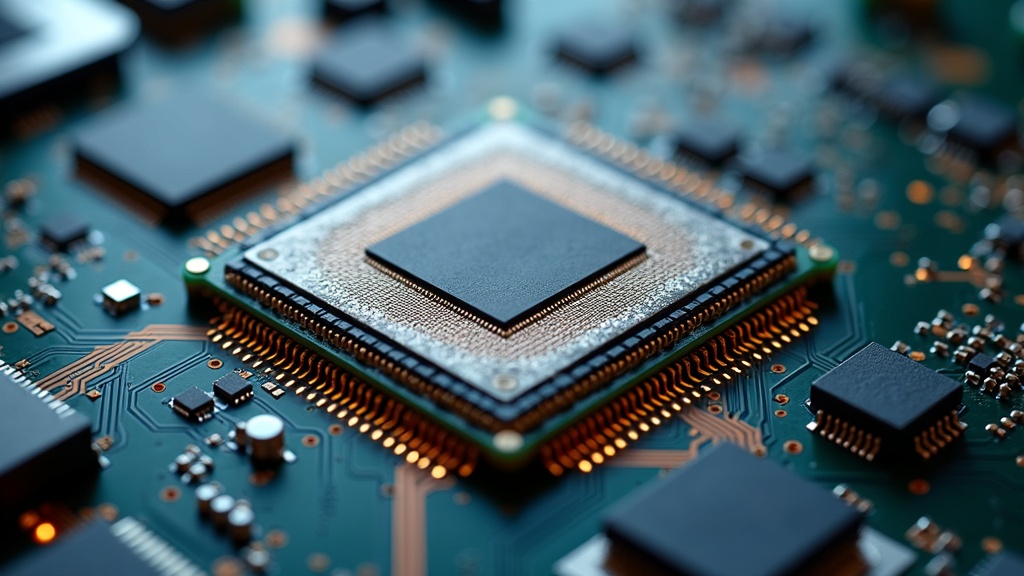
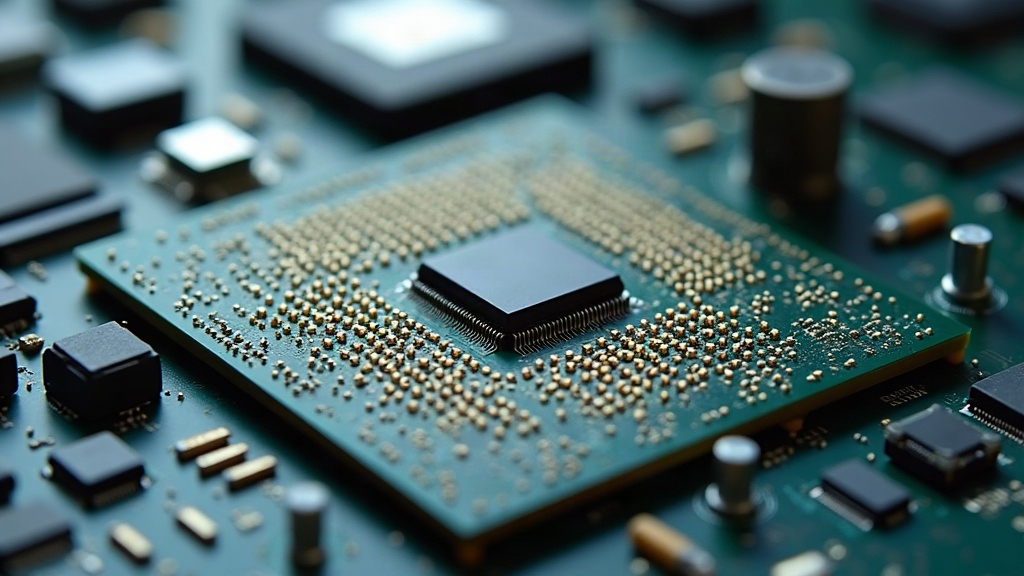
OpenAI just built its own AI chip in nine months. That is not just fast, it is a declaration that the era of chip monopolies is ending. On June 24, Broadcom and OpenAI unveiled Jalapeño, a custom inference processor showing 50% cost savings over Nvidia GPUs. The move signals that frontier AI labs are now writing their own silicon, and Nvidia's stranglehold on the inference market is cracking.
What Actually Happened
OpenAI and Broadcom announced the Jalapeño chip on June 24, a custom-designed ASIC (Application-Specific Integrated Circuit) built in partnership to optimize the inference workload, the computationally intensive task of running trained models at scale to serve requests. The chip was designed and taped out (finalized for manufacturing) in just nine months, which Broadcom CEO Hock Tan claims is the fastest ASIC development cycle ever achieved in high-performance semiconductors. Engineering samples have already been physically delivered to OpenAI CEO Sam Altman and President Greg Brockman, confirming manufacturing feasibility and production readiness.
Jalapeño is not a training accelerator like Nvidia's H100 or Blackwell. It is purpose-built for inference: running pre-trained models efficiently and at scale. The processor delivers approximately 50% cost savings compared to typical GPU-based inference setups, a margin that becomes economically decisive when you are serving billions of ChatGPT requests annually. OpenAI and Broadcom plan to deploy the first production units by the end of 2026, with scaling ramping across 2027 and beyond. The partnership explicitly frames this as part of OpenAI's "full stack" strategy, moving the company beyond reliance on any single hardware vendor. The timing is critical: OpenAI's inference costs are rising faster than training costs, making custom silicon economically essential rather than optional.
The nine-month timeline was itself enabled by AI: OpenAI's own models accelerated the design cycle, reducing what would have traditionally taken 18-24 months of human engineering. This recursion, AI building the chips that run AI, is the competitive moat that matters now. The speed advantage alone gives OpenAI a lead that traditional chip companies cannot match through traditional process improvements. Broadcom has the manufacturing muscle, but OpenAI has the speed of iteration. This partnership weaponizes both.
Why This Matters More Than People Think
The real threat to Nvidia is not that OpenAI has a better chip. It is that OpenAI has proven it can have one fast. Nvidia's lead has always rested on two pillars: architectural innovation and manufacturing relationships. Broadcom eliminates the second pillar immediately. The first pillar cracks the moment a frontier lab with capital, talent, and internal models can iterate faster on silicon than Nvidia's public roadmap. A nine-month cycle means OpenAI can ship Jalapeño variants every two years while Nvidia is still in the planning phase for its next generation. The asymmetry is profound: Nvidia optimizes for the broad market serving dozens of customer use cases, OpenAI optimizes for one use case at extreme scale. One customer's advantage is another vendor's constraint.
Inference is where the AI industry makes money. Training is a sunk cost, inference is recurring revenue. Nvidia derives roughly 70% of data center GPU revenue from inference workloads, not training. If OpenAI captures even 20-30% of its own inference spend on custom silicon by 2027, that is billions of dollars per year that are no longer Nvidia revenue. And OpenAI is not alone. Anthropic is designing chips with Cerebras. Meta is building custom inference silicon. Google has TPUs that already run most internal workloads. The inference market is fragmenting in real time, and Nvidia's gross margins, currently 60-65% on data center GPUs, become indefensible if the customer base shrinks by a third. A 30% market share loss translates to more than 15 percentage points of gross margin compression, which would reduce Nvidia's annual net income by 40-50% based on 2025 levels. That is not a minor risk, that is existential.
The risk, however, is that custom silicon is harder to deploy than the financial models suggest. Broadcom will need to ramp manufacturing to multimillion-unit volumes. OpenAI will need to integrate Jalapeño into production clusters without disrupting ChatGPT's availability. Engineering teams at other labs will need to hire chip designers, a scarce resource. The first production batch might deliver less than the promised 50% cost advantage due to yield issues or undersea cable bottlenecks that prevent efficient cluster deployment. If Jalapeño ships with a 30% advantage instead of 50%, Nvidia can cut prices and keep most of the market. The timeline risk is real: a six-month delay in production ramps gives Nvidia time to pivot and launch competing inference silicon with their superior process node access.
For OpenAI, the 50% cost savings are material but almost secondary. The real value is control. ChatGPT's latency, throughput, and scaling constraints are now negotiable with an in-house design. The company can co-optimize the model and hardware, eliminate the tariff that comes from buying off-the-shelf silicon, and move faster than competitors who are stuck waiting for Nvidia's quarterly launches. Request latency might drop from 100ms to 60ms. Throughput might increase by 2x for the same power budget. Model quality might improve because the inference kernel is tuned for ChatGPT's exact architecture, not for a generic LLM workload. By 2028, custom inference silicon will be table stakes for any frontier lab with over one billion dollars in annual inference costs. OpenAI just moved first and locked in a two-year advantage that no competitor can match because the design-to-production cycle is now owned by the labs, not by the foundries.
The Competitive Landscape
Nvidia faces pressure from three angles now. First, the internal custom chips from frontier labs: OpenAI Jalapeño, Anthropic's Cerebras partnership, Meta's custom silicon. Second, the open-weights inference accelerators: Mobileye, Cerebras, Graphcore, and a dozen startups are shipping cheaper inference alternatives at lower volumes. Third, cloud providers are pushing Nvidia's HGX and DGX systems to the edge while deploying custom silicon in the core: AWS Trainium, Google TPU, Microsoft's in-house designs. Nvidia will remain the largest player for training and bleeding-edge workloads, but inference, the volume business where gross margins exceed 60%, is splintering across multiple competitors. Companies like AMD are aggressively pricing MI300 inference SKUs to capture share, and now they face pressure from custom silicon making their own chips look expensive relative to purpose-built alternatives.
The competitive timeline matters. Jalapeño deployment by end-2026 means OpenAI customers see lower latency and lower cost starting in Q4 2026. Anthropic, Meta, and other labs will announce similar silicon in the next 6-9 months. By mid-2027, the inference landscape will look radically different from today. Nvidia's quarterly guidance assumed inference revenue held at 2025 levels through 2027. That assumption is now at risk. The company will be forced to cut prices, compress margins, or shrink the addressable market as custom silicon captures share. Nvidia has no option to delay or wait out the trend because the custom silicon customers already have the capital and capability to execute independently.
Broadcom benefits the most from this deal. The company manufactures the chips, collects a per-unit margin, and gains an anchor customer for custom silicon services. Broadcom has been losing semiconductor design influence to Nvidia and TSMC for years. A partnership with OpenAI that proves custom ASICs are economically viable for AI labs redefines Broadcom's total addressable market. Within three years, Broadcom could be manufacturing custom inference silicon for five or more major AI companies, each with annual volumes in the hundreds of thousands to millions of units. That is a multibillion-dollar business that did not exist two years ago and positions Broadcom as the preferred partner for custom AI silicon manufacturing. The company transforms from a commodity chip maker to an exclusive partner to the frontier.
Hidden Insight: The Tariff on Generative AI is Finally Breaking
Nvidia's dominance has effectively taxed every AI company that needs GPUs. For a company running an LLM at scale, Nvidia GPUs represent 30-40% of total compute cost. That margin is sustainable only because the customer has no alternative. OpenAI, Anthropic, and Meta now have proof that alternatives exist, and that the design-to-production cycle is fast enough to move at the pace of AI research. Once you have proven the economic case, the technical momentum shifts immediately. The barrier to entry is not lower, it is that the barrier now exists behind the paywall of frontier labs with internal AI capability, not behind Nvidia's manufacturing moat.
The proof of concept matters more than the silicon itself. Jalapeño ships at the end of 2026, meaning revenue impact is still 18+ months away. But the announcement crystallizes something that was previously theoretical: frontier labs can own their own silicon, and the first-mover advantage in the design cycle goes to the labs, not the chip companies. This inverts the value chain. Instead of AI labs fighting over Nvidia's allocation, Nvidia now fights for mindshare while labs optimize for their own silicon. The power dynamic shifts from a seller's market to a competitive market where multiple suppliers can undercut each other on price and performance. Nvidia's leverage, scarcity and allocation power, evaporates the moment custom silicon ships at scale.
The recursion, using AI to accelerate chip design, is the lock-in that matters. OpenAI's internal models helped design Jalapeño. Anthropic's models inform Cerebras iterations. Meta's models guide their custom silicon. This creates a feedback loop: better models enable faster chip iterations, which enable better model training, which accelerates the next chip cycle. Nvidia's public roadmap cannot keep pace with this loop because Nvidia is not inside the training loop, Nvidia designs for the average customer, not the frontier. OpenAI moves at the speed of its own research, Broadcom executes on behalf of OpenAI, the next iteration ships 18 months later. Nvidia, by contrast, operates on a 2-3 year product cycle aligned to process node transitions and a broad set of customer requirements. Speed is the moat, and the labs own it.
For customers outside the frontier labs, mid-market AI companies, startups, traditional enterprises, the fragmentation is a problem. They will have fewer standardized options, longer lead times, and higher engineering costs if they want custom silicon. The infrastructure layer will bifurcate: frontier labs with custom silicon achieving 50%+ cost and latency advantages, and everyone else stuck on whatever Nvidia or AMD ships. This consolidates power at the top of the AI stack and raises the bar for anyone trying to compete on inference cost. The rich get richer because they can afford custom silicon, everyone else pays the tariff. Over time, this accelerates consolidation in the AI application layer as only the largest companies can justify the cost differential.
What to Watch Next
Watch for Anthropic's silicon announcement. The company is working with Cerebras and should announce custom inference chips by Q3 2026. If Anthropic's timeline is comparable to OpenAI's, nine months from design to engineering samples, then by mid-2027, both OpenAI and Anthropic will have production-ready custom silicon. That convergence matters because it proves the trend is not unique to OpenAI but is instead the new standard for frontier labs. A third announcement from Meta or Google would seal it as industry direction, forcing mid-tier AI companies to begin custom silicon projects whether or not they have in-house chip design expertise. By 2028, the question will not be whether to build custom silicon, but which partner to choose.
Watch for Nvidia's gross margin guidance on the next earnings call in late August 2026. Nvidia will not admit that Jalapeño is a threat, but the company will begin factoring inference share loss into forward guidance. If Nvidia's gross margins compress by 2-3 percentage points in the next two quarters, that is the market pricing in custom silicon adoption. Monitor gross margin trends quarterly through 2027. A sustained decline below 60% signals that the inference market is fragmented and Nvidia's moat is weakening faster than expected. Any guidance miss on gross margins should trigger a revaluation of Nvidia's long-term growth prospects and multiples.
Watch for pricing pressure on Nvidia's H100 and Blackwell inference SKUs by September 2026. As custom silicon becomes available and Broadcom ramps manufacturing, Nvidia will cut prices to hold market share. By mid-2027, Nvidia's inference pricing should be 15-25% lower than it was at the start of 2026. This is the market mechanism that forces infrastructure migration: cheaper custom silicon forces Nvidia to cut prices, making custom silicon more economically attractive, which further erodes margins and accelerates the shift. The feedback loop compounds across 2027 as more labs announce silicon and Nvidia is forced into deeper price cuts. Gross margin compression is inevitable from this point forward.
The inference market is no longer Nvidia's to lose. it is Nvidia's to defend, and they are already losing ground to the labs that move faster than quarterly chip launches.
Key Takeaways
- OpenAI and Broadcom shipped Jalapeño, a custom inference chip, in just 9 months. The fastest ASIC development cycle ever, with 50% cost savings over Nvidia GPUs and production deployment targeted for Q4 2026.
- Inference is 70% of Nvidia's data center GPU revenue. Custom silicon from frontier labs directly competes with Nvidia's highest-margin business, and a 20-30% market share loss translates to billions in annual revenue at risk.
- Anthropic, Meta, and Google are building custom silicon. The custom chip trend is not unique to OpenAI, signaling a structural shift toward in-house silicon for all frontier labs with sufficient scale and capital.
- Broadcom becomes the manufacturing anchor for custom AI silicon. The Jalapeño deal proves the business model works, positioning Broadcom to become the standard partner for custom chip design across 5+ major AI companies by 2028.
- The design-to-production cycle favors the labs over the chip companies. OpenAI used its own models to accelerate the nine-month cycle, creating a feedback loop where better models enable faster chip iterations that competitive chip vendors cannot match.
Questions Worth Asking
- If inference is where AI companies make money, and custom silicon cuts inference costs by 50%, why did it take until 2026 for frontier labs to invest seriously in in-house silicon design?
- How much of Nvidia's moat depends on the speed of their public roadmap versus the speed of iterating silicon for one specific customer?
- If custom silicon becomes the norm for frontier labs, what happens to the 80% of AI spending that comes from mid-market and enterprise customers who cannot afford to design their own chips?