Nvidia's data center gross margins have averaged above 75% for six straight quarters. On October 12, 2026, Microsoft gave the market a reason to model whether those margins can hold. Azure Maia 300, Microsoft's third-generation custom AI accelerator, enters production in 2027 with a specification the company says delivers 40% more tokens per megawatt than the best GPU-based systems currently deployed at Azure scale. If that number holds in production, the economics of running an AI cloud shift structurally in Microsoft's favor.
What Actually Happened
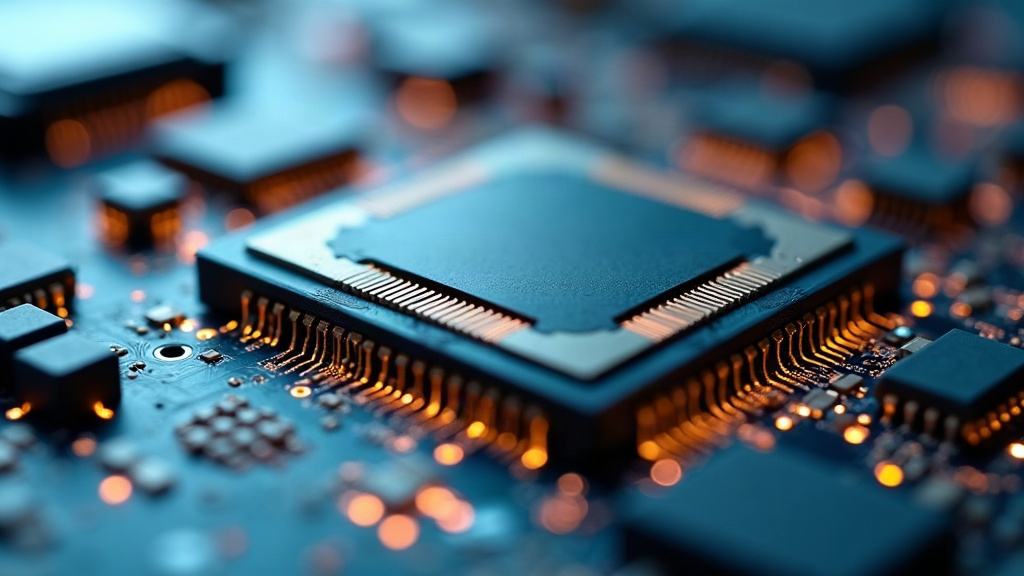
Microsoft published the full technical specifications for Azure Maia 300 on October 12, 2026, in a detailed engineering blog accompanied by third-party coverage from Data Center Dynamics. The chip uses a multi-chiplet architecture manufactured on TSMC's N2P process node, separating compute, memory-controller, and I/O functions across dedicated dies. Each accelerator carries eight stacks of HBM4 memory, providing 288GB of total capacity and up to 18TB/s of memory bandwidth, compared with HBM2e-based H100s that top out near 3.35TB/s. A 96-chip rack configuration rates at 167kW, provides 27.6TB of aggregate HBM capacity, and delivers 1.7Pbps of aggregate memory bandwidth. Microsoft has formally designated Maia 300 its "primary inference system" for Azure, a status that previously belonged to Nvidia hardware.
The performance leap over Maia 200 is substantial on vendor-reported metrics: 2.5x the memory bandwidth, 33% more memory capacity, and 7x the rack-scale token throughput in a full 96-accelerator configuration. The chip carries a 950W thermal design power rating per accelerator. Scale-out across racks uses an Ethernet-based custom transport rather than a proprietary interconnect, which reduces switching infrastructure cost and allows Azure to expand clusters with commodity networking equipment, according to reporting by Unite.AI. Microsoft describes the multi-chiplet design as enabling independent optimization of each chiplet type, reducing the frequency and cost of full die respins when one subsystem requires updating.
Maia 300 is positioned for multi-gigawatt deployment beginning in 2027. Maia 200 is already running production workloads including Microsoft Copilot, OpenAI inference, and Microsoft's MAI model family across Azure. The transition to Maia 300 will shift the highest-volume inference workloads from contracted Nvidia hardware to owned Microsoft silicon, per analysis from Converge Digest. The company does not plan to eliminate GPU procurement: Nvidia hardware will continue to handle training workloads and specialized inference scenarios where proprietary features provide advantages not yet replicated by Maia 300.
Why This Matters More Than People Think
Azure's AI business carries a structural cost problem that Maia 300 is designed to address. Every token served through Copilot, an OpenAI API endpoint, or an Azure AI Foundry application on Nvidia hardware passes through a chip whose economics favor the GPU vendor, not the cloud provider. Nvidia's data center gross margins have topped 75% for six consecutive quarters. At the throughput volumes Azure serves, the difference between renting inference at Nvidia's cost structure and running it on owned silicon at 40% better efficiency translates directly to billions of dollars in annual variable cost. That savings compounds with each AI workload added to the platform.
The deeper economic shift is from capital expenditure that creates no durable asset to capital expenditure that does. Microsoft committed to spending more than $80 billion on AI data center infrastructure in fiscal 2026. Deployed on owned custom silicon rather than GPU contracts, that spending builds an asset base with a defined depreciation schedule and residual value. GPU leases are effectively operating expenses with no carry-forward. The chip roadmap implies that Microsoft intends to deploy Maia 400 and beyond on the same architectural foundation, compounding efficiency gains across generations while the sunk costs of the design infrastructure are already paid.
The HBM4 specification is the most forward-looking element of Maia 300's design, according to a technical breakdown by TAI Semicon. At 18TB/s bandwidth per chip and 27.6TB per rack, Maia 300 is sized for model workloads that do not yet exist in production but that Microsoft's research investments suggest are coming. Current frontier models at 100-billion-plus parameters can saturate HBM2e bandwidth during sustained inference under heavy concurrent load, introducing latency spikes that degrade user experience at scale. HBM4 removes that ceiling for the next several model generations, meaning Maia 300 is not just more efficient than today's Nvidia hardware but better prepared for the inference demands of 2028 and 2029.
The Competitive Landscape
Google has been running custom AI silicon since its first TPU in 2015. Its sixth-generation Trillium (TPU v6e), announced in late 2025, claims 4.7x the performance per chip over TPU v5 and is already deployed across Google DeepMind inference workloads and Google Search AI features. Amazon's Trainium 2 and Inferentia 3 chips handle a growing fraction of AWS's own model inference, and Meta's MTIA chips run the recommendation and ranking systems that power its applications. Every major hyperscaler now has a custom silicon program. Microsoft is the last of the four to designate its own chip as the primary inference system, roughly five years behind Google's silicon curve.
Nvidia's position is more complex than its headline market share suggests. The company controls approximately 85% of the AI accelerator market by revenue and has seen no hyperscaler materially reduce GPU procurement while simultaneously scaling AI services. The displacement of Nvidia from Azure's top inference workloads is a 2027 to 2029 story, not an immediate shift. However, critics argue the trajectory from Google's TPU experience is instructive: once custom silicon reaches production maturity and deployment scale, GPU procurement growth at that cloud decelerates even as AI revenue accelerates. The margin delta compounds slowly, then suddenly.
The closest historical precedent is Apple's transition from Intel to its own M-series chips, completed across the entire product line between 2020 and 2022. Apple took approximately two years for a full migration, and the impact on Mac hardware gross margins was direct and measurable, improving by more than five percentage points over subsequent product cycles. Microsoft is executing a structurally analogous transition at data center scale, where the engineering complexity is higher and the timeline is measured in fiscal years rather than product launches. If Maia 300 delivers, the payoff is a sustainable improvement in Azure AI gross margins that doesn't require negotiating with Nvidia every generation.
Hidden Insight: The OpenAI Contract Shift
Almost no analysis of Maia 300 has examined what the chip means for the Microsoft-OpenAI relationship specifically. OpenAI is both Microsoft's most important customer and a structural competitor to Azure's growing AI services portfolio. The commercial agreements between the two companies are structured around Azure capacity and pricing, which means OpenAI's unit economics are directly tied to the cost at which Microsoft can serve inference. Maia 300's 40% efficiency advantage, if real in production, changes that cost structure in ways that will ripple through every future contract negotiation between the two companies.
In the short run, OpenAI benefits. Lower inference costs at Azure reduce the per-token hosting charge that flows through to OpenAI's COGS, improving OpenAI's margins at a moment when the company is spending aggressively on model development and racing toward an IPO. But the medium-run dynamic is less favorable for OpenAI. A Microsoft that runs inference on cheap, owned silicon has more pricing flexibility than one dependent on Nvidia hardware contracts. That flexibility can be deployed as competitive pricing on Azure AI services that compete directly with ChatGPT Enterprise, as improved margin, or as leverage in future contract renegotiation. Microsoft has never had that leverage before.
The HBM4 specification hints at something else not in any official announcement. HBM4 is the memory architecture designed for the model sizes and context lengths that will characterize AI workloads in 2028 and beyond. The fact that Microsoft is deploying HBM4 at rack scale from the first day of Maia 300's production rollout implies it has a model roadmap in view that justifies that specification today. These are not models currently available in Copilot. They are the models that will run on Maia 300 in 2028 at a cost structure that today's GPU prices cannot match.
The risk is real, however, and deserves direct statement. Custom silicon development carries a long history of performance claims that do not survive production deployment. Intel's Gaudi 3 was positioned as a cost-competitive alternative to Nvidia's H100 for inference workloads at lower price points, but enterprise adoption has been slow and independent benchmark results have consistently fallen short of vendor projections. Microsoft has published no third-party benchmark data for Maia 300, and the 40% efficiency advantage compares against an unnamed "leading GPU-based system" baseline using an undisclosed benchmark methodology. If deployment performance falls materially short, the capex case for multi-gigawatt Maia 300 infrastructure weakens and Microsoft faces a multi-year delay in its AI margin improvement thesis.
There is a less-discussed secondary effect on Azure's competitive position versus Amazon Web Services and Google Cloud. Both AWS and Google have been advertising their custom silicon efficiency advantages to enterprise customers for several years, using the cost-per-token economics of Trainium and TPU as selling points in cloud procurement negotiations. Microsoft has had no comparable answer in those conversations. Maia 300 gives Azure's enterprise sales team a specific, quotable efficiency number to place against Nvidia-based workload quotes from competing clouds. Whether or not the 40% figure holds precisely in production, the existence of the claim changes the procurement conversation immediately, before a single Maia 300 rack ships in 2027.
There is a less-discussed secondary effect on Azure's competitive position versus Amazon Web Services and Google Cloud. Both AWS and Google have been advertising their custom silicon efficiency advantages to enterprise customers for years, using the cost-per-token economics of Trainium and TPU as selling points in cloud procurement negotiations. Microsoft has had no comparable answer in those conversations. Maia 300 gives Azure's enterprise sales team a specific, quotable efficiency number to place against Nvidia-based workload quotes from competing clouds. Whether or not the 40% figure holds precisely in production, the existence of the claim changes the procurement conversation immediately, before a single Maia 300 rack ships in 2027.
The architecture choice to use standard Ethernet for rack-scale transport deserves attention beyond its cost implications. Proprietary interconnects, such as Nvidia's NVLink, create a hardware lock-in that makes it difficult for customers to mix and match accelerators within a single cluster. By using Ethernet, Microsoft builds Maia 300 clusters in a way that is inherently more composable: compute nodes, storage nodes, and networking infrastructure can be sourced from multiple vendors and upgraded independently. This design philosophy mirrors the broader trend in data center architecture away from vertically integrated stacks toward open, disaggregated infrastructure, and it positions Azure to benefit from continued innovation in Ethernet switching without waiting on a proprietary interconnect vendor's roadmap.
What to Watch Next
The most actionable 30-day indicator is any change in language about capital allocation at Microsoft's fiscal Q2 2027 earnings call in January. Currently the company reports AI revenue growth and data center capex as aggregate figures. If Maia 300 is performing as intended and the owned-versus-rented silicon ratio is shifting, that will first appear as a change in the capex commentary or in the ratio between owned silicon depreciation and external hardware procurement. Analysts covering Microsoft infrastructure costs have not yet broken these lines out separately, but they will need to once the numbers become material.
The 90-day technical signal is a potential MLPerf submission. MLCommons runs the MLPerf Inference benchmark suite twice yearly, and the spring 2027 cycle would be Maia 300's first opportunity to appear with independently verifiable performance data. A score consistent with Microsoft's 40% efficiency claim would validate the architecture against Nvidia H200 and Blackwell baselines and put concrete numbers behind what has so far been a vendor assertion. An absence from MLPerf, or a score that trails the announcement, would raise the same systemic questions about custom silicon viability that have complicated Intel Gaudi's adoption story.
Looking 180 days out, watch for Nvidia's investor day response, expected in early 2027. The company's Rubin architecture roadmap needs to demonstrate a compelling economic case for continued GPU procurement at hyperscaler scale in a world where Microsoft, Google, and Amazon are each building competing silicon programs. If Nvidia introduces inference-specific pricing models, new HBM4-based configurations for Azure-scale workloads, or exclusive software features that custom silicon cannot access, that would confirm that the Maia 300 announcement registered as a genuine competitive threat internally, not merely a headline-generating press event.
Maia 300 is not a chip story. It is a leverage story: the instrument by which Microsoft acquires independence from the cost structure of its own most important partnership.
Key Takeaways
- 288GB HBM4 per chip, 18TB/s bandwidth: Maia 300's memory specs exceed any current production Nvidia H100 configuration, designed to serve next-generation model scale from 2027
- 40% more tokens per megawatt vs. leading GPU systems: Microsoft's headline efficiency claim versus an unnamed baseline; no independent verification has been published yet
- 7x rack-scale throughput over Maia 200: Generation-over-generation jump reflecting both TSMC N2P process node and the upgrade from HBM2e to HBM4
- Multi-gigawatt production deployment starts 2027: Maia 300 designated "primary inference system" for Azure, shifting Copilot and OpenAI workloads off Nvidia hardware at scale
- Microsoft spent $80B+ on AI infrastructure in fiscal 2026: The proportion allocated to owned custom silicon versus GPU contracts will determine the timeline for any margin improvement
Questions Worth Asking
- If Maia 300 delivers the 40% efficiency gain, does Microsoft pass any savings to enterprise customers as lower token pricing, or does it widen Azure AI operating margins instead?
- How does the OpenAI partnership contract structure change when Microsoft's inference economics no longer depend on Nvidia hardware pricing?
- Custom silicon programs at major tech companies historically take three to five years to reach the efficiency claims made at announcement. What would failure look like for Maia 300, and what is Microsoft's fallback?