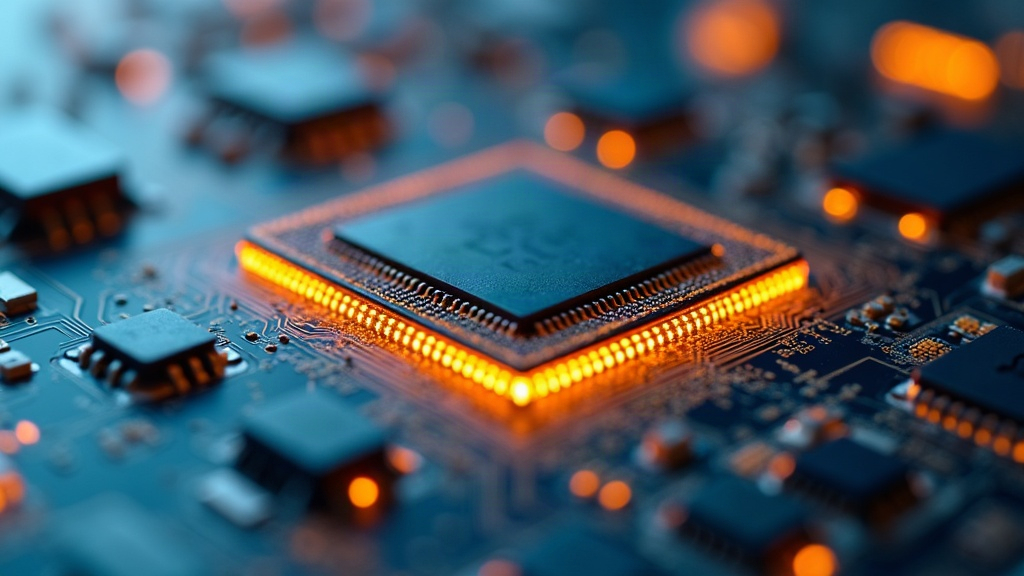
The constraint that nearly stopped Optimus from scaling wasn't the robot's mechanical assembly, its software stack, or the supply of precision actuators. It was DRAM. Tesla sliced its AI5 chip memory configuration in half, then partially walked back the cut, in a 48-hour exchange on X that revealed more about the hidden physics of humanoid robot manufacturing than any factory tour would have. The message hidden in the numbers is uncomfortable: at the volumes Tesla is targeting, the global memory supply chain does not exist yet.
What Actually Happened
On October 1, 2026, Elon Musk posted to X that Tesla had cut the RAM on both its next-generation AI5 and AI6 inference chips, which power the Optimus humanoid robot. According to Not a Tesla App, the AI5 chip was cut from its originally planned specification to 72GB of LPDDR5, while the AI6 chip was reduced by a third to 144GB of LPDDR6. Musk characterized the move directly: "This was the only way to get enough volume for Optimus production and greatly reduces cost." The phrase "only way" is direct and stark language. Tesla did not cut memory because it wanted to. It cut memory because the semiconductor supply chain gave it no viable alternative path to the production volumes it needs.
Within 24 hours, as Drive Tesla Canada reported, Musk made a partial correction: the AI5 specification was bumped from 72GB up to 96GB after a reply on X pointed out that Tesla would otherwise be the only company using the minimum RAM configuration of LP5 memory, which would have created its own supply-chain isolation problem. A single-customer configuration has no ecosystem support for yield improvements, cost reductions, or alternative supplier competition. So AI5 ended up with a third less memory than originally planned rather than half, while AI6 retained its third-cut at 144GB. The final result: two memory adjustments in 48 hours, both driven by the realities of global semiconductor supply allocation, not by engineering preference or performance modeling.
The performance justification offered by Musk is that memory bandwidth matters more than memory capacity for Optimus's current workloads, and that bandwidth was not changed by the capacity cuts. Benzinga noted that this framing has been corroborated by internal Tesla assessments suggesting negligible impact on robot performance under current task conditions. The claim is technically plausible: embedded AI inference workloads are often bottlenecked by memory bandwidth rather than capacity, particularly for the vision-and-proprioception pipelines that dominate Optimus's sensor processing stack. Whether that claim remains accurate as Optimus moves toward more complex tasks with larger state requirements is a separate and more consequential question that the current production decision has deferred rather than answered.
Why This Matters More Than People Think
The Optimus production bottleneck is not mechanical, not software-related, and not driven by battery chemistry limitations. It is DRAM volume. This revelation reframes the entire humanoid robot scaling story in a way that most existing analyses have not captured. Every model of when Tesla will hit its production targets for Optimus has focused on factory throughput, actuator supply chains, and software readiness. Memory supply was not on the standard checklist. The fact that a specific variant of consumer-grade LPDDR5 memory became the rate-limiting step for the most anticipated robot production program in history reveals how narrow the industrial supply base is for even established semiconductor products at the volumes Tesla is targeting.
Tesla has reportedly placed its first large-scale component order for roughly 5,000 Optimus units and is in the process of auditing Chinese suppliers for mass production. At 5,000 units, the memory constraint is already visible. Extrapolate to Tesla's stated goal of 1 million Optimus units per year and the arithmetic becomes uncomfortable. At 96GB per robot, 1 million Optimus units annually would require approximately 96 petabytes of LPDDR5 memory. Global DRAM production in 2026 is estimated at roughly 150 to 180 billion gigabytes annually across all memory types and configurations. A large share of that production is committed to smartphones, laptops, and data center servers. Optimus at scale would require coordinated supply agreements with semiconductor manufacturers at a scope not yet publicly announced by any party.
The cost dimension also matters significantly. Musk stated that the memory cuts "greatly reduces cost," and at the volumes Tesla is targeting, memory is a real cost line item in the bill of materials for each robot. If Tesla is targeting a sub-$10,000 consumer price point for Optimus by the late 2020s, the component-level discipline being demonstrated with this AI5 and AI6 decision is consistent with that roadmap. Every reduction in memory specification at volume represents real manufacturing savings that can be redirected toward actuator technology improvements, battery chemistry upgrades, or margin protection. The memory cut is simultaneously a production necessity and a pricing strategy, and both motivations are legitimate on their own terms.
The Competitive Landscape
Tesla is not the only company navigating the memory architecture question for humanoid robots. Figure AI, which operates the Figure 02 in BMW's manufacturing plants, uses a combination of NVIDIA Jetson hardware and custom inference silicon. Unitree, the Chinese manufacturer shipping its G1 model at $16,000 per unit, uses consumer-grade processors that are less memory-intensive than Tesla's custom AI silicon. AgiBot, which has deployed robots in logistics settings across China, favors distributed processing architectures that reduce the per-unit memory requirement by spreading compute across modular subsystems. None of these approaches involves the same scale ambition as Tesla's Optimus program, which is precisely why Tesla's memory constraint problem is uniquely visible at this stage.
The bear case on Tesla's memory strategy, however, is straightforward: Micron Technology has publicly warned that humanoid robots could eventually demand more than 200GB of memory per unit as their task complexity increases beyond current factory applications. If Micron's projection is correct, the AI5 chip at 96GB is already at less than half the memory density that future robot workloads will require. The gap between current specifications and future requirements would demand a complete AI5 and AI6 hardware revision at exactly the moment Tesla is trying to scale volume production. Critics argue that Musk's dismissal of the performance impact may be accurate for current Optimus tasks like controlled assembly line operations and package sorting, but will not survive the transition to domestic robots operating in unstructured environments with unpredictable and open-ended task requirements.
The historical parallel is useful here. Early smartphone manufacturers faced similar DRAM bottlenecks during the transition from single-digit to double-digit millions of units per quarter. Qualcomm and MediaTek both made memory configuration decisions in 2012 and 2013 that constrained software capability for two to three years but enabled the price points that drove Android's global mass-market adoption. The constraint was real, the tradeoff was conscious and strategic, and the market rewarded it. Tesla may be making the same calculation: get Optimus into the field at scale with current memory specifications, generate real-world performance data from factory deployments, and revise the silicon in a subsequent hardware generation when the production ramp has established the supply chain and unit economics necessary to support higher specifications.
Hidden Insight: The Robot Memory Market Is Still Being Invented
The exchange between Musk and a technical user on X revealed something that industry watchers have not yet fully processed: the AI5 chip's original memory cut would have made Tesla the only customer for a specific minimum-spec variant of LP5 memory. Memory manufacturers do not maintain production lines for single-customer configurations indefinitely. The LP5 minimum configuration exists in the market because multiple customers use it; if Tesla alone had been its customer, the entire ecosystem support that makes that configuration manufacturable at competitive cost would have been compromised. The bump from 72GB to 96GB was not just a performance concession; it was a supply chain insurance decision that preserved Tesla's access to a viable component ecosystem.
This exposes a broader truth about the humanoid robot industry: the memory market does not yet have standards designed around robots at scale. Desktop computers, laptops, smartphones, and data centers all have established memory form factors with multiple competing suppliers and decades of manufacturing investment behind them. Robots at the scale Tesla is pursuing require a new category: high-bandwidth, high-reliability, compact DRAM optimized for embodied AI inference workloads that operate continuously in physically demanding environments. Samsung, Micron, and SK Hynix are all aware of this opportunity. But the specifications have not yet crystallized, and the committed volume is not yet large enough to justify dedicated manufacturing investment in specialized configurations. Tesla is simultaneously building a product market and trying to shape a component market that does not yet fully exist.
The investor angle that has received insufficient attention is the relationship between memory architecture and Optimus's software roadmap. Tesla's Full Self-Driving stack has historically been constrained by inference memory in ways that required architectural revisions at each successive hardware generation. The same dynamic will apply to Optimus as the software becomes more capable and the task space expands. The current 96GB specification may be acceptable for assembly line tasks where the environment is controlled and the task space is narrow. When Optimus moves into general-purpose applications, the memory requirement will grow non-linearly with task complexity and context window size. Tesla is managing this tension by front-loading the production scale now, but the software team is already working within constraints that will require revisiting in the 18 to 24 month hardware revision cycle.
The geopolitical dimension has received almost no coverage. LPDDR5 and LPDDR6 memory at volume is predominantly manufactured in South Korea and Taiwan. Tesla's decision to cut memory to hit volume targets is partly a response to export controls, trade policy uncertainty, and the cost premium associated with qualifying non-Chinese memory suppliers after the supply chain consolidation of the 2020 through 2024 period. The supply constraint Musk described is not purely a capacity issue; it is a consequence of a specific procurement strategy that prioritizes supply chain security over unit cost optimization. At 5,000 units, this tradeoff is manageable. At 1 million units per year, the geopolitics of DRAM supply will become as central to Optimus's production economics as the robot hardware itself, and no public roadmap currently addresses that dimension with specificity.
What to Watch Next
In the next 30 days, watch for Tesla's Q3 2026 earnings call, which will likely be the first public venue where Musk addresses Optimus production volumes with any specificity. The memory specification change was announced on X rather than in an investor communication, which means institutional investors have not yet formally priced the supply chain complexity it reveals. If analysts specifically question memory procurement strategy on the earnings call, the quality of the answer will be revealing. A dismissive response would suggest Tesla has not fully modeled the scaling challenge. A detailed answer about forward supply agreements with Micron, Samsung, or SK Hynix would suggest the company has already addressed the constraint upstream and the X announcement was describing a solved problem rather than an ongoing one.
Over the 90-day horizon, monitor Micron's investor communications and product announcements for any mention of humanoid robot memory products. Micron has been the most vocal among major semiconductor companies about the robotics memory opportunity, having published analysis projecting 200GB-plus requirements for next-generation robot workloads. If Micron announces a production commitment or design win specifically for automotive or humanoid robot LPDDR5 at 96GB or higher specifications, it will confirm that Tesla's memory adjustments have already triggered a supply chain response upstream. Micron entering a robot-specific memory product line would also change the competitive dynamics for Unitree, Figure, and AgiBot, who currently benefit from commodity consumer memory cost structures.
At 180 days, the critical test is whether the AI5 specification holds or gets revised before full volume production begins. If Tesla announces an AI5 revision or a successor specification with higher memory capacity before the end of Q2 2027, it will be evidence that the 96GB specification is proving insufficient in real-world performance testing as the software stack matures. The revision cycle for embedded AI silicon is typically 18 to 24 months; a faster revision would signal that the performance-memory tradeoff Musk described on X is not holding under actual deployment conditions. That outcome would pressure Optimus's production timeline projections, which have already been adjusted multiple times and remain closely tied to Tesla's long-term valuation thesis and its credibility with institutional investors who have priced in the robotics upside.
The robot isn't bottlenecked by AI. The AI is bottlenecked by memory. And the memory is bottlenecked by a supply chain that wasn't built for this.
Key Takeaways
- AI5 chip settled at 96GB LPDDR5: Tesla reduced AI5 from its original spec, first cutting to 72GB then correcting to 96GB after supply ecosystem concerns were flagged
- AI6 cut by one-third to 144GB LPDDR6: the next-generation chip also took a memory reduction to secure volume needed for Optimus production at the scale Tesla is targeting
- Supply volume was the constraint, not design preference: Musk described the cuts as "the only way to get enough volume," pointing to DRAM supply allocation as the rate-limiting production factor
- Micron warns future robots need 200GB or more: the current 96GB spec may already be below what complex future tasks require, setting up a hardware revision cycle in the 2027 to 2028 timeframe
- Tesla targets 1 million Optimus units per year: at 96GB per unit, that production goal requires coordinated memory supply agreements at a scale not yet publicly announced by any semiconductor manufacturer
Questions Worth Asking
- If memory supply is already the constraint at 5,000 units, what forward supply agreements with Micron, Samsung, or SK Hynix are required before Tesla can credibly target 100,000 units per year?
- Is Musk's claim that bandwidth matters more than capacity permanently true for Optimus, or does it hold only for the current narrow factory-task software stack that has not yet been deployed in unstructured environments?
- What does Tesla's willingness to accept a supply-constrained memory specification tell us about the realistic timeline for a consumer Optimus product versus the factory-floor deployment that is already underway?